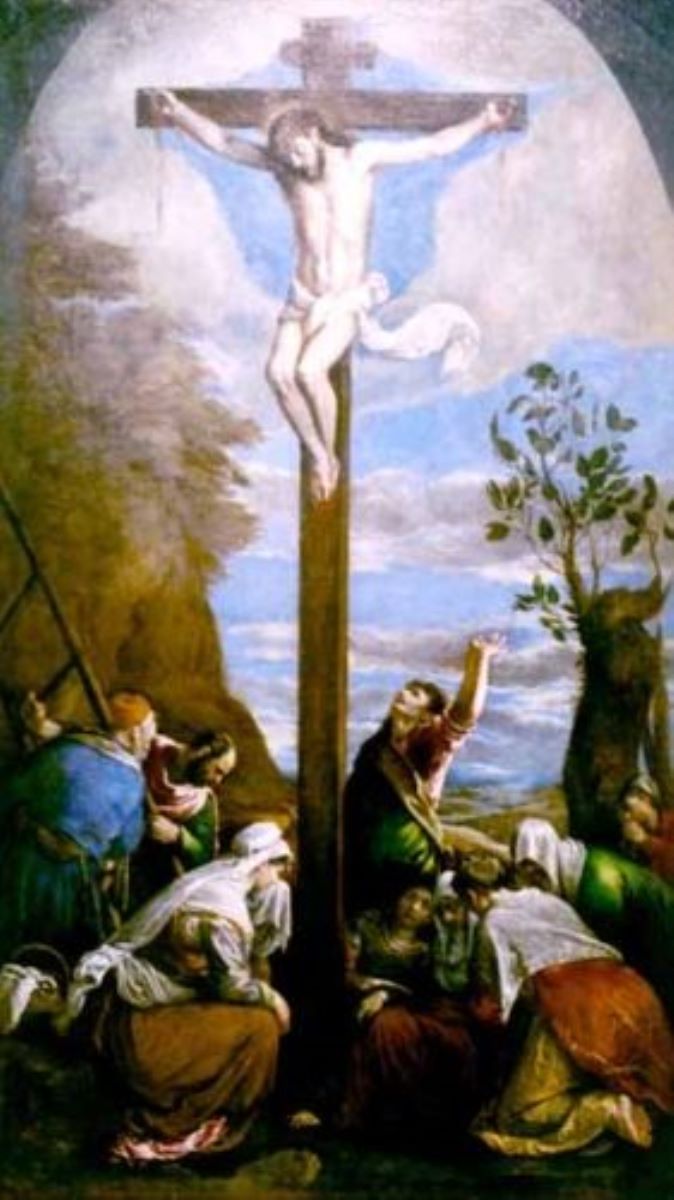
 Jacopo BassanoItalian, 1510–1592
Răstignirea
May one see it?
Unknown

Bucharest, Romania
The owner is known; whether it is on view today is not.
- In this state since
- Source
- The museum
About the painting
In the museum's own words — in Romanian
Tabloul se înscrie în șirul imaginilor inspirate de Patimile lui Iisus, pictate de Bassano, către 1575, pentru biserici și mânăstiri din Veneția și Trentino. Semant jos, pe piatra de la baza crucii: IACS. A. Pon/TE BASSAN [...] S / BASSAN [...].
National Museum of Art of Romania
Particulars
In the catalog
Sources
- National Museum of Art of Romania
- Image: National Museum of Art of Romania — CC BY-SA 4.0
Meanwhile, in the life of Jacopo Bassano
The whole life1510
Born
1535
Venice: study with Bonifazio de Pitati
According to Carlo Ridolfi's biography, Jacopo comes to Venice to learn the secrets of the craft in the workshop of Bonifazio de Pitati, called Veronese (study under him is likely but not certain). Bonifazio instils in him a lasting appreciation of Titian; in Venice Bassano also sees the works of Pordenone and spends much of the 1530s painting there.
1539
His father's death and the return to Bassano
After the death of his father, Francesco the Elder (by other accounts, he had died as early as 1530), Jacopo returns to Bassano del Grappa, settles there for good and takes over the family workshop. He rarely leaves his home town afterwards.
c. 1540
Finds his own style
His early works show the influence of Mannerism, with elongated figures and bright, contrasting colour (he knew the popular etchings of Parmigianino); by 1540 he has acquired a manner of his own, based on observing nature, people and animals, with strong chiaroscuro. His pictures draw on the everyday life of small villages and the beauty of nature.
1546
Marries Elisabetta Merzari
Jacopo marries Elisabetta Merzari, a local woman; the couple will have eight children, five sons and three daughters, and four of the sons will become painters and join their father's workshop.
14 February 1592
Died