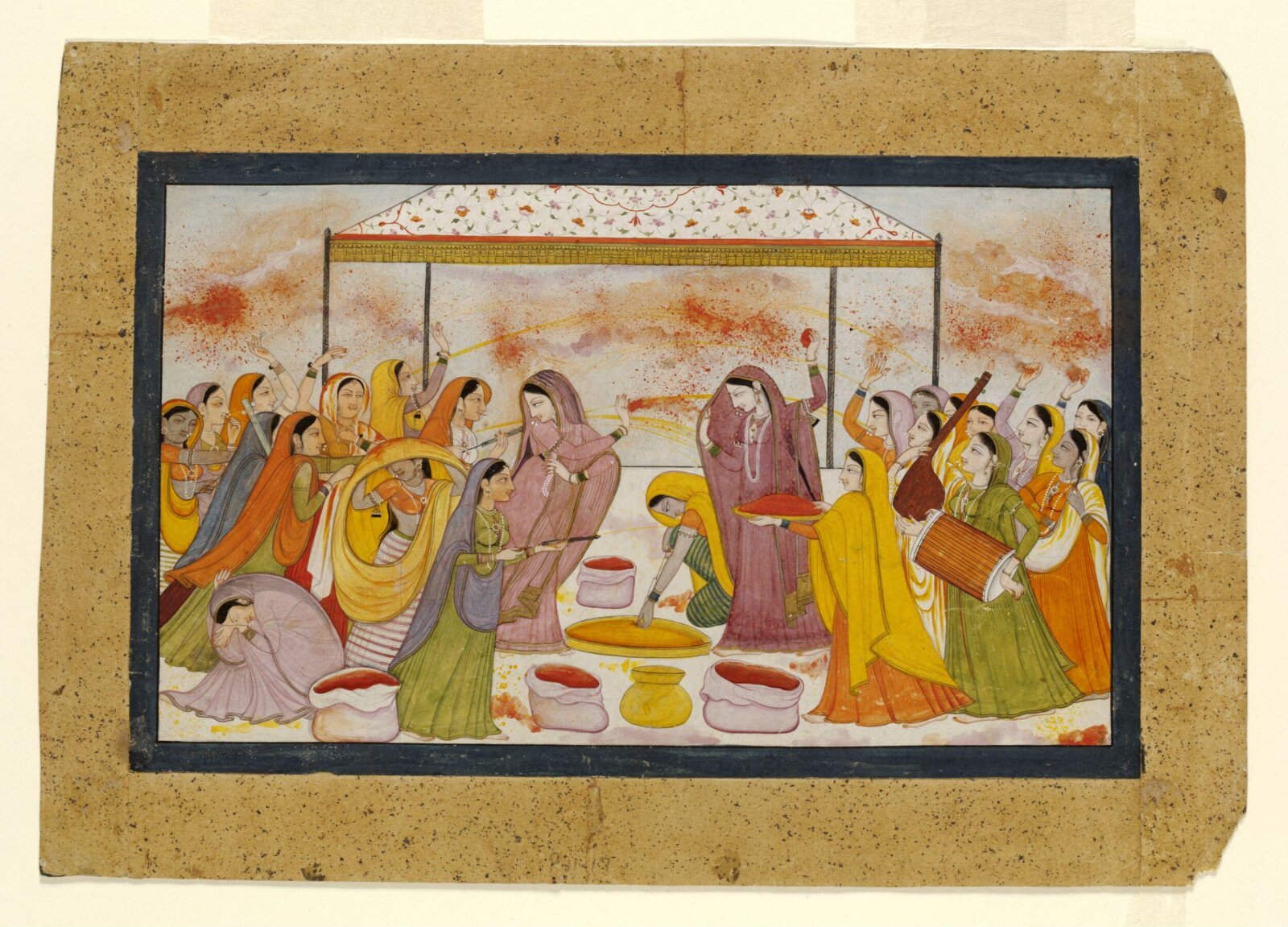
Radha
May one see it?
Not receiving at present

Victoria and Albert Museum
London, United Kingdom
It belongs to the collection, but is not on display at present.
- Checked
- 7 days ago
- In this state since
- Sep 25, 2026
- Source
- The museum's own collection data
About the painting
The festival of Holi is celebrated across India in February and March. It marks the arrival of spring and revellers show great exuberance, throwing coloured powders and coloured water at each other. This painting shows two groups of women showering each other with red and orange powder and spraying a saffron-coloured liquid. Radha, the human consort of the god Krishna in Hindu mythology, is the most prominent figure in the group on the left-hand side.
Read on
Although today the colours used for Holi range from reds and yellows to blues and greens, the traditional colour was made from the leaves of the ‘tesu’ tree (Butea monosperma). This tree is known as the ‘flame of the forest’ and produces bright red flowers, which are dried and ground to give a saffron colour when mixed with water. The yellow powder was most probably turmeric, which comes from the root of a leafy plant in the ginger family called Curcuma longa. Ground turmeric comes from the fingers of the root, which are boiled or steamed and then dried and ground. The red dye may be red sandalwood powder (Pterocarpus santalinus).
Victoria and Albert Museum
Particulars
- Accession number
- IS.9-1949
What it shows
In the catalog
Sources
- Victoria and Albert Museum: the museum's own open data · fetched 7 days ago
- Image: Victoria and Albert Museum — © Victoria and Albert Museum, London