 Viktor Vasnetsov1848–1926
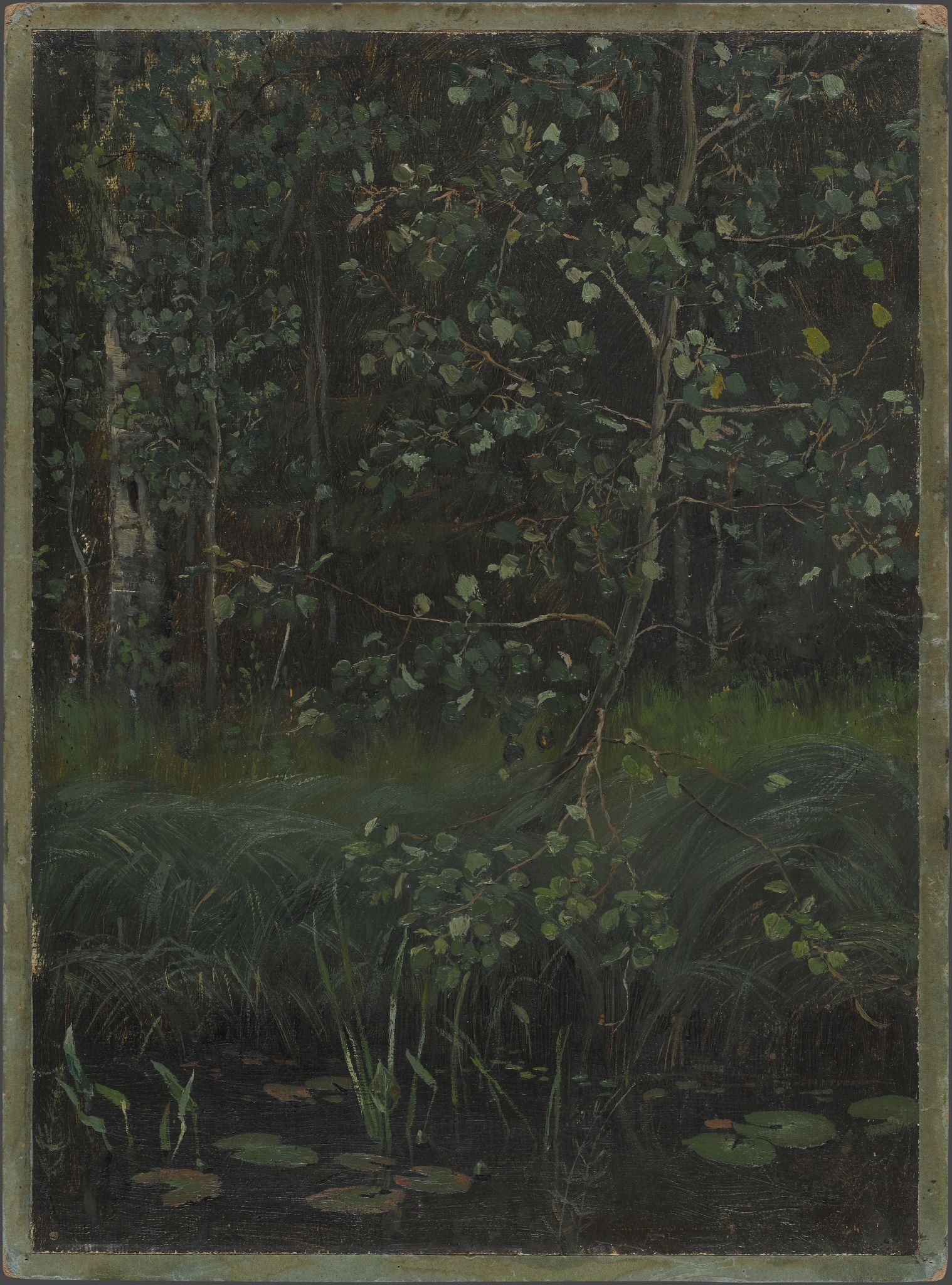
Пруд в Ахтырке
May one see it?
Unknown

Tretyakov Gallery
Moscow, Russia
The owner is known; whether it is on view today is not.
- Source
- The museum
About the painting
In the museum's own words — in Russian
В творчестве Виктора Михайловича Васнецова пейзаж имеет важное значение и выступает в качестве героя картины наряду с изображенными персонажами. В природе, как и в душе человеческой, художника не интересовали переливы мимолетных настроений или случайных состояний; пейзаж в его работах стал инструментом, помогающим выявить внутренний смысл событий, дать им особенную вневременную окраску.
Летом 1879-1880 годов по приглашению промышленника и мецената Саввы Ивановича Мамонтова Васнецов впервые приехал в село Ахтырка, а с 1881 года каждое лето проводил в усадьбе Абрамцево. Это было значимое место для широкого круга молодых московских художников, театральных деятелей, писателей. В жизни Васнецова оно сыграло решающую роль. Здесь он впервые обратился к сюжетам народных сказок, развил фольклорно-эпическое направление своего творчества, в котором особое место занимал пейзаж.
Read on
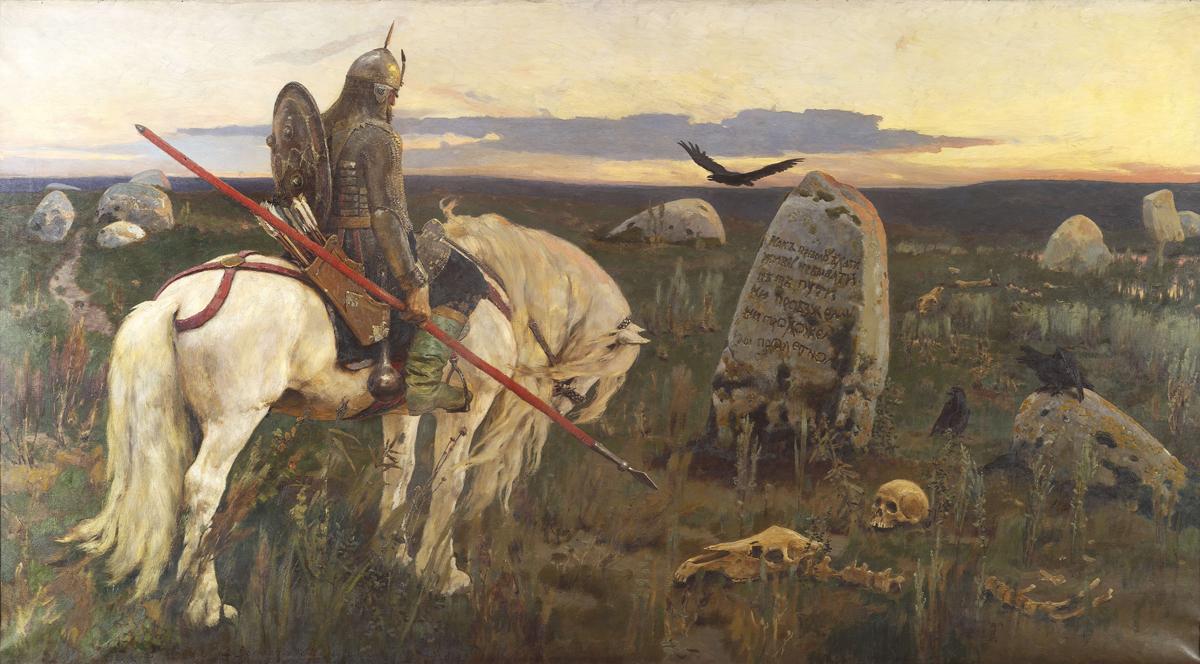
Эпический простор абрамцевской природы сочетался с лирической нежностью, что послужило неисчерпаемым источником вдохновения для художника; недаром именно здесь появились «Алёнушка» (1881) и эпические «Богатыри» (1881–1898). Со временем интерес Васнецова к абрамцевской природе не угасал, а работа над пейзажами приобрела самостоятельную ценность и стала настоящей потребностью для художника. Недаром в 1901 году он приобрел загородное имение Ваньково в Дмитровском уезде, расположенном всего в 20 верстах от Абрамцева.
Tretyakov Gallery
Particulars
- Accession number
- ДМВ Ж-235
In the catalog
Sources
- Tretyakov Gallery
- Image: Tretyakov Gallery — © State Tretyakov Gallery
Meanwhile, in the life of Viktor Vasnetsov
The whole life1878
He moves to Moscow, the city of his life’s work
In 1878, his resolve strengthened by Mamontov’s letter, he moved to Moscow, the city to which most of his creative life would be tied: he settled in a small flat in 3rd Ushakovsky Lane near Ostozhenka, walked the city for hours admiring the Kremlin and St Basil’s, and until 1885 the family changed rented flats in Moscow six times.
1878–1880
Mamontov’s commission for the Donetsk Railway
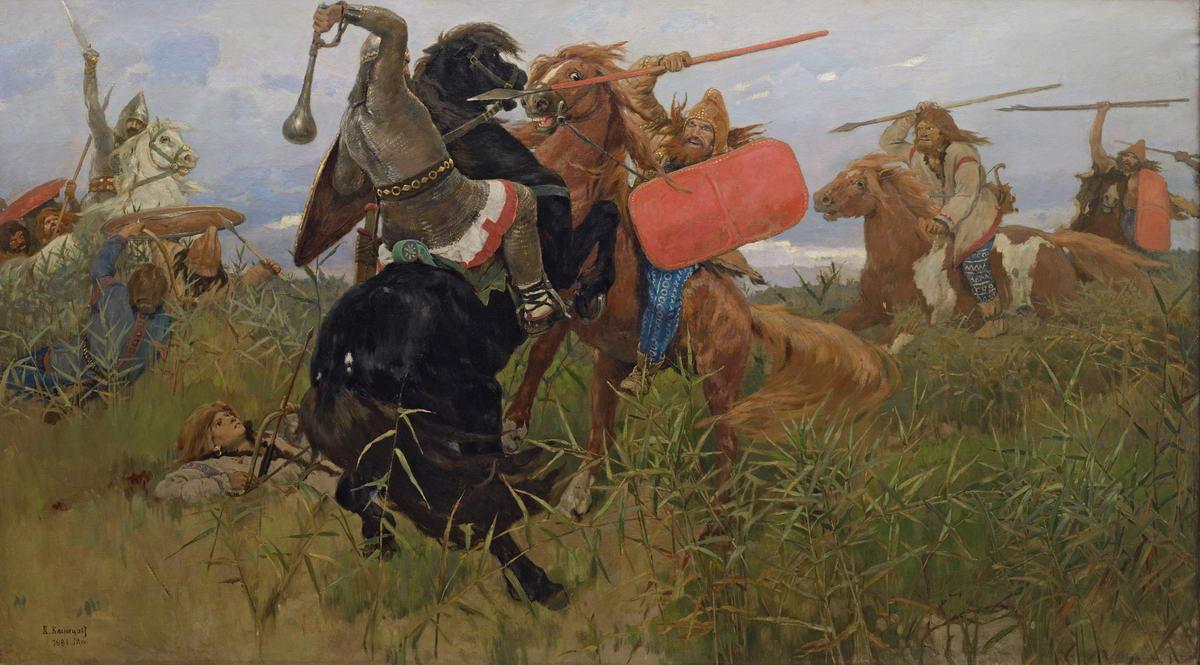
Repin brought him to the house of Savva Mamontov, who commissioned three fairy-tale pictures for the boardroom of the Donetsk Railway — “The Battle of the Russians with the Scythians”, “The Flying Carpet” and “The Three Princesses of the Underground Kingdom” (the princesses of gold, precious stones and coal); the princess Coal, a modest dark-haired girl in a black dress, was especially successful.
1878–1890 · Career
the Peredvizhniki
From 1878 he belonged to the Society of Travelling Art Exhibitions (the Peredvizhniki): he took part in its activity in 1878–1890 and exhibited with it until 1897; he was admitted for the realism and sharp social subjects of his genre paintings.
1879
His daughter Tatyana, the first of five children, is born
In 1879 his daughter Tatyana was born, later an artist and keeper of her father’s legacy; sons followed — Boris (1880), Alexei (1882), Mikhail (1884) and Vladimir (1889).
June 1880
His first visit to Mamontov’s Abramtsevo
In June 1880, with his brother Apollinary, he first came to Abramtsevo at Savva Mamontov’s invitation and joined the circle of Repin, Polenov, Serov and other artists, where he became one of the leaders of the national-romantic current.