 El LissitzkyRussian, 1890–1941
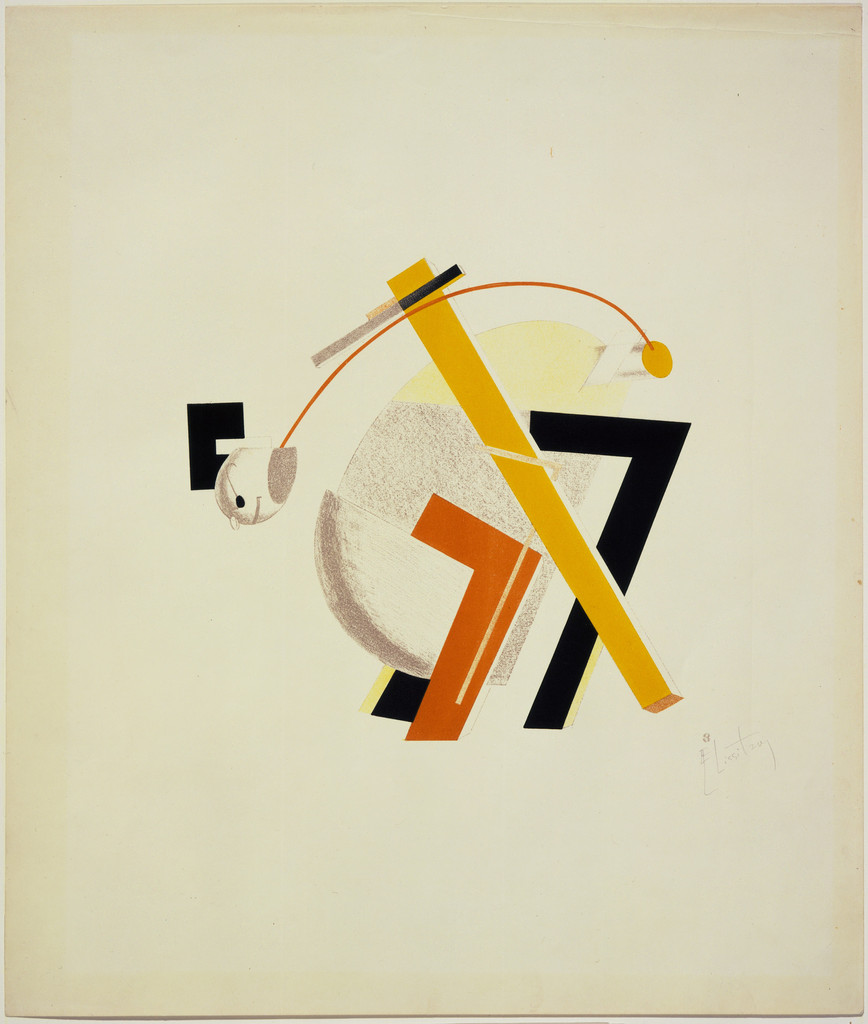
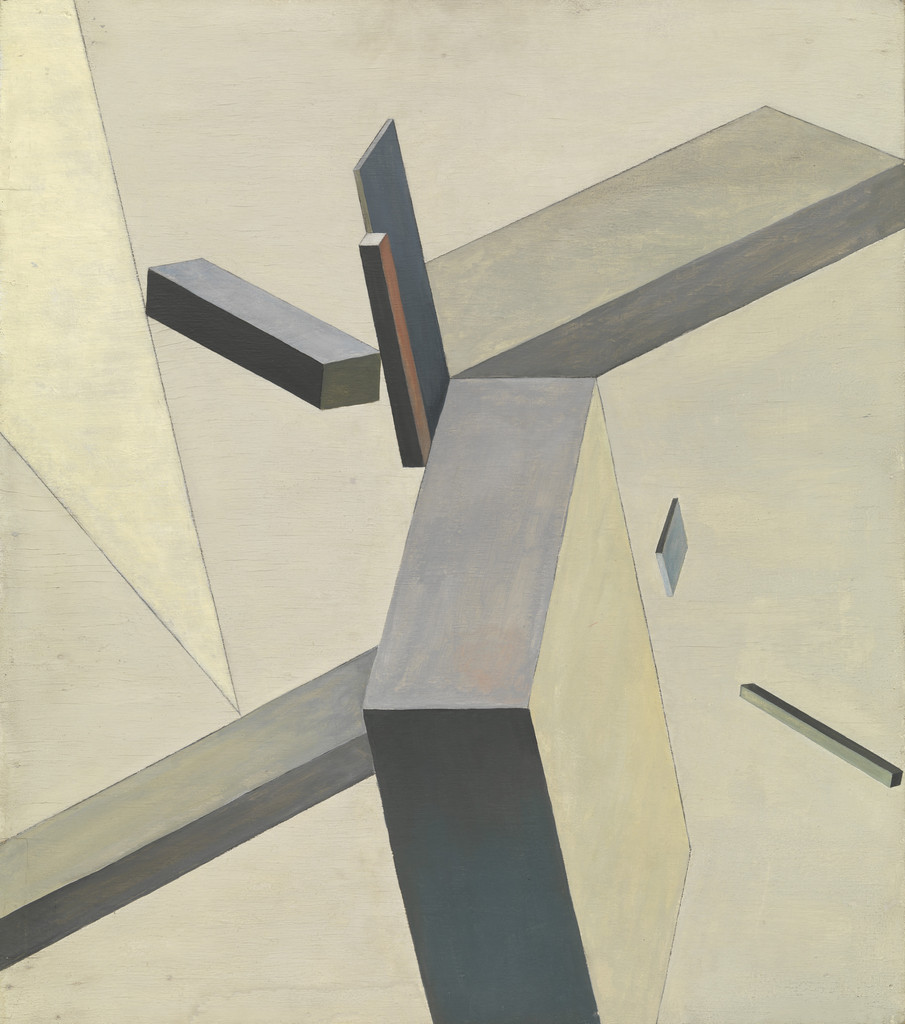
Проун 88
May one see it?
Unknown

Tretyakov Gallery
Moscow, Russia
The owner is known; whether it is on view today is not.
- In this state since
- Source
- The museum
About the work
In the museum's own words — in Russian
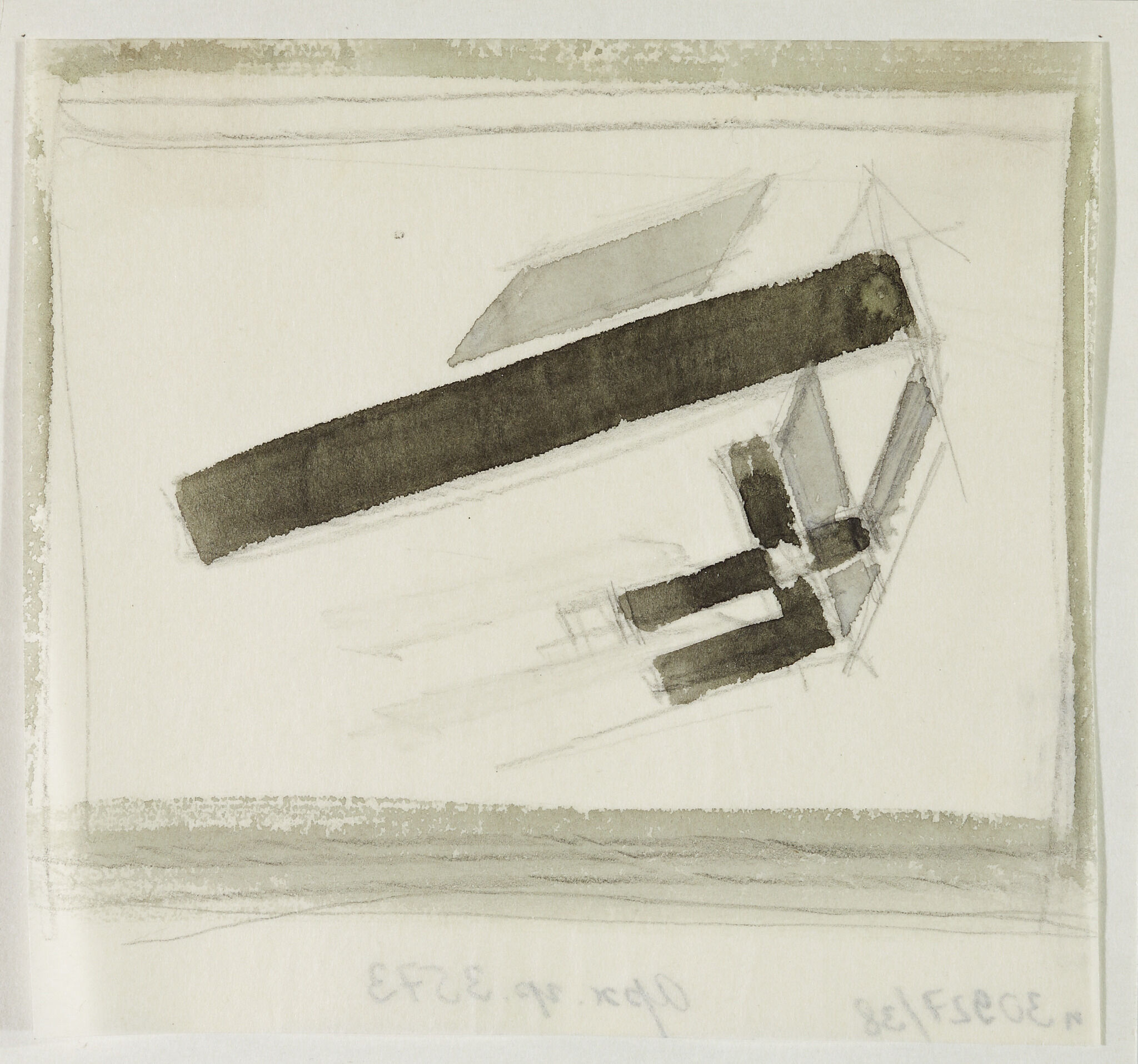
В 1924‒1925 годах Лисицкий находился на лечении от туберкулеза в Минусио ─ небольшом городке в Швейцарии неподалеку от Локарно. В это время он увлекся фотографией и фотограммой, начал работать над архитектурным проектом горизонтального небоскреба; в целом идея проунов была для него уже исчерпана. Тем не менее, оставалась необходимость в их создании для участия в больших выставках. «Проун 88» был одним из последних проунов, созданных Лисицким.
Read on
Весной 1925 года до отъезда в Москву (Лисицкий вернулся в Россию в июне) он выполнил 11 проунов, которые экспонировал в мае−июне 1925 года в Виcбадене на большой выставке современного искусства; в каталоге они не имели названий, и все 11 перечислялись как «Бристольский картон». Вполне возможно, что «Проун 88» входил в их число. По эскизу, хранящемуся в Третьяковской галерее, Лисицкий сделал большой проун на картоне («Проун 88». Художественный музей Морицбург, Халле). В композиции этого проуна повторяется элемент конструкции горизонтального небоскреба.
Tretyakov Gallery
Particulars
- Accession number
- АРХ ГР-3573
In the catalog
Sources
- Tretyakov Gallery
- Image: Tretyakov Gallery — © State Tretyakov Gallery
Meanwhile, in the life of El Lissitzky
The whole life1921–1925
In Berlin: Schwitters, Moholy-Nagy, van Doesburg
In Berlin Lissitzky meets and befriends Kurt Schwitters, László Moholy-Nagy and Theo van Doesburg. Together with Schwitters and van Doesburg he presents the idea of an international artistic movement under the guidelines of constructivism, and works with Schwitters on the issue “Nasci” (“Nature”) of the periodical Merz; he also joins the Dutch group De Stijl.
1923
The Proun Room at the Great Berlin Art Exhibition
In 1923, for the Great Berlin Art Exhibition, Lissitzky transforms a small room (about 3 by 3 by 2.5 m) into a single work of art, the Proun Room, which lets viewers “walk into an image” and become active participants. He violates the unwritten rule of rejecting the commercialization of art by putting price tags on three elements of the room; the price tags, together with his “half-dance” during the demonstration of the room, alienate his friend Theo van Doesburg.
1923–1924
Tuberculosis and a Swiss hospital
In 1923–1924 Lissitzky is severely ill with tuberculosis and stays in a Swiss hospital; at this time he is reported even to have considered suicide. He will die of tuberculosis in 1941.
1925
Return to the USSR
Lissitzky's years in Germany and Switzerland run from 1921 to 1925; it appears that in 1925 he returns to the Soviet Union.
1927
The All-Union Polygraphic Exhibition in Moscow
In 1927 the All-Union Typographic (Polygraphic) Exhibition takes place in Moscow under Lissitzky's direction and to his design; one of its aims is to show the paths humanity has travelled in conveying thought by means of symbolic and graphic signs. He develops new principles of exhibition display, treating an exhibition as a whole organism.
1927
Marriage to Sophie Küppers
In 1927 Lissitzky marries Sophie Küppers, the widow of Paul Küppers of the Kestnergesellschaft. Sophie, born Schneider, is a gallery owner and art historian; her first marriage was to the art historian Paul Erich Küppers.