 Mikhail Vrubel1856–1910
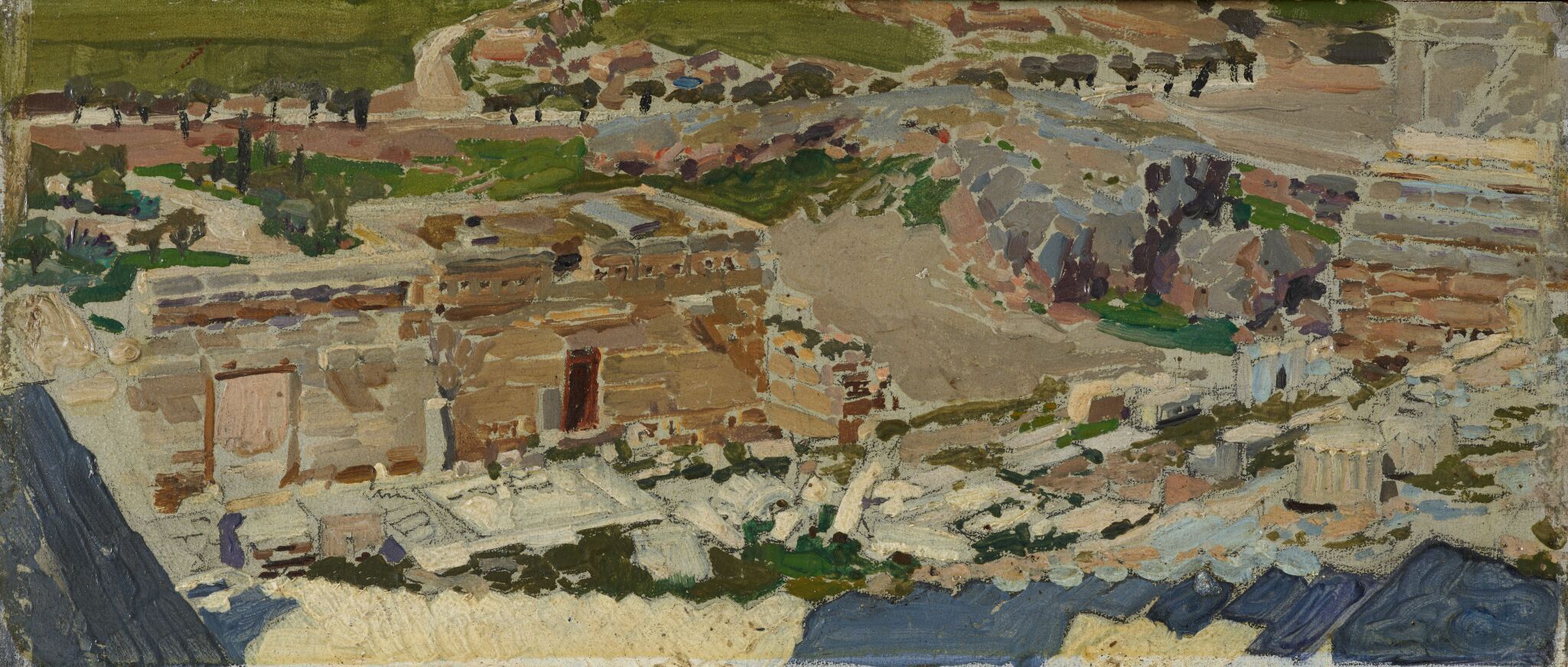
Пропилеи. Афины
May one see it?
Unknown

Tretyakov Gallery
Moscow, Russia
The owner is known; whether it is on view today is not.
- Source
- The museum
About the painting
In the museum's own words — in Russian
Этюд «Пропилеи. Афины» был написан Михаилом Врубелем во время его поездки в Италию в марте – начале апреля 1894 года. Художник был «командирован» туда Саввой Мамонтовым для сопровождения его старшего сына Сергея на лечение. Путешественники жили в местечке Стурла близ Генуи. Возвращались они в Россию по морю через Неаполь, Бриндизи, Пирей, Афины и Константинополь. Во время этой поездки Врубель исполнил около 20 пейзажных этюдов.
Read on
На этюде «Пропилеи. Афины» изображен знаменитый памятник архитектуры, оформлявший вход на Акрополь в Афинах, оставшийся незавершенным. Избранный мотив взят художником очень необычно, с высокого горизонта, позволяющего охватить глазом весь памятник целиком. Общее впечатление от комплекса поддерживается единым колоритом переливчатых светло-серых, оливковых, голубоватых, фиолетовых и зеленых цветов. Эта переливчатость передается мастером «мозаичными» мазками, характерными для всей серии средиземноморских этюдов. Использованная художником сложная техника, в которой он применяет одновременное нанесение краски кистью и мастихином, прекрасно передает каменную кладку архитектуры и окружающую зелень деревьев и кустарников.
«Видовое» начало, главенствующее в работах Левитана, Серова, Остроухова, свойственное пейзажным этюдам современных Врубелю художников, в его этюдных работах уступает место иным задачам, более близким к декоративным
Tretyakov Gallery
Particulars
- Accession number
- 9122
In the catalog
Sources
- Tretyakov Gallery
- Image: Tretyakov Gallery — © State Tretyakov Gallery
Meanwhile, in the life of Mikhail Vrubel
The whole life1891–1892
A second journey to Italy
Vrubel accompanied the Mamontovs to Italy as an adviser to the Abramtsevo pottery, but quarrelled with Elizaveta Mamontova and left with Savva Mamontov for Milan, where his half-sister Lilya was studying singing. He spent the winter in Rome, where he was to carry out Mamontov’s commissions — sets for “The Merry Wives of Windsor” and a new curtain for the Private Opera: he lodged with the Svedomsky brothers and later worked in the studio of Alexander Rizzoni.
mid-1890s
With Schechtel on the Morozov mansions
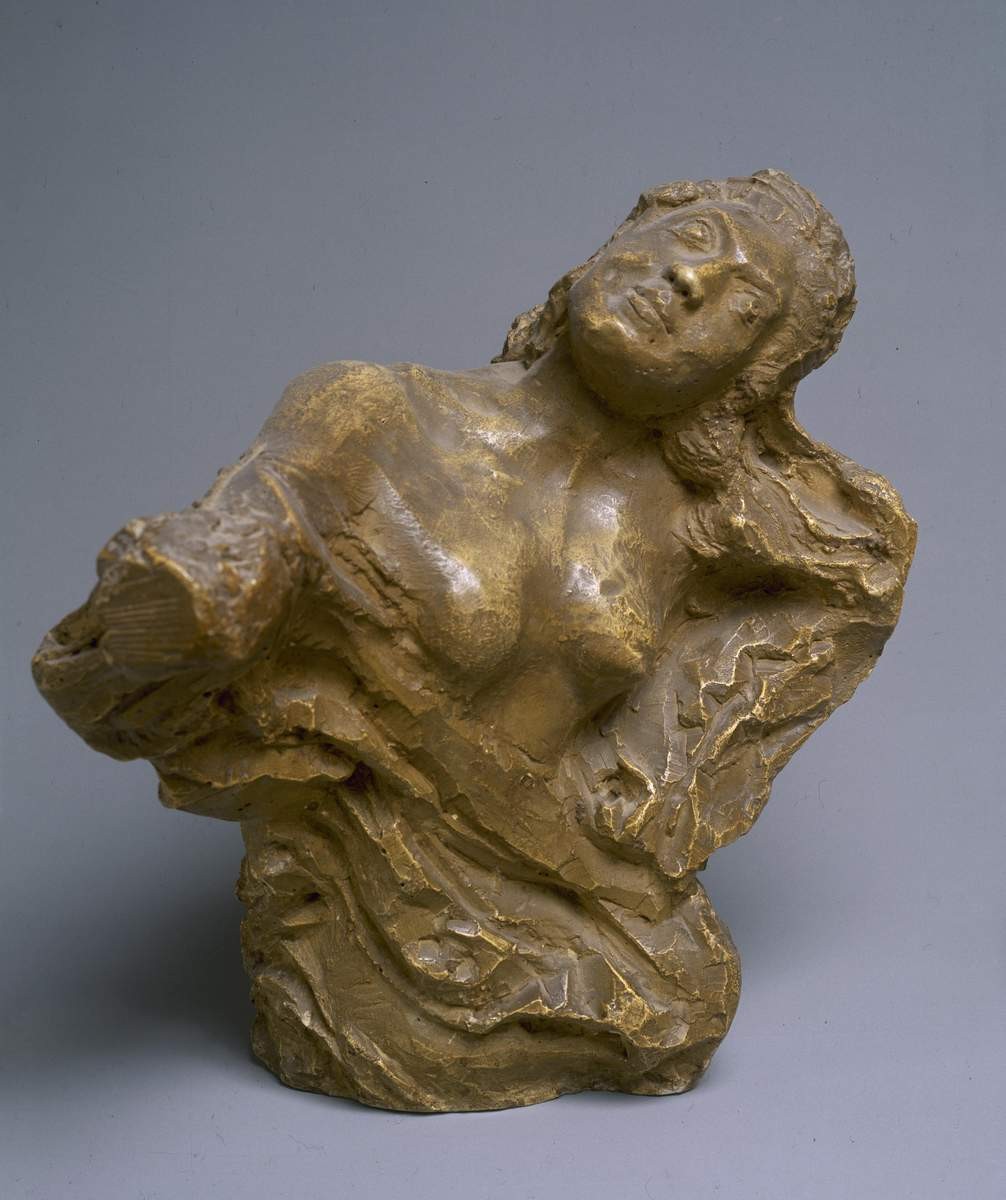
His work for Mamontov secured Vrubel’s reputation in Moscow, and together with Fyodor Schechtel he decorated S. T. Morozov’s mansion on Spiridonovka Street and A. V. Morozov’s house in Podsosensky Lane. His most important sculpture is held to be the “Gothic” group “Robert and the Nuns”, which adorns the staircase lantern of the Morozov mansion.
early 1896
Meeting Nadezhda Zabela
In St Petersburg Vrubel stepped in for the ailing Korovin as designer of Humperdinck’s opera “Hansel and Gretel”, which Mamontov was financing, and at a rehearsal he first heard, then saw, the singer of Gretel — Nadezhda Zabela. Rushing up to her in the interval with the cry “What a lovely voice!”, he proposed almost on the day they met, and later told his sister that had she refused, he would have killed himself on the spot.
22 May 1896
The Academy rejects his Nizhny Novgorod panels
Mamontov secured Vrubel a commission for two huge panels for the art section of the All-Russian Exhibition — “Mikula Selyaninovich” and “The Princess of the Dream”, a hundred square metres in three months. But the academician Albert Benois, in charge of the pavilion, demanded sketches, a telegram went to St Petersburg — “Vrubel’s panels are monstrous, they must be removed” — the Academy’s commission ruled them unfit to show, and on 22 May the works were carried out of the pavilion.
July 1896
Mamontov’s pavilion for the “rejected” panels
Mamontov bought both panels for 5,000 roubles: Polenov and Korovin finished “Mikula”, Vrubel completed “The Princess of the Dream” in a shed at the Abramtsevo pottery, and in time for the imperial couple’s visit on 15–17 July the canvases were shown in a specially built pavilion signposted “Exhibition of decorative panels by the artist M. A. Vrubel, rejected by the jury of the Imperial Academy of Arts” — the words naming the Academy’s jury soon had to be painted over. A newspaper battle followed: Nikolai Garin-Mikhailovsky offered the first balanced analysis of Vrubel’s art, while Maxim Gorky mocked his panels in five articles.
28 July 1896
Marries Nadezhda Zabela in Geneva
Meeting Zabela’s family went badly — the age gap troubled them (he was 40, she 28), and the bride herself knew that Vrubel drank and squandered money — but on 28 July the couple were married in the Cathedral of the Exaltation of the Holy Cross in Geneva. They spent their honeymoon in a guesthouse in Lucerne, where Vrubel went on working on panels for A. V. Morozov’s Gothic study: by the wedding he was literally penniless and had walked from the station to his bride’s.