 El LissitzkyRussian, 1890–1941
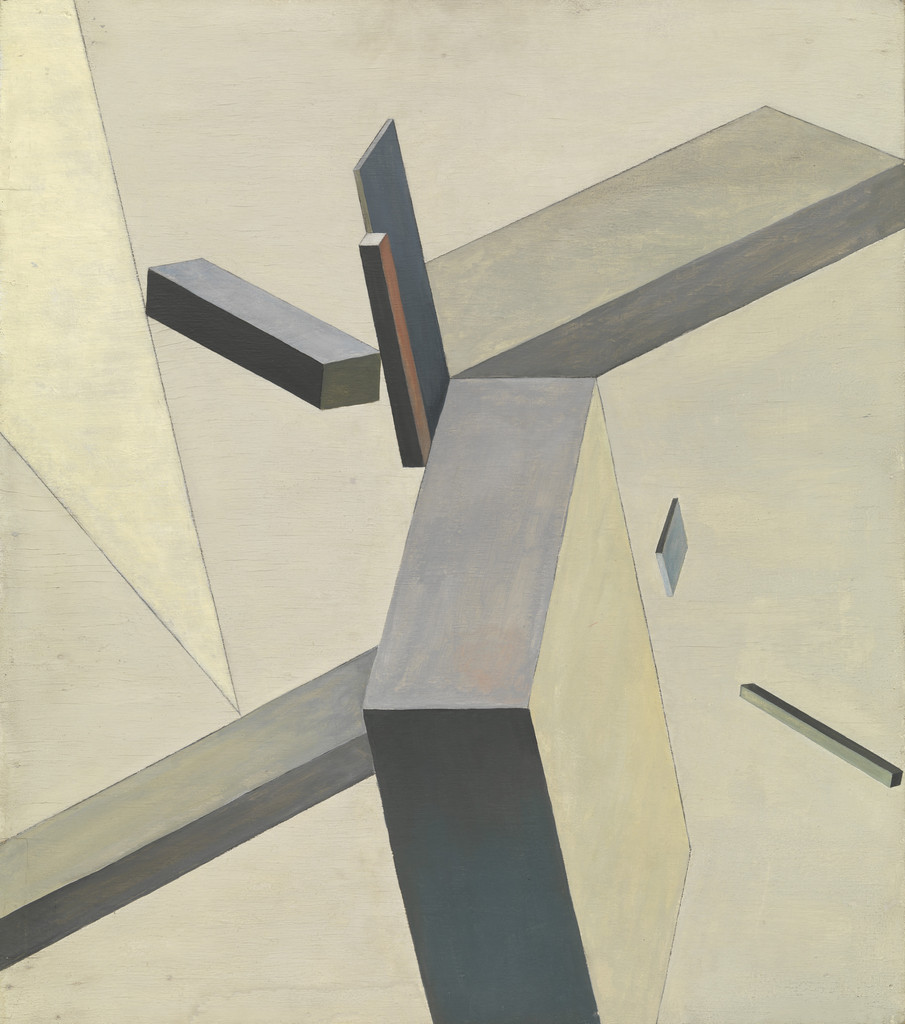
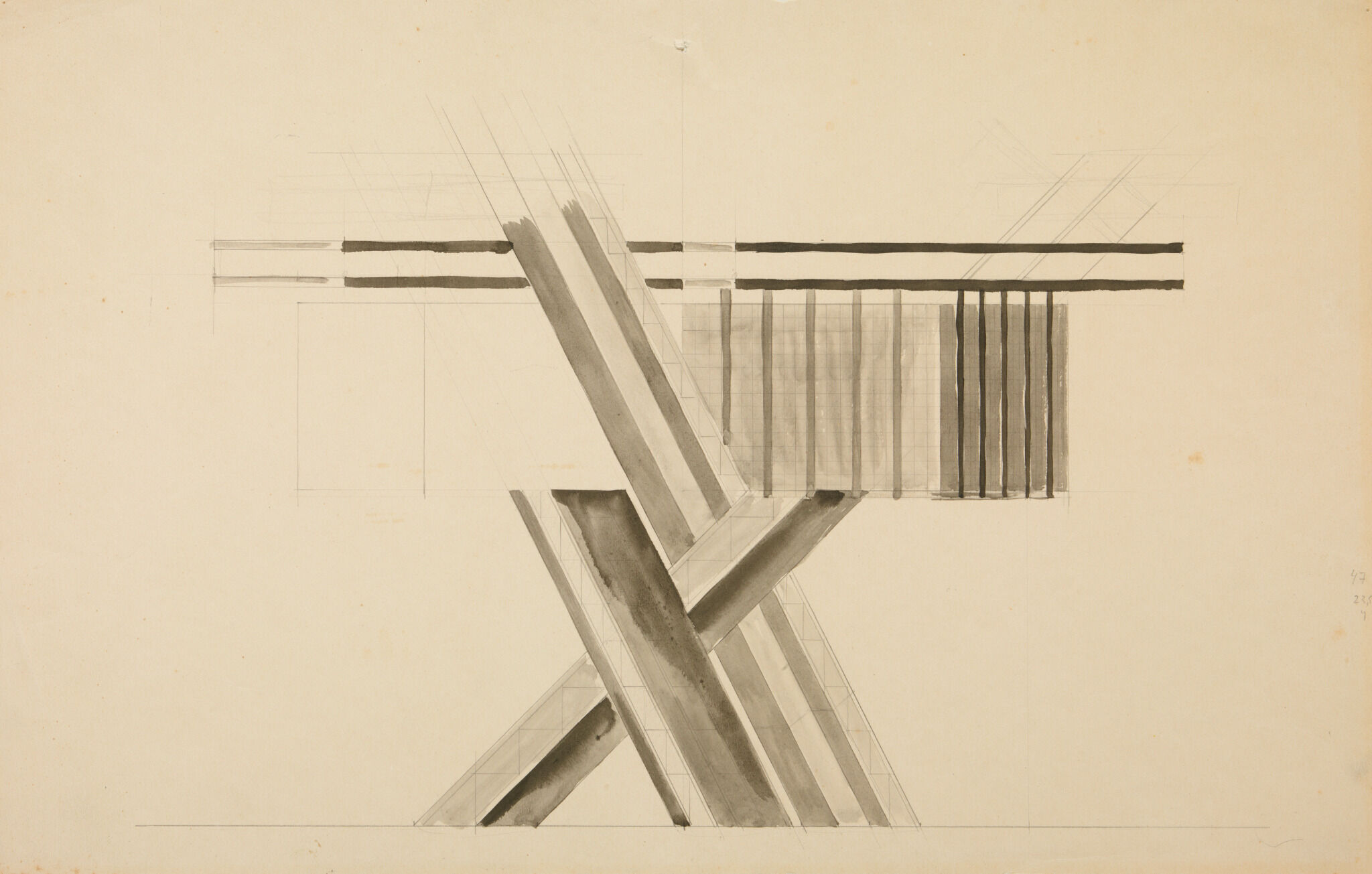
Проект небоскрёба
Can I see it?
Unknown
Where is “Проект небоскрёба” now? Collection: Tretyakov Gallery, Moscow. Unknown.

Moscow, Russia
The owner is known; whether it is on view today is not.
- In this state since
- Source
- The museum
About the work
Museum text in Russian
В 1924 году, находясь в санатории в Швейцарии, Лисицкий начал работу над проектом серии «горизонтальных» небоскребов для Москвы. Их новаторство заключалось в инженерной идее ‒ горизонтальные здания проектировались на опорах высотой около 50 метров. Представляя свои проекты на зарубежных выставках, Лисицкий изобрел для них специальное название-неологизм Wolkenbügel – в буквальном переводе с немецкого «гладильщик облаков», «облачный утюг». Разработав концепцию восьми одинаковых небоскрёбов на пересечении Бульварного кольца с радиальными улицами, он продолжал развивать идею «горизонтального небоскреба». В новом проекте опоры перекрещивались, верхняя часть здания приобретала некую асимметрию. Этот вариант предполагал более сложную и динамичную конструкцию, в которой решались инженерные и эстетические проблемы баланса и равновесия.
Read on
В статье «Серия небоскребов для Москвы. WB1» («Известия АСНОВА. № 1. М., 1926») Лисицкий описывает уже известные небоскребы, называет эту серию WB1, и анонсирует следующую серию WB2, которая должна была состоять из небоскребов на перекрещивающихся опорах.
Tretyakov Gallery
Details
- Accession number
- АРХ ГР-3598
In the catalog
Sources
- Tretyakov Gallery
- Image: Tretyakov Gallery — © State Tretyakov Gallery
In the life of El Lissitzky
The whole life1921–1925
In Berlin: Schwitters, Moholy-Nagy, van Doesburg
In Berlin Lissitzky meets and befriends Kurt Schwitters, László Moholy-Nagy and Theo van Doesburg. Together with Schwitters and van Doesburg he presents the idea of an international artistic movement under the guidelines of constructivism, and works with Schwitters on the issue “Nasci” (“Nature”) of the periodical Merz; he also joins the Dutch group De Stijl.
1923
The Proun Room at the Great Berlin Art Exhibition
In 1923, for the Great Berlin Art Exhibition, Lissitzky transforms a small room (about 3 by 3 by 2.5 m) into a single work of art, the Proun Room, which lets viewers “walk into an image” and become active participants. He violates the unwritten rule of rejecting the commercialization of art by putting price tags on three elements of the room; the price tags, together with his “half-dance” during the demonstration of the room, alienate his friend Theo van Doesburg.
1923–1924
Tuberculosis and a Swiss hospital
In 1923–1924 Lissitzky is severely ill with tuberculosis and stays in a Swiss hospital; at this time he is reported even to have considered suicide. He will die of tuberculosis in 1941.
1925
Return to the USSR
Lissitzky's years in Germany and Switzerland run from 1921 to 1925; it appears that in 1925 he returns to the Soviet Union.
1927
The All-Union Polygraphic Exhibition in Moscow
In 1927 the All-Union Typographic (Polygraphic) Exhibition takes place in Moscow under Lissitzky's direction and to his design; one of its aims is to show the paths humanity has travelled in conveying thought by means of symbolic and graphic signs. He develops new principles of exhibition display, treating an exhibition as a whole organism.
1927
Marriage to Sophie Küppers
In 1927 Lissitzky marries Sophie Küppers, the widow of Paul Küppers of the Kestnergesellschaft. Sophie, born Schneider, is a gallery owner and art historian; her first marriage was to the art historian Paul Erich Küppers.