Ilya RepinUkrainian, 1844–1930
Портрет крестьянина
Can I see it?
Unknown
Where is “Портрет крестьянина” now? Collection: Simferopol Art Museum, Simferopol. Unknown.
Simferopol, Crimea
The owner is known; whether it is on view today is not.
- In this state since
- Source
- The museum
About the painting
Museum text in Russian
Поясное изображение крестьянина с черными волосами, подстриженными под скобку, с седоватыми усаим и бородой. Смотрит на зрителя. Одет в серый зипун. В правой руке посошок и цветной платок, левая заложена за борт зипуна. Фон серый.
Simferopol Art Museum
Details
- Accession number
- Ж-169
In the catalog
Sources
- The State Catalogue of the Museum Fund of Russia
- Image: Simferopol Art Museum — © Симферопольский художественный музей · Госкаталог музейного фонда РФ
In the life of Ilya Repin
The whole life1887
Razvod s Veroy Alekseyevnoy
При разводе поделили детей: старшие остались у отца, младшие — у матери. Стасов беспокоился о душевном самочувствии друга.
1887
Garshin’s portrait at the 15th Wanderers’ exhibition
From their first meeting Repin wanted to paint the writer, struck by “Garshin’s eyes, full of serious bashfulness”; Garshin would enter the studio noiselessly, like a bodiless angel. Shown in 1887, the portrait split the reviewers — some thought Repin had painted Garshin mad, others had never seen finer eyes and a brighter brow; today it is in the United States, in the Metropolitan Museum.
1888
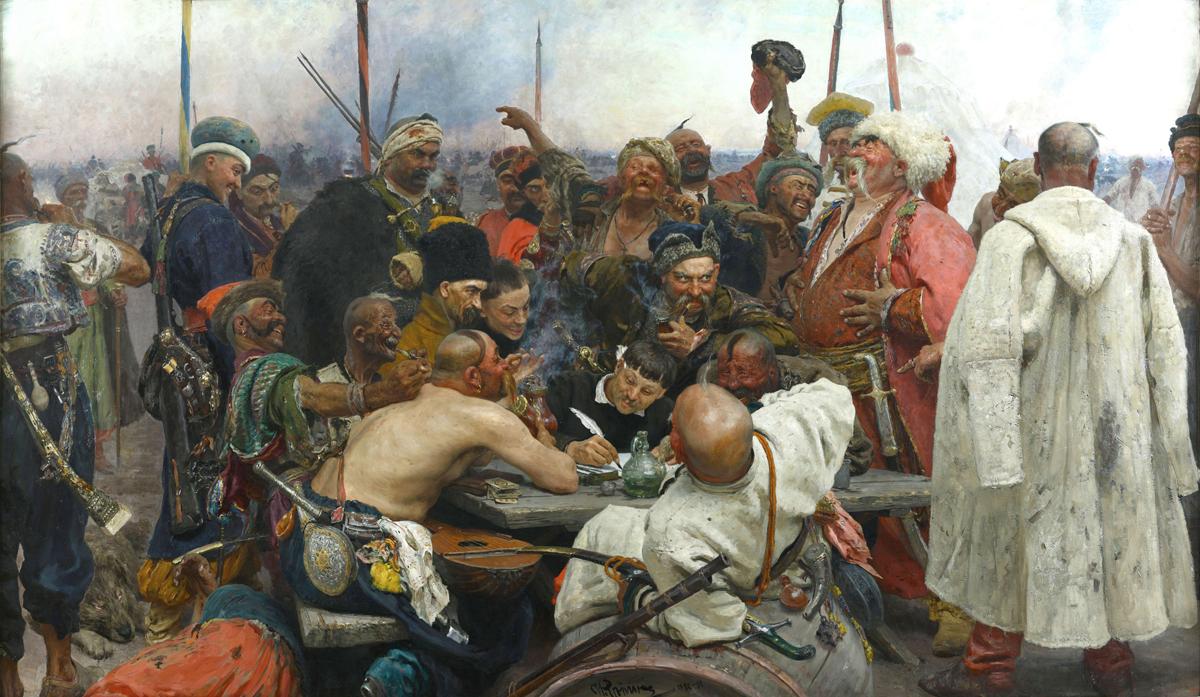
Second trip for the “Zaporozhians” — with his son Yuri
Eight years after the first trip Repin again set off for Little Russia, this time with his son Yuri, drawing everything the canvas might need — huts, utensils, costumes, weapons. He called his state “a creative binge” and the future characters “a merry folk”.
1890
Meets Natalia Nordman
He met Natalia Nordman (1863–1914), the daughter of an admiral, a writer, feminist and campaigner for better working conditions who advocated a simple life close to nature; she became his common-law wife.
1891
Leaves the Wanderers
In 1891 he resigned from the Wanderers in protest against a new statute restricting the rights of young artists; he had already left the board in 1887, and he rejoined the society only in the late 1890s.