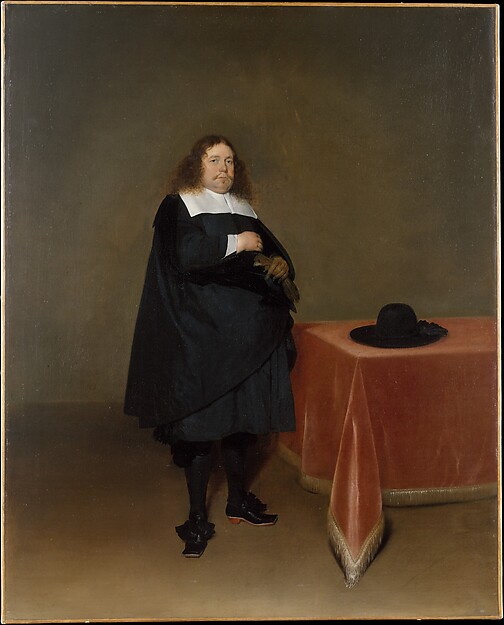
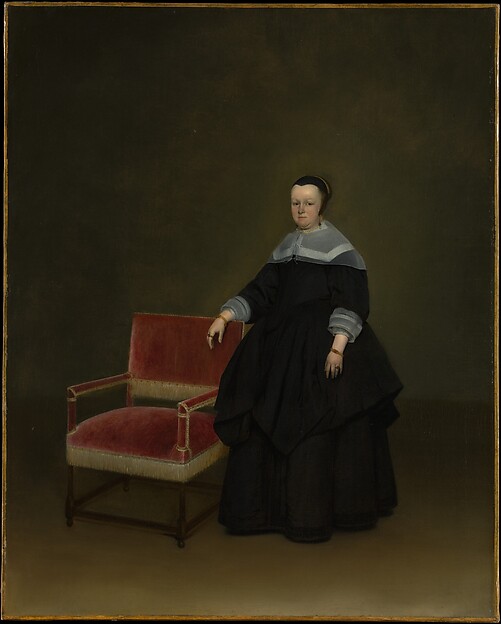
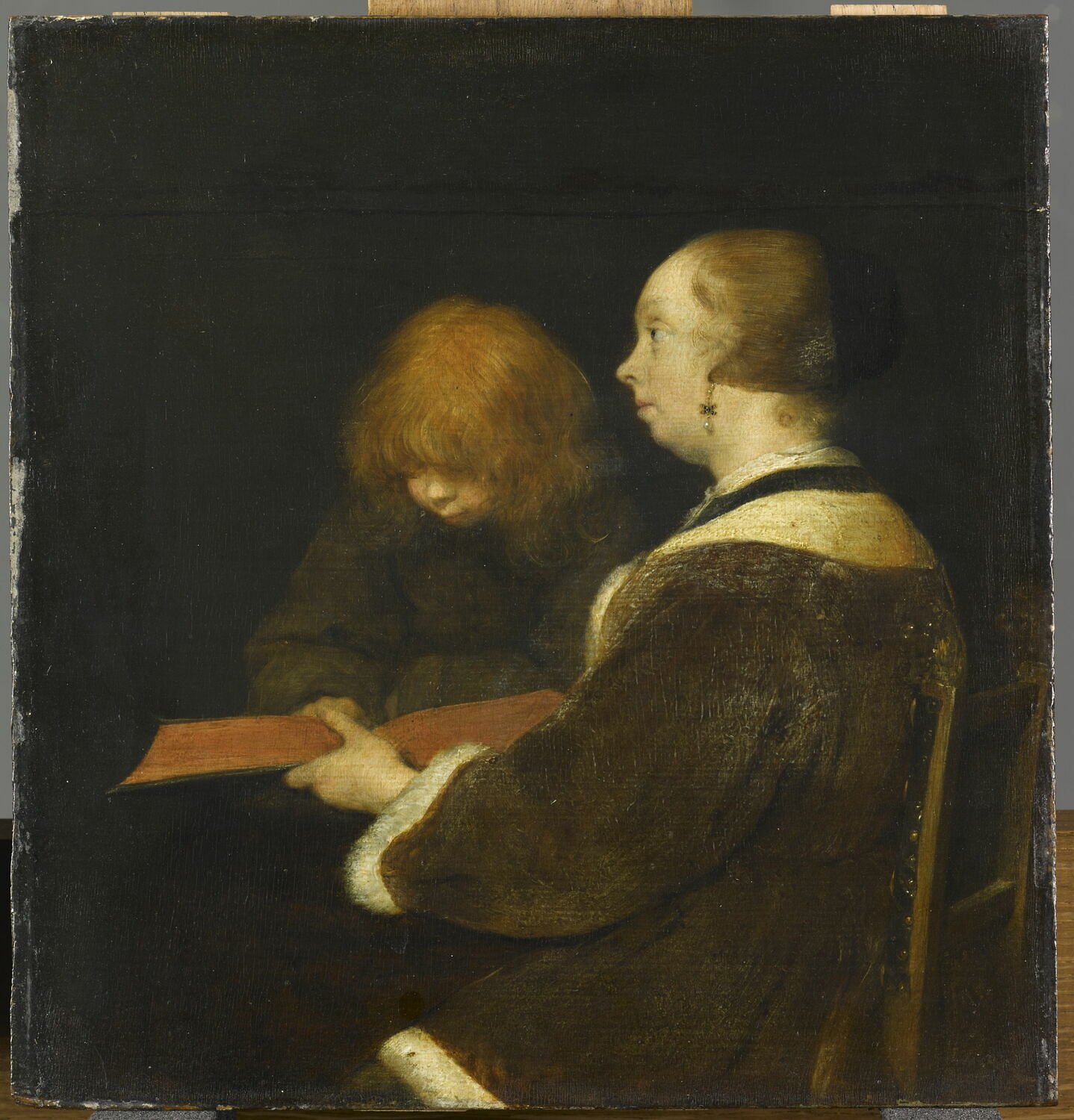
Gerard ter BorchDutch, 1617–1681
Портрет дамы
May one see it?
Unknown

Moscow, Russia
The owner is known; whether it is on view today is not.
- Source
- The museum
Particulars
- Accession number
- Ж-2968
In the catalog
Sources
- Pushkin State Museum of Fine Arts
- Image: Pushkin State Museum of Fine Arts — © Pushkin State Museum of Fine Arts
Meanwhile, in the life of Gerard ter Borch
The whole life1648
Turns to interior scenes
Whereas earlier he painted mainly scenes of peasant and military life, from 1648 he gives more attention to domestic interiors with few figures: gallant couples, ladies reading a letter or making music.
1648
Returns to Holland
In the same year he returns to Holland and lives by turns in Amsterdam, The Hague, Haarlem, Kampen and Zwolle; in a short time he gains the reputation of Europe’s foremost master of genre painting. One of his great patrons is the Amsterdam burgomaster Andries de Graeff.
15 May 1648
Present at the ratification of the Peace of Münster
In the service of Count Peñaranda, he is present at the conclusion of the Peace of Münster between Holland and Spain on 15 May 1648 and records the event in his celebrated little picture, painted on copper, “The Ratification of the Treaty of Münster” (De bezwering van de vrede van Münster).
14 February 1654
Marries and settles in Deventer
He marries Gertruid Matthijsen and settles in Deventer; in the 1650s he concentrates on genre painting, showing people in ordinary everyday surroundings and sometimes in mysterious or amorous relationships.
1655
Granted citizenship of Deventer
In 1655, a year after settling there, he is granted citizenship of Deventer.
not after 1655
Caspar Netscher becomes his pupil
Caspar Netscher studies under ter Borch in 1655 at the latest. Together with his master he makes nine of the ten portraits of the Craeyvanger family.