Théodore RousseauFrench, 1812–1867
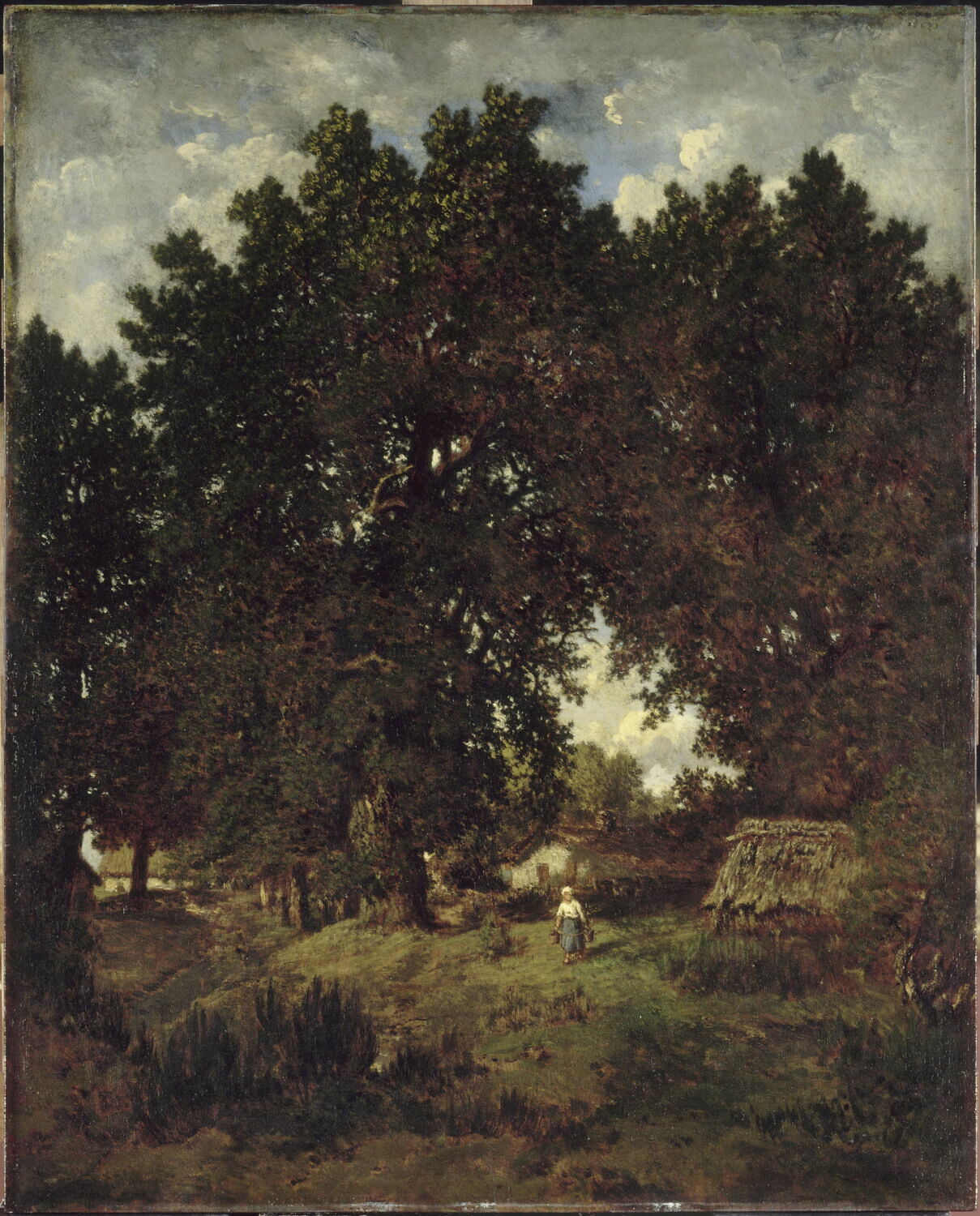
Пейзаж. (Перед грозой)
Can I see it?
Unknown
Where is “Пейзаж. (Перед грозой)” now? Collection: Penza Savitsky Art Gallery, Penza. Unknown.
Penza, Russia
The owner is known; whether it is on view today is not.
- In this state since
- Source
- The museum
About the painting
Museum text in Russian
Летний пейзаж. На переднем плане горизонтальная полоса водного пространства с растительностью у дальнего берега и лодкой, в которой, согнувшись, спиной к зрителю, стоит рыбак в белой рубашке с удочкой в руках. На втором плане освещенная слабым светом плоская равнина со светлой тропинкой, уходящей вглубь справа налево. На дальнем плане в центре на фоне темной группы высоких деревьев белое строение с красно-коричневой кровлей, по сторонам от которого низкая ограда, справа (за оградой) сарай. Вдали слева и справа темные силуэты деревьев и тающий в дымке горизонт. Небо высокое, голубовато-серое, с темными облаками (справа вверху большое темное облако) и светлыми облачками над горизонтом.
Penza Savitsky Art Gallery
Details
- Accession number
- 65-ж
In the catalog
Sources
- The State Catalogue of the Museum Fund of Russia
- Image: Penza Savitsky Art Gallery — © Пензенская областная картинная галерея имени К. А. Савицкого · Госкаталог музейного фонда РФ
In the life of Théodore Rousseau
The whole life1836–1849
“Le grand refusé”
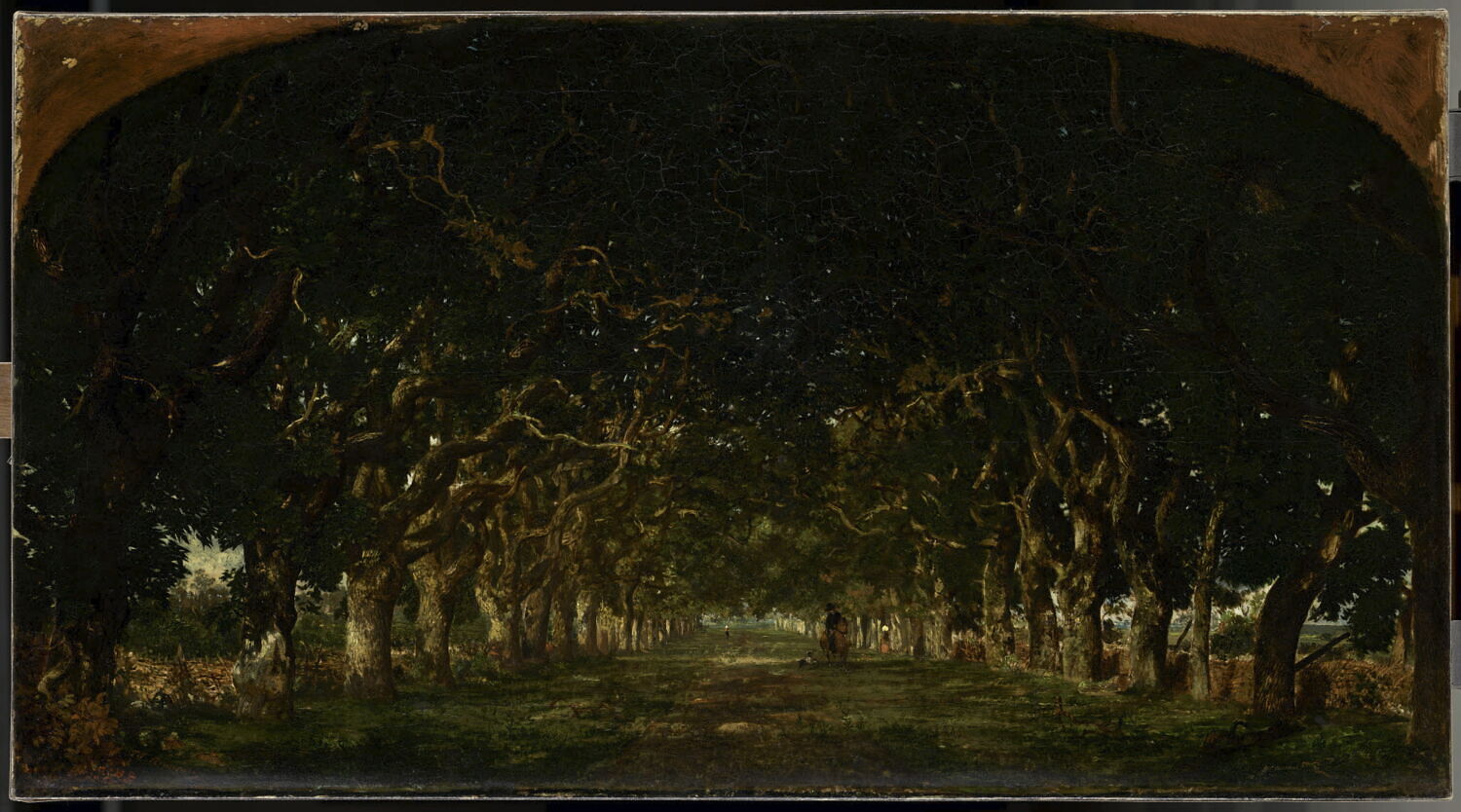
After 1841 Rousseau stopped sending work to the Salon until 1849; dubbed “le grand refusé”, he became known through the writings of his friend, the critic Théophile Thoré, while his father, who had at first regretted his son's forsaking business, sided with him in all his conflicts with the Salon. In these years of “artistic exile” Rousseau painted some of his best pictures: “The Chestnut Avenue”, “The Marsh in the Landes” (now in the Louvre) and “Hoar-Frost”.
1848
Settles in Barbizon for good
Until then Rousseau had lived at Barbizon only occasionally, but in 1848 he settled in the forest village (with his wife, by some accounts) and spent most of his remaining days in its vicinity. His neighbour, the landscape painter Jules Dupré, recalled how hard Rousseau found it to know when a picture was finished, and how he would sometimes carry off a canvas on which his friend had laboured too long.
1849
Returns to the Salon
In 1849 Rousseau sent work to the Salon again, and all three of his submissions were accepted. He could now obtain fair sums for his pictures, though only about a tenth of their value thirty years after his death, and his admirers grew in number.
1851
Exhibits “The Edge of the Forest”
In 1851, after the reorganization of the Salon of 1848, Rousseau exhibited his masterpiece, “The Edge of the Forest” (now in the Louvre). The authorities still ignored him: that year the Legion of Honour went to Narcisse Diaz, whom Rousseau had taught to paint trees, while he himself received the Cross only soon afterwards.