 Nicholas RoerichRussian, 1874–1947
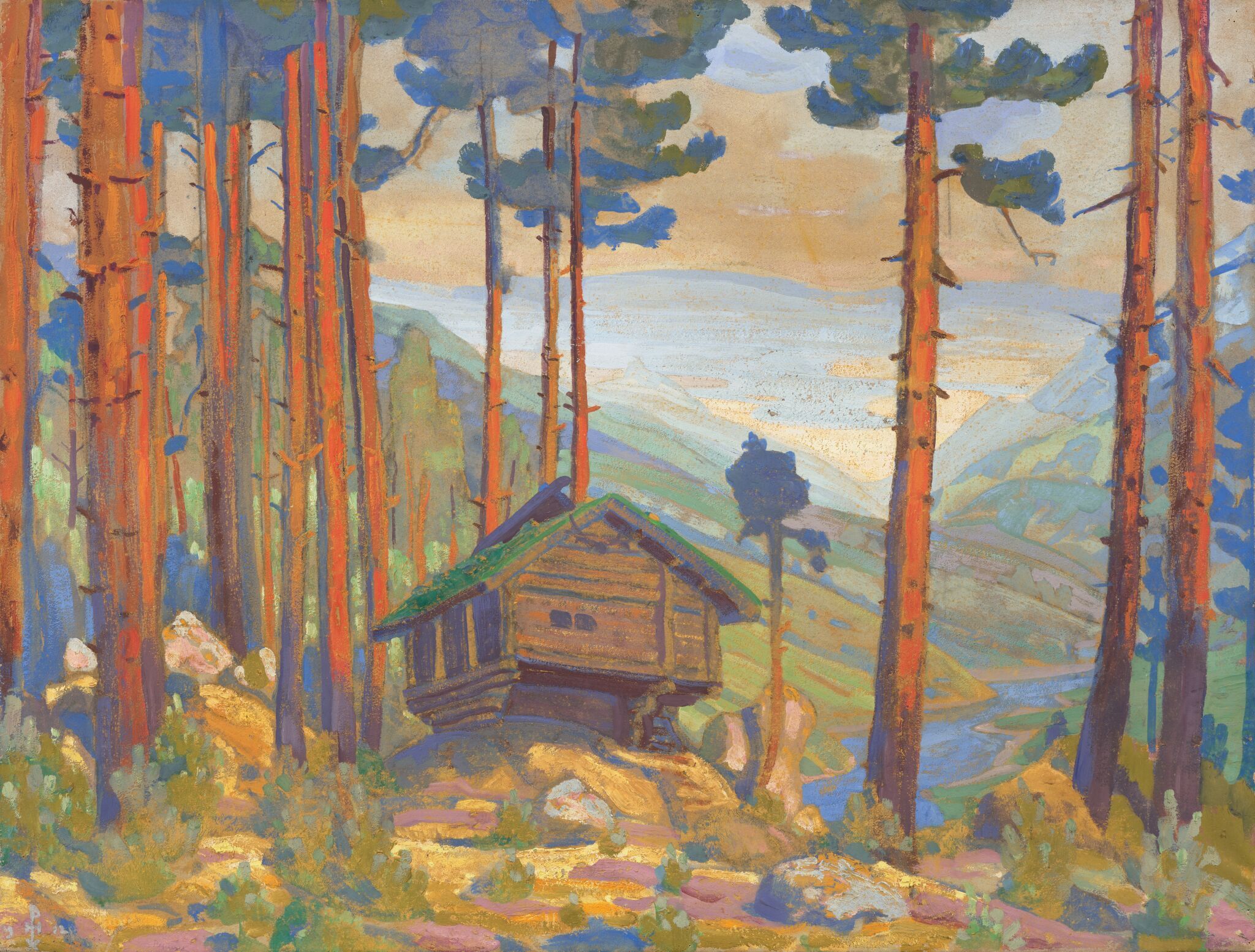
Песнь Сольвейг
Can I see it?
Unknown
Where is “Песнь Сольвейг” now? Collection: Tretyakov Gallery, Moscow. Unknown.

Moscow, Russia
The owner is known; whether it is on view today is not.
- Source
- The museum
About the painting
Museum text in Russian
Драма Генрика Ибсена «Пер Гюнт» и музыка Эдварда Грига давно и неразрывно соединились вместе. Актеры Художественного театра, которых воодушевило создание спектакля под руководством К.С. Станиславского, даже побывали на родине Пер Гюнта, а Рерих ехать отказался, заметив, что отправится только по завершении декораций. Вернувшиеся из путешествия актеры не уставали рассказывать художнику, как он оказался верен и точен в своей работе.
Эскиз, на котором изображена скромная избушка, решен в мягких пастельных тонах. В нем есть что-то от старинного гобелена: нерезкие очертания холмов, переходящих в голубые горы, суровое нагромождение валунов на переднем плане и, как мощные струны гигантской арфы, натянутые между небом и землей, высокие упругие и упрямые сосны, цепляющиеся корнями за каменистую почву.
Read on
При всем немногословии этого уголка земли, при том, что главной героини драмы – нежной и верной девушки – нет на полотне, здесь царит дух красоты, гармонии и светлой грусти ожидания, в котором Сольвейг провела всю жизнь.
Щемящая грусть небольшого эскиза несет чувства вроде бы не свойственные энергичному, яркому и, подчас, резкому Николаю Рериху. Но в этом и сила искусства символизма: способность к перевоплощению, умению наделить богатыми чувствами небольшой холст, в котором проницательный зритель способен увидеть декорации вечной жизненной драмы.
Tretyakov Gallery
Details
- Accession number
- Ж-378
In the catalog
Sources
- Tretyakov Gallery
- Image: Tretyakov Gallery — © State Tretyakov Gallery
In the life of Nicholas Roerich
The whole life1909–1913
Diaghilev's Russian Seasons: sets and a libretto
In Paris, Borodin's “Polovtsian Dances” from “Prince Igor” and Rimsky-Korsakov's “The Maid of Pskov” are staged in Roerich's designs; for the ballet “The Rite of Spring”, to music by Stravinsky, he creates the costumes and sets and also writes the libretto.
1910
Becomes head of “The World of Art”
From 1910 Roerich heads the artistic association “The World of Art”, whose members include Benois, Bakst, Grabar, Serov, Petrov-Vodkin, Kustodiev, Ostroumova-Lebedeva, Serebriakova and others.
1910
Novgorod: excavations and the defence of the Saviour at Nereditsa
In summer 1910 Roerich carries out the first archaeological excavations in Novgorod together with Nikolai Makarenko, and the same year he campaigns for the fate of the Church of the Saviour at Nereditsa and the Rurik Gorodishche; he is also troubled by crude restorations of churches in Yaroslavl, Pskov and Kostroma.
1913
Plans for an Indian expedition with Golubev
Roerich has been friends and in correspondence with the Indologist Viktor Golubev since 1906; in 1913 they discuss a joint expedition to India to study what Russian and Indian cultures have in common, and a museum of Indian culture in St Petersburg. He also works with Agvan Dorzhiev and other Russian Buddhists, and between 1909 and 1915 takes part in building and decorating the St Petersburg Buddhist temple.