 Henri Cartier-BressonFrench, 1908–2004
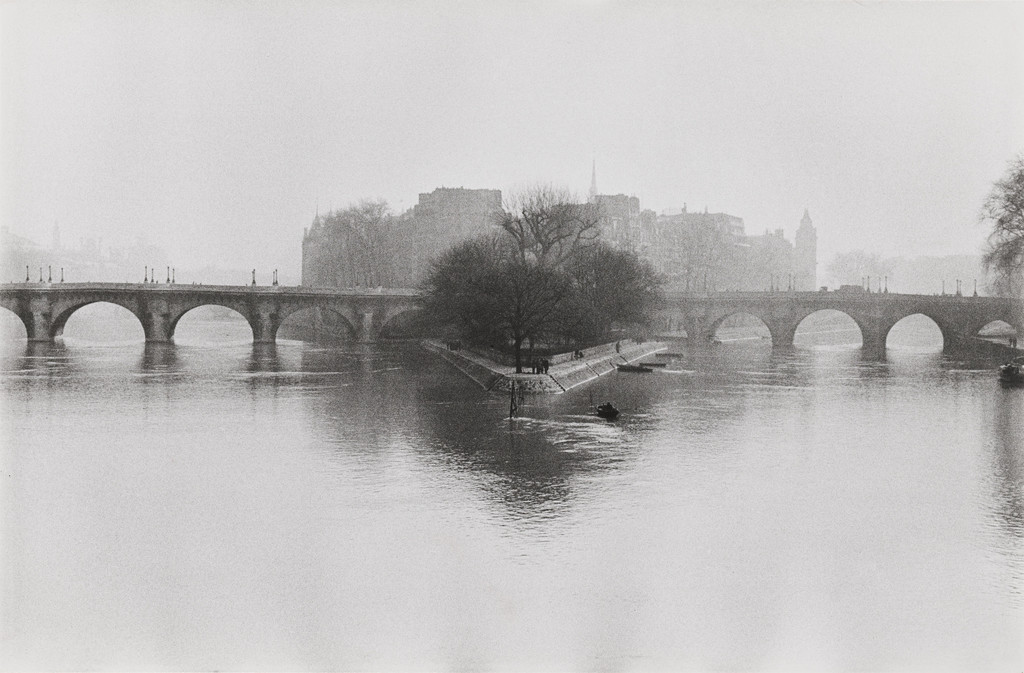
Paris
Can I see it?
Not on view at present
Where is “Paris” now? Collection: The Museum of Modern Art, New York. Not on view at present. Checked September 22, 2026.

New York, United States
It belongs to the collection, but is not on display at present.
- Checked
- Source
- The museum
Details
- Accession number
- 137.2009
In the catalog
Sources
- The Museum of Modern Art
- Image: The Museum of Modern Art — © the artist or rights holder
In the life of Henri Cartier-Bresson
The whole life1948
Reporting Gandhi’s funeral
He achieved international recognition for his coverage of Gandhi’s funeral in India in 1948.
1948–1949
China at a turning point: the fall of the Kuomintang
He covered the last stage of the Chinese Civil War — the last six months of the Kuomintang administration and the first six months of the People’s Republic; in Beijing, as the communists liberated it, he photographed the last surviving imperial eunuchs, in Shanghai he often worked with the photojournalist Sam Tata, whom he had befriended in Bombay, and from China he went on to the Dutch East Indies to document independence from the Dutch.
1950
The last days of Ramana Maharshi, and Sri Aurobindo
In 1950 he travelled in South India: in Tiruvannamalai he photographed the last moments of Ramana Maharshi and his ashram, and a few days later he visited and photographed Sri Aurobindo, the Mother and the Sri Aurobindo Ashram in Pondicherry.
1952
The book “The Decisive Moment”
His book “Images à la sauvette” was published, titled “The Decisive Moment” in English: 126 photographs from East and West, a cover drawn by Henri Matisse and a 4,500-word philosophical preface taking as its keynote Cardinal de Retz: “There is nothing in this world that does not have a decisive moment”.