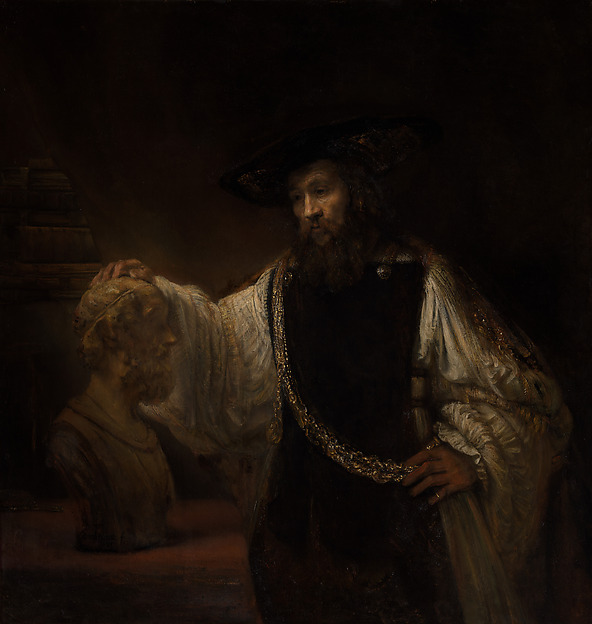
George CatlinAmerican, 1796–1872
Osceola Nick-a-no-chee, a Boy
Can I see it?
Unknown
Where is “Osceola Nick-a-no-chee, a Boy” now? Collection: Smithsonian American Art Museum, Washington, D.C. Unknown.

Washington, D.C., United States
The owner is known; whether it is on view today is not.
- In this state since
- Source
- The museum
About the painting
George Catlin’s Indian Gallery attracted attention in New York and other eastern cities, but not enough paying customers to support the artist and his family. In November 1839, Catlin sailed for England in hopes of generating increased receipts and perhaps selling the Indian Gallery to a wealthy aristocrat. Nick-a-no-chee, a Seminole who was thought to be a nephew of the great Osceola, was a ready subject of sympathy in Britain, where the Indian policies of the United States were roundly condemned. He visited the Indian Gallery on a number of occasions, sometimes clothed in Indian garments from Catlin’s collection.
Smithsonian American Art Museum
Details
- Accession number
- 1985.66.386,307 1/2
What it shows
In the catalog
Sources
- Smithsonian American Art Museum
- Image: Smithsonian American Art Museum — CC0
In the life of George Catlin
The whole life1838
The Indian Gallery and public lectures
Back in the East, he gathers his paintings and Native artifacts into his own Indian Gallery and begins giving lectures on life among the Indians, touring Pittsburgh, Cincinnati and New York with the show. The paintings hang salon-style, in rows one above another, and visitors identify them by catalogue numbers.
May 1838
Congress declines to buy the Indian Gallery
The U.S. Congress rebuffs his offer to sell the collection: Catlin wanted his life’s work kept intact, but his later efforts to persuade officials in Washington failed as well.
after 1839
Gallery shows in London, Brussels and Paris
As a showman and entrepreneur, he draws public interest to the Indian Gallery with exhibitions in London, Brussels and Paris (including the Louvre). Charles Baudelaire praised him for bringing back to life the nobility and manliness of the chiefs.
November 1839
Moves his family to England
Finding no response in America to his view of Native culture, and hoping for a more receptive audience after Congress turned him down, he takes his family and collection across the Atlantic to England.
1841
Book on the manners, customs and condition of the Indians
In London he publishes Manners, Customs, and Condition of the North American Indians, in two volumes with about 300 engravings; like his other books on Native culture, it aims to prove to society that Native Americans were not the primitive savages they were then thought to be.