Otto DixGerman, 1891–1969
Old Woman
Can I see it?
Not on view at present
Where is “Old Woman” now? Collection: Art Institute of Chicago, Chicago. Not on view at present. Checked September 29, 2026.

Chicago, United States
It belongs to the collection, but is not on display at present.
- Checked
- In this state since
- Source
- The museum
About the work
After serving in World War I, where he mastered the machine-gun, Dix began making art that set out to reveal society’s immorality and ugly truths. In this watercolor, an old prostitute’s wrinkled exterior and toothless, puckered mouth remind the viewer of the inevitability of death while playing on our vulnerability to vanity, greed, and lust.
Art Institute of ChicagoCC BY 4.0
Details
- Accession number
- 2013.929
In the catalog
Sources
- Art Institute of Chicago
- Image: Art Institute of Chicago — © the artist or rights holder
In the life of Otto Dix
The whole life1920s
A ruthless chronicle of Weimar Germany
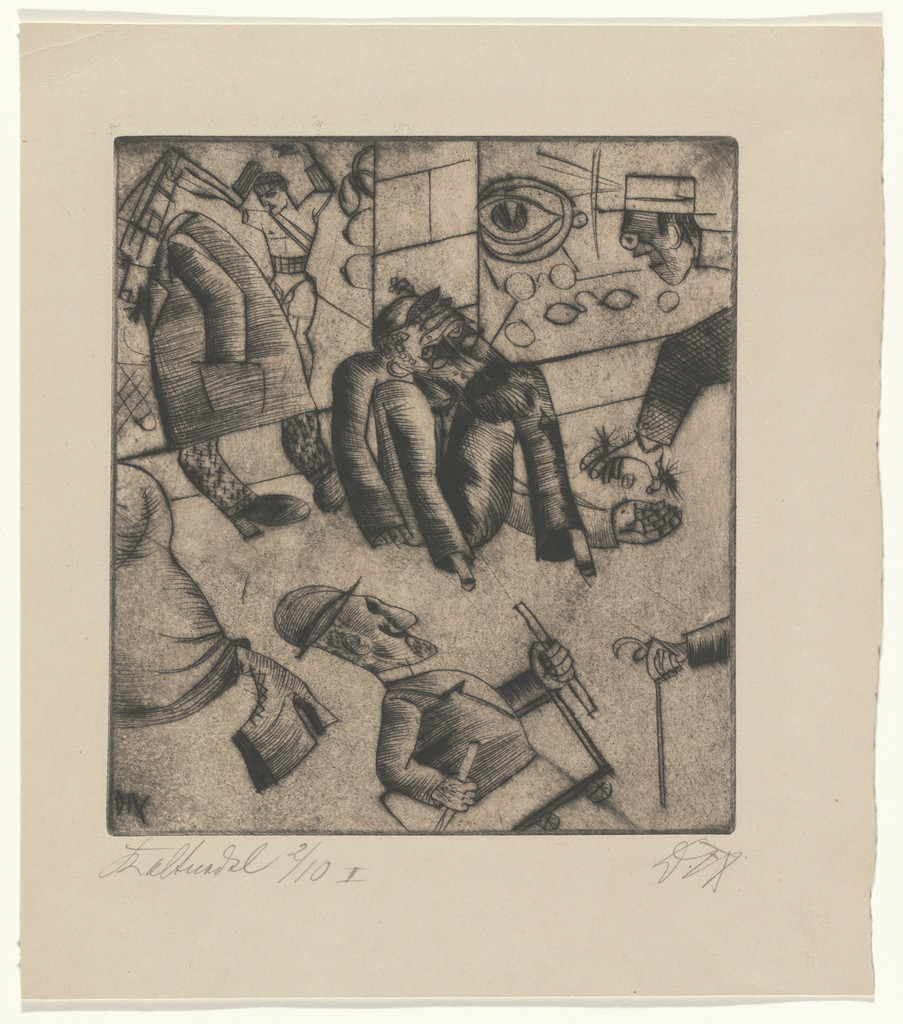
Like Grosz, Dix is extremely critical of contemporary German society, unsparingly depicting prostitution, violence, old age and death and often dwelling on Lustmord, or sexualized murder. His legless and disfigured veterans, a common sight on Berlin's streets in the 1920s, reveal the ugly side of war and the forgotten status of these men in German society.
1921
Meeting Martha Koch
Dix meets the metalsmith Martha Koch; they will marry in 1923 and have three children, and she becomes a frequent subject of his portraits.
1 February 1923
Married: Martha Dix
14 June 1923
Daughter born: Nelly Dix
1925
The Neue Sachlichkeit exhibition in Mannheim
Dix contributes to the Neue Sachlichkeit exhibition in Mannheim, which also features works by George Grosz, Max Beckmann, Heinrich Maria Davringhausen, Karl Hubbuch, Rudolf Schlichter, Georg Scholz and many others.
1925
The Trench scandal: Adenauer cancels the purchase
The Trench causes such a furor that the Wallraf-Richartz Museum hides the painting behind a curtain; in 1925 the then-mayor of Cologne, Konrad Adenauer, cancels the purchase of the painting and forces the museum's director to resign.
![Young Family (Lovers) (Junge Familie [Liebespaar]), also known under the title "Homunkulus", Otto Dix, 1918](https://api.nga.gov/iiif/df009930-91ff-4d00-85c7-6a52083047ce/full/!2400,2400/0/default.jpg)