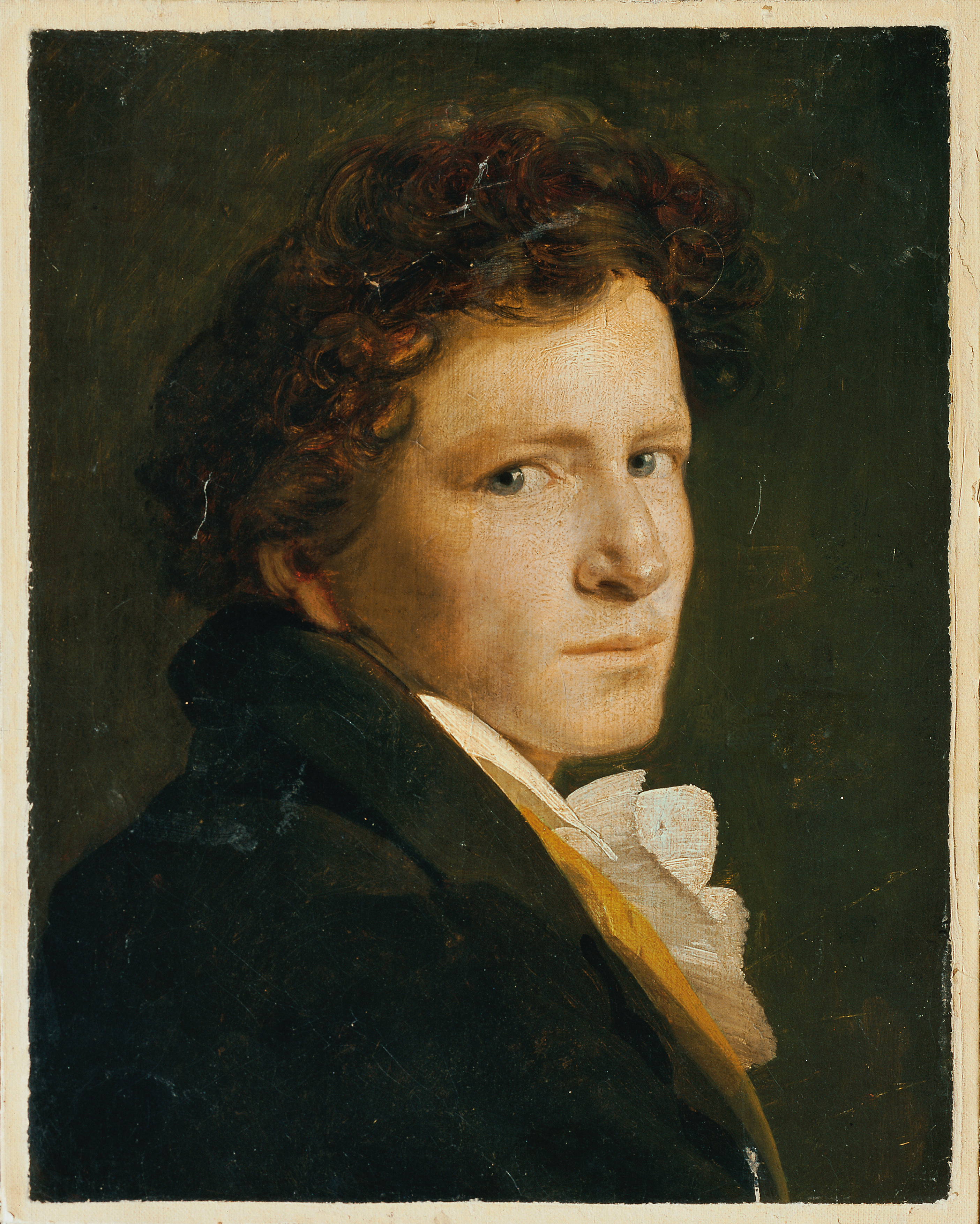
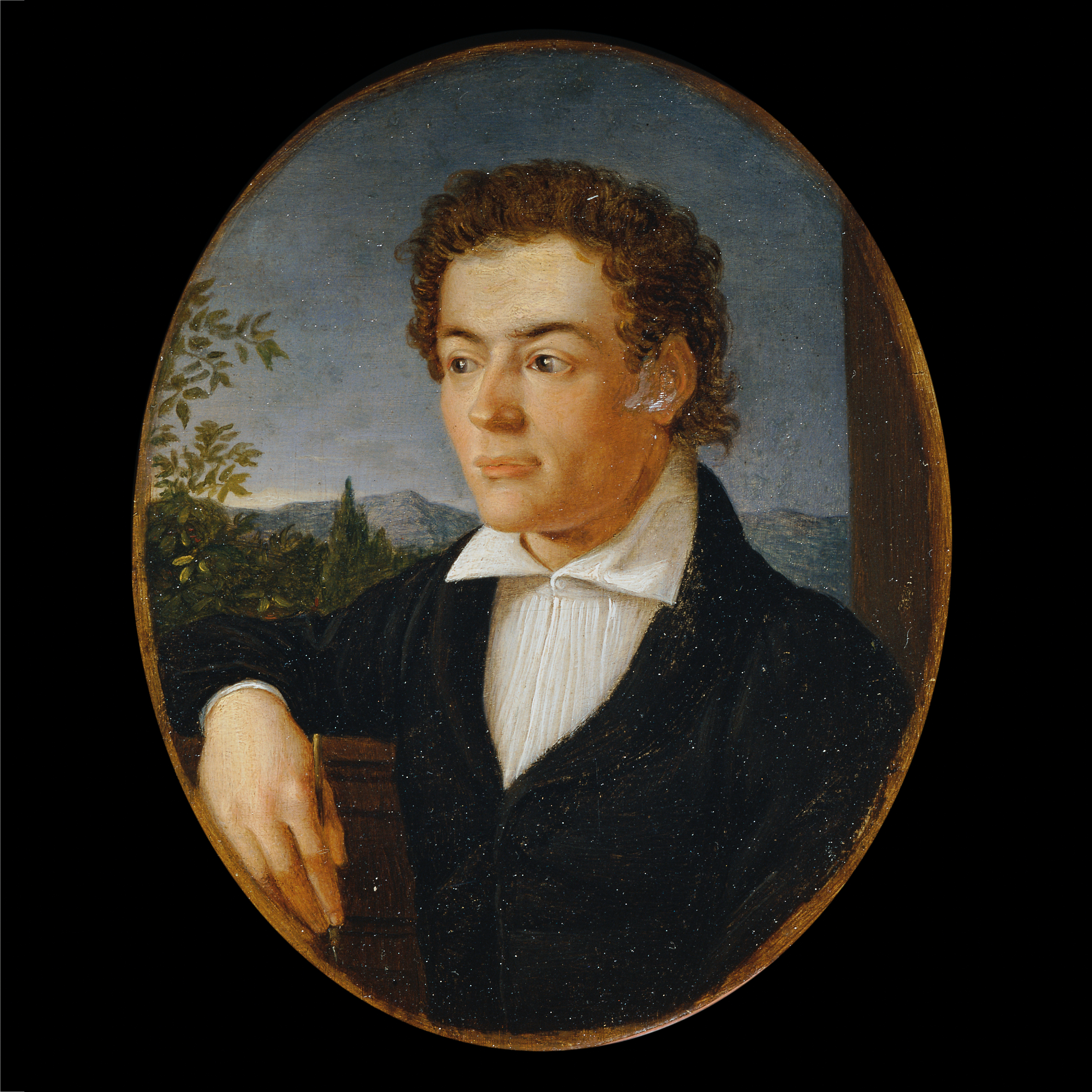
Philipp Otto RungeGerman, 1777–1810
Oak Leaves
May one see it?
Not receiving at present

Cambridge, United States
It belongs to the collection, but is not on display at present.
- Checked
- In this state since
- Source
- The museum
Particulars
- Accession number
- 1985.53
In the catalog
Sources
- Harvard Art Museums
- Image: Harvard Art Museums — © President and Fellows of Harvard College
Meanwhile, in the life of Philipp Otto Runge
The whole life1798–1801
Studies at the Royal Academy in Copenhagen
Having decided to become an artist, Runge studies at the Copenhagen Academy under Jens Juel and Nicolai Abildgaard with the financial support of his brother Daniel; Caspar David Friedrich had studied there shortly before him. He draws from the nude and studies anatomy, geometry and perspective. Some accounts date the start of his studies to 1799.
1801–1804
The Dresden Academy and the circle of Romantics
In 1801 Runge moves to Dresden and studies at the Academy under Anton Graff until 1804. He grows close to the “Dresden Romantics” — Caspar David Friedrich, Johann Gottfried Quistorp and Ludwig Tieck; Tieck introduces him to the mystical treatises of Jakob Böhme and to the ideas of Novalis.
3 April 1804
Married: Pauline Runge
1807
Arrives at the idea of the color sphere
In 1807 Runge arrives at the concept of the color sphere, expanding the hue circle into a sphere with white and black as its opposite poles, as his letter to Goethe of 21 November 1807 shows. He hoped that his disk color-mixing experiments, dated 1807 or by other accounts 1808, would give the sphere scientific support.
1810
The “Color Sphere” (Farben-Kugel) is published
Early in 1810 the treatise “Color Sphere” (Farben-Kugel) is published in Hamburg: a description of the sphere, an illustrated essay on the rules of color harmony and an essay on color in nature by Runge's friend Henrik Steffens. Goethe, who had read the manuscript before publication, mentions it in his Theory of Colors (1810) as successfully concluding efforts of this kind.
2 December 1810
Death in Hamburg
On 2 December 1810 Runge dies in Hamburg of consumption (tuberculosis) at the age of thirty-three, his life's work spanning little more than ten years. His youngest child is born the next day and is given his father's name.