 James Abbott McNeill WhistlerAmerican, 1834–1903
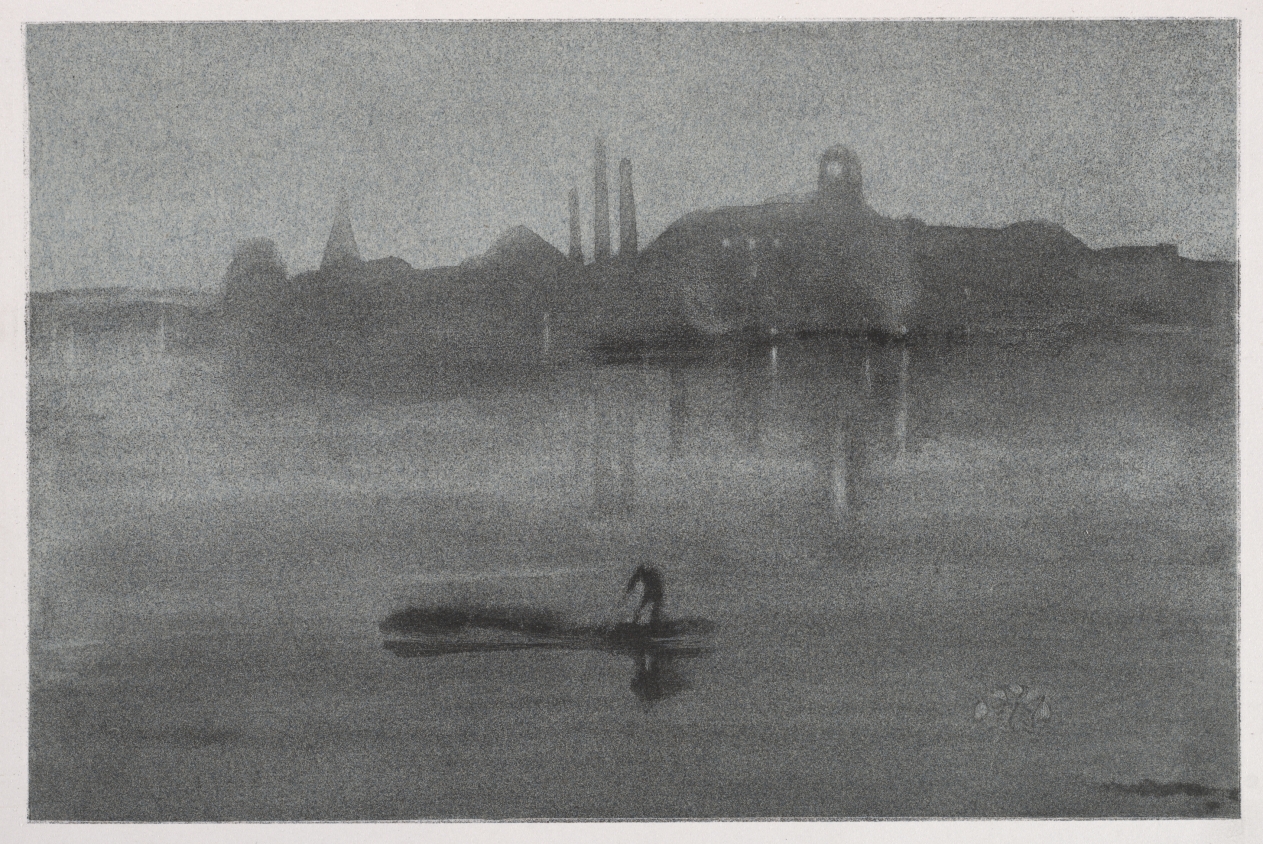
Nocturne
Can I see it?
Not on view at present
Where is “Nocturne” now? Collection: The Cleveland Museum of Art, Cleveland. Not on view at present. Checked September 29, 2026.

Cleveland, United States
It belongs to the collection, but is not on display at present.
- Checked
- In this state since
- Source
- The museum
About the work
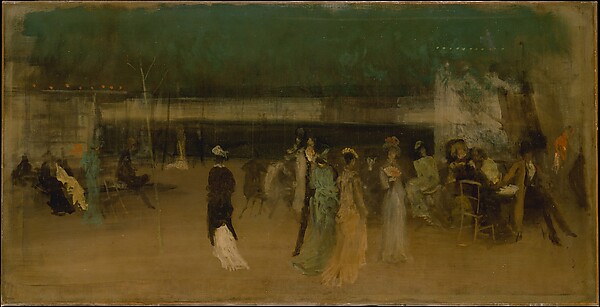
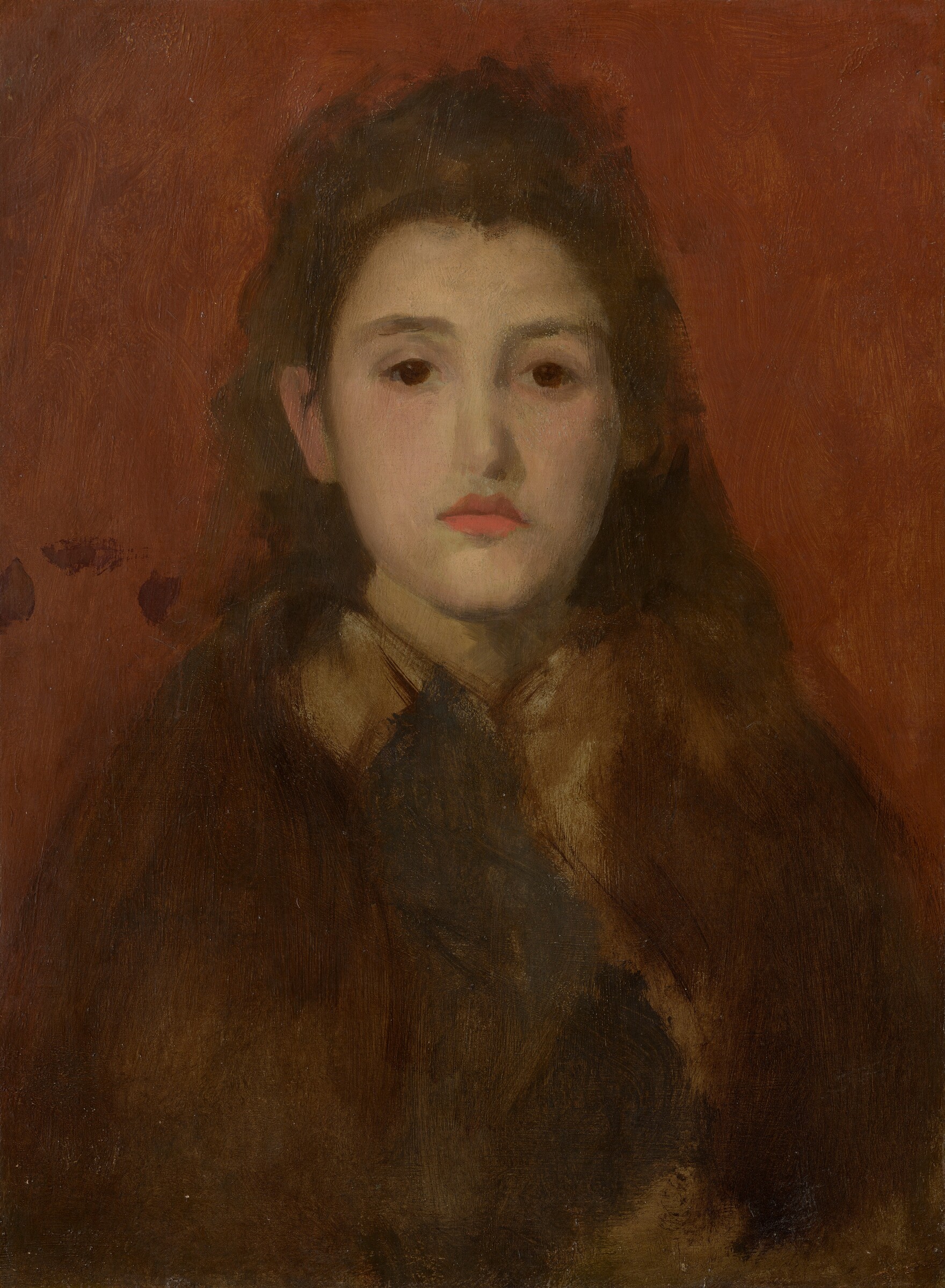
Whistler was the first to borrow musical terms for the titles of his works of art. In 1872, he defined painting as "the exact correlative of music, as vague, as purely emotional, as released from all functions of representation." Whistler’s use of musical terminology was meant to convey the supremacy of color, line, and form over subject matter in his art. The title Nocturne was suggested by the artist’s patron, Frederick Leyland, an enthusiastic amateur pianist who was especially fond of Chopin, whose nocturnes were regarded as the epitome of Romantic mood music—particularly appropriate for Whistler’s moonlit marine views.
The Cleveland Museum of Art
Details
- Accession number
- 1941.89
In the catalog
Sources
- The Cleveland Museum of Art
- Image: The Cleveland Museum of Art — Museum open access
In the life of James Abbott McNeill Whistler
The whole life1877
Libel Suit Against Ruskin
In 1877 Whistler sued the critic John Ruskin, who had condemned his "Nocturne in Black and Gold: The Falling Rocket," demanding 1,000 pounds in damages. Because of the criticism, his works fell out of favour.
25 – 26 November 1878
The Trial of Whistler v. Ruskin
On 25–26 November 1878 the suit was heard in the High Court. The jury returned a verdict in Whistler's favour but awarded damages of one farthing, and costs were split between the parties.
8 May 1879
Bankruptcy
Legal costs and debts from the construction of the White House on Tite Street forced Whistler to declare bankruptcy on 8 May 1879; his collection, possessions, and house went to auction.
September 1879
Trip to Venice
After the trial, Whistler accepted a commission for twelve etchings and arrived in Venice in September 1879. The three-month trip stretched to fourteen months: over 50 etchings, nocturnes, and more than 100 pastels.