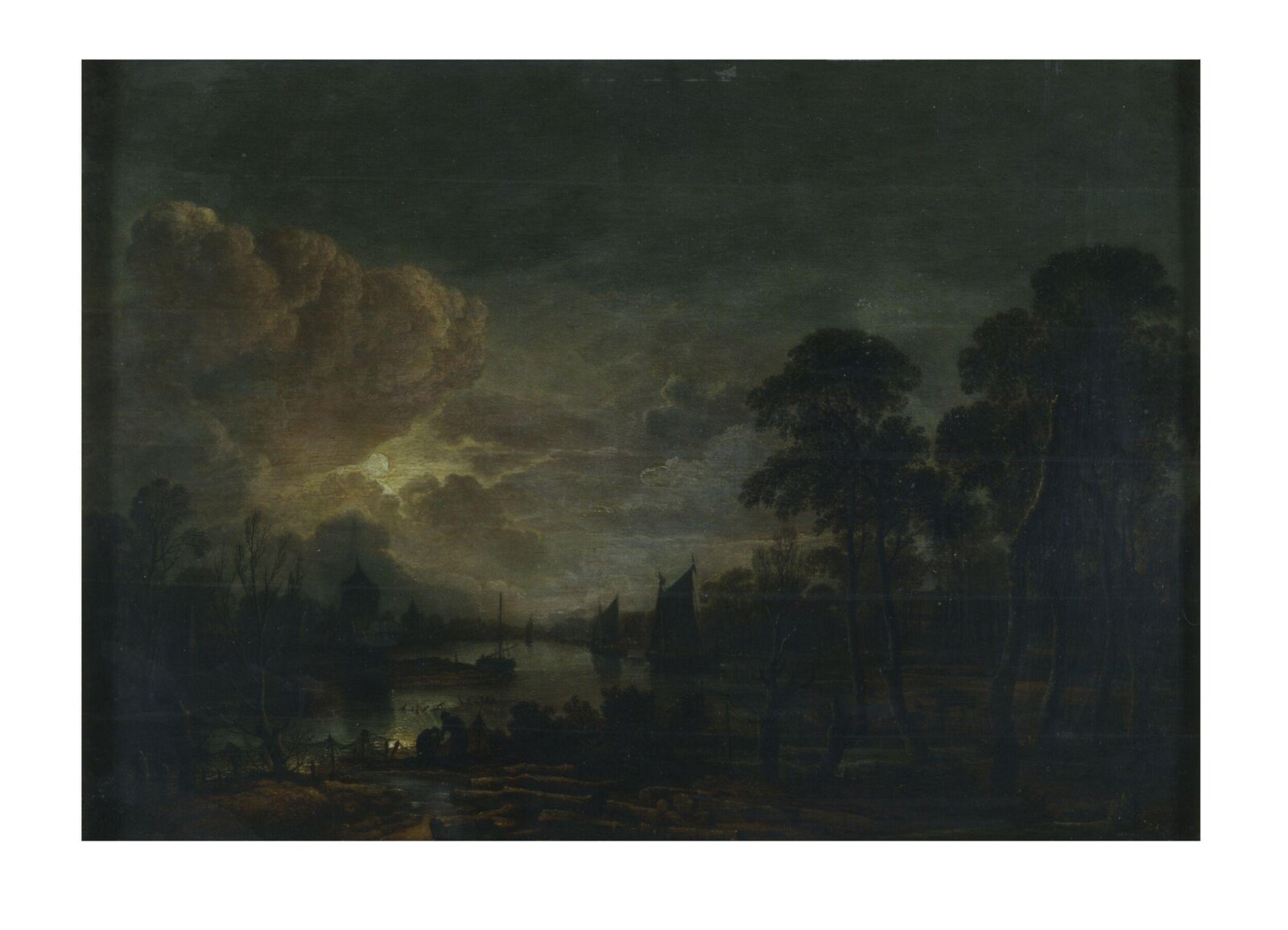
Aert van der NeerDutch, 1604–1677
Moonlight Landscape with River
May one see it?
Not receiving at present

Victoria and Albert Museum
London, United Kingdom
It belongs to the collection, but is not on display at present.
- Checked
- In this state since
- Source
- The museum
About the painting
Aert van der Neer (1603/04-1677) spent his youth in Arkel near Gorinchem (Gorkum), a town on the river Waal, east of Dordrecht. He moved to Amsterdam in about 1632 and remained there for the rest of his life. He was best known for moonlight landscapes and winter scenes. The chronology of van der Neer's oeuvre is far from easy to determine however his earliest work seems to date from 1642 and the latest from 1665.
Read on
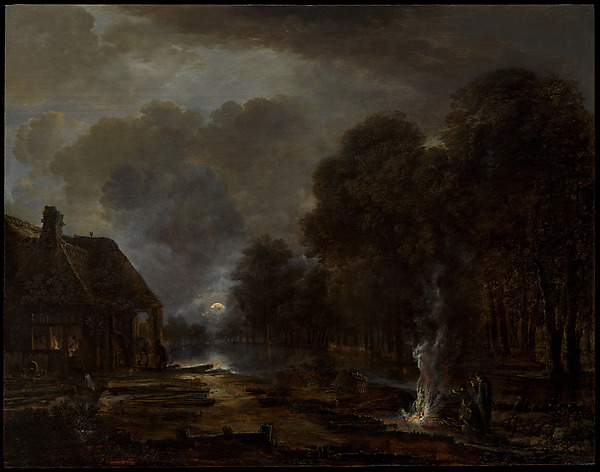
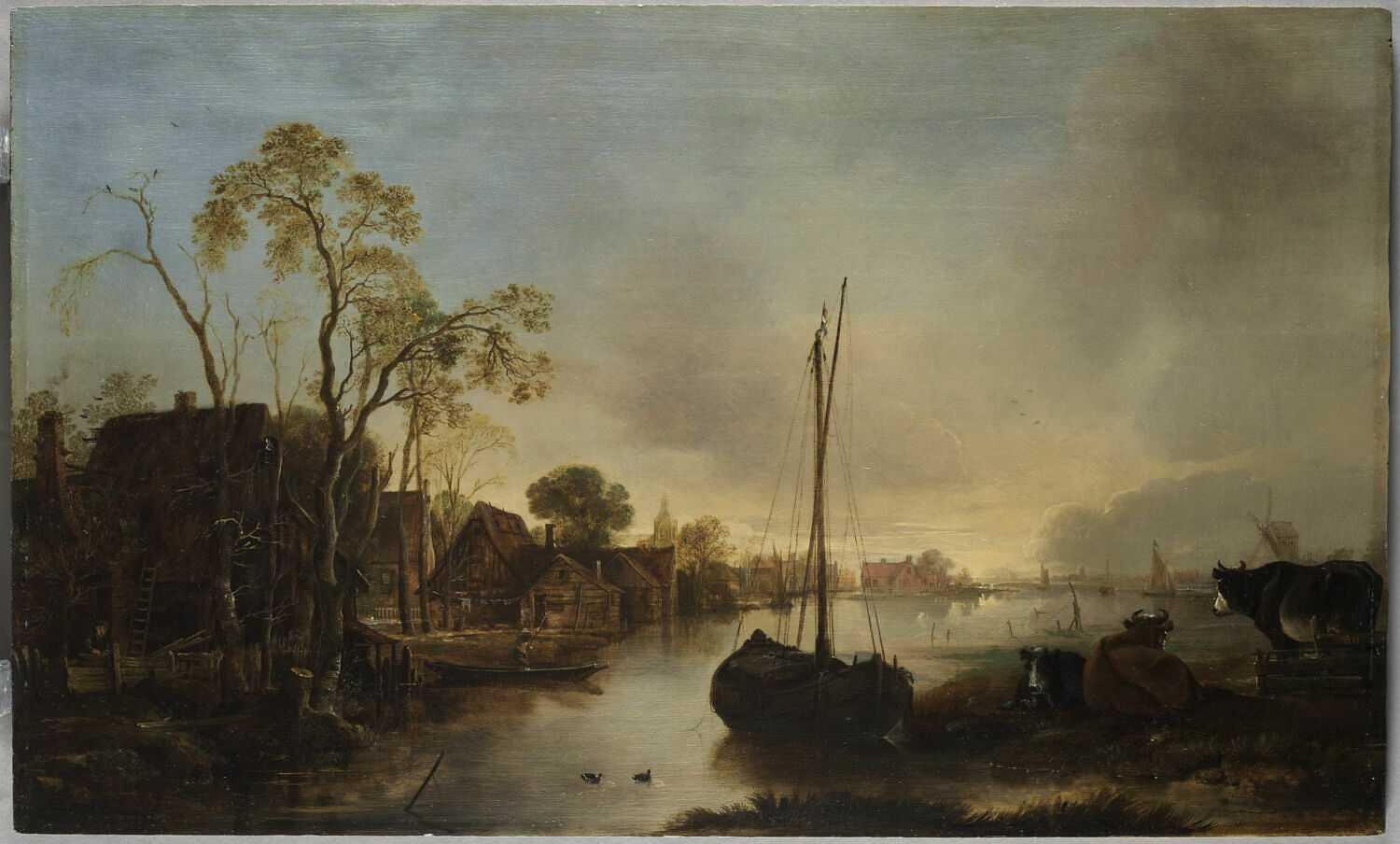
This painting which attribution is uncertain could well be an authentic work by Aert van der Neer who had a very large output and was much copied during and after his lifetime. It is however featured in the catalogue raisonné (Wolfgang Schulz, 2002) of the artist as a probable 17th-century imitation. Despite the 19th century retouchings, the overall picture looks like a 17th century work and the naturalistic elements are all very well executed and neat: the foliage in the trees, the vegetation at ground level but also the nets and the figures are very accurate and readable. The entire picture conveys a sense of lightness and freshness that is typical of van der Neer's production. The compositional idea is also recurrent in many other versions of the same subject. Despite its darkness most likely due to a dirty varnish and the actual poor condition of the painting, the play of light and the contrast between light and darkness are typical of van der Neer's mastery in natural effects through a subtle use of an earthy palette that plays with greyish blue and reddish brown tones.
Victoria and Albert Museum
Particulars
- Accession number
- 347-1878
What it shows
In the catalog
Sources
- Victoria and Albert Museum
- Image: Victoria and Albert Museum — © Victoria and Albert Museum, London