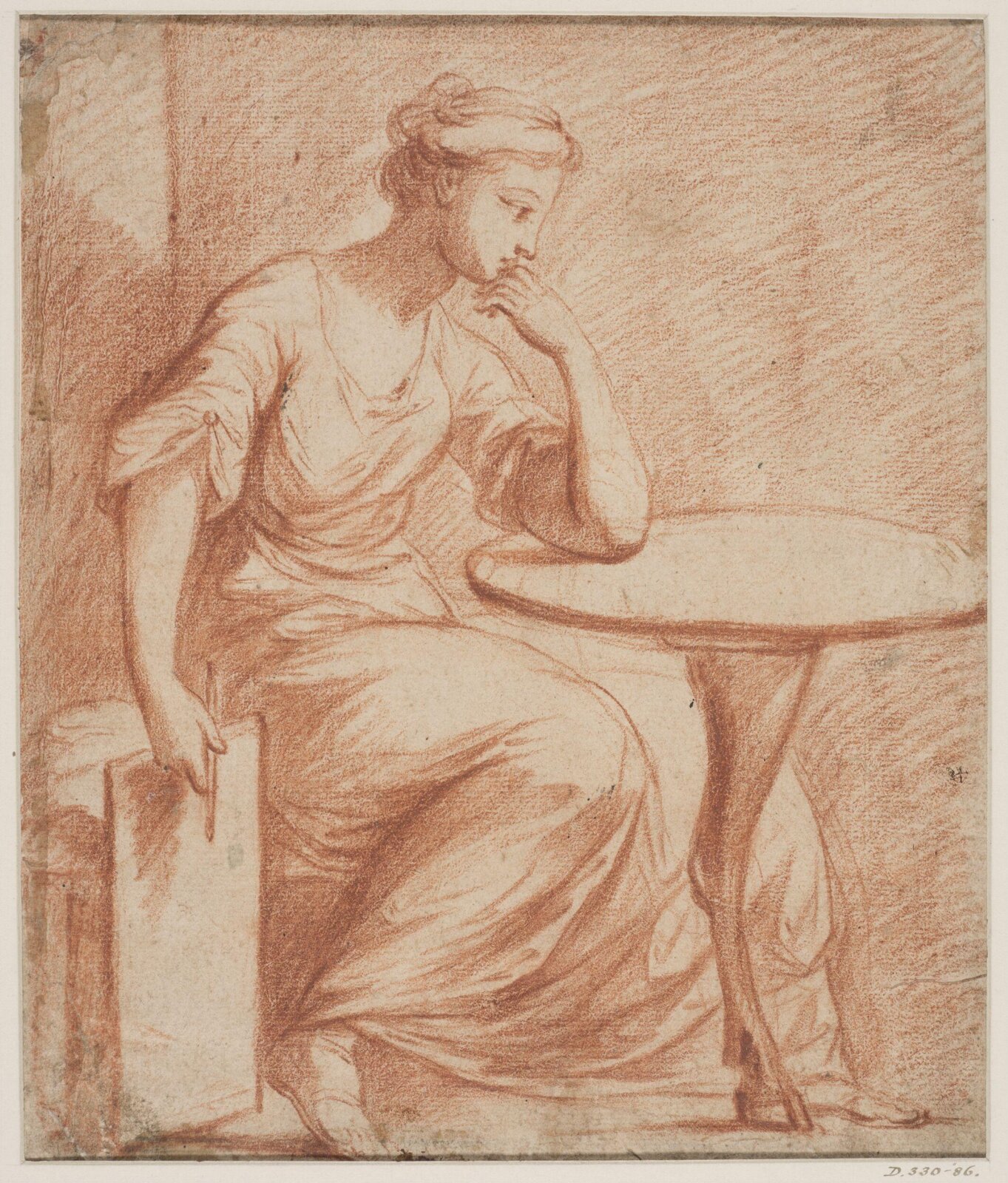
 Angelica KauffmannSwiss, 1741–1807
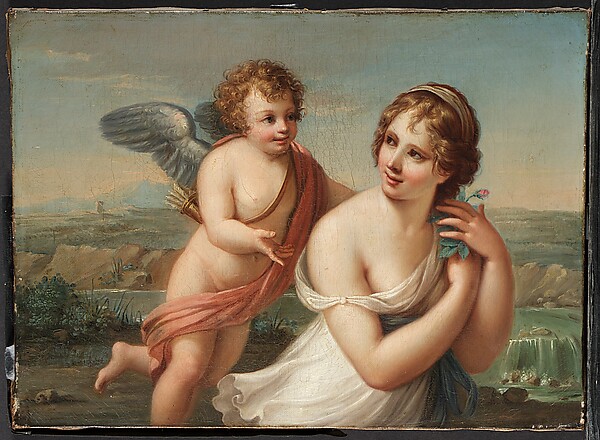
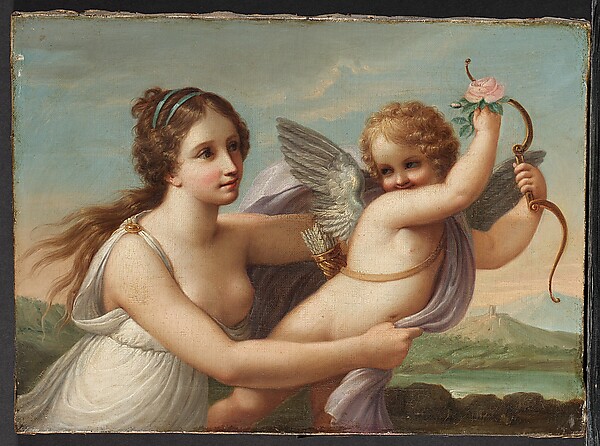
Meditation
Can I see it?
Not on view at present
Where is “Meditation” now? Collection: Victoria and Albert Museum, London. Not on view at present. Checked September 25, 2026.

London, United Kingdom
It belongs to the collection, but is not on display at present.
- Checked
- In this state since
- Source
- The museum
Details
- Accession number
- D.330-1886
In the catalog
Sources
- Victoria and Albert Museum
- Image: Victoria and Albert Museum — © Victoria and Albert Museum, London
In the life of Angelica Kauffmann
The whole life1766
Friendship with Joshua Reynolds
Reynolds became Kauffman’s firmest friend: in his pocketbooks she often appears as “Miss Angelica” or “Miss Angel”; in 1766 he painted her portrait, and she answered with her portrait of Reynolds.
June 1766
Arrives in London
In June 1766 Kauffman arrived in London, having been persuaded by Lady Wentworth to go with her. Lady Wentworth’s rank opened society to her, and the royal family showed her particular favour.
1767
Marries the impostor “Count de Horn”
In 1767 Kauffman married an impostor calling himself Count Frederick de Horn; the marriage ended in scandal: by one account it was declared void within a few months, by another the couple separated the following year.
December 1768
Founding member of the Royal Academy of Arts
In December 1768 Kauffman became one of the founding members of the Royal Academy of Arts in London, one of only two women among them.
1769
Three pictures at the Royal Academy exhibition
At the Academy’s exhibition of 1769 Kauffman showed “Hector Taking Leave of Andromache”, “Venus Directing Aeneas and Achates to Carthage” and “Achilles Discovered by Ulysses among the Daughters of Lycomedes”; all three were bought by the patroness Theresa Parker.
1781
Returns to Rome
Disappointed by the relative apathy of the British towards history painting, Kauffman left London, where she had lived for fifteen years, in 1781, after her marriage to Antonio Zucchi, and returned to Rome, where that genre was better known and enjoyed the patronage of patrons and collectors.