 Salvador DalíSpanish, 1904–1989
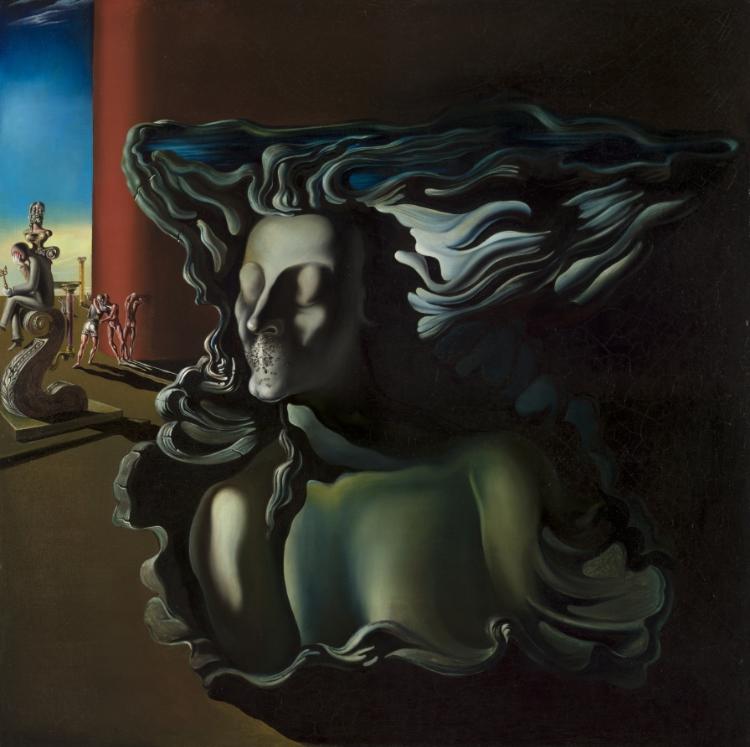
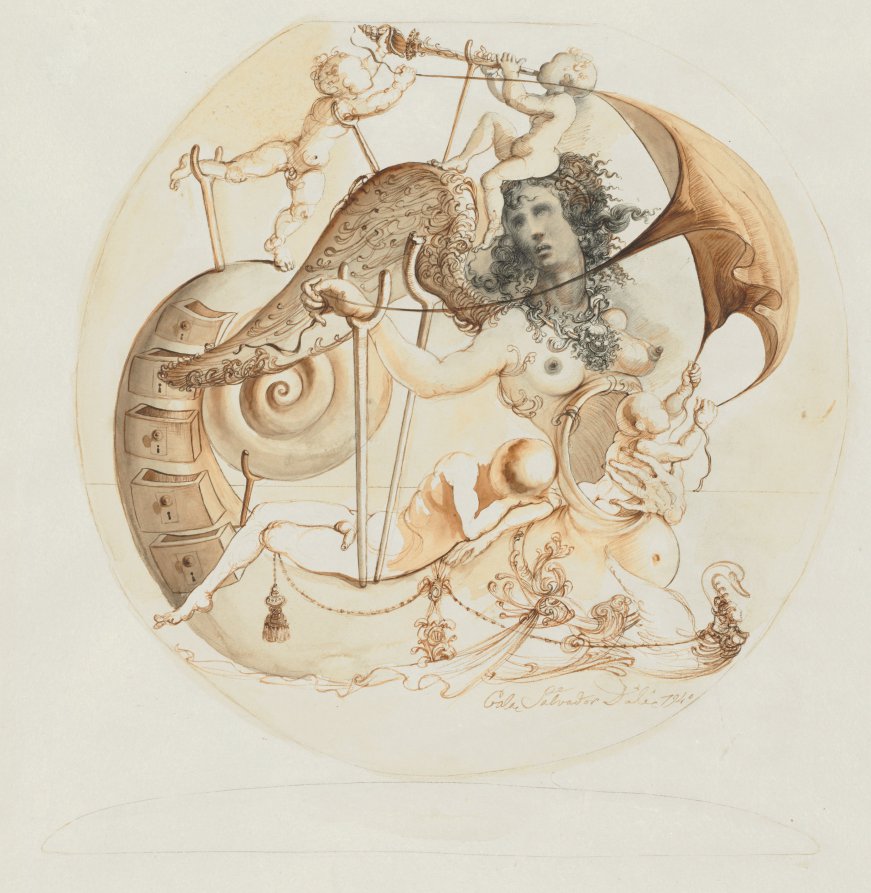
Marsupial Figure
Can I see it?
Not on view at present
Where is “Marsupial Figure” now? Collection: The Cleveland Museum of Art, Cleveland. Not on view at present. Checked September 29, 2026.

Cleveland, United States
It belongs to the collection, but is not on display at present.
- Checked
- In this state since
- Source
- The museum
Details
- Accession number
- 1947.2608
In the catalog
Sources
- The Cleveland Museum of Art
- Image: The Cleveland Museum of Art — © Salvador Dali, Gala-Salvador Dali Foundation / Artists Rights Society (ARS), New York
In the life of Salvador Dalí
The whole lifeMarch 1938
Meets Sigmund Freud
Thanks to Stefan Zweig, Dalí met Freud and sketched his portrait; Freud whispered, “That boy looks like a fanatic.” The next day Freud wrote to Zweig that he had regarded the Surrealists as complete fools, but “that young Spaniard, with his candid fanatical eyes” had changed his estimate.
April 1939
The break with Buñuel
Soon after Franco's victory in the Civil War, Dalí wrote to Luis Buñuel denouncing socialism and Marxism and praising Catholicism and the Falange, and Buñuel broke off relations with him.
May 1939
Breton expels him from the Surrealists
In the May issue of Minotaure André Breton announced Dalí's expulsion from the Surrealist group, accusing him of espousing race war and repudiating Surrealist automatism. Many Surrealists then broke off relations with him.
June – August 1940
Fleeing the war to the United States
The Second World War found the Dalís in France; they took refuge in Arcachon, where he painted “Slave Market with the Disappearing Bust of Voltaire”. On 20 June 1940 the Portuguese consul in Bordeaux, Aristides de Sousa Mendes, issued them visas, and in August they sailed from Lisbon to New York, to live in the United States for eight years.
November 1941 – February 1942
A MoMA retrospective alongside Miró
The Museum of Modern Art in New York held two major simultaneous retrospectives of Dalí and Joan Miró; Dalí was represented by forty-two paintings and sixteen drawings. The show drew critical attention, toured eight American cities and enhanced his reputation in America.
October 1942
“The Secret Life of Salvador Dalí” is published
Dalí's autobiography appeared simultaneously in New York and London; Time called it “one of the most irresistible books of the year”, while George Orwell later wrote a scathing review. Its claim that Buñuel alone was responsible for the anti-clericalism of “L'Âge d'Or” may have indirectly cost Buñuel his post at MoMA.