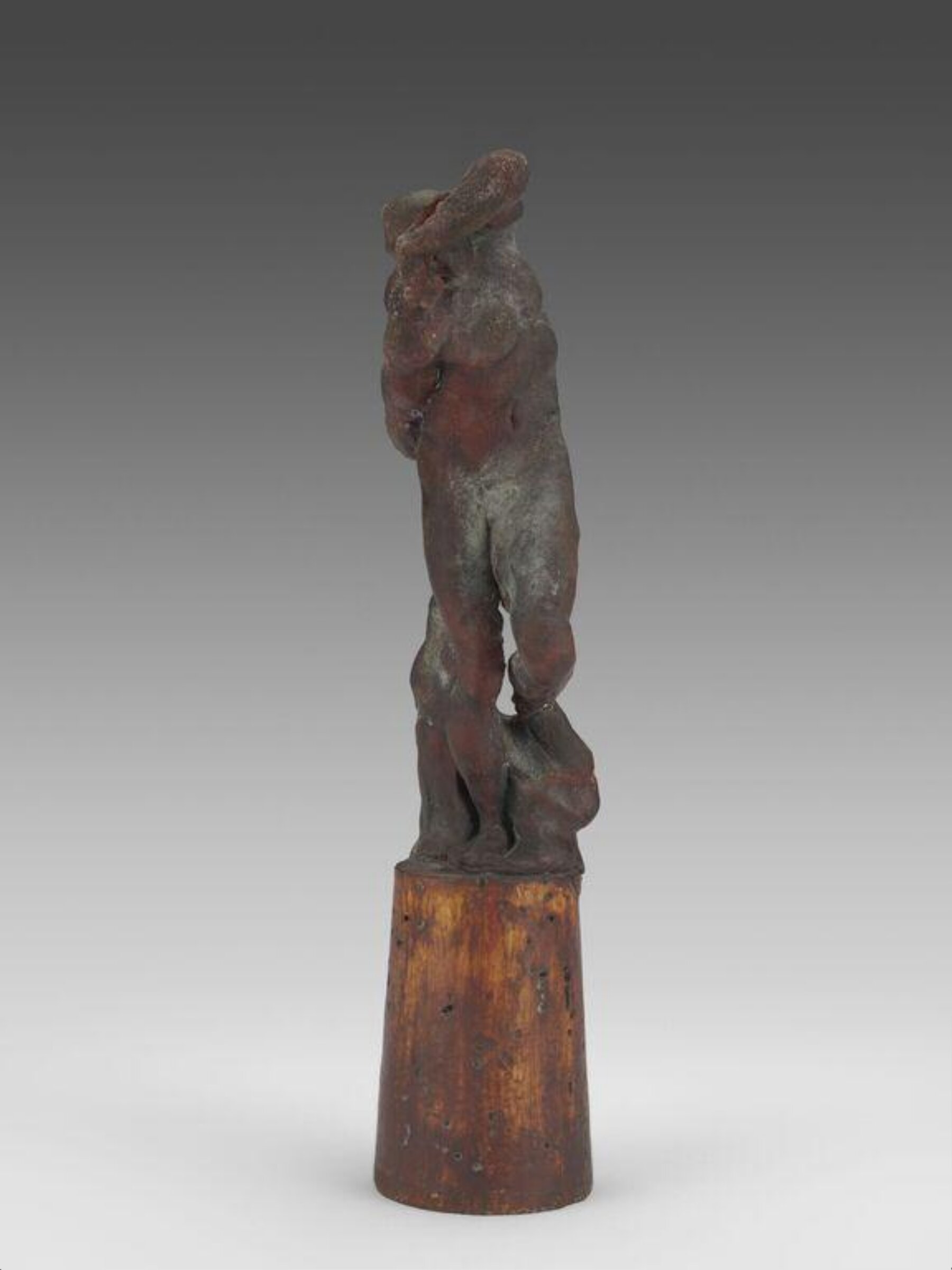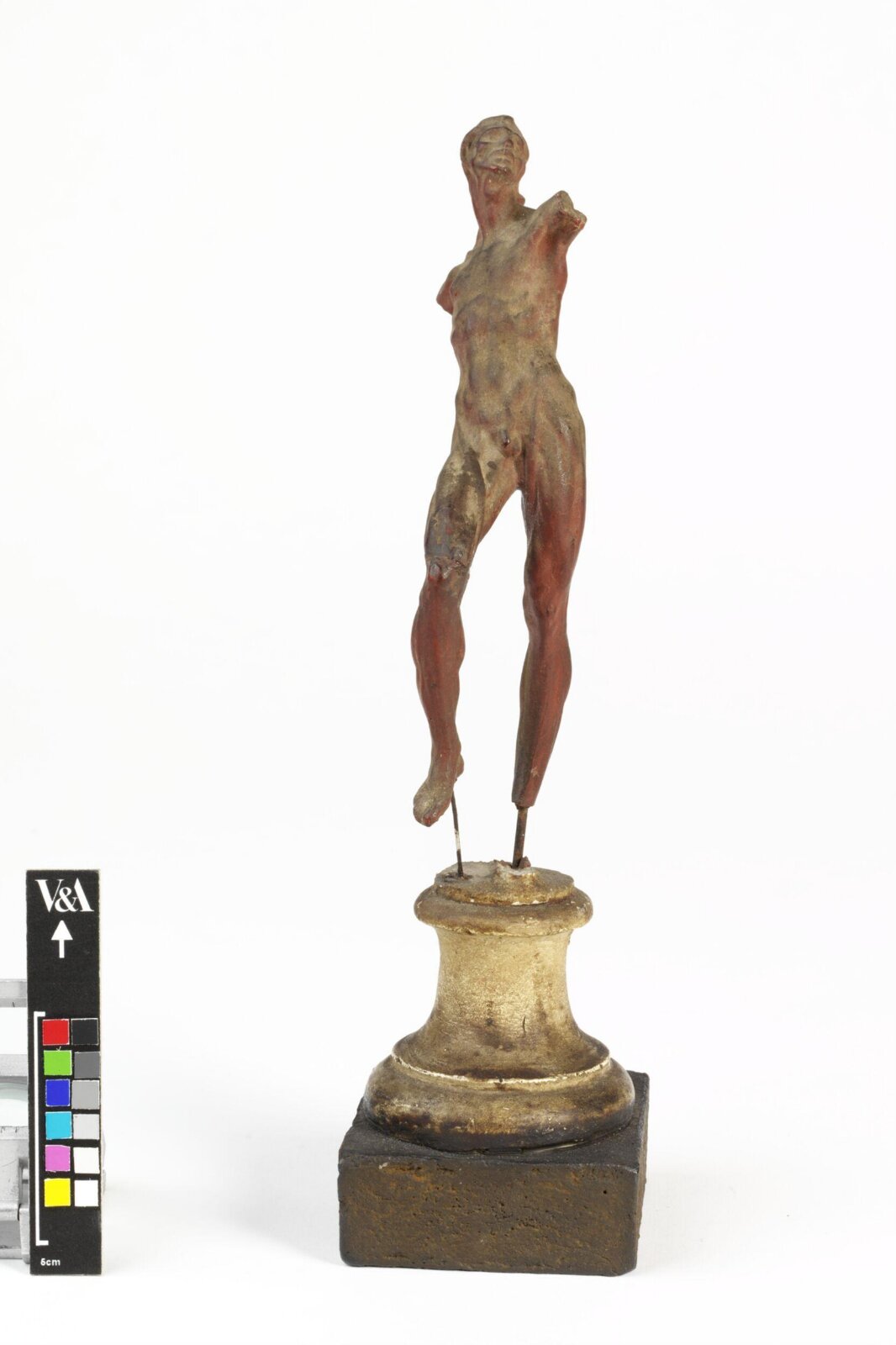
Male Écorché figure
May one see it?
Not receiving at present

Victoria and Albert Museum
London, United Kingdom
It belongs to the collection, but is not on display at present.
- Checked
- In this state since
- Source
- The museum
About the sculpture
The French word écorché literally means flayed or skinned. It has been adopted almost universally by scholars when speaking of a human figure stripped of its skin and thus displaying the superficial layers of muscles. Sculpted models or statuettes in which the muscles of the body are revealed (or écorchés) first appeared in sixteenth century Europe, and in Italy primarily.
A large number of surviving examples indicate the popularity of this statuette. All indicate derivations from the same original, but were not necessarily cast at the same time. The old attribution of this wax -formerly in the Gherardini collection in Florence- to Michelangelo, has long been rejected. The style of the figure suggests that it was made in the last quarter of the sixteenth century, possibly in Florence.
Victoria and Albert Museum
Particulars
- Accession number
- 4115-1854