ART WIKI32,963 on view
MapCollectionArtistsMuseumsExhibitionsJournal
Sign in

ART WIKI

Where the masterpiece hangs, and when they let you in.

Collections: Art Institute of Chicago, Getty Villa, Harvard Art Museums, Hirshhorn Museum and Sculpture Garden, J. Paul Getty Museum, Minneapolis Institute of Art, Musée du Louvre, National Gallery of Art, National Museum of Asian Art, National Portrait Gallery (Smithsonian), Pushkin State Museum of Fine Arts, Rijksmuseum, Smithsonian American Art Museum, SMK — National Gallery of Denmark, State Hermitage Museum, State Russian Museum, The Cleveland Museum of Art, The Metropolitan Museum of Art, The Museum of Modern Art, Tretyakov Gallery, Victoria and Albert Museum, Whitney Museum of American Art, State Catalogue of the Museum Fund of Russia (274 museums), Europeana (19 museums), Wikidata (6 museums), Paris Musées (12 museums), and Joconde, the French Ministry of Culture's museum database (495 museums). Images belong to their rights holders.

Sections

  • Map
  • Search
  • Collection
  • Masterpieces
  • On view now
  • Artists

More

  • Museums & galleries
  • Exhibitions
  • Journal
  • Where the data comes from
  • Privacy & cookies
HomeMapBrowse
  1. Collection/
  2. Musée d'Orsay/
  3. Lying roe
Lying roe, Gustave Courbet, 1857
Gustave Courbet, portraitGustave CourbetFrench, 1819–1877

Lying roe

1857 · Painting · 33 × 41.5 cm

May one see it?

Unknown

Musée d'Orsay

Paris, France

The owner is known; whether it is on view today is not.

In this state since
Sep 29, 2026
Source
The museum
On the mapMuseum page

Particulars

1857 · aged 38
18191877
Accession number
MNR 652

In the catalog

PaintingsFrench paintingRealism19th century

Sources

  • Wikidata
  • Image: Musée d'Orsay — Gustave Courbet · Public domain · Wikimedia Commons

Meanwhile, in the life of Gustave Courbet

The whole life
  1. 1855

    Stages the “Pavilion of Realism”

    Refusing to accept the jury's decision, Courbet asked museums and private owners to lend his paintings, had a separate building erected and showed about forty canvases there, without state permission, under the Second Empire. The public was baffled and laughed at the “crude art”, and the critics mocked him; the paintings were appreciated by Delacroix and Baudelaire.

  2. 1855

    The “Realist Manifesto” in the exhibition catalogue

    The catalogue of the Pavilion of Realism opened with a manifesto in which Courbet claimed the right to artistic freedom and the right to show his works to the public on his own. He defined his aim as conveying the customs, ideas and appearance of his time, to be not only a painter but a man as well: to “create living art”.

  3. 1855

    The Exposition Universelle jury turns down three paintings

    Courbet submitted fourteen paintings to the Salon of 1855, part of the Exposition Universelle; three were rejected “for lack of space”, among them the monumental “A Burial at Ornans” and “The Artist's Studio”.

  4. 1855

    Empress Eugénie before “The Bathers”

    According to Proudhon's recollection, Empress Eugénie, visiting the Pavilion of Realism, stopped before Courbet's “Bathers”, with its robustly peasant-like nude body shown without the usual idealization, and exclaimed, “Is this a Percheron too?” She had just been looking at Rosa Bonheur's “Horse Fair”.

  5. 1857

    Salon of 1857: “Young Ladies on the Banks of the Seine”

    At the Salon of 1857 Courbet showed six paintings, among them “Young Ladies on the Banks of the Seine (Summer)”, painted the year before, and the first of his many hunting scenes. Modern women casually displaying their undergarments caused a scandal; pairing sensational works with hunting scenes secured Courbet both notoriety and sales.

More by Gustave Courbet

All works
Young Ladies of the Village, Gustave Courbet, 1851–52

Young Ladies of the Village

1851–52 · The Metropolitan Museum of Art

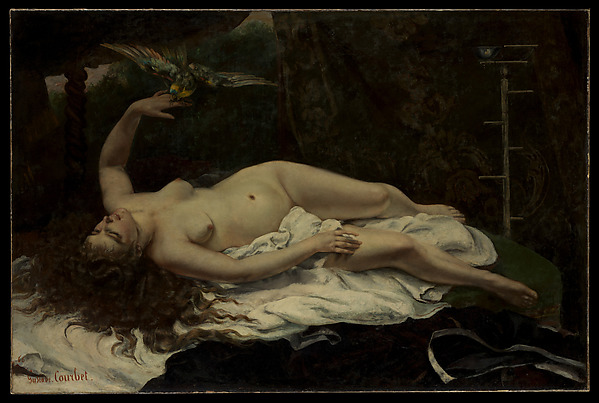
Woman with a Parrot, Gustave Courbet, 1866

Woman with a Parrot

1866 · The Metropolitan Museum of Art

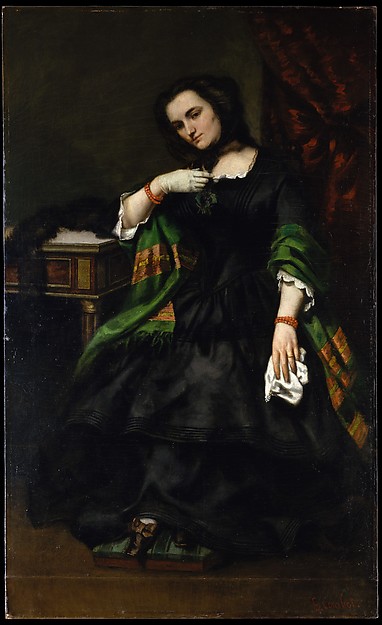
Madame Auguste Cuoq (Mathilde Desportes, 1827–1910), Gustave Courbet, ca. 1852–57

Madame Auguste Cuoq (Mathilde Desportes, 1827–1910)

ca. 1852–57 · The Metropolitan Museum of Art

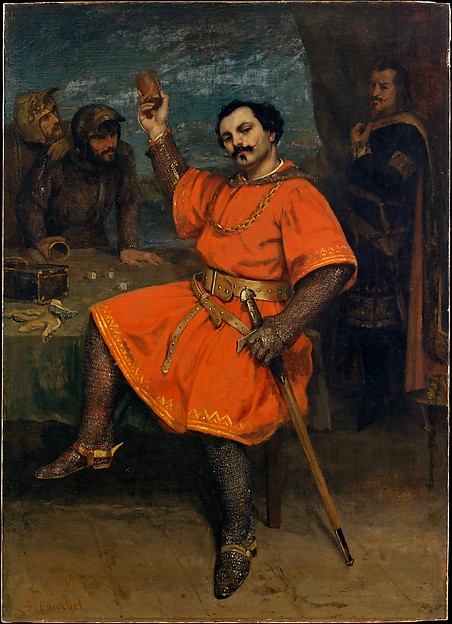
Louis Gueymard (1822–1880) as Robert le Diable, Gustave Courbet, 1857

Louis Gueymard (1822–1880) as Robert le Diable

1857 · The Metropolitan Museum of Art

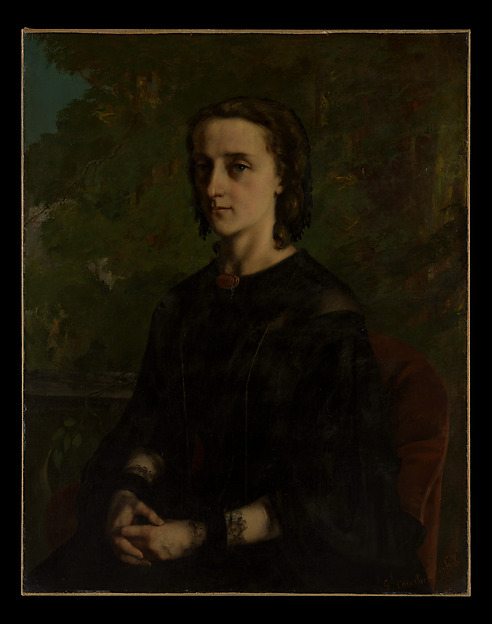
Madame Frederic Breyer (Fanny Hélène Van Bruyssel, 1830–1894), Gustave Courbet, 1858

Madame Frederic Breyer (Fanny Hélène Van Bruyssel, 1830–1894)

1858 · The Metropolitan Museum of Art

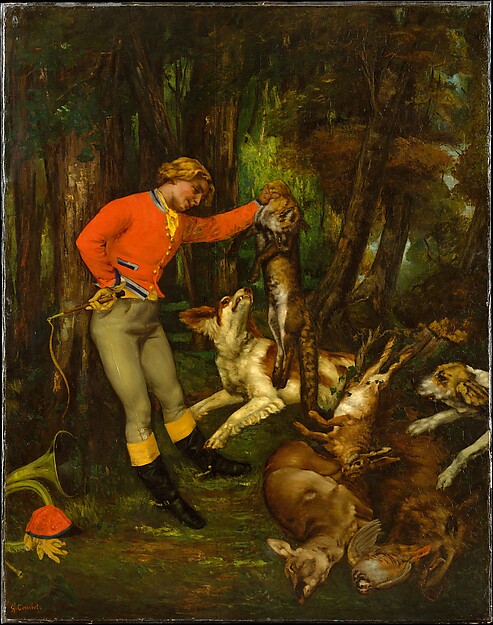
After the Hunt, Gustave Courbet, ca. 1859

After the Hunt

ca. 1859 · The Metropolitan Museum of Art

The Source, Gustave Courbet, 1862

The Source

1862 · The Metropolitan Museum of Art

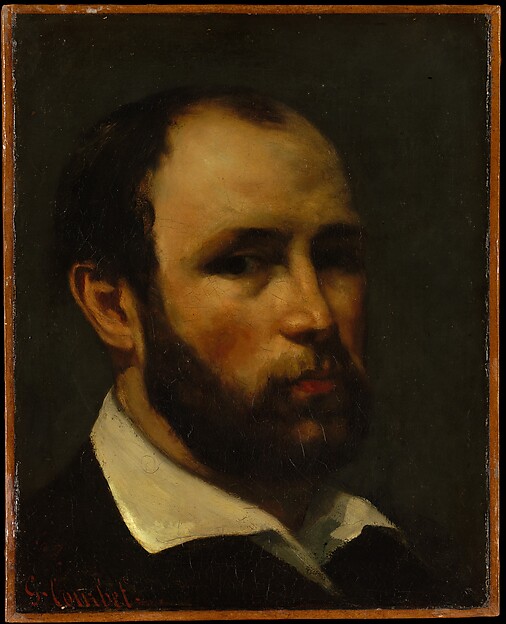
Portrait of a Man, Gustave Courbet, probably ca. 1862

Portrait of a Man

probably ca. 1862 · The Metropolitan Museum of Art

From the collection of Musée d'Orsay

Museum page
Still Life: Japanese Vase with Roses and Anemones, Vincent van Gogh, 1890

Vincent van Gogh

Still Life: Japanese Vase with Roses and Anemones, 1890

Chaumes de Cordeville, Vincent van Gogh, 1890

Vincent van Gogh

Chaumes de Cordeville, 1890

Doctor Gachet's Garden in Auvers, Vincent van Gogh, 1890

Vincent van Gogh

Doctor Gachet's Garden in Auvers, 1890

Two Children, Vincent van Gogh, 1890

Vincent van Gogh

Two Children, 1890

The siesta (after Millet), Vincent van Gogh, 1890

Vincent van Gogh

The siesta (after Millet), 1890

Marguerite Gachet in the Garden, Vincent van Gogh, 1890

Vincent van Gogh

Marguerite Gachet in the Garden, 1890

The Church at Auvers, Vincent van Gogh, 1890

Vincent van Gogh

The Church at Auvers, 1890

Portrait of Dr. Gachet, Vincent van Gogh, 1890

Vincent van Gogh

Portrait of Dr. Gachet, 1890