ART WIKI32,963 on view
MapCollectionArtistsMuseumsExhibitionsJournal
Sign in

ART WIKI

Where the masterpiece hangs, and when they let you in.

Collections: Art Institute of Chicago, Getty Villa, Harvard Art Museums, Hirshhorn Museum and Sculpture Garden, J. Paul Getty Museum, Minneapolis Institute of Art, Musée du Louvre, National Gallery of Art, National Museum of Asian Art, National Portrait Gallery (Smithsonian), Pushkin State Museum of Fine Arts, Rijksmuseum, Smithsonian American Art Museum, SMK — National Gallery of Denmark, State Hermitage Museum, State Russian Museum, The Cleveland Museum of Art, The Metropolitan Museum of Art, The Museum of Modern Art, Tretyakov Gallery, Victoria and Albert Museum, Whitney Museum of American Art, State Catalogue of the Museum Fund of Russia (274 museums), Europeana (19 museums), Wikidata (6 museums), Paris Musées (12 museums), and Joconde, the French Ministry of Culture's museum database (495 museums). Images belong to their rights holders.

Sections

  • Map
  • Search
  • Collection
  • Masterpieces
  • On view now
  • Artists

More

  • Museums & galleries
  • Exhibitions
  • Journal
  • Where the data comes from
  • Privacy & cookies
HomeMapBrowse
  1. Collection/
  2. Rijksmuseum/
  3. Lust for Gold
Lust for Gold, Thomas Couture, 1840 - 1879

Lust for Gold

1840 - 1879 · Painting

About the painting

In the museum's own words — in Dutch

De gouddorst. Jonge vrouwen met ontblote borsten staande bij een tafel waarachter zit een oude man met geld en sieraden. Achter de man staat een grijnzende Mefisto.

Rijksmuseum

Particulars

1840 - 1879
18151879
Accession number
SK-A-1866

Meanwhile, in the life of Thomas Couture

The whole life
  1. 1838

    His debut at the Paris Salon

    In 1838, a year after the Prix de Rome, Couture is shown at the Paris Salon for the first time, with a canvas depicting a Venetian woman after a night orgy.

  2. 1847

    The Salon of 1847: the triumph of “The Romans of the Decadence”

    The picture meets with a resounding success and recognition: Théophile Gautier calls it the most remarkable work of the exhibition. Many find it symbolic that in the hall it takes the usual place of Veronese’s “The Wedding at Cana”, and some opinions favour the French canvas over the Italian classic.

  3. after 1847

    Opens an independent atelier in Paris

    Soon after this triumph, in the wake of which he called himself the only truly serious artist of his age, Couture opens an independent atelier on the streets of Laval and Pigalle in Paris. It is conceived as a rival to the École des Beaux-Arts: several dozen pupils study there, among them students from the USA and Germany, and Couture wants to train not geniuses but painters who know their craft, demanding individuality from them rather than imitation.

  4. January 1850

    Manet becomes his pupil

    From January 1850 Couture teaches Édouard Manet for more than six years. In the end Manet broke with his teacher and with academism and became one of the founders of Impressionism.

  5. 1855

    The 1855 World’s Fair: “The Falconer” misses the top award

More by Thomas Couture

All works

Neighbors at Rijksmuseum

Museum page

On the same theme · Money-changer

All works on the theme

At the 1855 World’s Fair Couture shows the picture “The Falconer”, but it does not win the highest award, which he regards as a major setback. As a result he renounces the first-class medal awarded to him for this picture and for “The Romans of the Decadence”.

  • 29 March 1879

    Died

  • Thomas Couture, portraitThomas CoutureFrench, 1815–1879

    May one see it?

    Unknown

    Rijksmuseum

    Amsterdam, Netherlands

    The owner is known; whether it is on view today is not.

    Source
    The museum
    On the mapMuseum page

    What it shows

    Money-changerMephistopheles, name of the demonic tempter in the literary versions of the Faust legends

    In the catalog

    PaintingsOilFrench paintingRomanticismRealism19th century

    Sources

    • Rijksmuseum
    • Image: Rijksmuseum — public domain
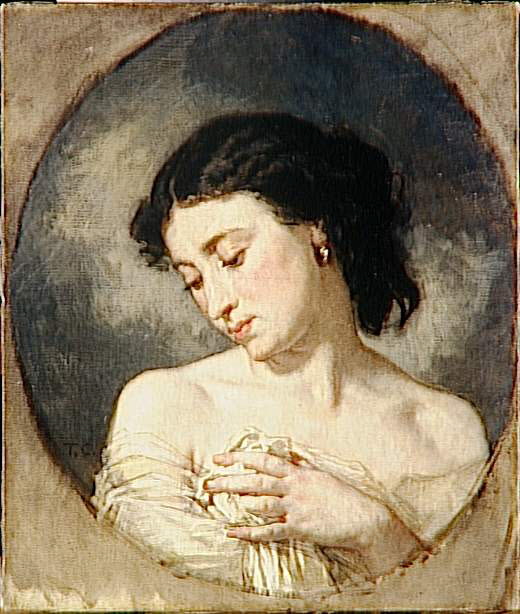
    Jeune femme en buste, les épaules dénudées., Couture, Thomas, 2e tiers du XIXe siècle (1835 - 1879)

    Jeune femme en buste, les épaules dénudées.

    second third of the 19th century (1835–1879) · Musée du Louvre

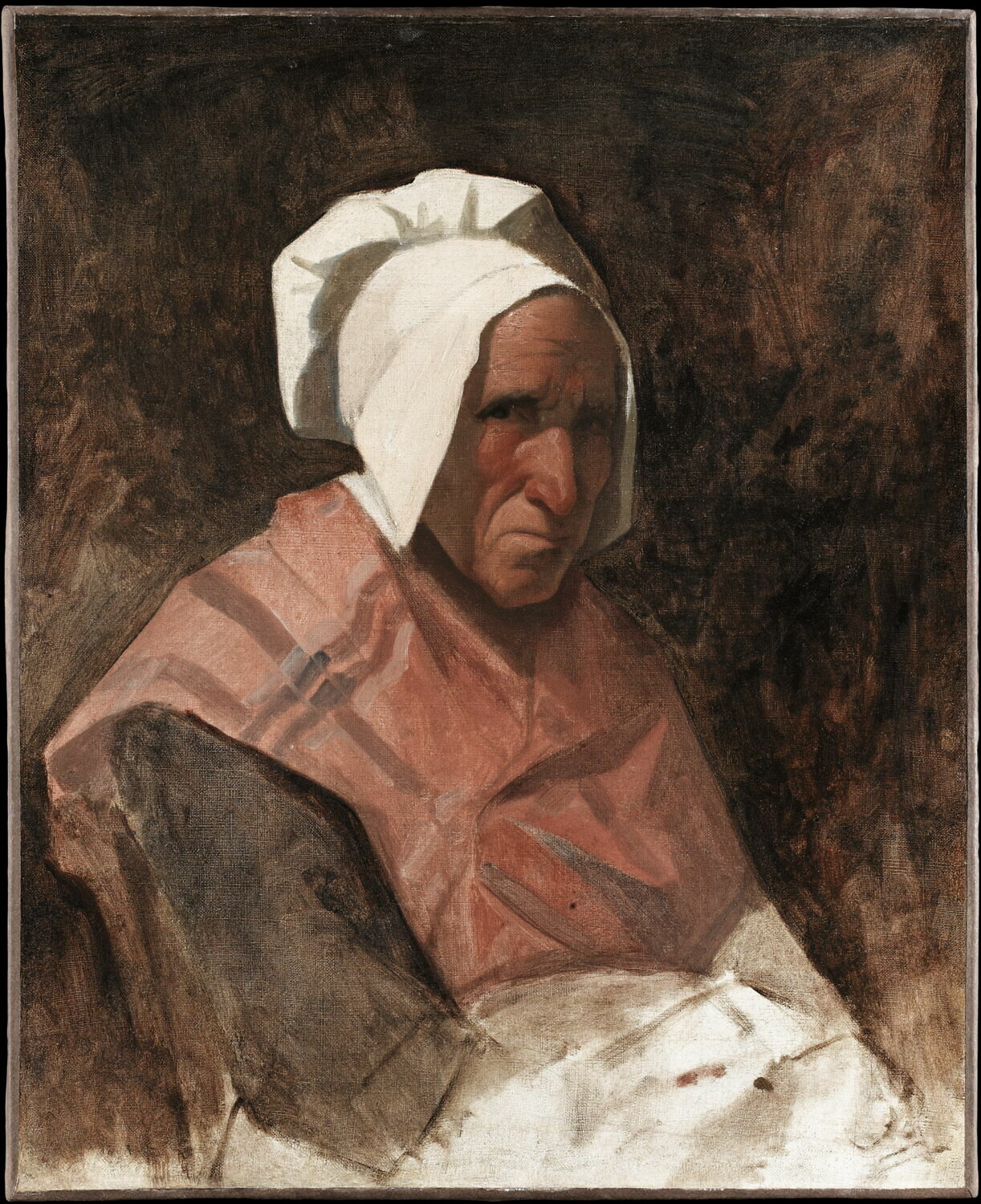
    Marie Simonet, du village de Villemoyenne (Aisne)., Couture, Thomas, 2e quart du XIXe siècle (1836)

    Marie Simonet, du village de Villemoyenne (Aisne).

    second quarter of the 19th century (1836) · Musée du Louvre

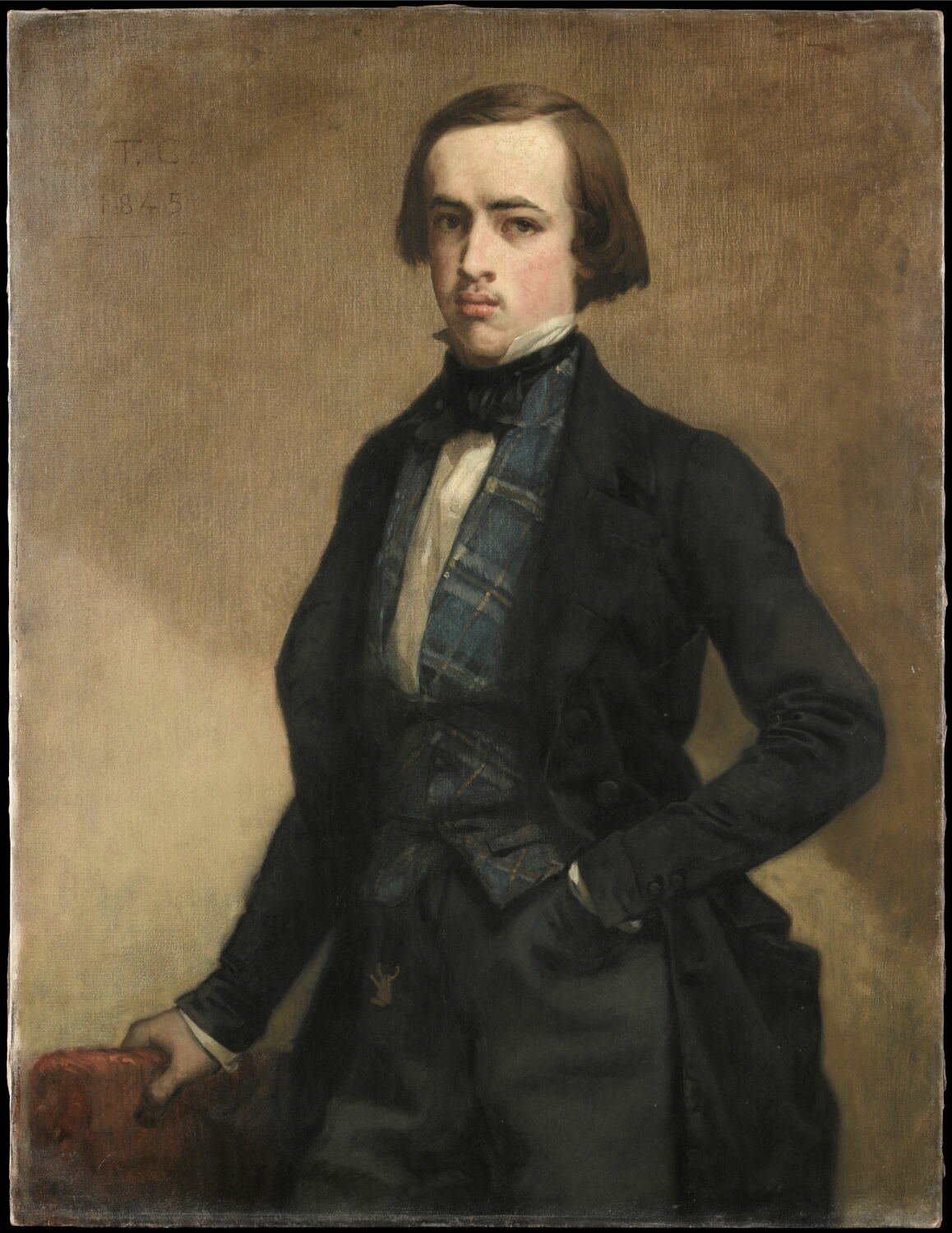
    Adolphe Moreau (1827-1882), fils du collectionneur Adolphe Moreau et père du donateur des MuséesNationaux, Étienne Moreau-Nélaton., Couture, Thomas, 2e quart du XIXe siècle (1845)

    Adolphe Moreau (1827-1882), fils du collectionneur Adolphe Moreau et père du donateur des MuséesNationaux, Étienne Moreau-Nélaton.

    second quarter of the 19th century (1845) · Musée du Louvre

    Romans of the Decadence, Thomas Couture, 1847

    Romans of the Decadence

    1847 · Harvard Art Museums

    The Bird Catcher, Thomas Couture, c. 1857

    The Bird Catcher

    c. 1857 · Art Institute of Chicago

    The Romans of the Decadence, Thomas Couture, 1847

    The Romans of the Decadence

    1847 · Musée d'Orsay

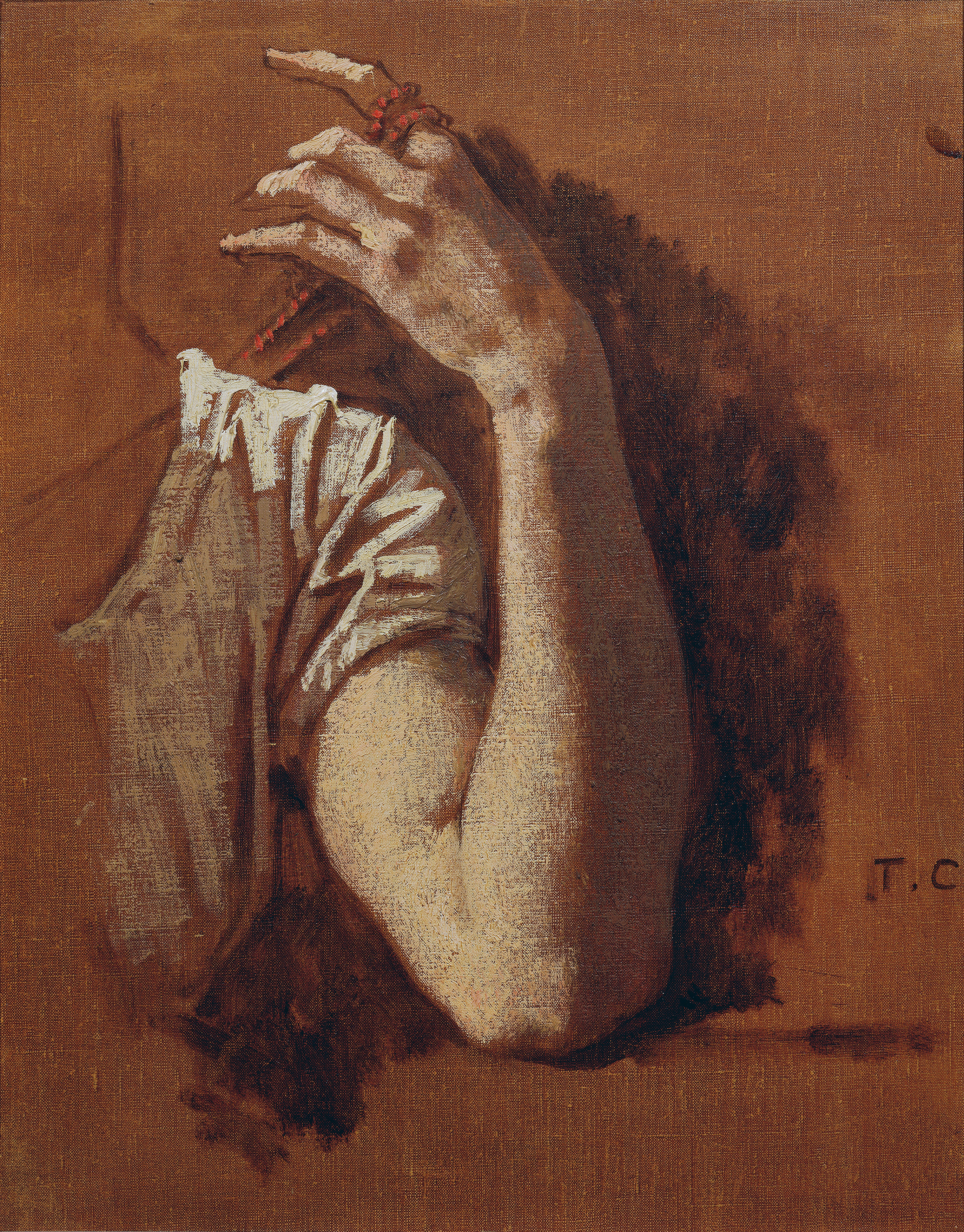
    Armstudie, Thomas Couture

    Armstudie

    Belvedere

    La Courtisane, Thomas Couture, c. 19th century

    La Courtisane

    c. 19th century · Musée d'Orsay

    Self-portrait, Vincent van Gogh, 1887

    Vincent van Gogh

    Self-portrait, 1887

    La Corniche near Monaco, Claude Monet, 1884

    Claude Monet

    La Corniche bij Monaco, 1884

    De Nachtwacht, Rembrandt van Rijn, 1642

    Rembrandt van Rijn

    The Night Watch, 1642

    Portrait of a Woman, Probably Maria Trip (1619-1683), Rembrandt van Rijn, 1639

    Rembrandt van Rijn

    Portrait of Maria Trip, 1639

    Still Life with Peacocks, Rembrandt van Rijn, c. 1639

    Rembrandt van Rijn

    Still Life with Peacocks, c. 1639

    Landscape with a Stone Bridge, Rembrandt van Rijn, c. 1638

    Rembrandt van Rijn

    The Stone Bridge, c. 1638

    Man in Oriental Dress, Rembrandt van Rijn, 1635

    Rembrandt van Rijn

    Man in Oriental Dress, 1635

    Portrait of Haesje Jacobsdr van Cleyburg, Rembrandt van Rijn, 1634

    Rembrandt van Rijn

    Portrait of Haesje Jacobsdr van Cleyburg, 1634

    Geldwisselaar Robert Macaire stuurt klant weg, Honoré Daumier, 1838

    Honoré Daumier

    Geldwisselaar Robert Macaire stuurt klant weg, 1838

    Rijksmuseum

    Wisselkantoor van Lodewijk XIV, 1706, anonymous, 1706

    anonymous

    Wisselkantoor van Lodewijk XIV, 1706, 1706

    Rijksmuseum

    Wisselkantoor van Lodewijk XIV, 1706, anonymous, 1706

    anonymous

    Wisselkantoor van Lodewijk XIV, 1706, 1706

    Rijksmuseum

    Wisselkantoor van Lodewijk XIV, 1706, anonymous, 1706

    anonymous

    Wisselkantoor van Lodewijk XIV, 1706, 1706

    Rijksmuseum

    Productie en gebruik van papier, anonymous, c. 1850 - c. 1900

    anonymous

    Productie en gebruik van papier, c. 1850 - c. 1900

    Rijksmuseum

    Man telt munten (het Gehoor), anonymous, 1660 - 1800

    anonymous

    Man telt munten (het Gehoor), 1660 - 1800

    Rijksmuseum

    Wisselkantoor van Lodewijk XIV, 1706, anonymous, 1706

    anonymous

    Wisselkantoor van Lodewijk XIV, 1706, 1706

    Rijksmuseum

    Wisselkantoor van Lodewijk XIV, 1706, anonymous, 1706

    anonymous

    Wisselkantoor van Lodewijk XIV, 1706, 1706

    Rijksmuseum