 Bartolomé Esteban MurilloSpanish, 1617–1682
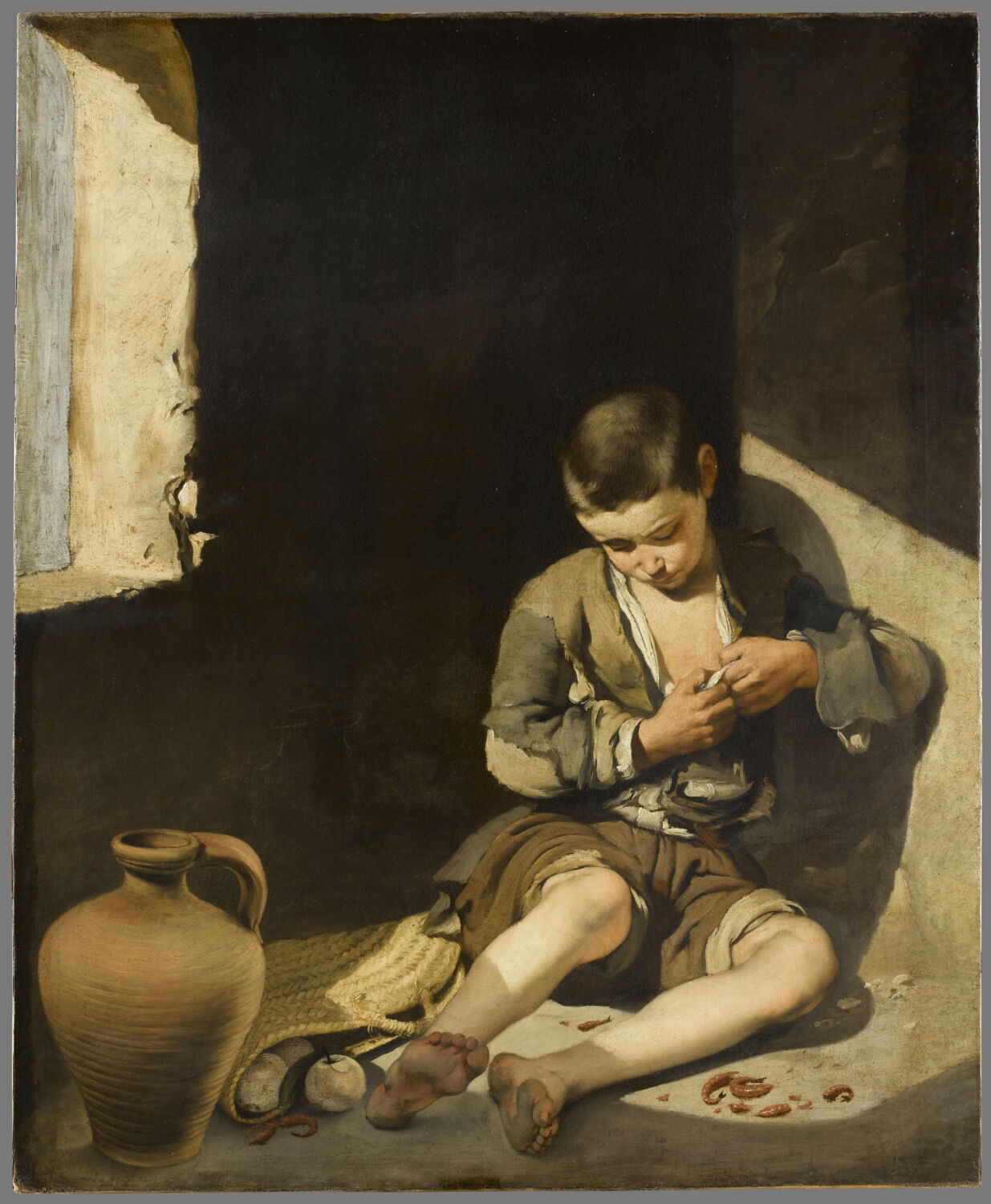
The Young Beggar
Le Jeune mendiant
Can I see it?
Yes, on view now
Where is “The Young Beggar” now? Musée du Louvre, Salle 718, Aile Denon, Niveau 1, Paris. Yes, on view now. Checked September 26, 2026.

Closed· opens at 9:00 AM
On public display.
- Checked
- In this state since
- Source
- The museum
About the painting
The Young Beggar is an oil on canvas genre painting by Spanish painter Bartolomé Esteban Murillo, from c. 1645-1650. Also known as The Lice-Ridden Boy due to the figure of a young boy delousing himself in the painting, The Young Beggar is the first known depiction of a street urchin by Murillo.
It was influenced by the poverty of Spanish children in the 17th century and followed the style of Michelangelo Merisi da Caravaggio. Murillo's painting focuses on an orphaned child and uses a complementary technique of light and shade. It has been viewed as one of his most popular works of the Spanish Baroque painting and was once kept in the royal collection of Louis XVI.
It is now in the Louvre Museum in Paris.
Details
- Accession number
- INV 933
In the catalog
Sources
- Musée du Louvre
- Image: Musée du Louvre — © 2009 GrandPalaisRmn (musée du Louvre) / Stéphane Maréchalle