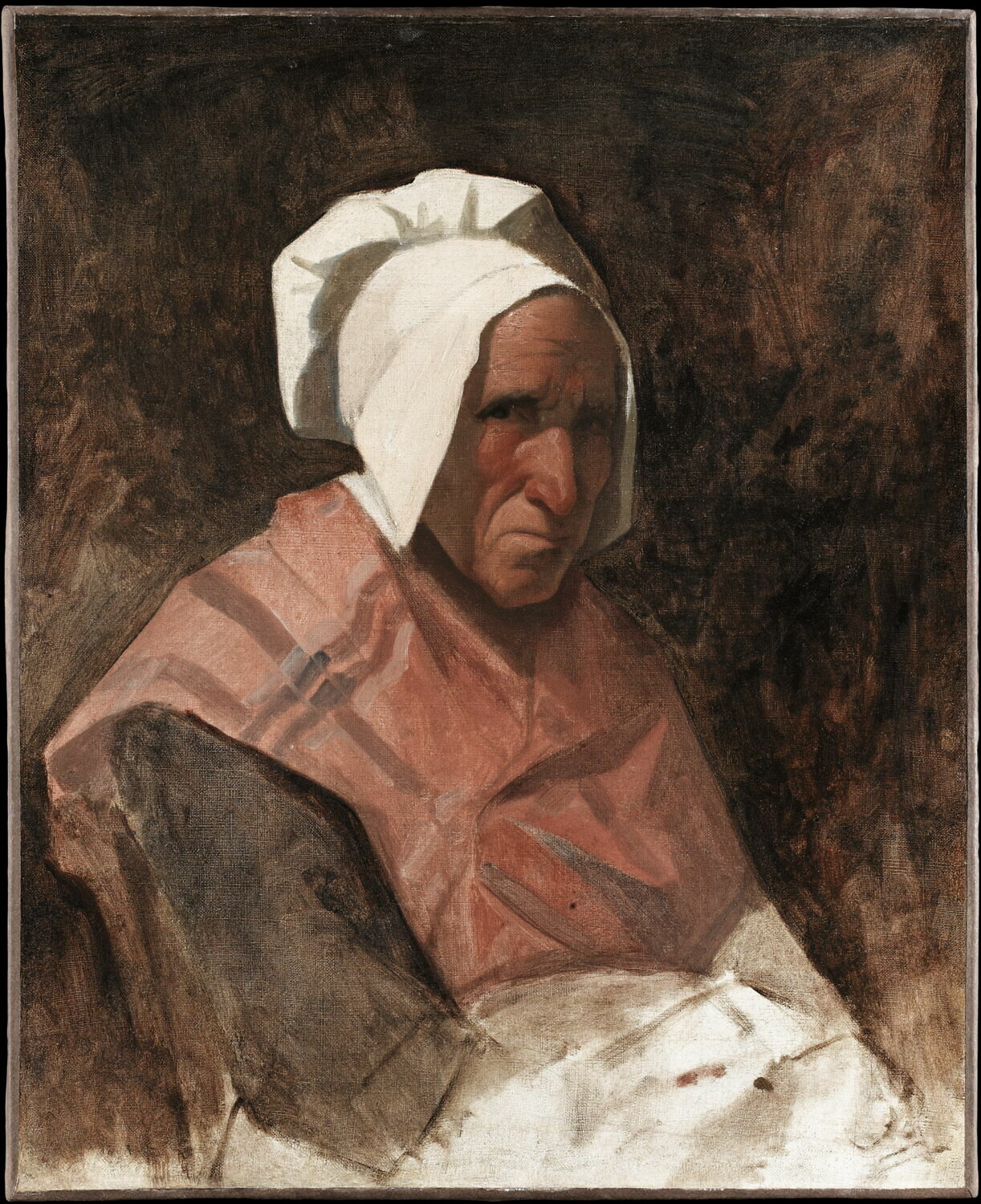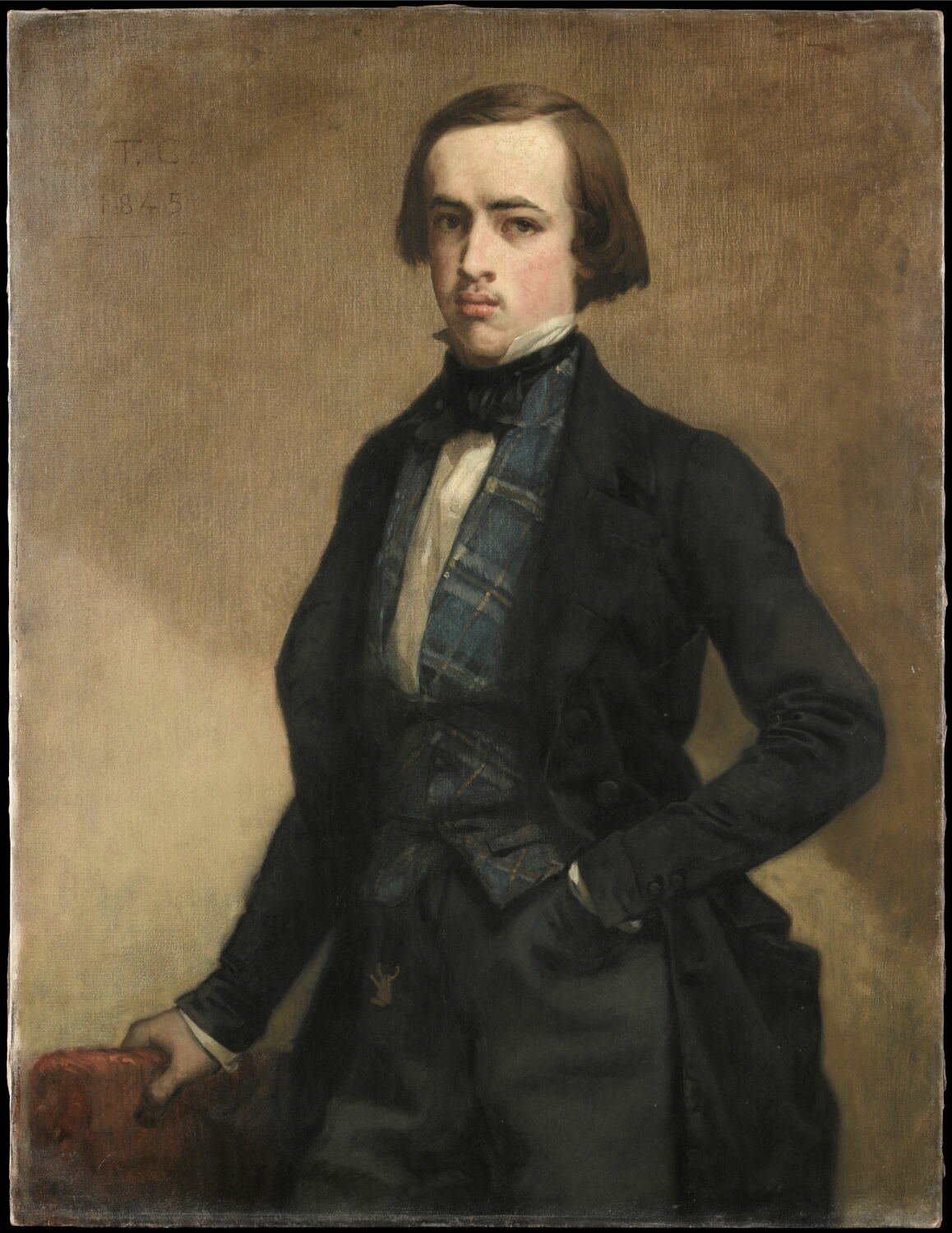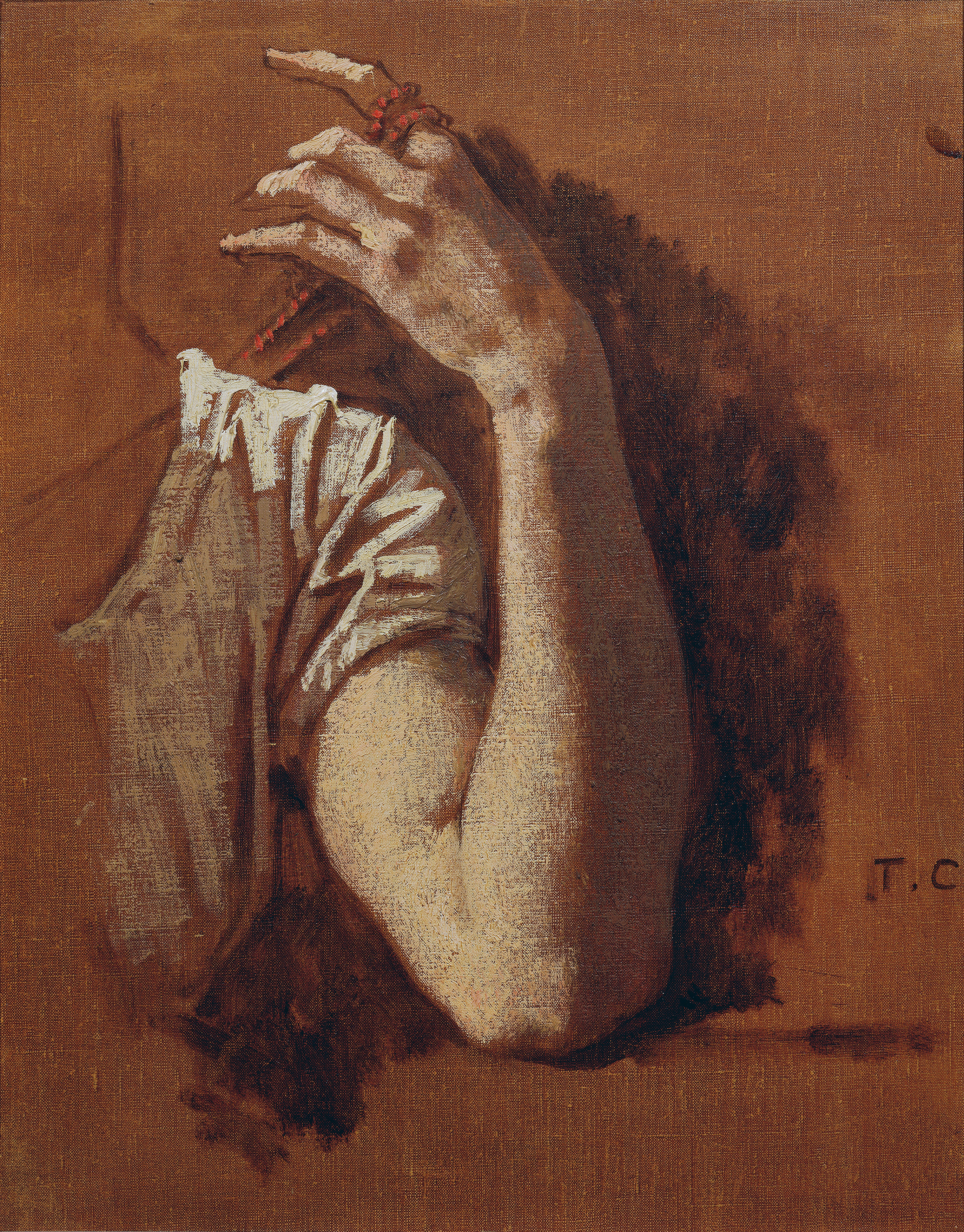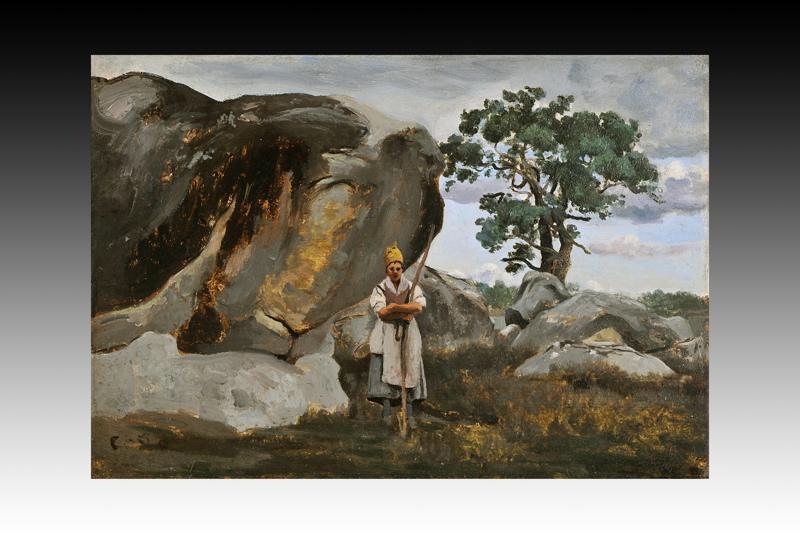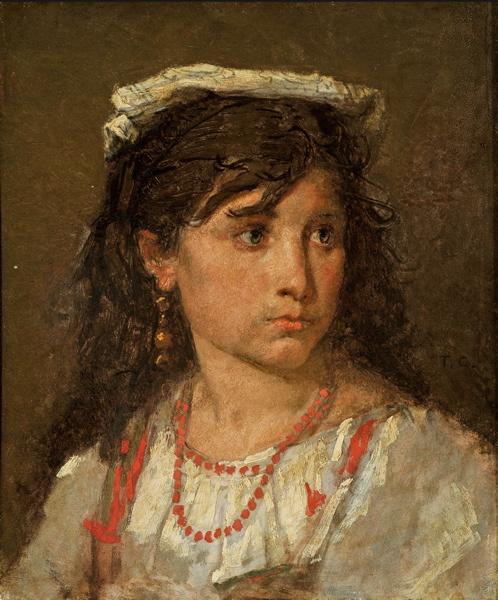
 Thomas CoutureFrench, 1815–1879
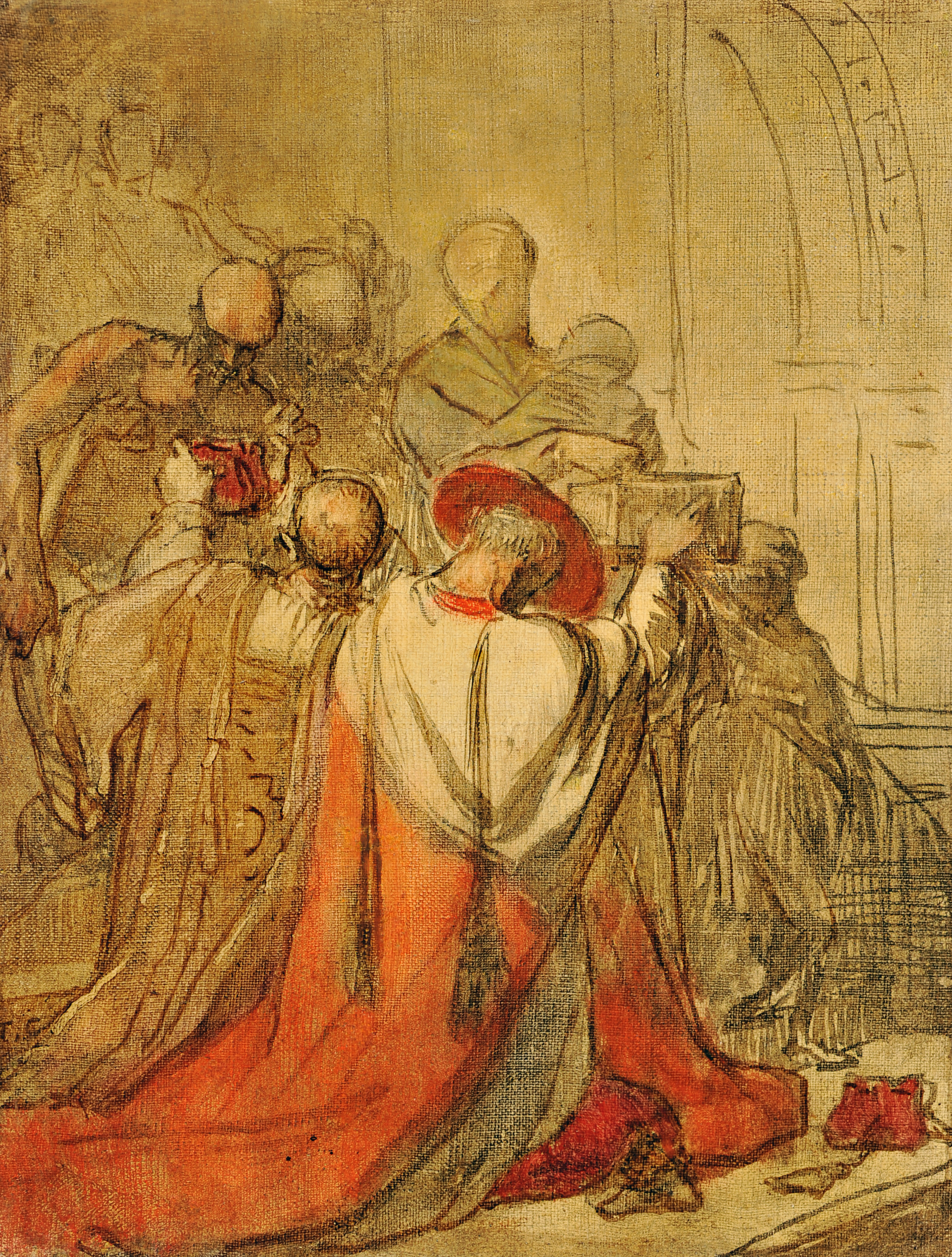
Le denier de Saint Pierre
Can I see it?
Unknown
Where is “Le denier de Saint Pierre” now? Collection: Musée d'art et d'archéologie de Senlis, Senlis. Unknown.
Senlis, France
The owner is known; whether it is on view today is not.
- In this state since
- Source
- The museum
Details
- Accession number
- A.2004.1.1
What it shows
In the catalog
Sources
- Musée d'art et d'archéologie de Senlis
- Image: Musée d'art et d'archéologie de Senlis — © Christian Schryve, Compiègne; Ministère de la Culture (France), base Joconde
In the life of Thomas Couture
The whole life1847–1848
A gold medal, and the state buys “The Romans”
“The Romans of the Decadence” is awarded a first-class gold medal, and the state buys the picture for 12,000 francs. From 1848 it is shown in the collection of the Luxembourg Museum, and later it is transferred to the collection of the Musée d’Orsay.
January 1850
Manet becomes his pupil
From January 1850 Couture teaches Édouard Manet for more than six years. In the end Manet broke with his teacher and with academism and became one of the founders of Impressionism.
1855
The 1855 World’s Fair: “The Falconer” misses the top award
At the 1855 World’s Fair Couture shows the picture “The Falconer”, but it does not win the highest award, which he regards as a major setback. As a result he renounces the first-class medal awarded to him for this picture and for “The Romans of the Decadence”.
1860
Leaves Paris for his native Senlis
Upset by the unfavourable reception of his murals, Couture leaves Paris in 1860 and for a time returns to his hometown of Senlis, where he goes on teaching the young artists who come to him.
1863
Forced to close his atelier
In 1863 Couture is forced to close his atelier, among other reasons because a year earlier many of his pupils had gone over to Courbet.
1869
Moves to Villiers-le-Bel
In 1869 Couture moves to Villiers-le-Bel. According to the critic Albert Wolff, he lives there in a seclusion which, thanks to the complete indifference of his contemporaries, turns him into a man buried alive.