 Peter Paul RubensFlemish, 1577–1640
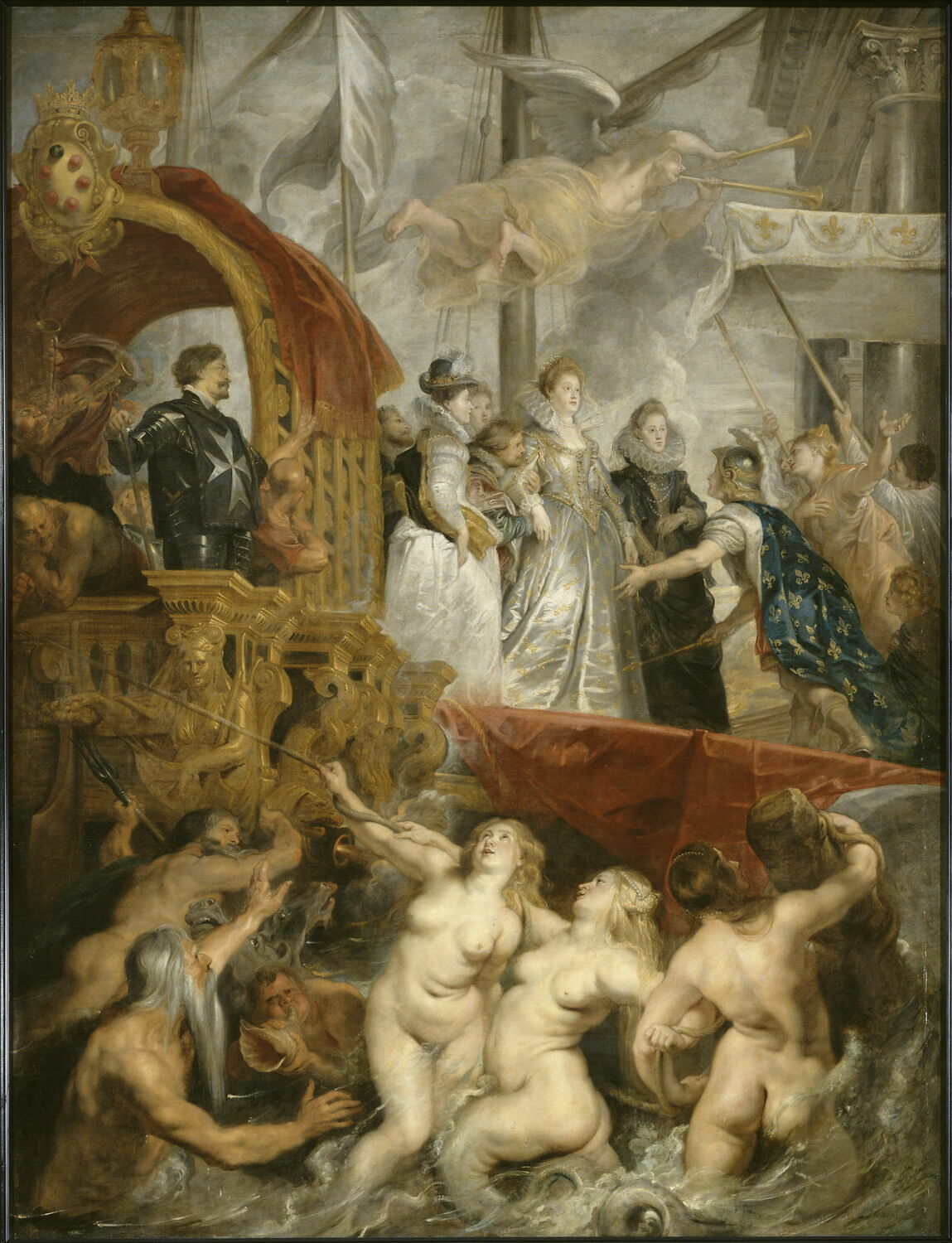
The Disembarkation at Marseilles
Le Débarquement de la reine à Marseille, le 3 novembre 1600
May one see it?
Yes, receiving visitors

Musée du Louvre
Room801, Aile Richelieu, Niveau 2Paris, France
On public display.
- Checked
- 7 days ago
- In this state since
- Sep 26, 2026
- Source
- The museum's own collection data
About the painting
The Arrival of Marie de Medici at Marseilles is a Baroque painting by Sir Peter Paul Rubens executed c. 1622–1625. It was commissioned by Marie de' Medici of France to commemorate the life of her and her husband Henry IV of France. This painting was one of the 24 paintings in the Marie de' Medici cycle by Rubens. The painting is in the Louvre in Paris.
Particulars
- Accession number
- INV 1774
Sources
- Musée du Louvre: the museum's own open data · fetched 7 days ago
- Image: Musée du Louvre — © 2004 GrandPalaisRmn (musée du Louvre) / Hervé Lewandowski
Meanwhile, in the life of Peter Paul Rubens
The whole life1600
Entering the Service of the Duke of Mantua
Almost immediately upon arriving in Italy, the 23-year-old Rubens was presented in Venice to Duke Vincenzo I Gonzaga and entered the service of the Mantuan court, gaining a patron, a salary, and high standing.
5 March 1603
Diplomatic Mission to Spain
On behalf of Duke Gonzaga, Rubens traveled to Spain to deliver gifts to King Philip III; the paintings were damaged by rainstorms en route, and the artist restored them himself in Valladolid. This was the first of his journeys combining art and diplomacy.
28 October 1608
Departure from Italy Forever
Having finished the commission for the Oratorians, Rubens left Rome without permission on 28 October 1608, hurrying to his ailing mother; despite promises to return to Mantua, he never went back to Italy.
3 October 1609
Married: Isabella Brant
9 January 1610
Court Painter to the Archducal Couple
After being presented at court in August 1609, Rubens received his patent as court painter to Archduke Albert and the Infanta Isabella; at the same time he secured the right to remain working in Antwerp rather than Brussels, and to be paid a fee for each painting.
1621
Marie de' Medici's Commission for the Luxembourg Palace Cycles
The Queen Mother of France, Marie de' Medici, commissioned from Rubens two large allegorical cycles for the Luxembourg Palace — one on her own life and one on the life of the late Henry IV; the second series was never completed.