John HeartfieldGerman, 1891–1968
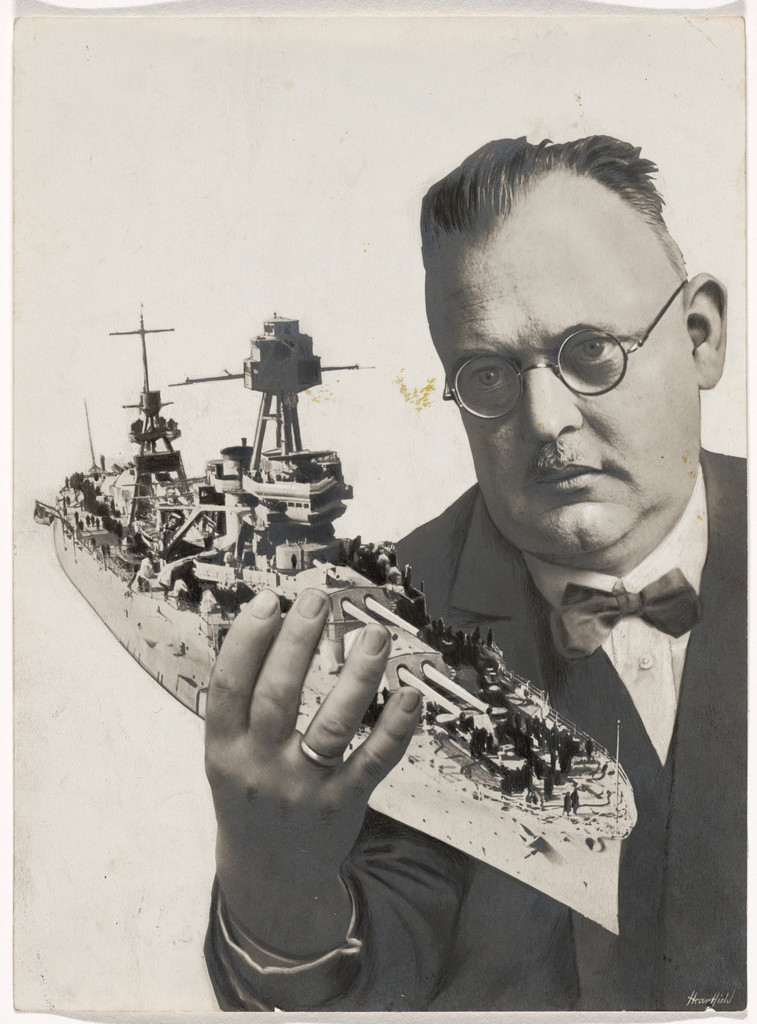
Лариса Райснер: Октябрь
Can I see it?
Unknown
Where is “Лариса Райснер: Октябрь” now? Collection: Pushkin State Museum of Fine Arts, Moscow. Unknown.

Moscow, Russia
The owner is known; whether it is on view today is not.
- In this state since
- Source
- The museum
Details
- Accession number
- ГП-1886
In the catalog
Sources
- Pushkin State Museum of Fine Arts
- Image: Pushkin State Museum of Fine Arts — © Pushkin State Museum of Fine Arts
In the life of John Heartfield
The whole life1920s
Photomontages, book jackets and stage sets
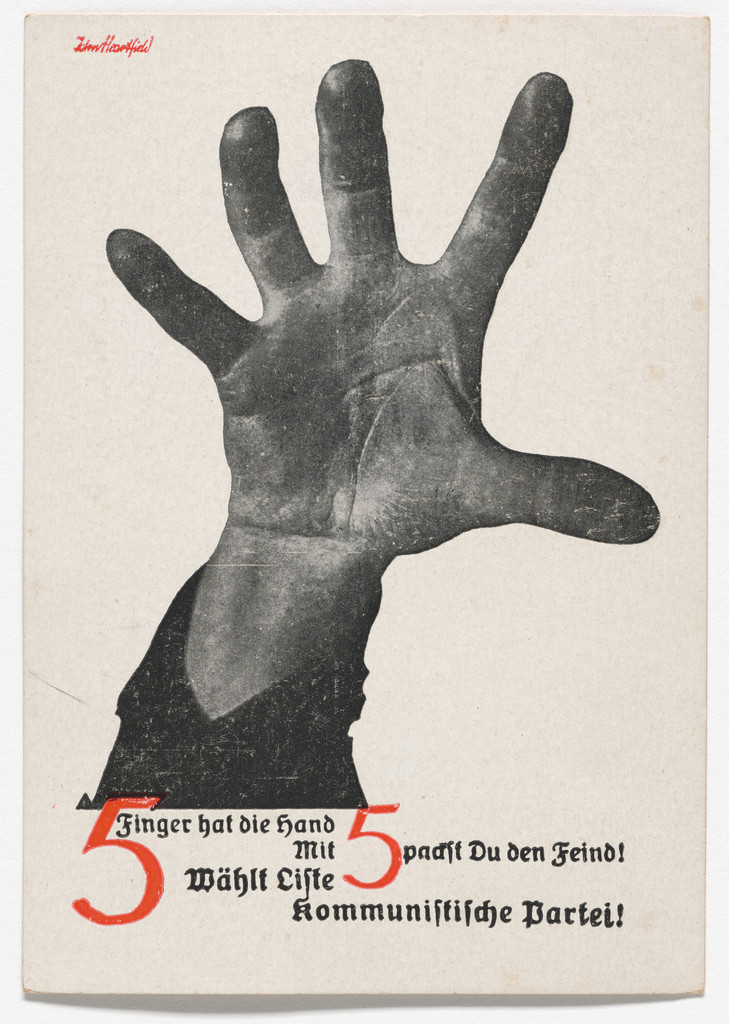
During the 1920s Heartfield produces a great number of photomontages, the first political photomontages, many of them reproduced as dust jackets for books such as Upton Sinclair’s “The Millennium”; he works mainly for the daily Die Rote Fahne and the weekly Arbeiter-Illustrierte-Zeitung (AIZ), and also builds theatre sets for Erwin Piscator and Bertolt Brecht.
1930–1938
Montages on the covers of the AIZ
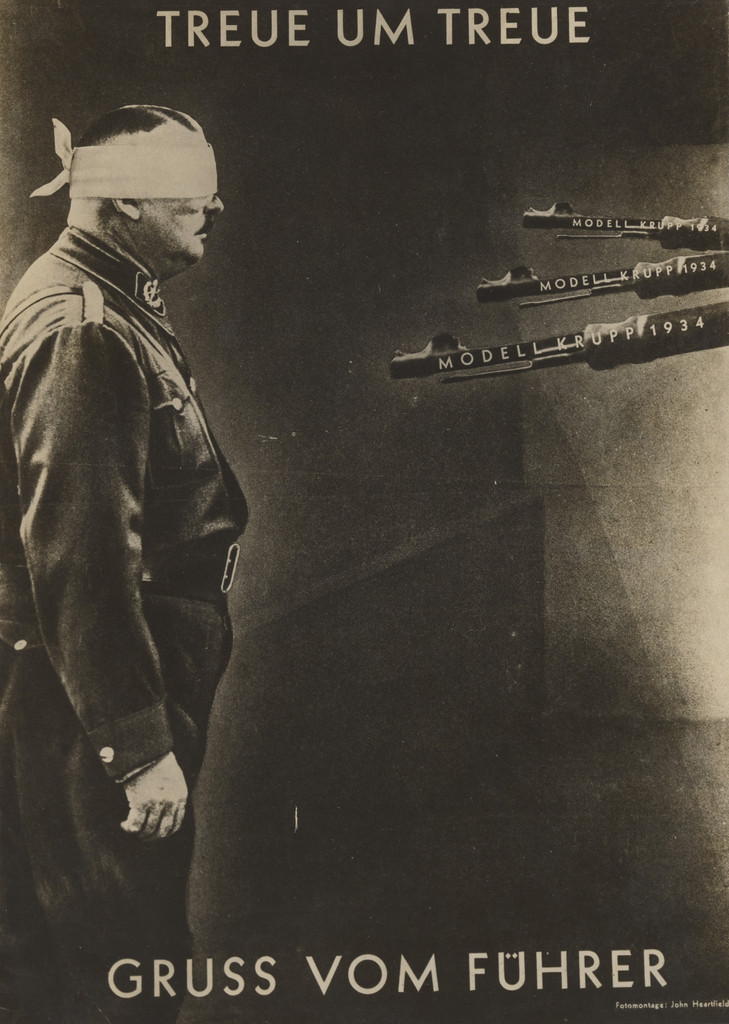
From 1930 to 1938 Heartfield’s political montages regularly appear on the cover of the Arbeiter-Illustrierte-Zeitung, a popular weekly whose circulation, as many as 500,000 copies at its height, rivalled any other contemporary German magazine. In these years he creates 240 political photomontages, mainly criticising fascism and Nazism: satirising Hitler and the Nazis, he subverts Nazi symbols, above all the swastika, in order to undermine their propaganda message.
1932–1933
Montage posters on the streets of Berlin
Through rotogravure, an engraving process whereby pictures, designs and words are engraved into the printing plate or cylinder, Heartfield’s montages in the form of posters are distributed in the streets of Berlin from 1932 until the Nazis come to power in 1933.
April 1933
Flight from Germany over the Sudeten Mountains
In April 1933, when the Nazi Party takes power, the SS break into Heartfield’s apartment on Good Friday, but he escapes by jumping from his balcony and hiding in a trash bin; on foot over the Sudeten Mountains he flees to Czechoslovakia, and later rises to number five on the Gestapo’s most-wanted list.