 Jan van GoyenDutch, 1596–1656
Landscape with Stream
May one see it?
Not receiving at present

Victoria and Albert Museum
London, United Kingdom
It belongs to the collection, but is not on display at present.
- Checked
- In this state since
- Source
- The museum
About the painting
Jan van Goyen (1596-1656) was a prolific painter and draughtsman (1200 paintings and 800 drawings) but he did not gain recognition until the late 19th century.
Among his pupils were the famous genre painter Jan Steen (1626-1679) who was also his son-in-law, and the Italianate landscapist Nicolaes Berchem (1620-1683).
Read on
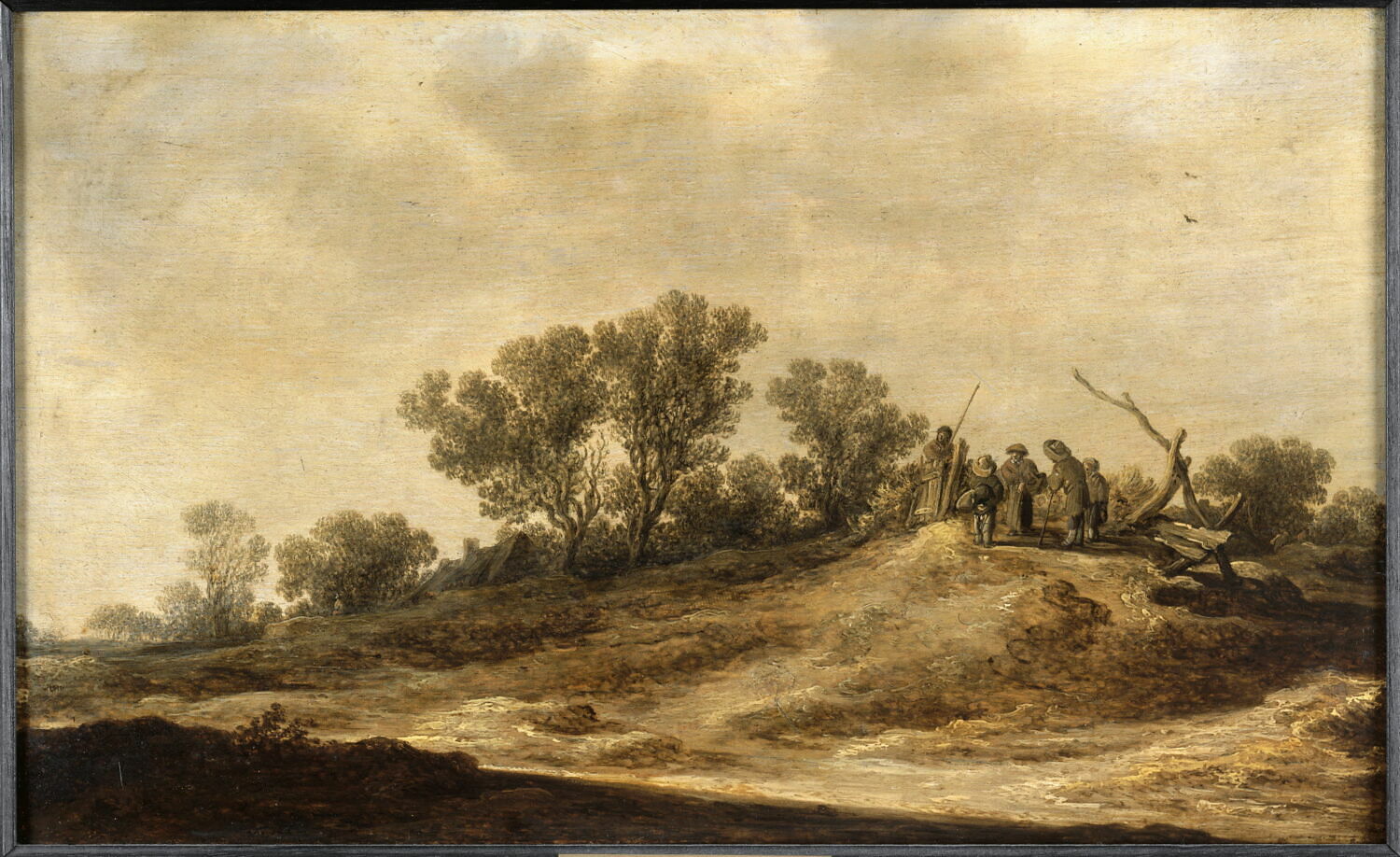
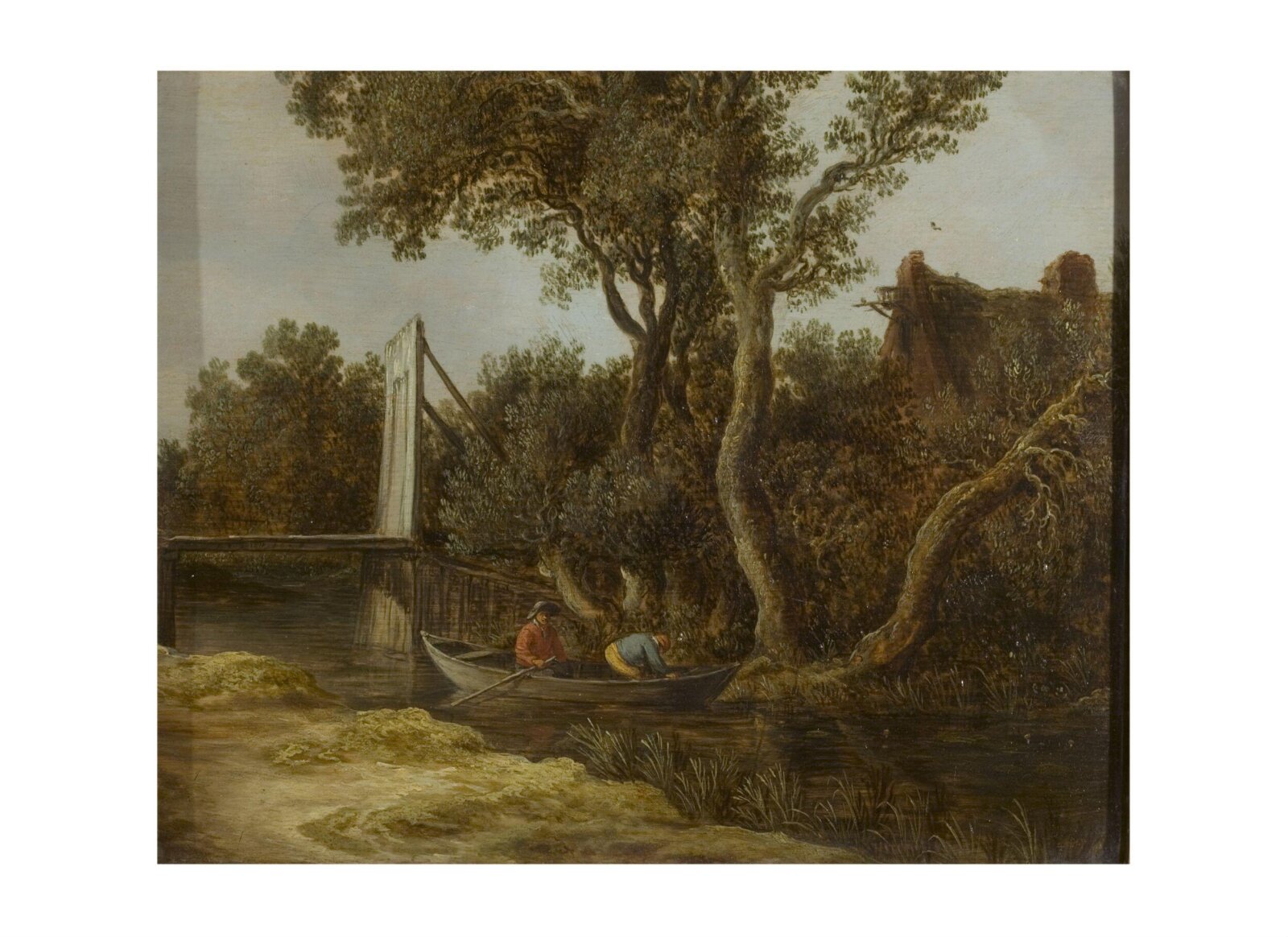
This painting showing a landscape with a stream and two figures on a small boat, a wooden bridge behind, belongs to the end of van Goyen's first period; that is until the early 1630s, and witnesses the new attention for nature and their familiar surroundings in 17th century Dutch art. In this picture, one can still feel the influence of his master, the great landscape painter Esaias van de Velde who used a palette dominated by brown and green tones and compositions depicted from a rather close point of view. In this painting, which follows roughly the same scheme as his master's, van Goyen introduced diagonals features such as the river stream, a pictorial solution he would particularly favour in the following decade so as to widen his compositions and enhance the sense of depth. This painting, which date had long been debated, is quite close in style to Landscape with wagons, dated 1632, Westfries Museum, Hoorn, in which he however gave a greater dimension to the open air.
Victoria and Albert Museum
Particulars
- Accession number
- P.40-1910
What it shows
In the catalog
Sources
- Victoria and Albert Museum
- Image: Victoria and Albert Museum — © Victoria and Albert Museum, London
Meanwhile, in the life of Jan van Goyen
The whole life1618–1632 · Workplace
Leiden
late 1620s
One of the creators of the “panoramic style”
In the late 1620s the “panoramic style” took shape in Dutch landscape painting; van Goyen, together with Salomon van Ruysdael and Pieter de Molijn, is regarded as its exponent and one of its creators. His compositions are marked by a low horizon, a high sky and taut diagonals of perspective.
1629
Meets Jan Porcellis
In 1629 van Goyen met Jan Porcellis, who bought a house van Goyen was then selling. The encounter left its mark: after moving to The Hague in 1632 van Goyen began painting the seascapes and river views most typical of his art, and partly under Porcellis’s influence he worked out a laconic three-plane colour scheme, the “tonal landscape”.
1630s
The last known victim of the tulip mania
Van Goyen’s pictures rarely fetched high prices, so he sought other income: he worked as an art dealer and auctioneer and speculated in tulips and real estate, becoming the last known victim of the tulip mania of the 1630s. Real estate, usually a safe investment, left him with enormous debts; one of his houses was rented by Paulus Potter.