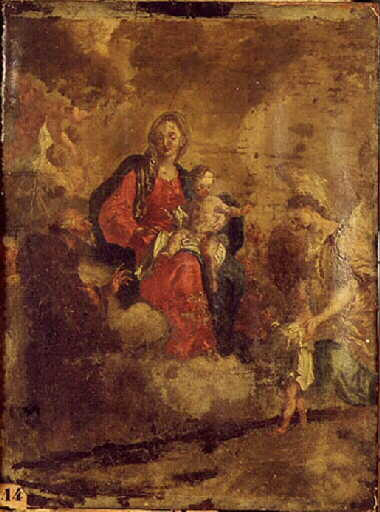
 Alonso CanoSpanish, 1601–1667
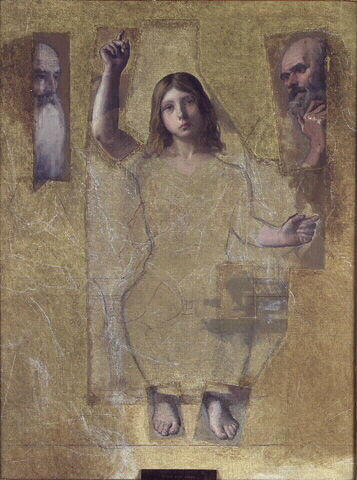
La Vierge et l'Enfant Jésus
Can I see it?
Unknown
Where is “La Vierge et l'Enfant Jésus” now? Collection: Musée Ingres-Bourdelle, Montauban. Unknown.
Montauban, France
The owner is known; whether it is on view today is not.
- In this state since
- Source
- The museum
About the painting
Museum text in French
Peinture à l'huile sur toile marouflée sur bois
Musée Ingres-Bourdelle
Details
- Accession number
- MI.22.3.5
What it shows
In the catalog
Sources
- Musée Ingres-Bourdelle
- Image: Musée Ingres-Bourdelle — © Roumagnac Guy; Ministère de la Culture (France), base Joconde
In the life of Alonso Cano
The whole life19 March 1601
Born
1637
Called to Madrid by the Count-Duke of Olivares
He begins preparing for a journey to Madrid, where he is called to work for the Count-Duke of Olivares, a close associate of King Philip IV. The summons may have come at Velázquez’s suggestion.
winter 1638
Settles in Madrid
He settles in Madrid; closeness to the court lets him see the royal collections, rich in 16th-century Venetian painting and in Velázquez’s recent works. This helps explain the evolution of his style from the tenebrism borrowed from Caravaggio to a more colourful manner and elegant figures recalling the paintings of Van Dyck.
1644
His wife is found murdered; suspicion falls on Cano
Cano’s wife is found murdered with fifteen stab wounds; an Italian painter who lived in his house (by another account, a servant) is accused but vanishes, and because of discord between the spouses suspicion falls on Alonso himself. The judges, mindful of his unbalanced temper, blame Cano: he is arrested and tortured but is not found guilty and, not without the king’s intervention, is released.
1652
Returns to Granada and becomes a canon
Back in his native city (he had been living in the province of Valencia), he receives holy orders with the help of Philip IV, becomes a canon and chief architect of the cathedral, decorates its main chapel and is appointed its chief painter; by another account, the orders gave him protection from further prosecution. He brings books, engravings and tools with him, apparently planning to stay for good.
3 September 1667
Died