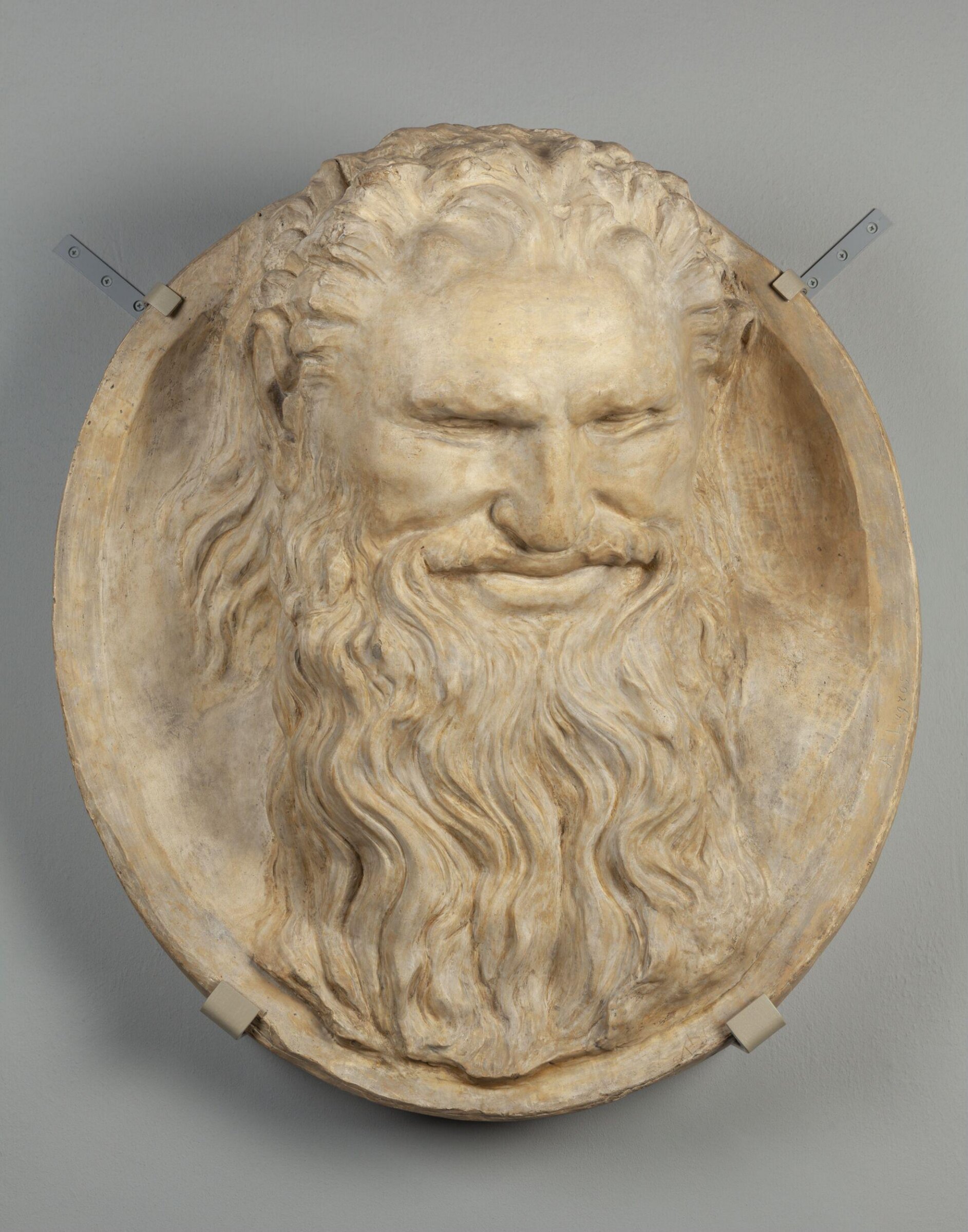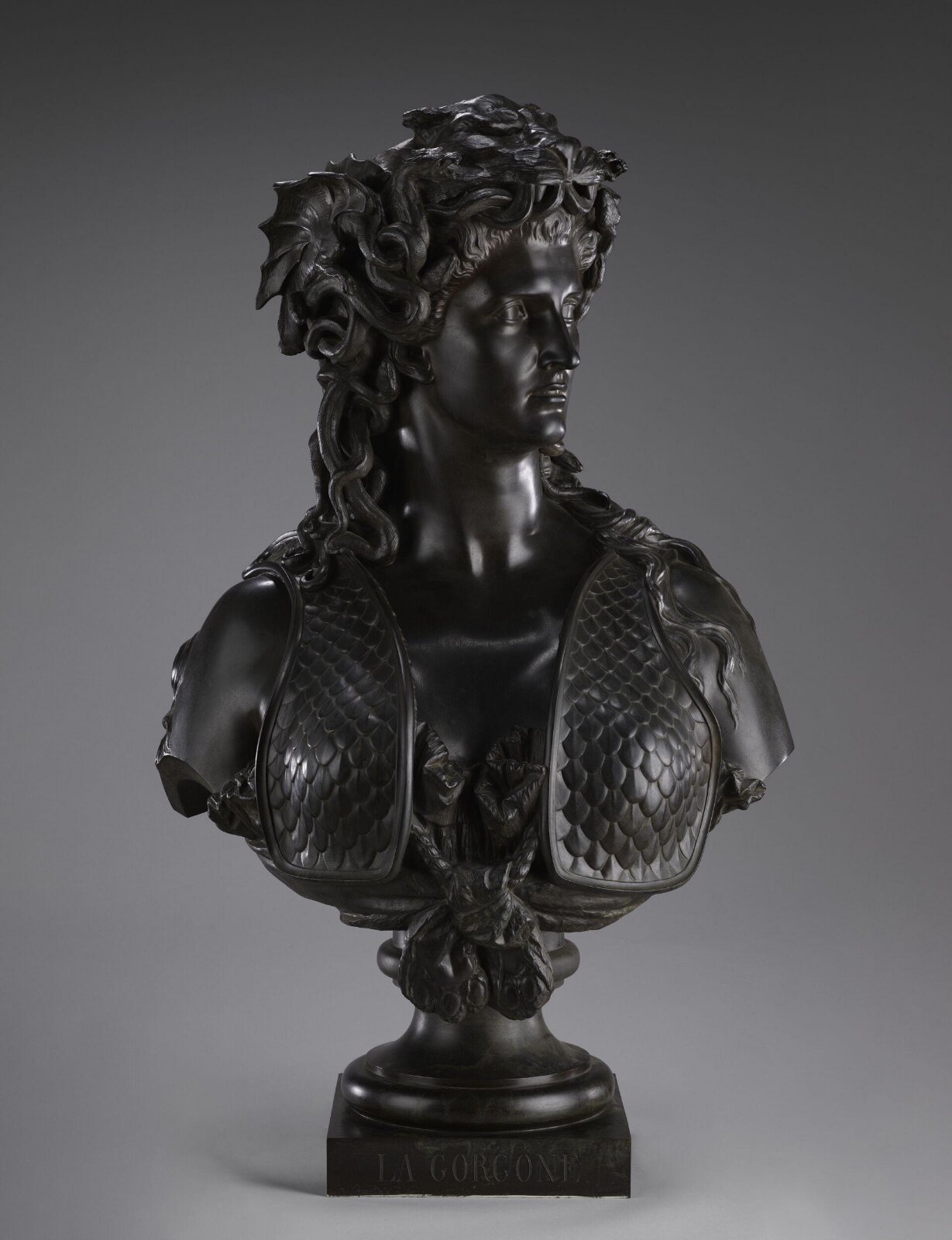
La Gorgone (The Gorgon)
May one see it?
Yes, receiving visitors

London, United Kingdom
RoomSculpture, Room 21a, The Dorothy and Michael Hintze Galleries
On public display.
- Checked
- In this state since
- Source
- The museum
About the sculpture
The sculptor of this head, Adèle d'Affry, was born in Fribourg, Switzerland, but married Carlo Colonna, Duke of Castiglione, in Rome, and was generally referred to by contemporaries as the Duchesse Colonna. She adopted the male name 'Marcello' to demonstrate her seriousness and to distinguish her works from those of women amateurs. She was largely self-taught. She worked in Paris, Rome and Fribourg and was a friend of the French sculptors Carpeaux and Clésinger.
Read on
This bust is one of a number of subjects depicting powerful women. While the fearsome head of the Gorgon, or Medusa, had long been a sculptural motif - the V&A for instance has an important small bronze head of Medusa by Cellini - it is here translated into an unprecedently monumental form. While this composition was developed into a full size figure used in 1870 to decorate the Paris Opera, its reception in England was mixed. A South Kensington curator of the 1870s described it as a 'theatrical rendering of an ill-conceived ideal'. A reviewer in the 'Art Journal' of 1st June 1866 described it, after seeing it exhibited in the Royal Academy that year, as ...'a work admirable for spirit, power and firm execution [but] it is to be regretted that a coarsely voluptuous bust taints this noble conception with vulgarity'.
Victoria and Albert Museum
Particulars
- Accession number
- 239-1866
What it shows
In the catalog
Sources
- Victoria and Albert Museum
- Image: Victoria and Albert Museum — © Victoria and Albert Museum, London