René MagritteBelgian, 1898–1967
La durée poignardée (Time Transfixed)
May one see it?
Yes, receiving visitors

Art Institute of Chicago
Room396Chicago, United States
On public display.
- Checked
- 4 hours ago
- In this state since
- Sep 28, 2026
- Source
- The museum's own collection data
About the painting
Time Transfixed (French: La durée poignardée) is a 1938 oil on canvas painting by the Belgian surrealist René Magritte. It is part of the permanent collection of the Art Institute of Chicago and is usually on display in the museum's Modern Wing.
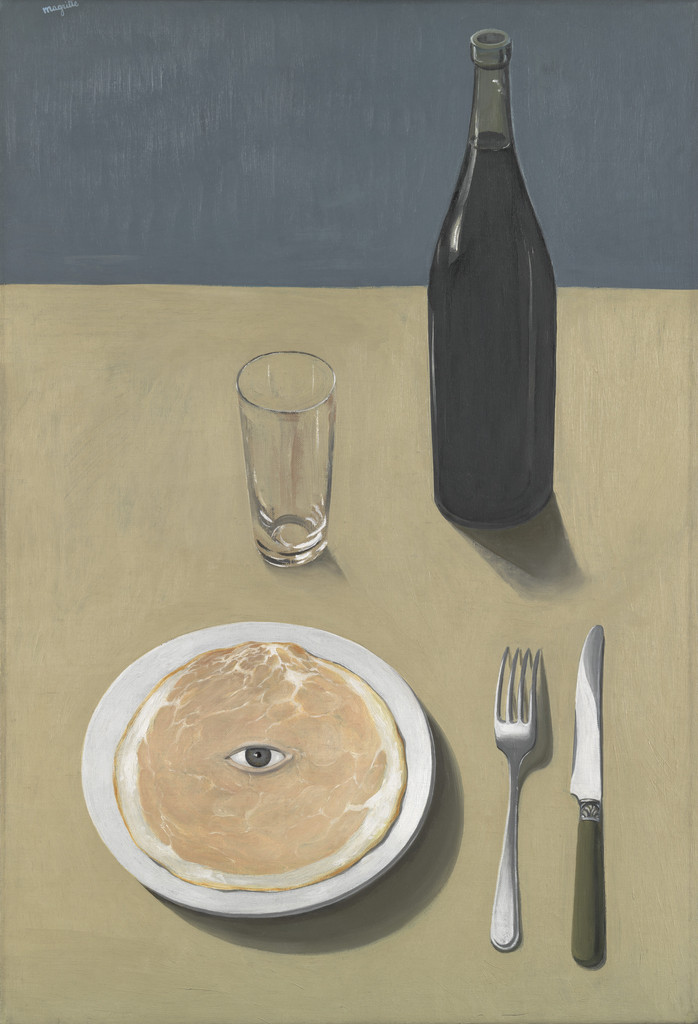
The painting was one of many done for surrealist patron and Magritte supporter Edward James. This was the second painting delivered to James for his London ballroom. The first was the portrait of James, Not to be Reproduced. Time Transfixed was purchased by the Art Institute from James in 1970 when he was raising capital to build his surrealist sculpture garden Las Pozas.
The painting depicts an LMS Stanier 5MT Black 5 4-6-0 Locomotive jutting out of a fireplace, at full steam, in an empty room. Above the mantelpiece is a tall mirror. Only the clock and two candlesticks standing on the mantelpiece are reflected in the mirror.
Read on
Like other Surrealist artists, René Magritte was influenced by Freud's psychoanalytic theories. Time Transfixed has been interpreted as an example of the Freudian concept of the uncanny.
Particulars
- Accession number
- 1970.426
What it shows
In the catalog
Sources
- Art Institute of Chicago: the museum's own open data · fetched 4 days ago
- Image: Art Institute of Chicago — © the artist or rights holder
Meanwhile, in the life of René Magritte
The whole life1930s
The patronage of Edward James
The British Surrealist patron Edward James let Magritte stay rent-free in his London home, where he studied architecture and painted; James is depicted in two paintings of 1937, “The Pleasure Principle” and “Not to Be Reproduced”.
1930–1954 · Residence
René Magritte House
1936
First solo exhibition in the United States
In 1936 his first solo exhibition in the United States was held at the Julien Levy Gallery in New York.
1936–1940
An affair with Sheila Legge and a marriage in crisis
In 1936 Magritte met the young performance artist Sheila Legge and began an affair with her; he arranged for his friend Paul Colinet to entertain and distract Georgette, but this led to an affair between Georgette and Colinet. The couple did not reconcile until 1940.
1938
Exhibition at the London Gallery
In 1938 an exhibition of his work was held at the London Gallery, following the New York solo show of 1936.
from 1940
Stays in occupied Brussels and breaks with Breton
During the German occupation of Belgium Magritte remained in Brussels, which led to a break with Breton.