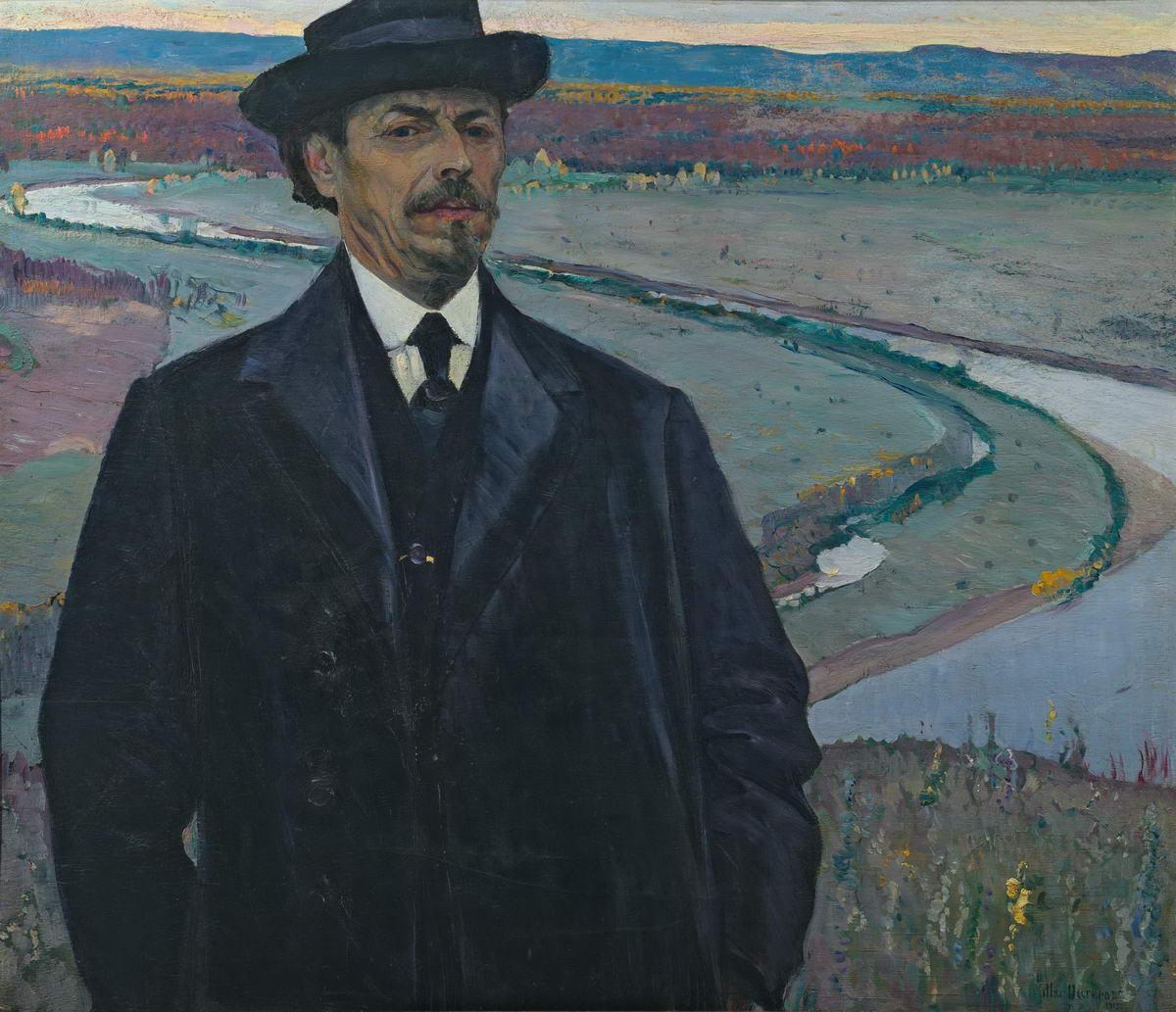
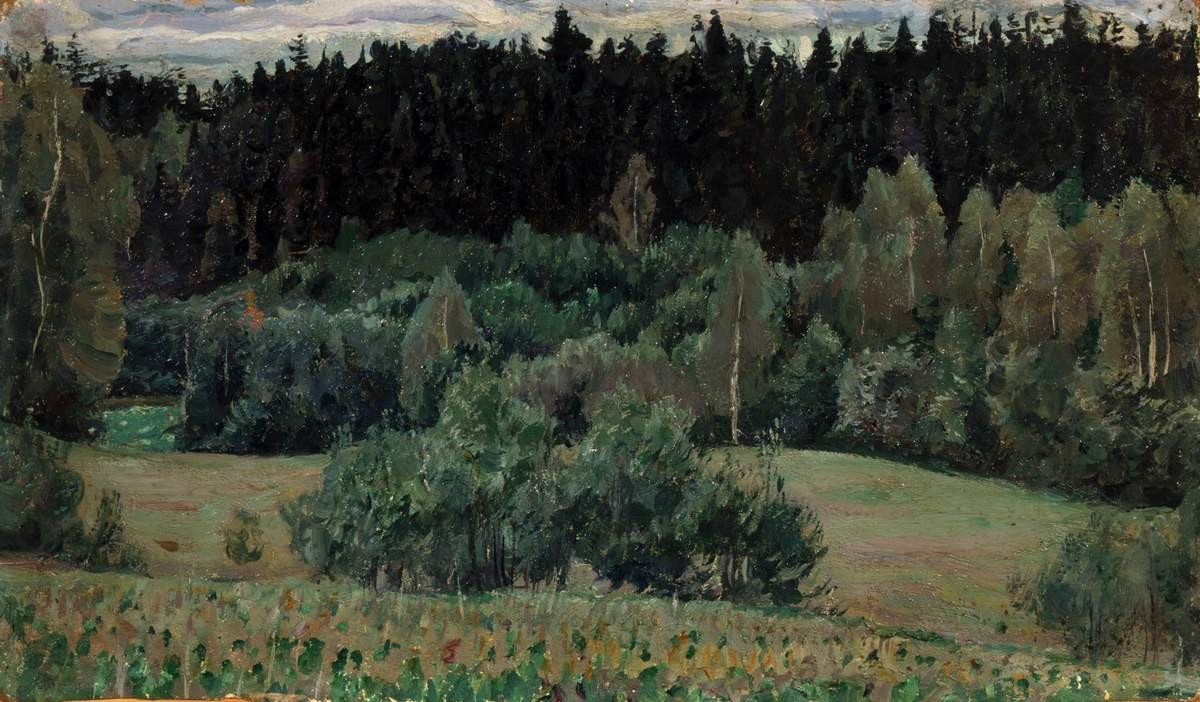
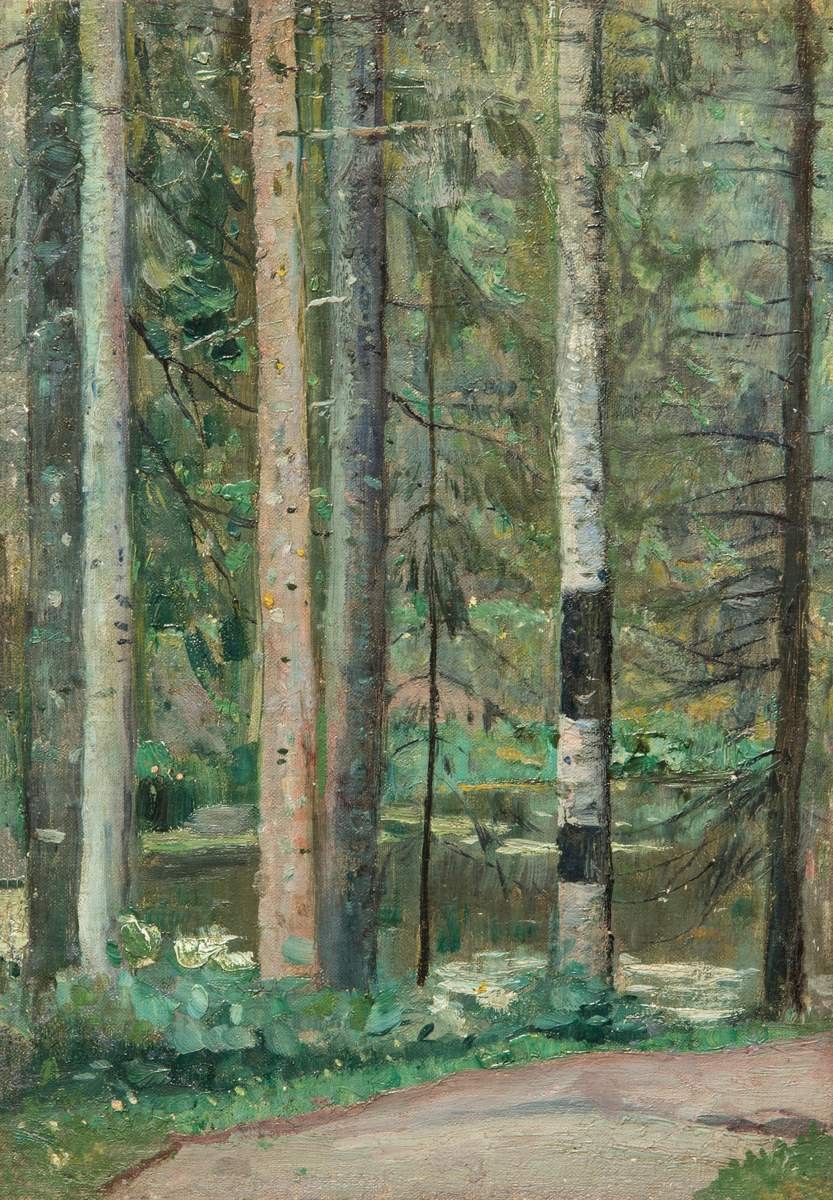
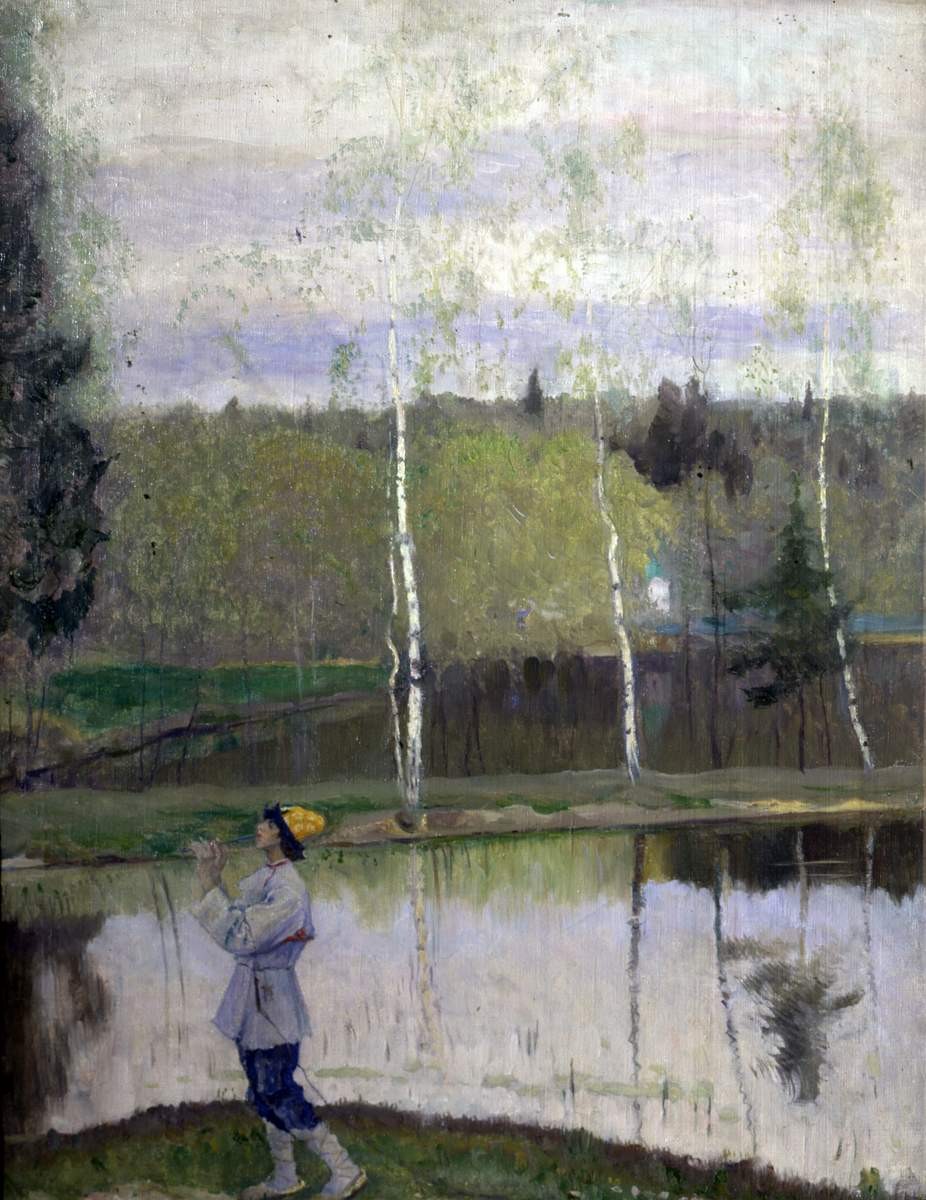
Mikhail Nesterov1862–1942
Крым
May one see it?
Unknown
Ufa, Russia
The owner is known; whether it is on view today is not.
- In this state since
- Source
- The museum
Particulars
- Accession number
- Ж-209
In the catalog
Sources
- The State Catalogue of the Museum Fund of Russia
- Image: Bashkir State Art Museum (Nesterov Museum) — © Башкирский государственный художественный музей имени М. В. Нестерова · Госкаталог музейного фонда РФ
Meanwhile, in the life of Mikhail Nesterov
The whole life1890s
Studies Byzantine art
To master monumental painting, new to him, Nesterov travelled to Rome, Palermo, Constantinople and Ravenna, where he could study the traditions of Byzantine art (other accounts name Rome and Istanbul).
1898
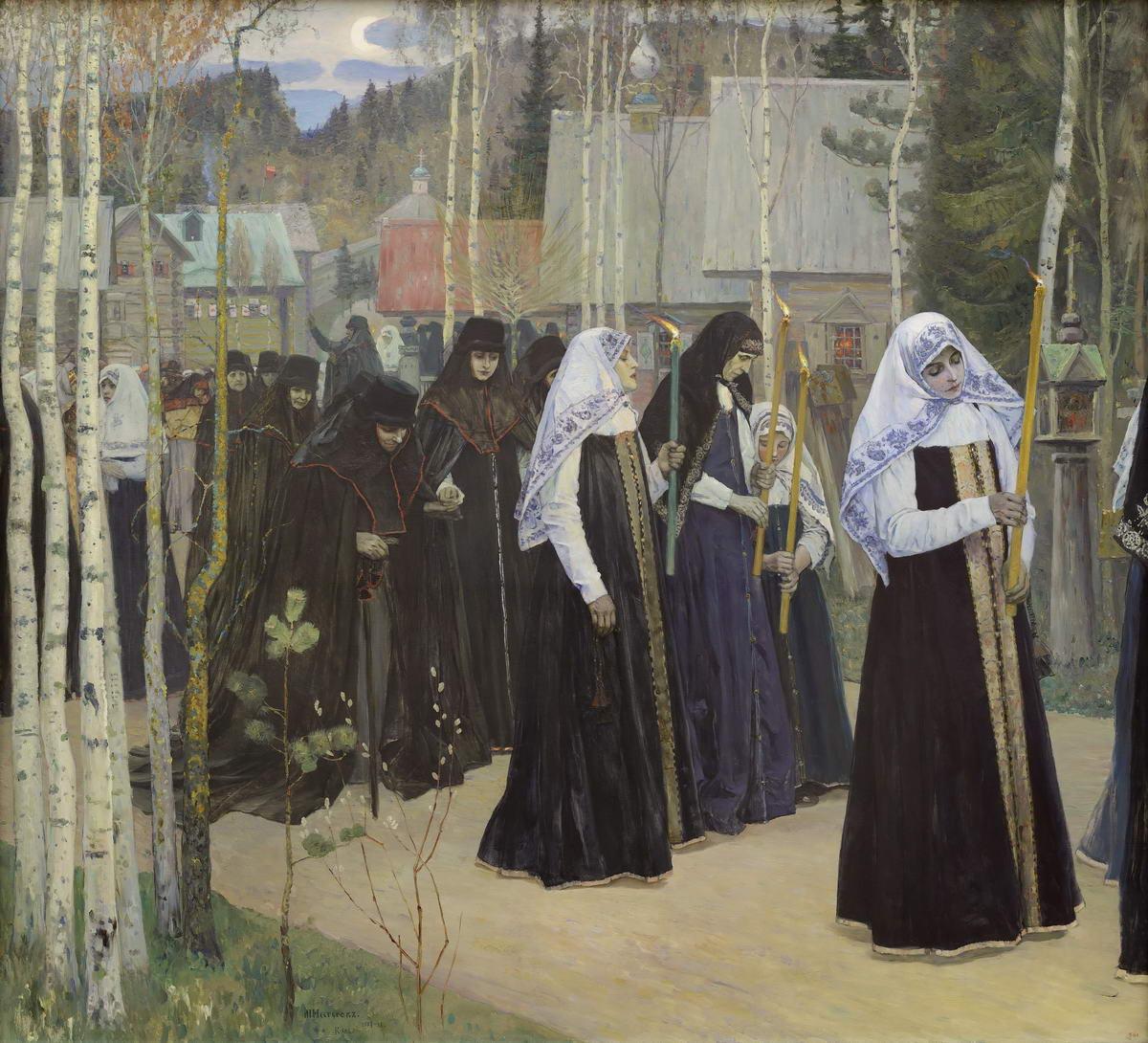
Made Academician for “The Great Tonsure”
“The Great Tonsure” (1897–1898), a young girl led by nuns to take the veil at a forest Old Believer hermitage, was warmly received by the public, and for it Nesterov was made an Academician of painting; in 1910 he became a Full Member of the Academy of Arts.
1898–1902
Life with Yulia Urusman
From 1898 until his second marriage in 1902 Nesterov was together with Yulia Nikolaevna Urusman (1877–1962). In these years the artist's daughter Vera (1899–1998) and sons Mikhail (1901–1921) and Fyodor, who lived from 23 February to 7 July 1902, were born.
1898–1904
Decorates the church at Abastumani
At the invitation of Tsesarevich George Alexandrovich, younger brother of Nicholas II, Nesterov decorated the palace church of St Alexander Nevsky at Abastumani, personally executing more than 50 compositions on the walls and iconostasis, yet he was dissatisfied with the result. By contrast, he refused to paint the Orthodox cathedral in Warsaw, unwilling to serve as “propaganda” for Russification in a Polish city.
1901
Journey to the Solovetsky Monastery
Seeking a deeper knowledge of the spiritual world of Russian monasteries, and material for his planned “Holy Rus”, Nesterov travelled to Solovki on the White Sea. The North and its monks inspired “Silence”, “The Little Fox”, “Quiet Life”, “The Solovetsky Cloister” and “Dreamers”.
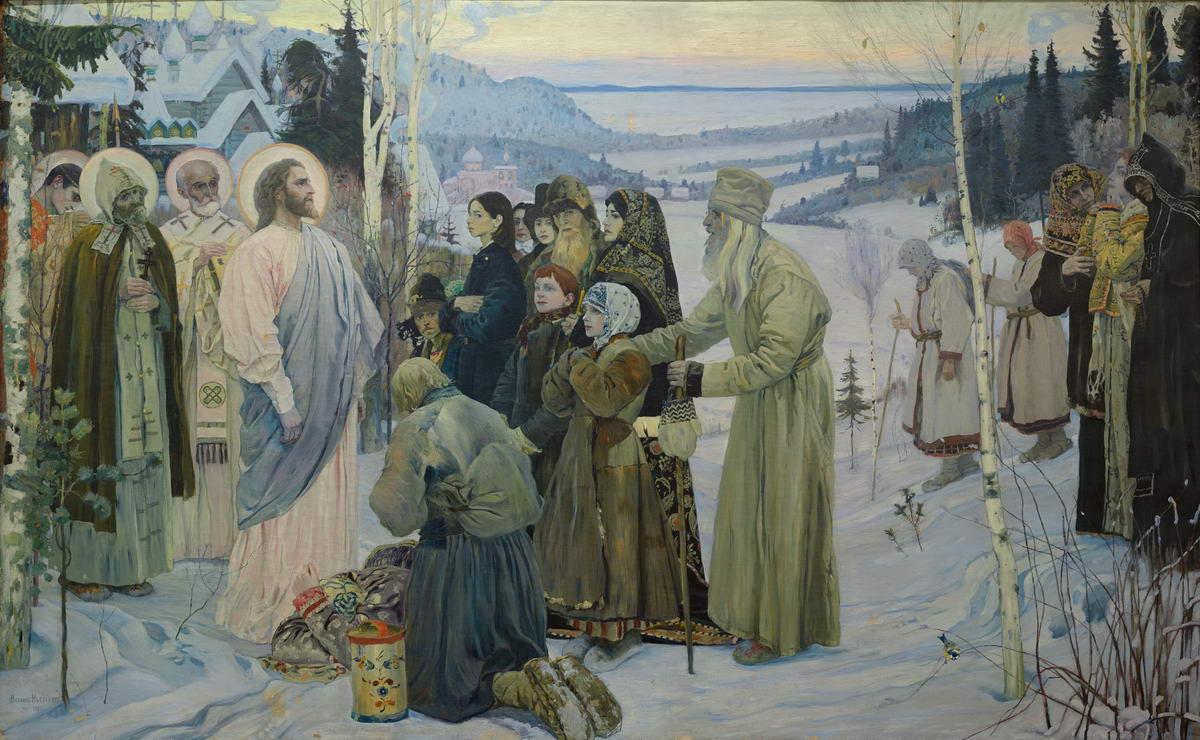
1902
Marries Ekaterina Vasilyeva
In spring 1902 Nesterov exhibited in Kiev his programmatic painting “Holy Rus” (“Come unto Me, all ye that labour and are heavy laden…”), finished in rough — Christ surrounded by saints and by pilgrims, the people's Russia. Ekaterina Petrovna Vasilyeva, who came to see it, became his wife a few months later — an acquaintance that proved a turning point in his life.