 Kazimir MalevichRussian, 1879–1935
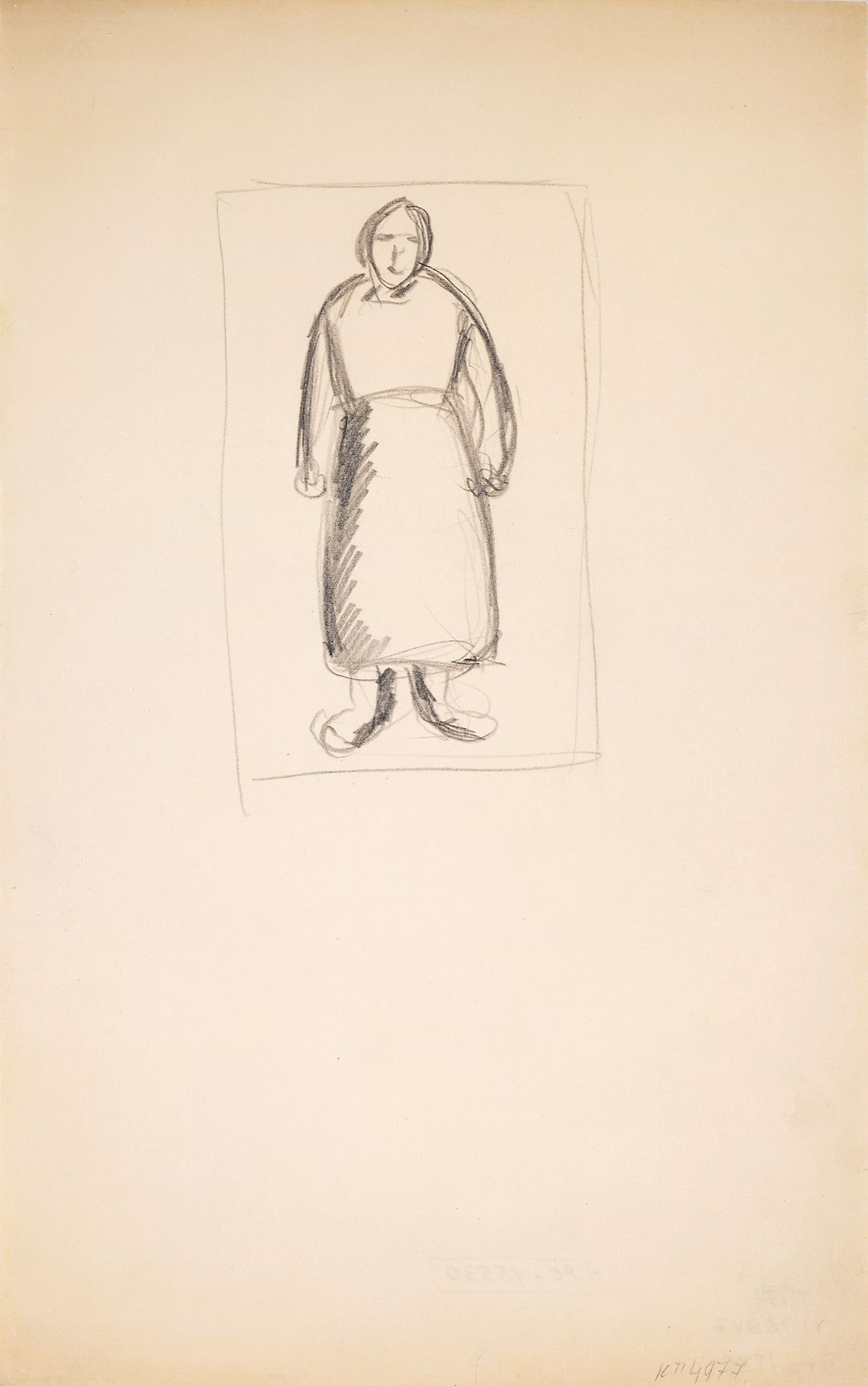
Крестьянка
Can I see it?
Unknown
Where is “Крестьянка” now? Collection: Tretyakov Gallery, Moscow. Unknown.

Moscow, Russia
The owner is known; whether it is on view today is not.
- In this state since
- Source
- The museum
About the work
Museum text in Russian
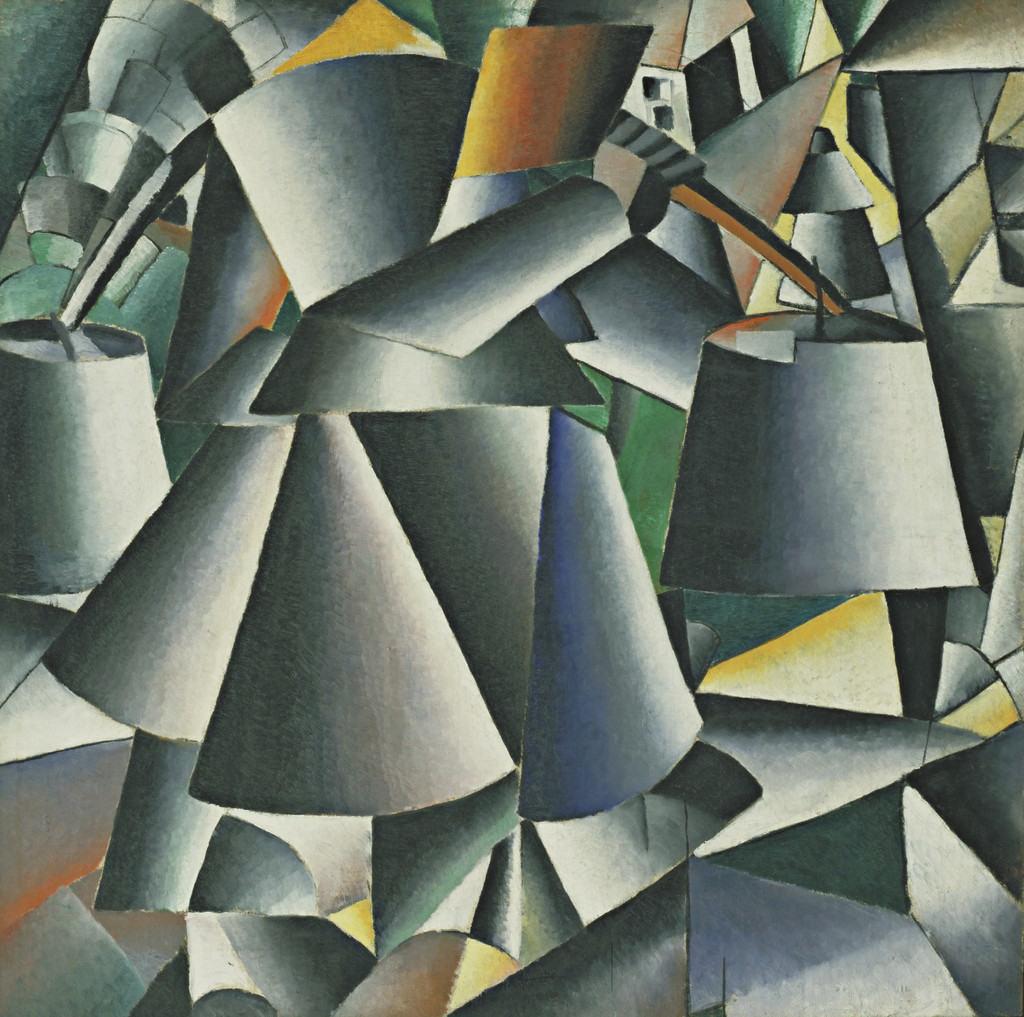
Рисунок «Крестьянка» принадлежит к серии постсупрематических штудий Малевича и является одним из эскизов женской фигуры для картины «Жатва», хранящейся в Государственном Русском музее. Сама картина датирована автором 1909 годом, хотя на самом деле, как и многие другие работы, написана в 1928–1929 годах к персональной выставке.
Создав в 1910-х супрематизм как универсальную систему взаимоотношений формы и цвета, Малевич продолжает разрабатывать его пластические возможности, интегрируя в фигуративное искусство, супрематические принципы. Он возвращается к своим фигуративным сюжетам 1910-х, интерпретируя их согласно новому пониманию искусства, и используя в них весь супрематический опыт.
Read on
Все пластические задачи, уже однажды решенные с помощью беспредметных форм, ставятся им заново и обретают новый смысл в применении к постсупрематической предметности. Поиск баланса форм, их взаимодействия с пространством, противопоставление тяжести и легкости, пустоты и наполненности, разреженности и плотности теперь становятся средствами изображения фигур и пейзажей.
Tretyakov Gallery
Details
- Accession number
- РС-15530
In the catalog
Sources
- Tretyakov Gallery
- Image: Tretyakov Gallery — © State Tretyakov Gallery
In the life of Kazimir Malevich
The whole life1923–1926
Director of the Museum of Artistic Culture and GINKhUK
In 1923 Malevich was appointed acting director of the Petrograd Museum of Artistic Culture and began research and teaching there, surrounded by pupils who had followed him. In 1924 the museum was renamed, and from 1924 to 1926 he was director of the Leningrad State Institute of Artistic Culture (GINKhUK), where he headed the formal-theoretical department; he lived in the Myatlev house on St Isaac’s Square, where the institute was housed, from 1926 until his death.
10 June 1926
“A monastery on state supplies”: the closure of GINKhUK
On 10 June 1926 “Leningradskaya Pravda” published G. Seryi’s article “A Monastery on State Supplies”, which became the pretext for closing the institute: the newspaper called it a government-supported monastery rife with “counterrevolutionary sermonizing and artistic debauchery”. The collection of the institute’s papers prepared for print, with Malevich’s “Introduction to the Theory of the Additional Element in Painting”, was annulled, and in the autumn GINKhUK was liquidated; Malevich and his colleagues continued to work at the Institute of Art History until their dismissal in June 1929.
8 – 29 March 1927
Warsaw: a solo exhibition and a lecture
In March 1927 Malevich travelled abroad on an official trip: in Warsaw his solo exhibition was held at the Polish Arts Club in the Polonia Hotel. He met Polish artists, among them former pupils — Władysław Strzemiński, the sculptor Katarzyna Kobro and Henryk Stażewski; he was mostly greeted with enthusiasm, though Mieczysław Szczuka reproached him as a Romantic who loved painterly means for their own sake.
29 March – 5 June 1927
Berlin and the Bauhaus: the Great Berlin Art Exhibition
At the end of March 1927 Malevich left Warsaw for Berlin with the Polish poet and critic Tadeusz Peiper; on 7 April they visited the Bauhaus in Dessau, where he met Walter Gropius and László Moholy-Nagy. At the Great Berlin Art Exhibition (7 May – 30 September) he was given a hall — over seventy works spanning his whole oeuvre; the show has been called a defining moment in the Western reception of Malevich.
1 November 1929
A solo exhibition at the Tretyakov Gallery
On 1 November 1929 the “Exhibition of Paintings and Graphic Works by K. S. Malevich” opened at the State Tretyakov Gallery. In 1930 an abridged version of the exhibition was shown in Kiev (February–May), and the artist’s works were exhibited in Berlin and Vienna.
20 September – December 1930
Arrested by the OGPU on a charge of espionage
In the autumn of 1930 Malevich was arrested by the OGPU on a charge of espionage: he was interrogated in Leningrad and threatened with execution, and released in early December — the investigator V. A. Kishkin showed no fanaticism. Shortly before, he had lost his job: the department he headed at the Institute of Art History had been closed.