John van Nost I
King William III
May one see it?
Yes, receiving visitors

On public display.
- Checked
- In this state since
- Source
- The museum's own collection data
About the sculpture
Object Type
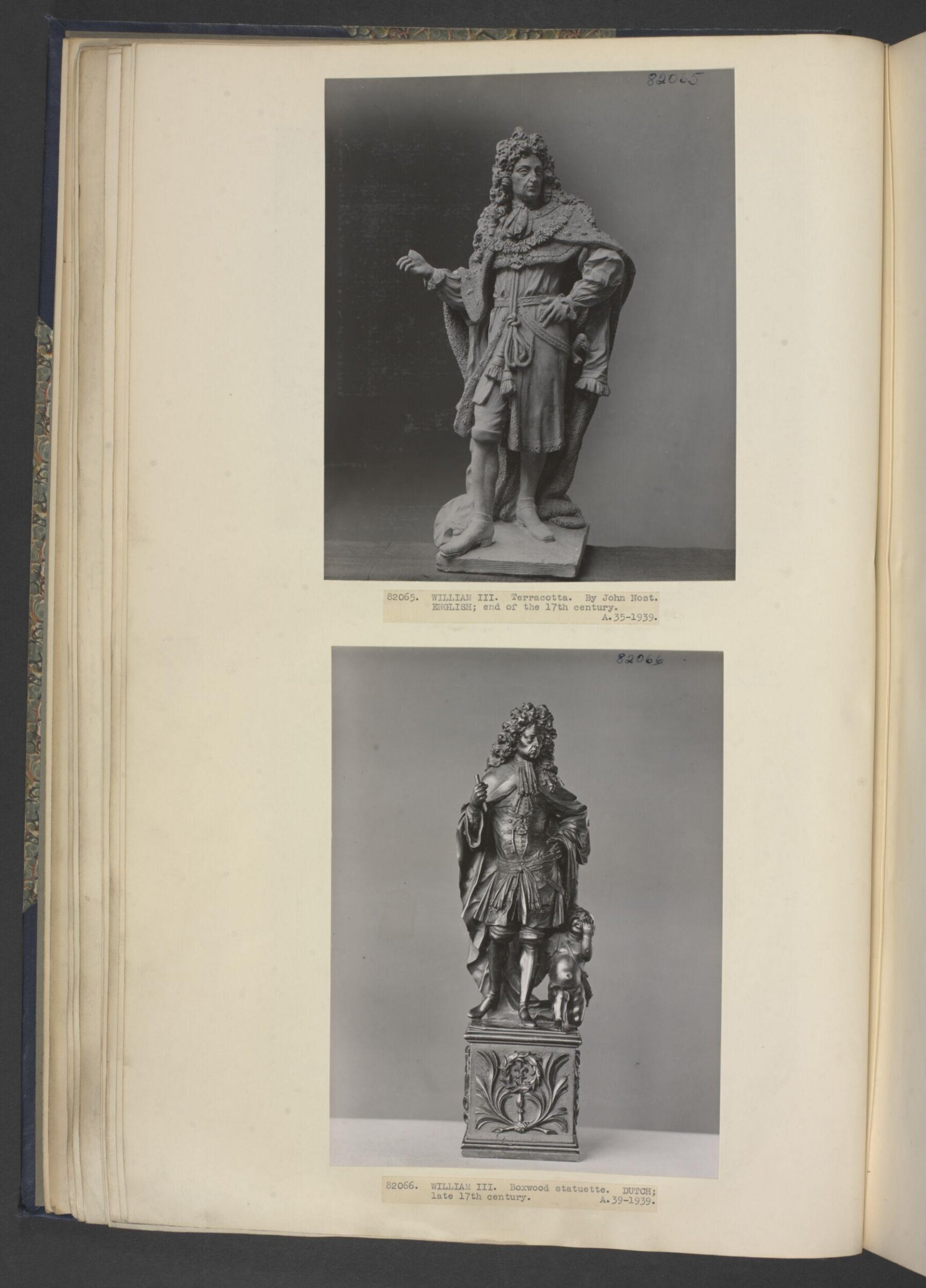
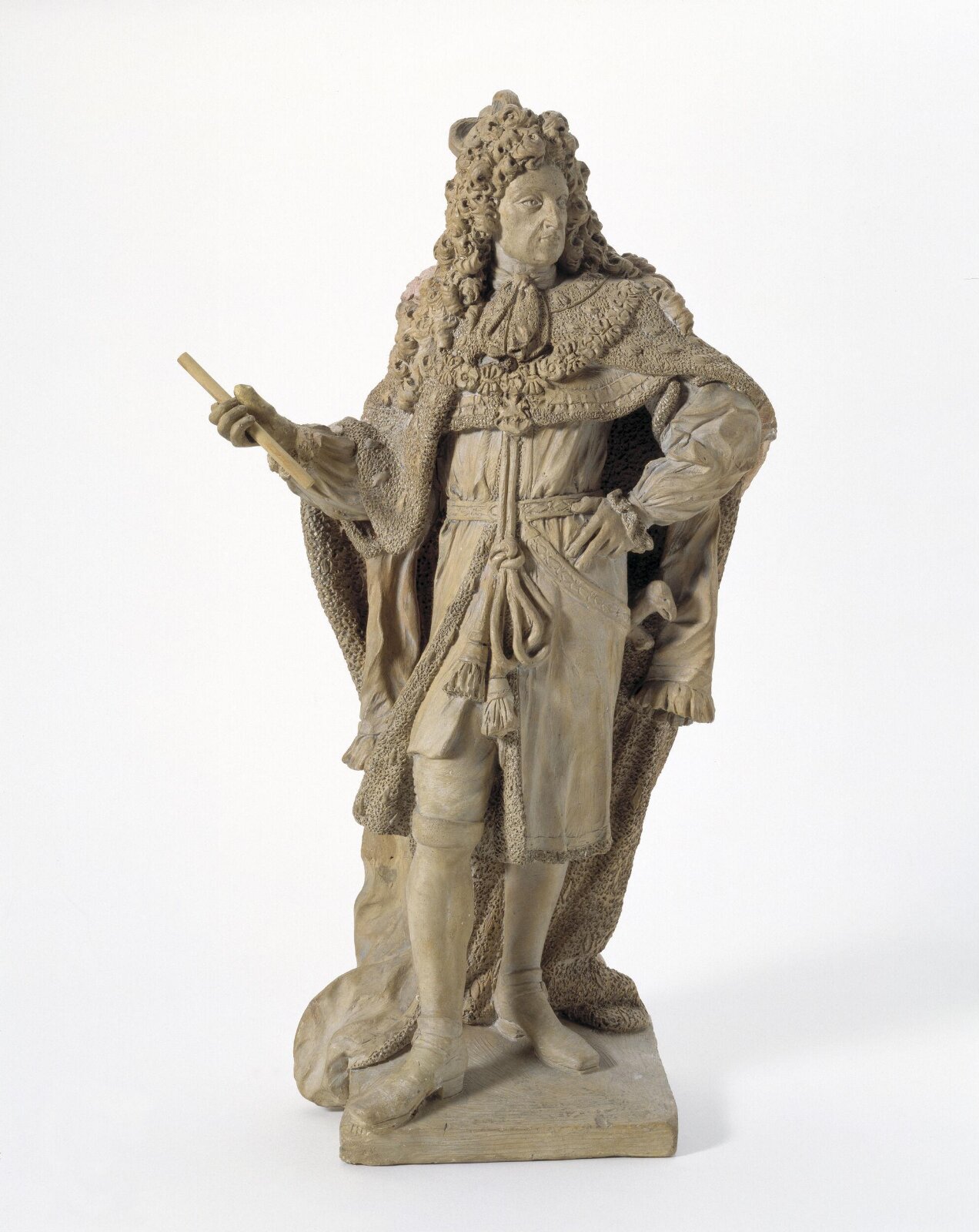
The King is shown holding a sceptre and looking towards his left. He wears a cloak lined with ermine (a white fur), the Chain and Order of the Garter, and a long curling wig. It is thought to be the original model for the lifesize stone figure of William III on the Royal Exchange erected in 1695. The statue has since been lost, following a fire at the Exchange of 1838.
People
John Nost Nost (1686-1710) was a native of Malines in The Netherlands. He is first recorded in England around 1678, working at Windsor Castle under Hugh May. His workshop was in the Haymarket and he specialised in lead figures, though he also worked in other materials, such as stone and terracotta. He had many important patrons and was commissioned to make a number of garden figures for great houses and palaces, including Castle Howard and Hampton Court Palace.
Materials & Making
Read on
Terracotta (baked clay) was commonly used for sculptors' models. The clay could be modelled freely before firing, and when fired was a durable material which could be painted or scaled up into a larger piece. Often, as must have happened with this piece, the terracotta model was valued on its own account.
Victoria and Albert Museum
Particulars
- Accession number
- A.35-1939
What it shows
In the catalog
Sources
- Victoria and Albert Museum: the museum's own open data · fetched 12 days ago
- Image: Victoria and Albert Museum — © Victoria and Albert Museum, London