 Viktor Vasnetsov1848–1926
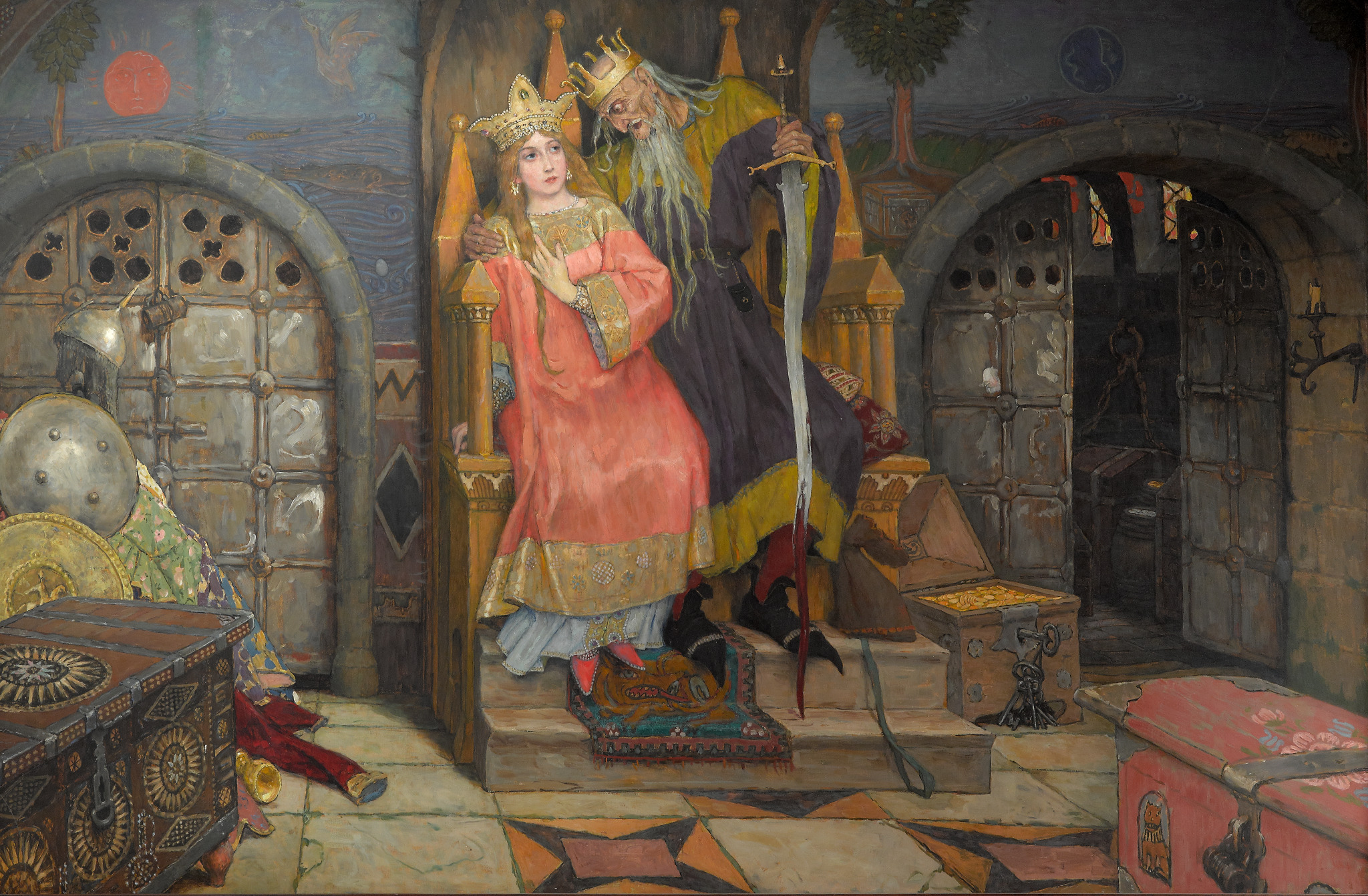
Кащей Бессмертный
May one see it?
Unknown

Tretyakov Gallery
Moscow, Russia
The owner is known; whether it is on view today is not.
- Source
- The museum
About the painting
In the museum's own words — in Russian
Картина «Кащей Бессмертный» является частью живописного цикла «Поэма семи сказок», в который также входят произведения: «Спящая царевна» (1913–1917), «Царевна-Несмеяна» (1916), «Баба-Яга» (1917), «Царевна-лягушка» (1918), «Сивка-Бурка» (начало 1920-х) и «Ковер-самолет» (1920–1923); 1925). Васнецов задумал их в 1880–1890-е годы как отдельные произведения, однако в 1901 году объединил в серию сказочных картин. В годы Первой мировой и Гражданской войны в России эти картины стали для художника своеобразным живописным дневником, в котором нашли отражение его поиски народных идеалов добра и красоты. Обращаясь к многовековому опыту своего народа, он размышлял о правде жизни и ее духовно-нравственных основах, о любви и непременной победе добра над злом.
Read on
Мотивом для задуманной Васнецовым картины послужила сказка о «Царевне-лягушке». В одном из вариантов, записанных А.Н. Афанасьевым, Василиса Премудрая, после того как Иван-царевич сжег в печи ее лягушачью шкурку, оказалась в царстве Кащея Бессмертного. В картине герои изображены сидящими на высоком «средневековом» троне, Кащей пытается обнять царевну, однако она отстраняется от него. Как известно, не во всех сказках Кащей является отрицательным персонажем, поэтому Васнецов подчеркивает его образ антигероя с помощью деталей – в руках он держит окровавленный меч, которым убивал добрых молодцев; его голову украшает «змеиная» корона. Развивая тему столкновения добра со злом, художник композиционно и колористически противопоставляет Василису и Кащея.
Главной частью изобразительного нарратива композиции стала настенная роспись, которая словно своеобразная карта раскрывает тайну, как победить Бессмертного Кащея: справа рядом с деревом помещен сундук и выбежавший из него заяц; слева – улетающая в небо утка и щука, передавшая Ивану-царевичу яйцо с иглой, на конце которой сокрыта смерть злодея.
Над картиной художник работал между 1917 и 1919 годами. Живописное произведение продолжает религиозно-философские размышления художника и вечном противостоянии добра и зла.
Tretyakov Gallery
Particulars
- Accession number
- ДМВ Ж-96
In the catalog
Sources
- Tretyakov Gallery
- Image: Tretyakov Gallery — © State Tretyakov Gallery
Meanwhile, in the life of Viktor Vasnetsov
The whole life1915
A sketch of the “bogatyrka”, the future budenovka
In 1915 he took part in designing a military uniform for the Russian army’s victory parade in Berlin and Constantinople; he is credited with creating the “bogatyrka”, a hat reproducing the cone-shaped helmets of Kievan Rus’ — the future budenovka.
1917
He rejects the revolution but stays in Russia
He did not accept the October Revolution, calling himself a convinced monarchist “on the ancient Russian principles”; his nobility and ties with the old regime found no favour with the Bolsheviks, but he did not emigrate and went on living and working in Moscow.
after 1917
After the revolution: church paintings to the Tretyakov
After the October Revolution he advocated moving some of the religious paintings from churches to the Tretyakov Gallery; even before the revolution he had been a trustee of the gallery and gave a significant part of his income to the State Historical Museum, a large part of whose collection was acquired with his money.
1919
His son Boris dies
In 1919 his son Boris (1880–1919) died; after the revolution the artist’s family was scattered, which he took hard.
September 1919
Rumours that Vasnetsov has been shot
In September 1919 a Russian émigré newspaper reported that the Bolsheviks had “in all likelihood” killed the artist; the rumour reached Repin at Penaty, who anxiously asked the Soviet artists visiting him whether it was true that Vasnetsov had been shot.
1920
His son Mikhail emigrates on the last steamer
During the Civil War Mikhail taught at the White Army’s flying school in Kiev; in 1920, escaping the Red Army, he sent his wife and son to his father’s house and left on the last steamer sailing from Crimea to Gallipoli — the family knew nothing of his fate until 1922.