 Mikhail Vrubel1856–1910
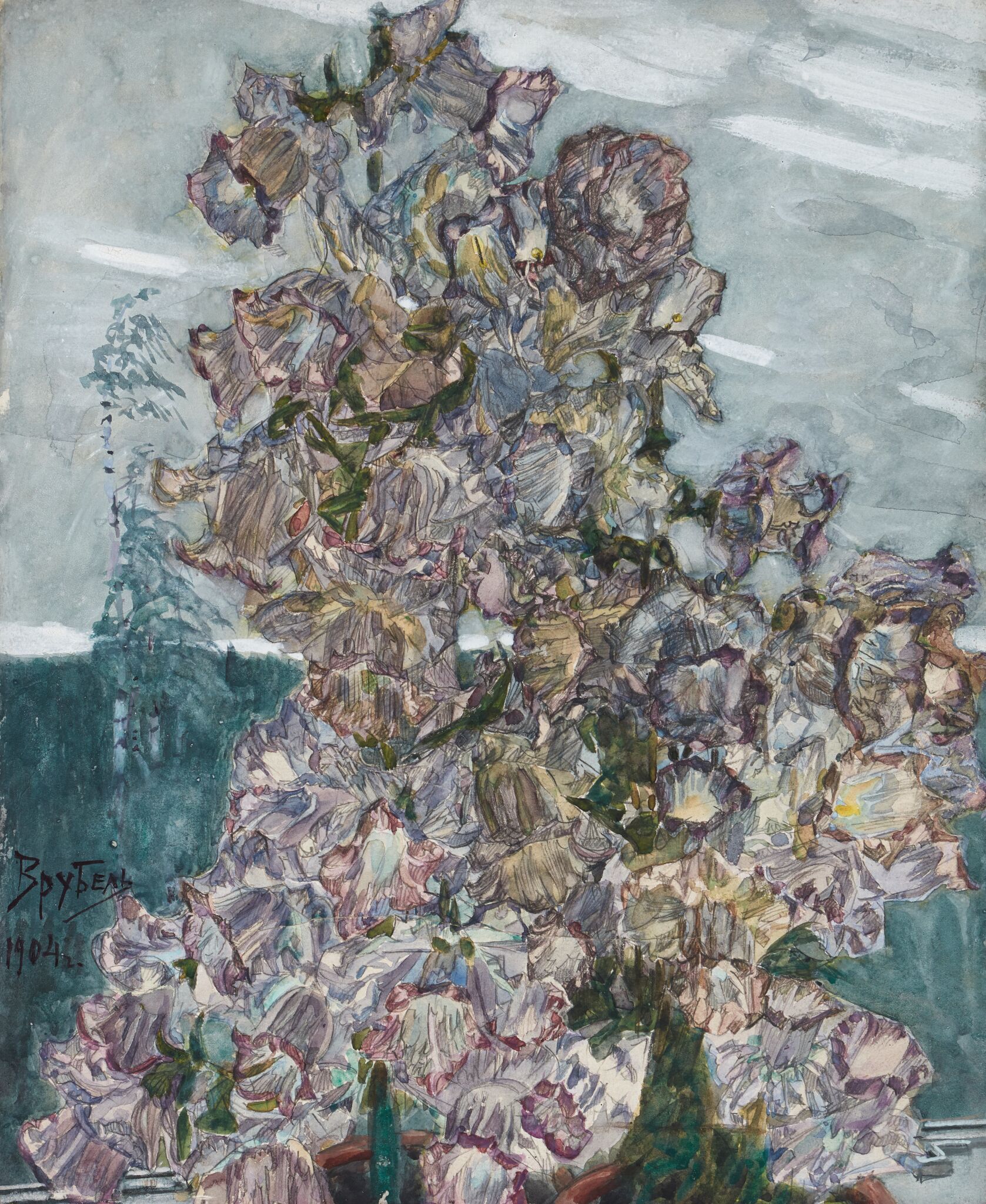
Кампанулы
May one see it?
Unknown: the museum keeps its counsel

Tretyakov Gallery
Moscow, Russia
The owner is known. Whether it is on view today, the museum does not say, and we were not trained to guess.
- In this state since
- Source
- The museum's own collection data
About the work
In the museum's own words — in Russian
Рисунок исполнен летом 1904 года, когда в состоянии Врубеля наступило заметное улучшение, он был переведен в клинику доктора Ф.А. Усольцева, располагавшуюся в Петровском парке в Москве. Художник много работал, словно стремясь восстановить утраченную связь с реальной жизнью, вновь обрести душевную гармонию. Исполненная карандашом, расцвеченная акварель «Кампанулы» – одна из лучших работ этого периода. Каждый из многих десятков бутонов смоделирован арабесками карандашных штрихов, поверх которых положена прозрачная акварель. Лиловые соцветия насыщены витальной энергией, движением. Изображая стоящий на подоконнике ящик с кампанулами, Врубель выбирает необычный ракурс. Растение, как фигура в парадном портрете, заполняет весь лист, за ним за рамой окна – скромный северный пейзаж с березкой на ветру, с пробегающими по серому небу облаками. Пейзаж «просвечивает» сквозь соцветия.
Read on
Растение – душа пейзажа, символ весеннего обновления, которое переживает сам художник. Обращаясь к изображению цветов, он словно возвращается к началу своего творческого пути, когда в Киеве он исполнил множество этюдов азалий, ирисов, орхидей. Пластическое богатство их форм служило своеобразным камертоном, который «настраивал» и связывал с реальностью его «сочиненные» произведения.
Tretyakov Gallery
Particulars
- Accession number
- 5288
In the catalog
Sources
- Tretyakov Gallery: the museum's own open data · fetched 6 days ago
- Image: Tretyakov Gallery — © State Tretyakov Gallery
Meanwhile, in the life of Mikhail Vrubel
The whole life1902
Bekhterev’s diagnosis
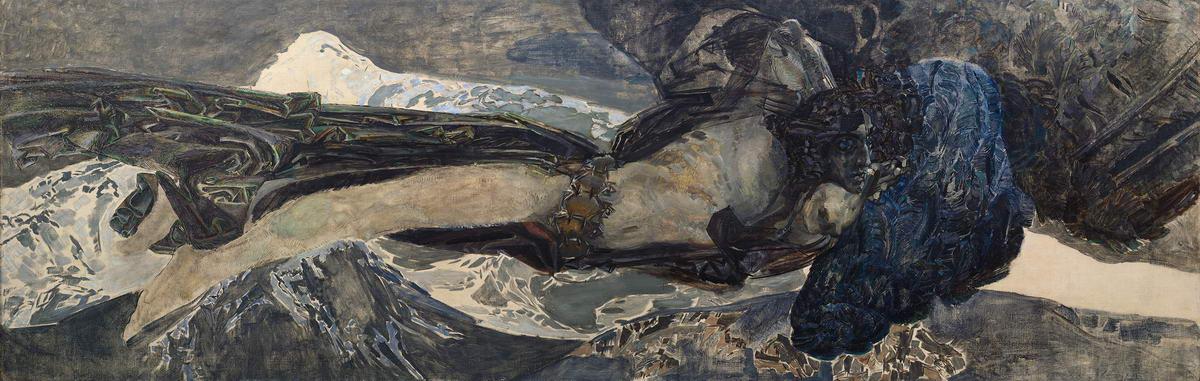
In St Petersburg Vrubel went on repainting the “Demon” without pause, ruining it in his friends’ view, and his family took him to the psychiatrist Vladimir Bekhterev, who diagnosed “incurable progressive paralysis” — tertiary syphilis; the artist himself was told nothing. In Moscow, although the collector Vladimir von Meck bought the painting for 3,000 roubles, he grew worse still: he drank and squandered money, and his wife and son tried to take refuge from him with relatives in Ryazan.
2 February 1902
“The Demon Downcast” fails in Moscow
The painting went on show in Moscow a day before the “Group of 36” exhibition closed; Vrubel hoped it would be bought for the Tretyakov Gallery. The failure coincided with news of the suicide of Alexander Rizzoni after unfair criticism in the journal Mir iskusstva.
April 1902
First hospitalisation
In early April, with symptoms of acute mental disorder, Vrubel was admitted to F. A. Savey-Mogilevich’s private clinic; until August his condition was so grave that even his wife and sister were not allowed to see him. In September he was moved to Vladimir Serbsky’s clinic at Moscow University, and Serbsky confirmed the diagnosis, establishing that the infection dated back to 1892.
November 1902
An exhibition of 36 works turns the tide
The papers greeted Vrubel’s illness with articles such as “Mentally Ill Decadents” in Russky Listok, so Benois and Diaghilev, set on proving the artist’s sanity to the public, mounted an exhibition of thirty-six of his works, including all three painted “Demons”. It marked a turning point in how critics and the public saw Vrubel, though few believed he would recover, and Mir iskusstva wrote of him in the past tense.
3 May 1903
Death of his son Savva
Vrubel had been discharged from the clinic in February, and von Meck invited the family to spend the summer on his estate in Kiev province, but on the eve of departure two-year-old Savva fell ill, and in Kiev the child died. Vrubel at once shook off his apathy, busied himself with the funeral and supported his wife, who would not say a word; their son was buried on Baikove Hill.
February 1906
Total blindness
Despite the “voices” that tormented him, Vrubel returned to the theme of the Prophet — he began painting a six-winged seraph and took up the visions of Ezekiel — but the picture was never finished: his sight began to fail catastrophically, and atrophy of the optic nerve set in. On 12 February 1906 he complained in a letter to his wife that he could neither read nor draw, and a few days later he was completely blind.