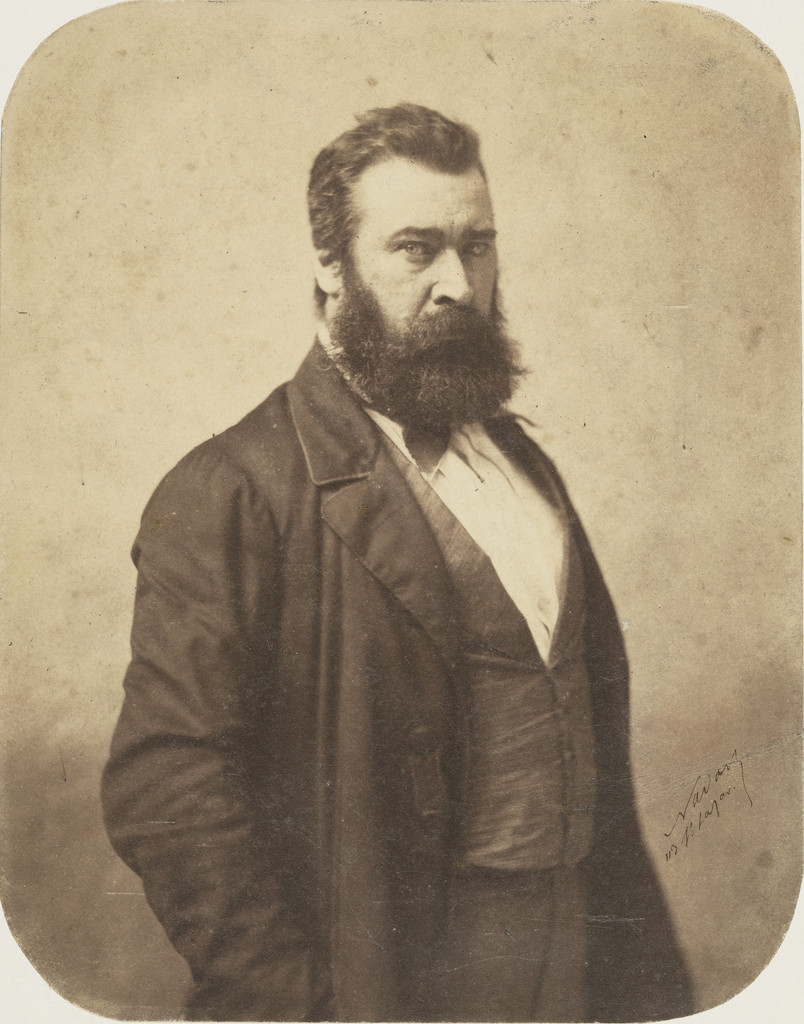
 Félix NadarFrench, 1820–1910
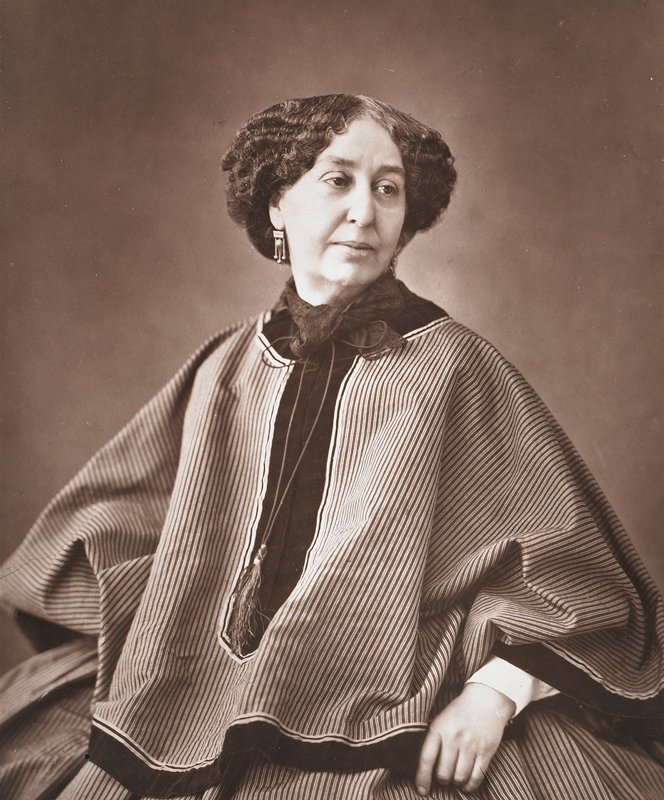
Jean-François Millet
Can I see it?
Not on view at present
Where is “Jean-François Millet” now? Collection: The Museum of Modern Art, New York. Not on view at present. Checked September 22, 2026.

New York, United States
It belongs to the collection, but is not on display at present.
- Checked
- Source
- The museum
Details
- Accession number
- 545.2009
In the catalog
Sources
- The Museum of Modern Art
- Image: The Museum of Modern Art — © the artist or rights holder
In the life of Félix Nadar
The whole life1854
A portrait studio at 113 rue Saint-Lazare
In 1854 a friend encouraged him to begin a portrait photography business; busy with caricature, Nadar yielded operations to his younger brother Adrien, who soon ran into debt, while Nadar took portraits at his own studio at 113 rue Saint-Lazare. Tensions between the brothers led to legal disputes over the right to use the name “Nadar”.
11 August 1854
Married: Ernestine Nadar
1855
Gold medal at the Exposition Universelle for the Pierrot series
The “Expressions of Pierrot” series was shown at the Exposition Universelle in Paris in 1855, where it won a gold medal.
8 February 1856
Son born: Paul Nadar
1858
The world’s first aerial photographs
He became the first person to take aerial photographs, using the wet-plate collodion process: the plates had to be prepared and developed in the basket while aloft, and escaping gas ruined the images until Nadar invented a gas-proof cotton cover for his baskets. He also pioneered the use of artificial light in photography, working underground in the catacombs of Paris.
1860
A studio at 35 Boulevard des Capucines
In 1860 Nadar moved to 35 Boulevard des Capucines, where he photographed politicians (Guizot, Proudhon), stage actors (Sarah Bernhardt, Paulus), writers (Hugo, Baudelaire, Sand, Nerval, Gautier, Dumas), painters (Corot, Delacroix, Millet) and musicians (Liszt, Rossini, Offenbach, Verdi, Berlioz). In the studio he eschewed traditional sumptuous decors and unnecessary accessories and preferred natural daylight.