 Helen FrankenthalerAmerican, 1928–2011
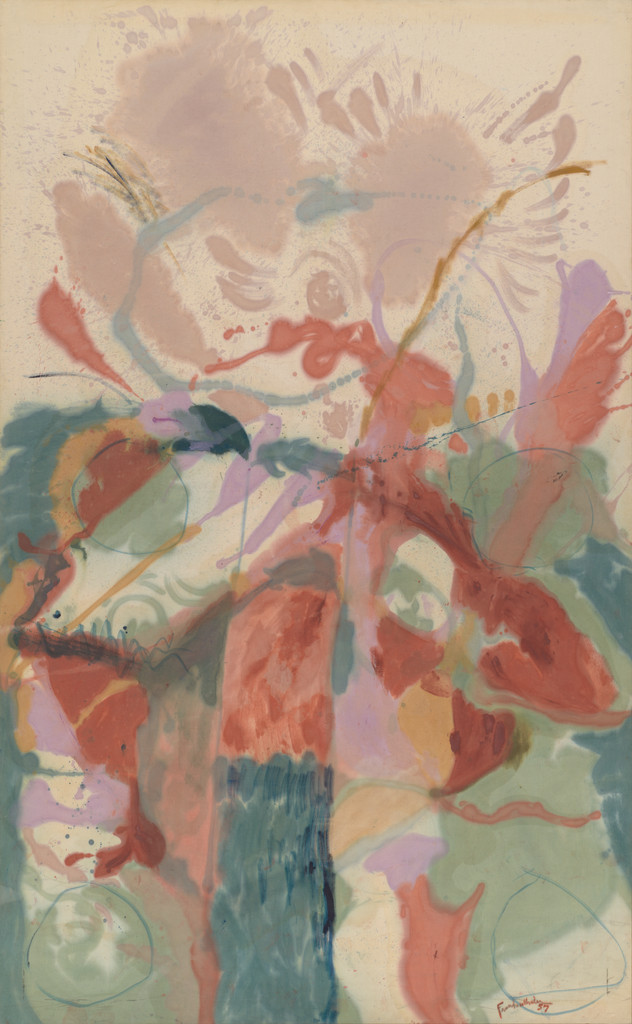
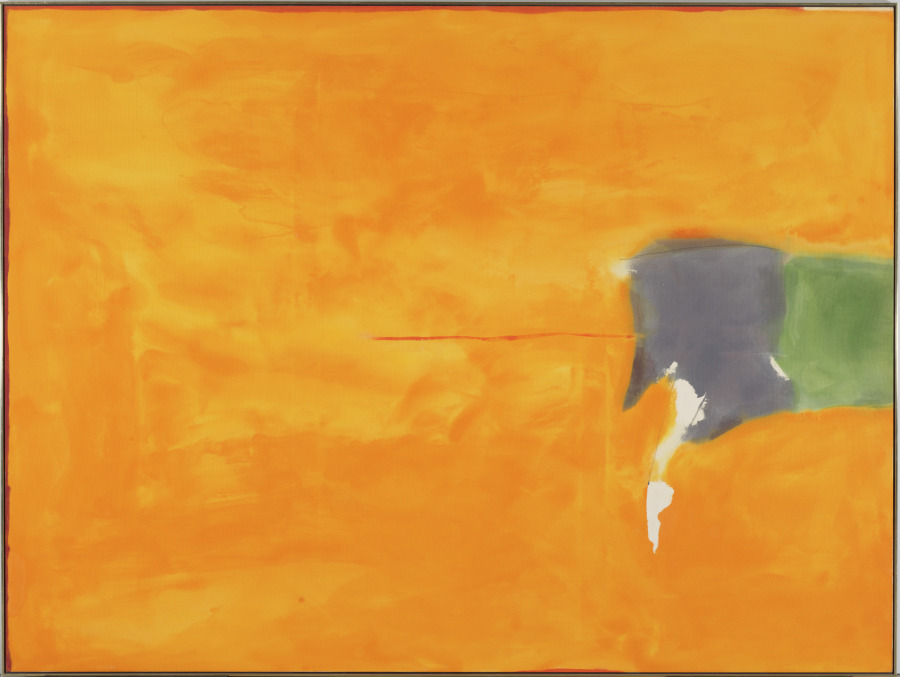
Humming Gold
Can I see it?
Not on view at present
Where is “Humming Gold” now? Collection: The Cleveland Museum of Art, Cleveland. Not on view at present. Checked September 29, 2026.

Cleveland, United States
It belongs to the collection, but is not on display at present.
- Checked
- In this state since
- Source
- The museum
About the painting
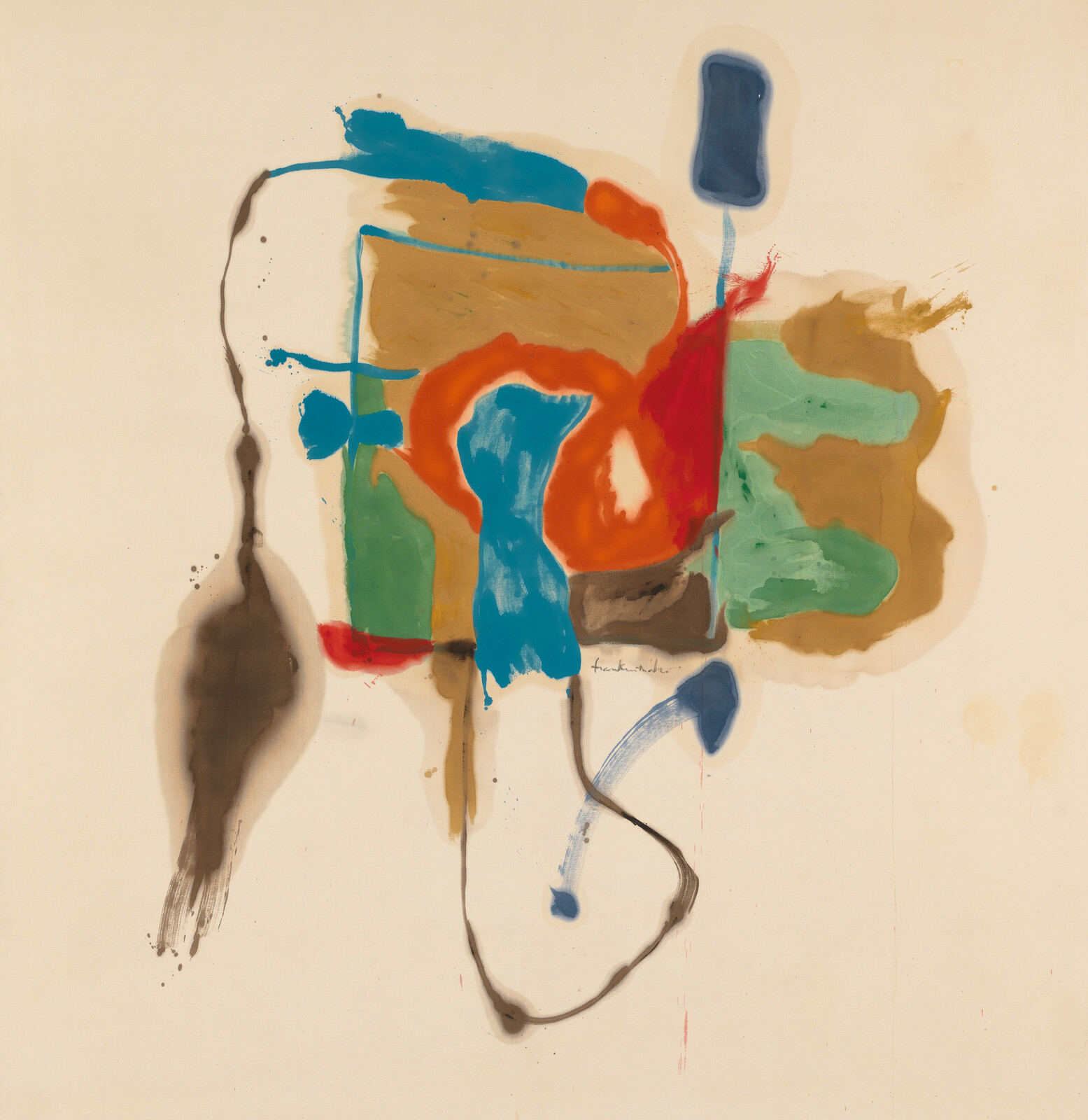
Though deeply influenced by Abstract Expressionism, Helen Frankenthaler succeeded in developing a visual language which has its very own identity. Her so-called soak-stain technique of staining pigment into raw canvas helped shape an influential art movement in the mid 20th century and led to works of impressive transparency and lucidity. In circling around the recurrent themes of spatial ambiguity and landscape, Frankenthaler’s paintings open up a deep, nearly infinite pictorial space. Surrounded by golden color, the dark green, gray, and white form in Humming Gold seems to spring back and forth on the picture plane, floating in a space of uncertain depth. The subtle red line may evoke a horizontal line, giving the viewer an idea about one’s own scale and position in relation to the painting.
The Cleveland Museum of Art
Details
- Accession number
- 2009.294
In the catalog
Sources
- The Cleveland Museum of Art
- Image: The Cleveland Museum of Art — © Helen Frankenthaler Foundation, Inc. / Artists Rights Society (ARS), New York
In the life of Helen Frankenthaler
The whole life1969
Solo exhibition at the Whitney Museum
The Whitney Museum of American Art holds a solo exhibition of Frankenthaler’s work; it then travels to the Whitechapel Gallery in London, the Orangerie Herrenhausen in Hanover and the Kongresshalle in Berlin.
1971
Divorce from Robert Motherwell
Her marriage to Robert Motherwell, which began in 1958, ends in divorce; both born of wealthy parents, they were known as “the golden couple” for their lavish entertaining, and from the marriage Frankenthaler gained two stepdaughters, Jeannie and Lise.
1972
Mary Beth Edelson’s collage “Last Supper”
In Mary Beth Edelson’s collage “Some Living American Women Artists / Last Supper”, the heads of notable women artists, Frankenthaler among them, are placed over the heads of Christ and the apostles in Leonardo’s “Last Supper”; she herself does not consider herself a feminist and says that being a woman painter was never an issue for her.