William HogarthEnglish, 1697–1764
Hudibras Catechized, plate nine from Hudibras
Can I see it?
Not on view at present
Where is “Hudibras Catechized, plate nine from Hudibras” now? Collection: Art Institute of Chicago, Chicago. Not on view at present. Checked September 29, 2026.

Chicago, United States
It belongs to the collection, but is not on display at present.
- Checked
- In this state since
- Source
- The museum
About the work
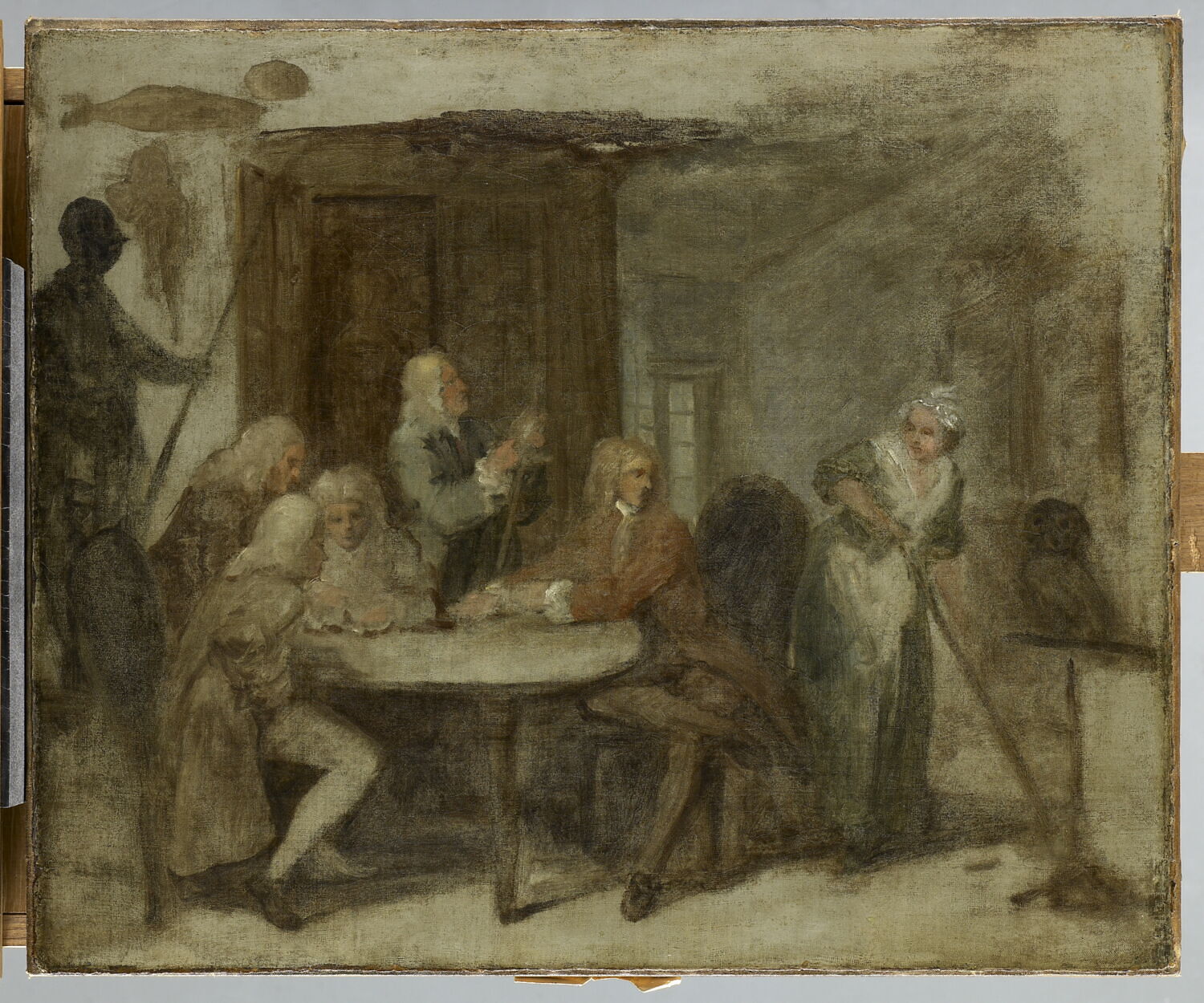
The 12 plates in the Hudibras series represent the early work of William Hogarth; they were made before he began publishing on his own. Issued with verses from Samuel Butler’s poem as explanatory captions, Hudibras foreshadows the “moral progresses” for which Hogarth is perhaps best remembered. In this scene, Hudibras visits the woman he is wooing but is surprised by a group of masked attackers. Believing them to be spirits sent by the astrologer Sidrophel, Hudibras confesses his sins and, by extension, the sins of the Puritans as a whole.
Art Institute of ChicagoCC BY 4.0
Details
- Accession number
- 2005.136.9
In the catalog
Sources
- Art Institute of Chicago
- Image: Art Institute of Chicago — CC0
In the life of William Hogarth
The whole life1712–1764 · Workplace
London
1724
Meeting fifteen-year-old Jane Thornhill
In 1724 Hogarth met Thornhill’s daughter Jane, then fifteen; five years later they would marry in secret.
from November 1724
Sir James Thornhill’s school
Shortly after it opened, in November 1724, Hogarth enrolled in a drawing school in Covent Garden run by Sir James Thornhill, serjeant painter to George I; he later claimed that even as an apprentice he carried in his head Thornhill’s paintings for St Paul’s Cathedral and Greenwich Hospital. He abandoned the earlier academy.
1727 – 28 May 1728
A lawsuit against the weaver Morris: “an engraver, and no painter”
In 1727 the tapestry worker Joshua Morris commissioned from Hogarth a design for “The Element of Earth”, but on hearing that he was “an engraver, and no painter” refused the finished work. Hogarth sued him in the Westminster court and won: judgment was given in his favour on 28 May 1728.