 Alonso CanoSpanish, 1601–1667
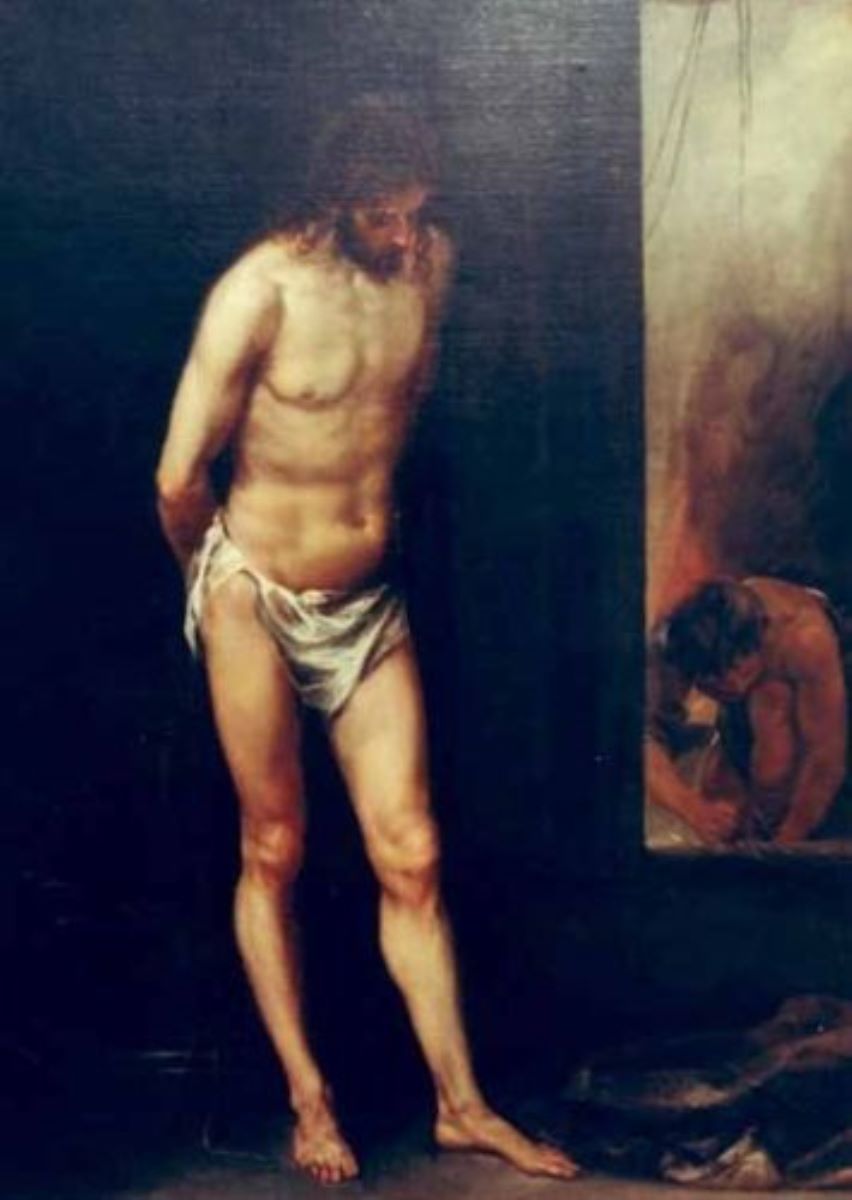
Hristos la stâlp
May one see it?
Unknown

Bucharest, Romania
The owner is known; whether it is on view today is not.
- In this state since
- Source
- The museum
About the painting
In the museum's own words — in Romanian
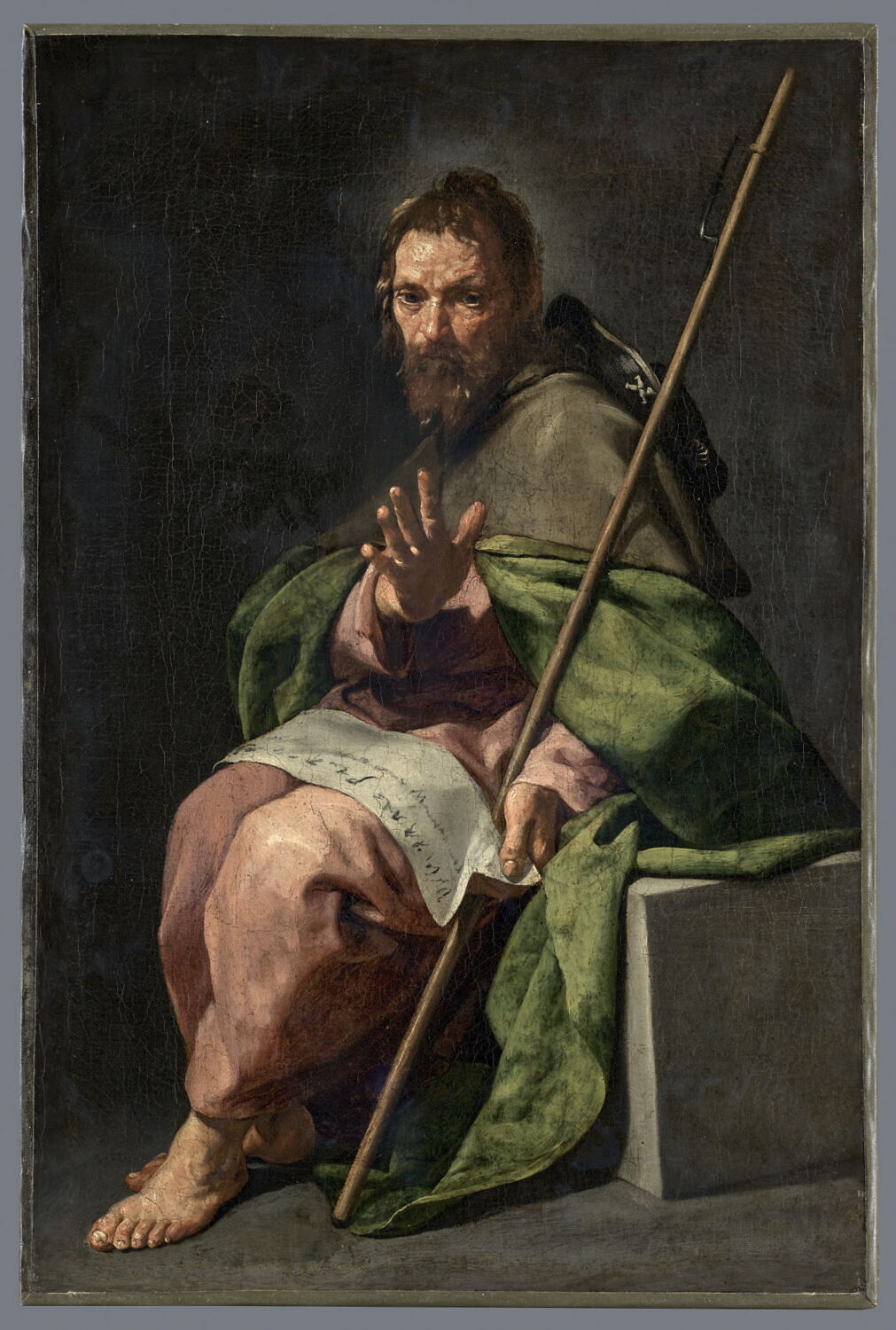
Lucrare cu caracter de unicitate în opera artistului, ea reflectă, rămânând extrem de personală, influențele picturii venețiene asupra lui Cano "cel mai european dintre pictorii spanioli". Semnat stânga jos, parțial descifrabil: Al [...] Fa [...].
National Museum of Art of Romania
Particulars
In the catalog
Sources
- National Museum of Art of Romania
- Image: National Museum of Art of Romania — CC BY-SA 4.0
Meanwhile, in the life of Alonso Cano
The whole life1614–1637
Collaborations in Seville and friendship with Velázquez
During his years in Seville he collaborates with Felipe and Gaspar de Ribas, Luis Ortiz de Vargas, Juan del Castillo, Pablo Legot, Martín de Andújar Cantos, Francisco Varela and other artists. He is a friend of Diego Velázquez.
1637
Called to Madrid by the Count-Duke of Olivares
He begins preparing for a journey to Madrid, where he is called to work for the Count-Duke of Olivares, a close associate of King Philip IV. The summons may have come at Velázquez’s suggestion.
winter 1638
Settles in Madrid
He settles in Madrid; closeness to the court lets him see the royal collections, rich in 16th-century Venetian painting and in Velázquez’s recent works. This helps explain the evolution of his style from the tenebrism borrowed from Caravaggio to a more colourful manner and elegant figures recalling the paintings of Van Dyck.
1640
Restores paintings after the Buen Retiro fire
In Madrid he is in charge of restoring paintings after the fire at the royal palace of Buen Retiro.
1642
Decides to stay at court
He sends his father a power of attorney to hand over all his affairs, making clear that he wants to remain at court. At court he became first royal architect, painter to Philip IV and tutor in drawing and painting to Balthasar Charles, Prince of Asturias.
1644
His wife is found murdered; suspicion falls on Cano
Cano’s wife is found murdered with fifteen stab wounds; an Italian painter who lived in his house (by another account, a servant) is accused but vanishes, and because of discord between the spouses suspicion falls on Alonso himself. The judges, mindful of his unbalanced temper, blame Cano: he is arrested and tortured but is not found guilty and, not without the king’s intervention, is released.