ART WIKI32,963 on view
MapCollectionArtistsMuseumsExhibitionsJournal
Sign in

ART WIKI

Where the masterpiece hangs, and when they let you in.

Collections: Art Institute of Chicago, Getty Villa, Harvard Art Museums, Hirshhorn Museum and Sculpture Garden, J. Paul Getty Museum, Minneapolis Institute of Art, Musée du Louvre, National Gallery of Art, National Museum of Asian Art, National Portrait Gallery (Smithsonian), Pushkin State Museum of Fine Arts, Rijksmuseum, Smithsonian American Art Museum, SMK — National Gallery of Denmark, State Hermitage Museum, State Russian Museum, The Cleveland Museum of Art, The Metropolitan Museum of Art, The Museum of Modern Art, Tretyakov Gallery, Victoria and Albert Museum, Whitney Museum of American Art, State Catalogue of the Museum Fund of Russia (274 museums), Europeana (19 museums), Wikidata (6 museums), Paris Musées (12 museums), and Joconde, the French Ministry of Culture's museum database (495 museums). Images belong to their rights holders.

Sections

  • Map
  • Search
  • Collection
  • Masterpieces
  • On view now
  • Artists

More

  • Museums & galleries
  • Exhibitions
  • Journal
  • Where the data comes from
  • Privacy & cookies
HomeMapBrowse
  1. Collection/
  2. Rijksmuseum/
  3. Hermaphroditus als kariatide
Hermaphroditus als kariatide, Giulio Romano, c. 1510 - c. 1521
Giulio Romano, portraitGiulio RomanoItalian, 1499–1546

Hermaphroditus als kariatide

c. 1510 - c. 1521 · Drawing

May one see it?

Unknown

Rijksmuseum

Amsterdam, Netherlands

The owner is known; whether it is on view today is not.

Source
The museum
On the mapMuseum page

Particulars

c. 1510 - c. 1521
14991546
Accession number
RP-T-1948-714(V)

What it shows

(story of) Hermaphroditus

In the catalog

Drawings & watercolorsInkRenaissance16th century

Sources

  • Rijksmuseum
  • Image: Rijksmuseum — public domain

Meanwhile, in the life of Giulio Romano

The whole life
  1. c. 1515

    Joins Raphael's workshop

    The young Giulio became the most gifted pupil and one of the chief assistants in Raphael's crowded workshop, working with him on the frescoes of the Villa Farnesina and the Vatican Loggias and Stanze; his hand is recognised, for example, in the monochrome herms beneath the Expulsion of Heliodorus and the Fire in the Borgo. The start of the collaboration is placed around 1515.

  2. 1520

    Inherits Raphael's workshop

    After Raphael's early death, Giulio, under his master's will, inherited the workshop and its commissions together with his long-time collaborator Giovan Francesco Penni — the start of his independent career. He was entrusted with finishing the master's unfinished work, including the frescoes of the Hall of Constantine in the Vatican.

  3. 1520

    Keeps the Vatican Stanze commission from Michelangelo

    When Raphael died, Michelangelo tried to take over completing the frescoes of the Vatican Stanze, but Giulio, together with Perino del Vaga, kept the commission, since they held the drawings for much of the unfinished work.

  4. 1521

    Federico II Gonzaga invites him to Mantua

    On the recommendation of Baldassare Castiglione, man of letters and Raphael's patron, Federico II Gonzaga invited Giulio to Mantua as court painter. The ruler courted him from 1522, being especially attracted by his skill as an architect.

More by Giulio Romano

All works
La Vierge à l'Enfant avec le petit saint Jean Baptiste, Giulio Romano, 1e quart du XVIe siècle (vers 1515 - 1516)

La Vierge à l'Enfant avec le petit saint Jean Baptiste

first quarter of the 16th century (c. 1515–1516) · Musée du Louvre

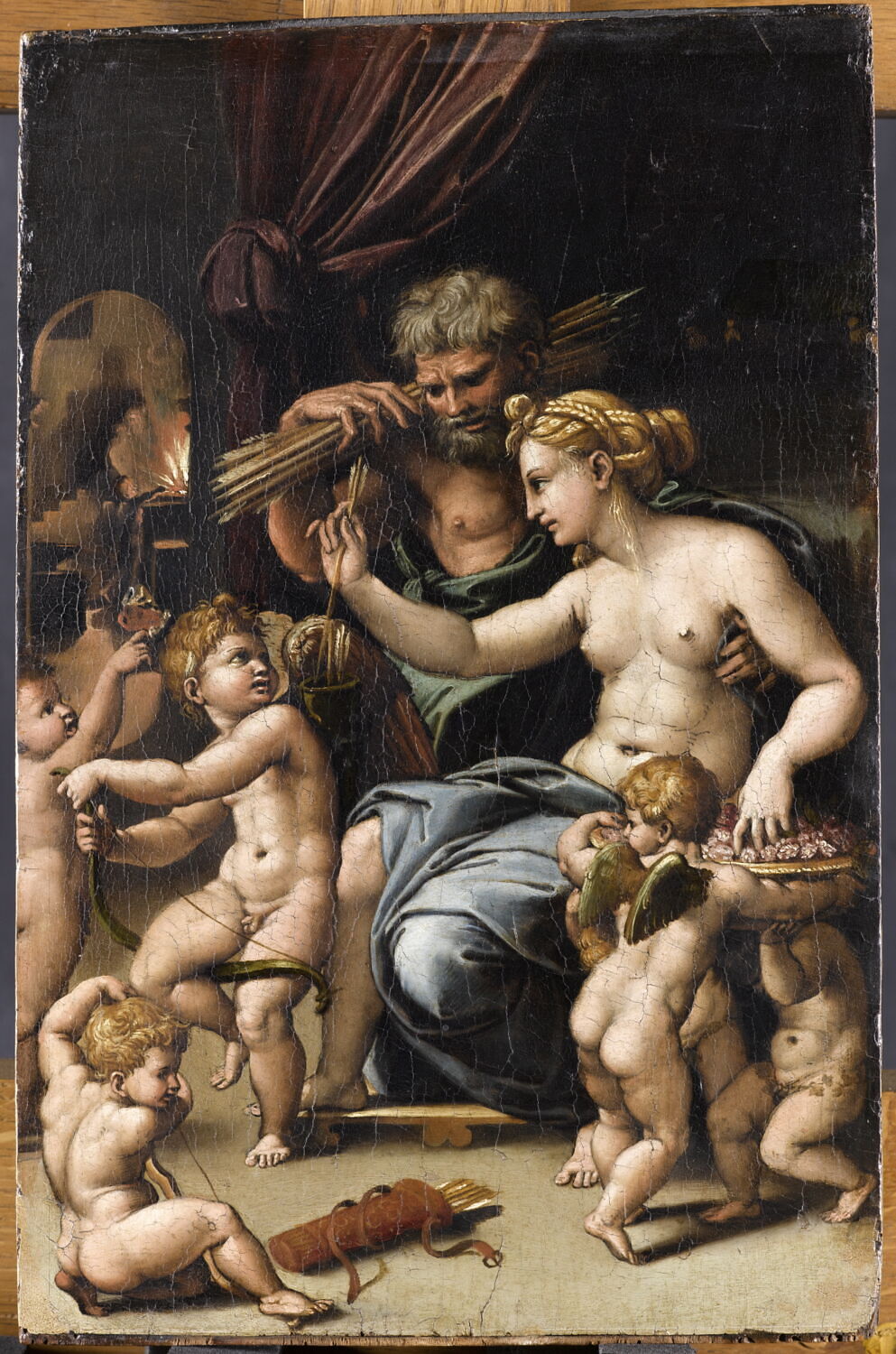
Vénus, Vulcain et l'Amour avec cinq putti, Giulio Romano, 1e moitié du XVIe siècle (vers 1520 - 1530)

Vénus, Vulcain et l'Amour avec cinq putti

first half of the 16th century (c. 1520–1530) · Musée du Louvre

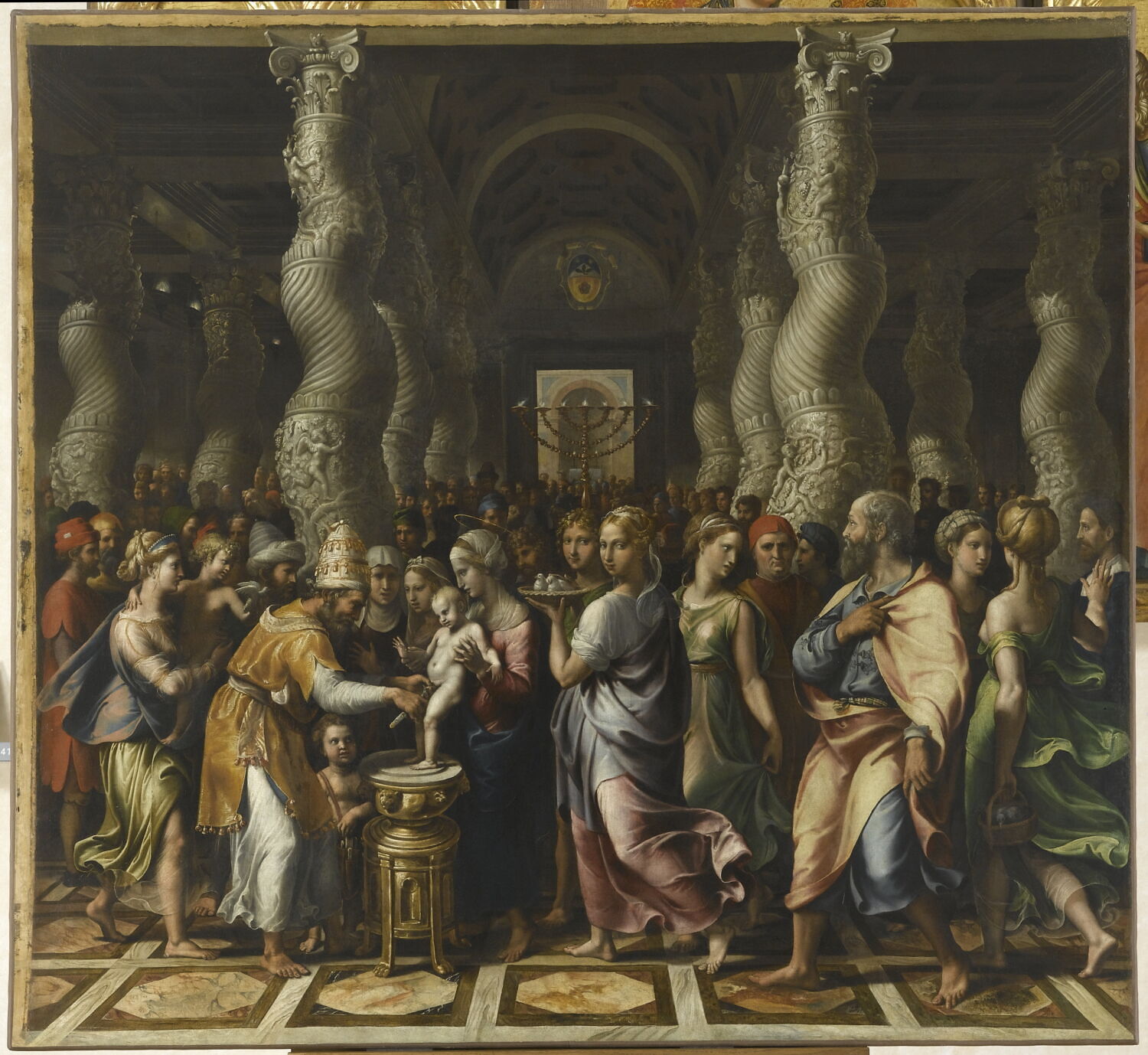
La Circoncision, Giulio Romano, 1e quart du XVIe siècle (vers 1520 - 1524)

La Circoncision

first quarter of the 16th century (c. 1520–1524) · Musée du Louvre

Love Scene, Giulio Romano, c. 1525

Love Scene

c. 1525 · State Hermitage Museum

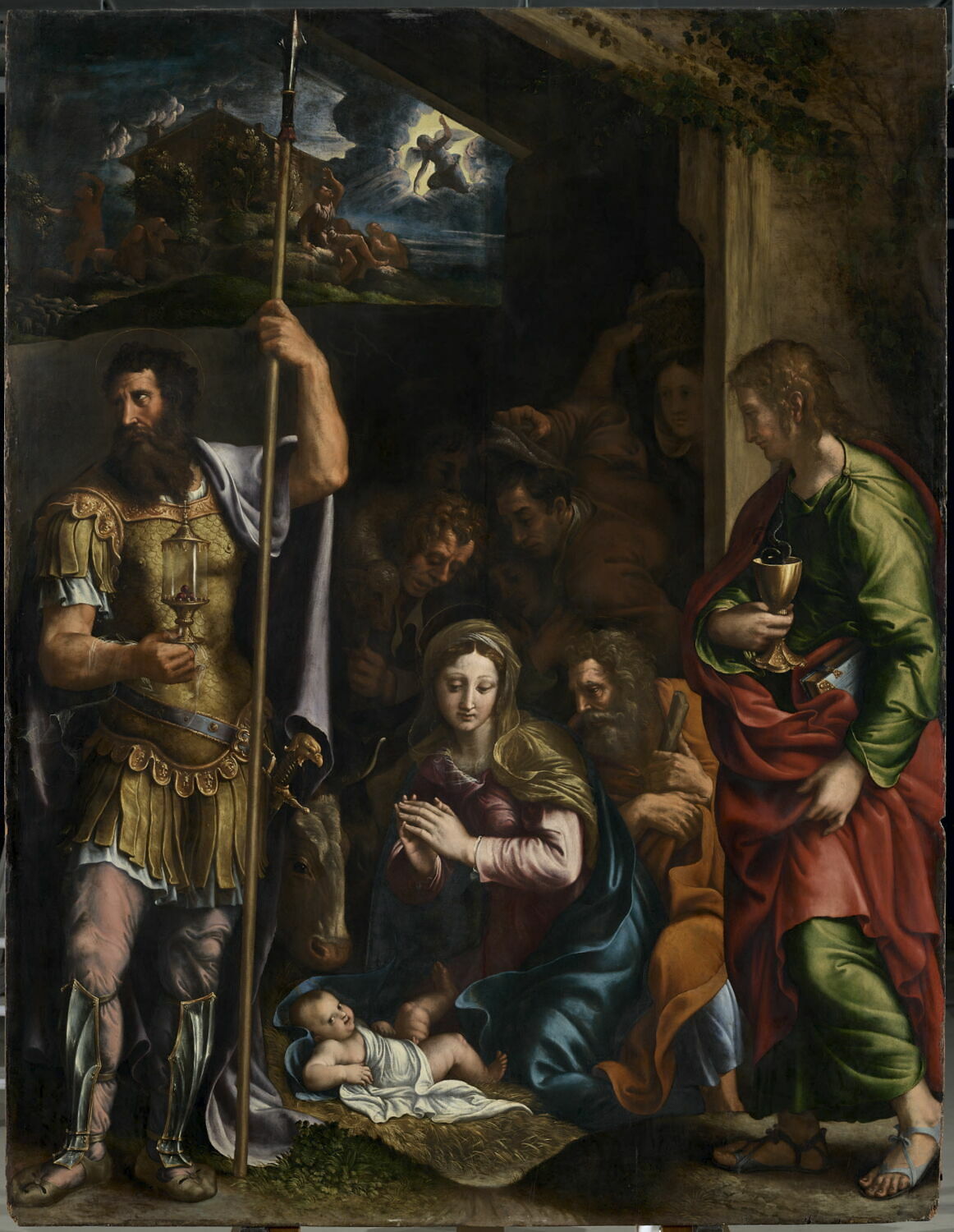
L'Adoration des bergers entre saint Jean l'Évangéliste et saint Longin (dans la partie supérieure, l'Annonce aux bergers), Giulio Romano, 1e moitié du XVIe siècle (vers 1536 - 1537)

L'Adoration des bergers entre saint Jean l'Évangéliste et saint Longin (dans la partie supérieure, l'Annonce aux bergers)

first half of the 16th century (c. 1536–1537) · Musée du Louvre

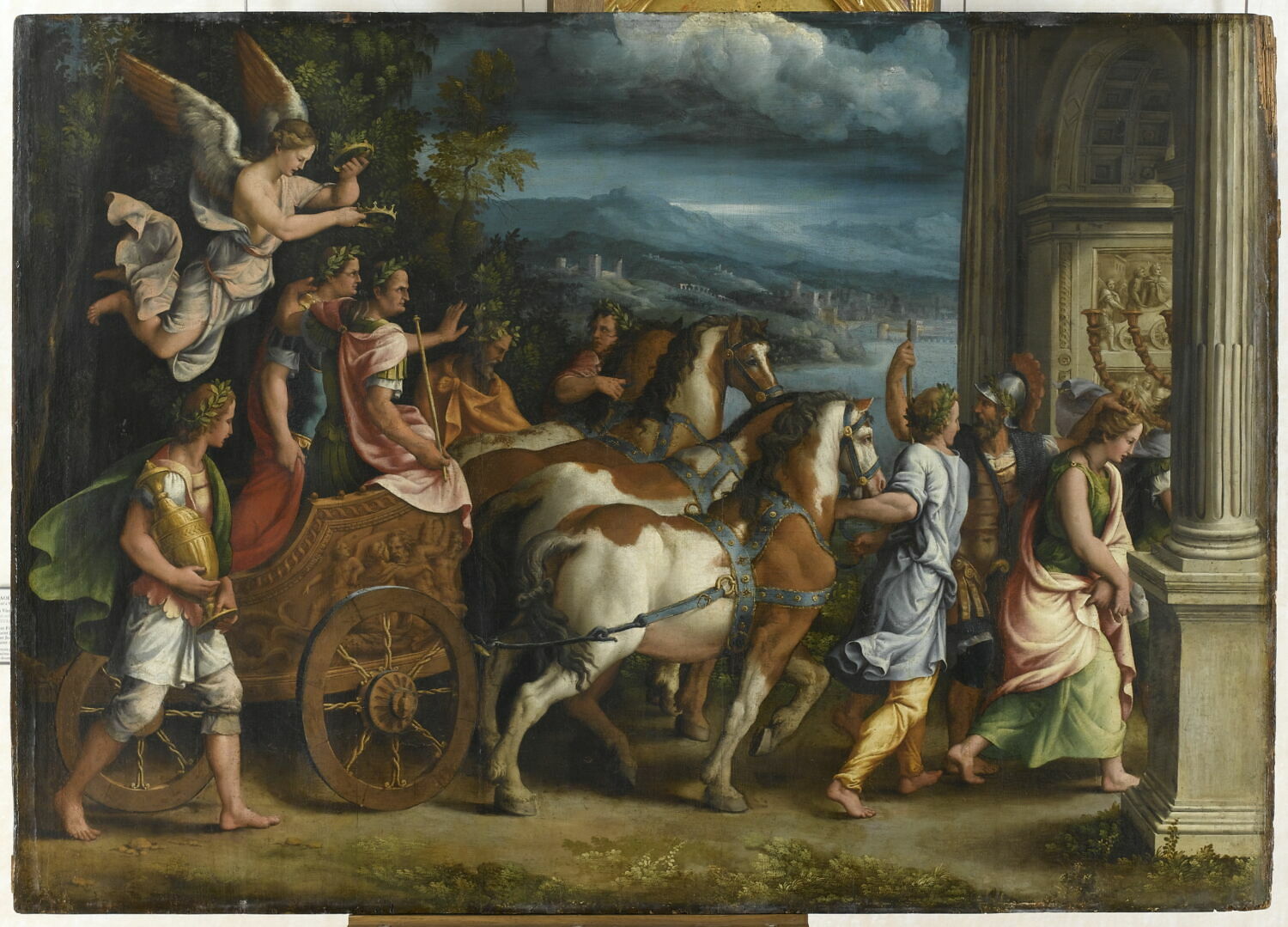
Le Triomphe de Titus et de Vespasien, Giulio Romano, 2e quart du XVIe siècle (vers 1537)

Le Triomphe de Titus et de Vespasien

second quarter of the 16th century (c. 1537) · Musée du Louvre

Allegorical Figure Holding a Sphere, Giorgio Ghisi possibly after Giulio Romano, mid 1560s

Allegorical Figure Holding a Sphere

mid 1560s · Not on view · National Gallery of Art

Flight of Meriones, with Dead Coeranos Being Dragged from the Chariot, after Giulio Romano

Flight of Meriones, with Dead Coeranos Being Dragged from the Chariot

Not on view · National Gallery of Art

Neighbors at Rijksmuseum

Museum page
Self-portrait, Vincent van Gogh, 1887

Vincent van Gogh

Self-portrait, 1887

La Corniche near Monaco, Claude Monet, 1884

Claude Monet

La Corniche bij Monaco, 1884

De Nachtwacht, Rembrandt van Rijn, 1642

Rembrandt van Rijn

The Night Watch, 1642

Portrait of a Woman, Probably Maria Trip (1619-1683), Rembrandt van Rijn, 1639

Rembrandt van Rijn

Portrait of Maria Trip, 1639

Still Life with Peacocks, Rembrandt van Rijn, c. 1639

Rembrandt van Rijn

Still Life with Peacocks, c. 1639

Landscape with a Stone Bridge, Rembrandt van Rijn, c. 1638

Rembrandt van Rijn

The Stone Bridge, c. 1638

Man in Oriental Dress, Rembrandt van Rijn, 1635

Rembrandt van Rijn

Man in Oriental Dress, 1635

Portrait of Haesje Jacobsdr van Cleyburg, Rembrandt van Rijn, 1634

Rembrandt van Rijn

Portrait of Haesje Jacobsdr van Cleyburg, 1634