 Mikhail Vrubel1856–1910
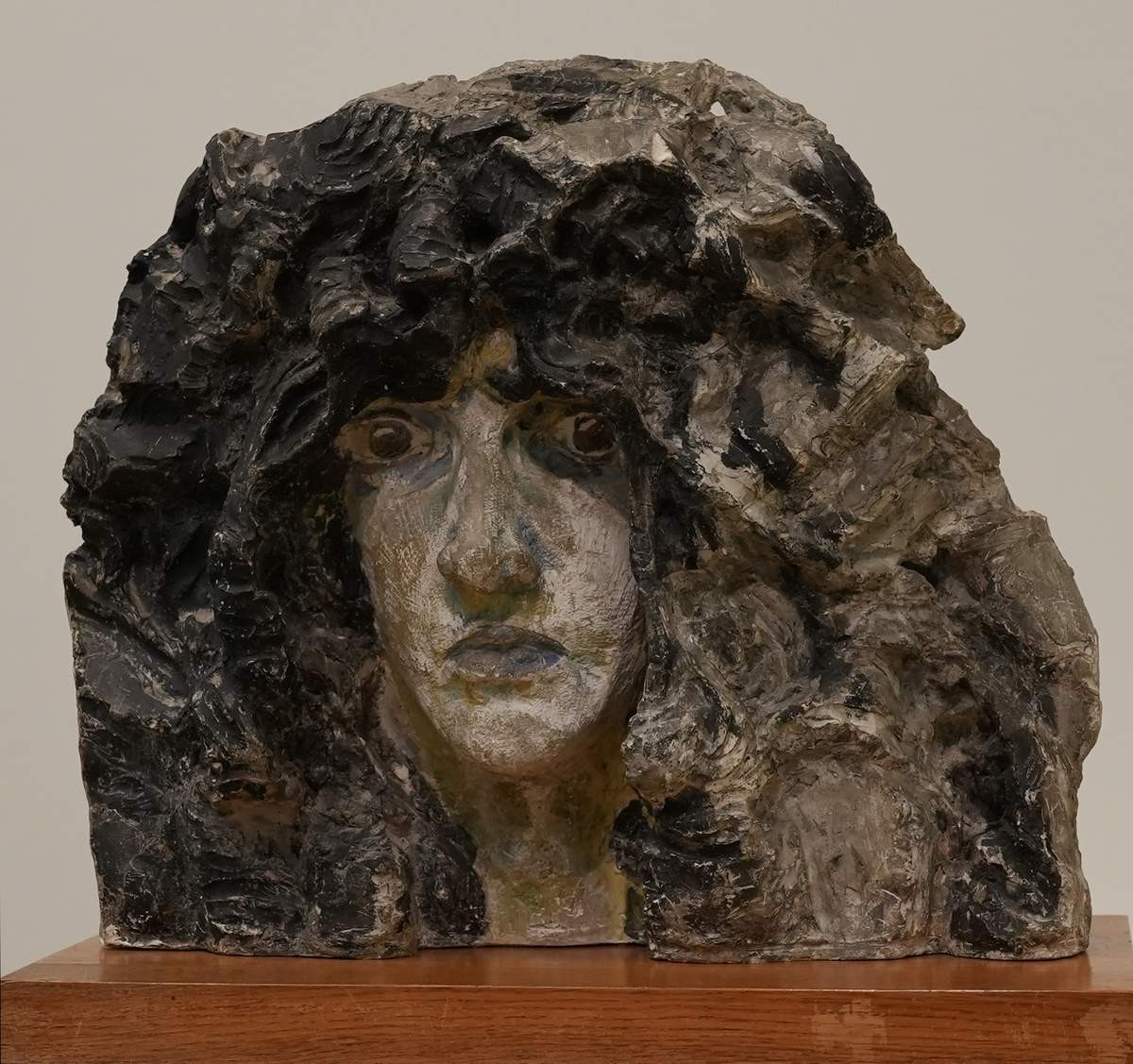
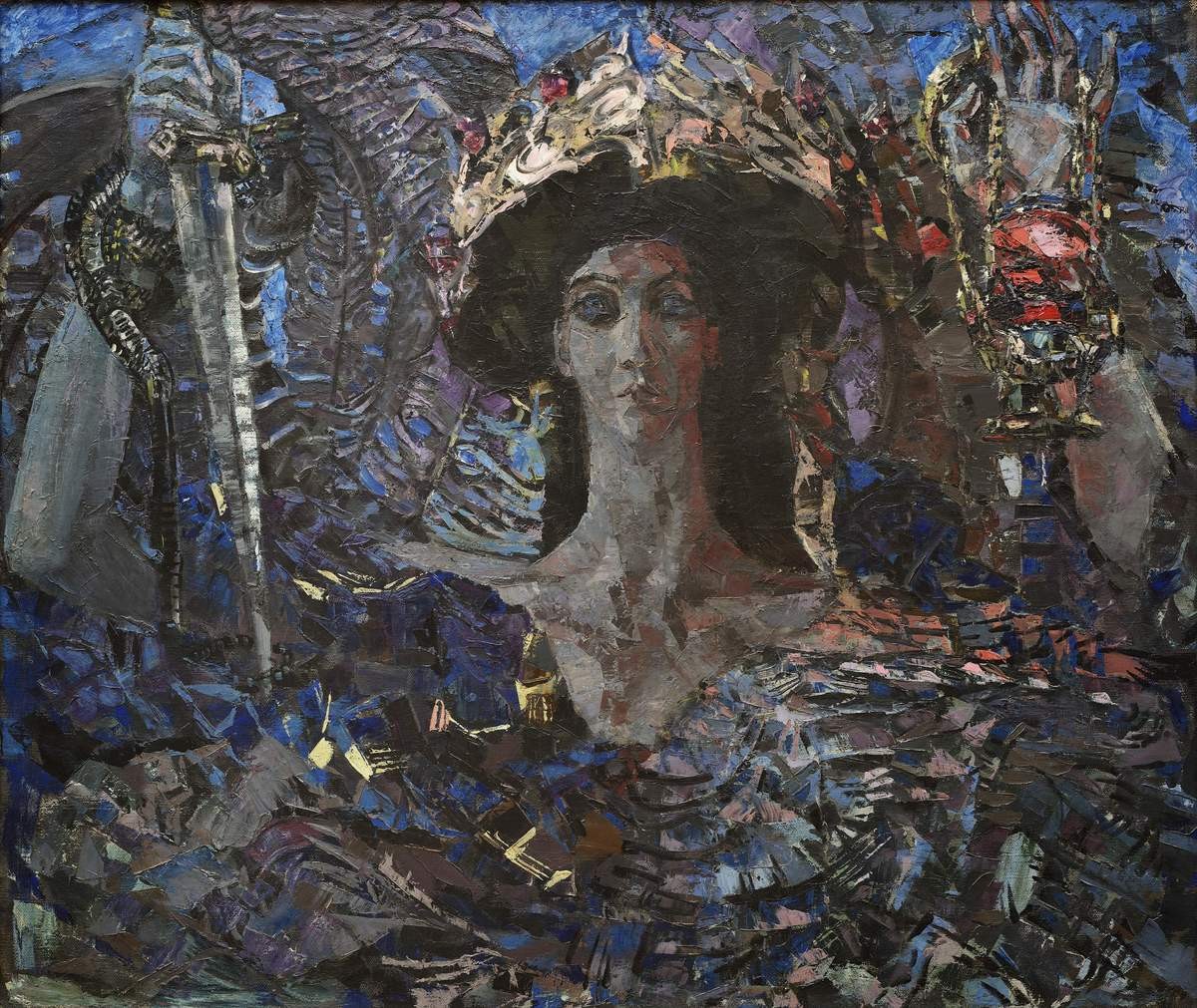
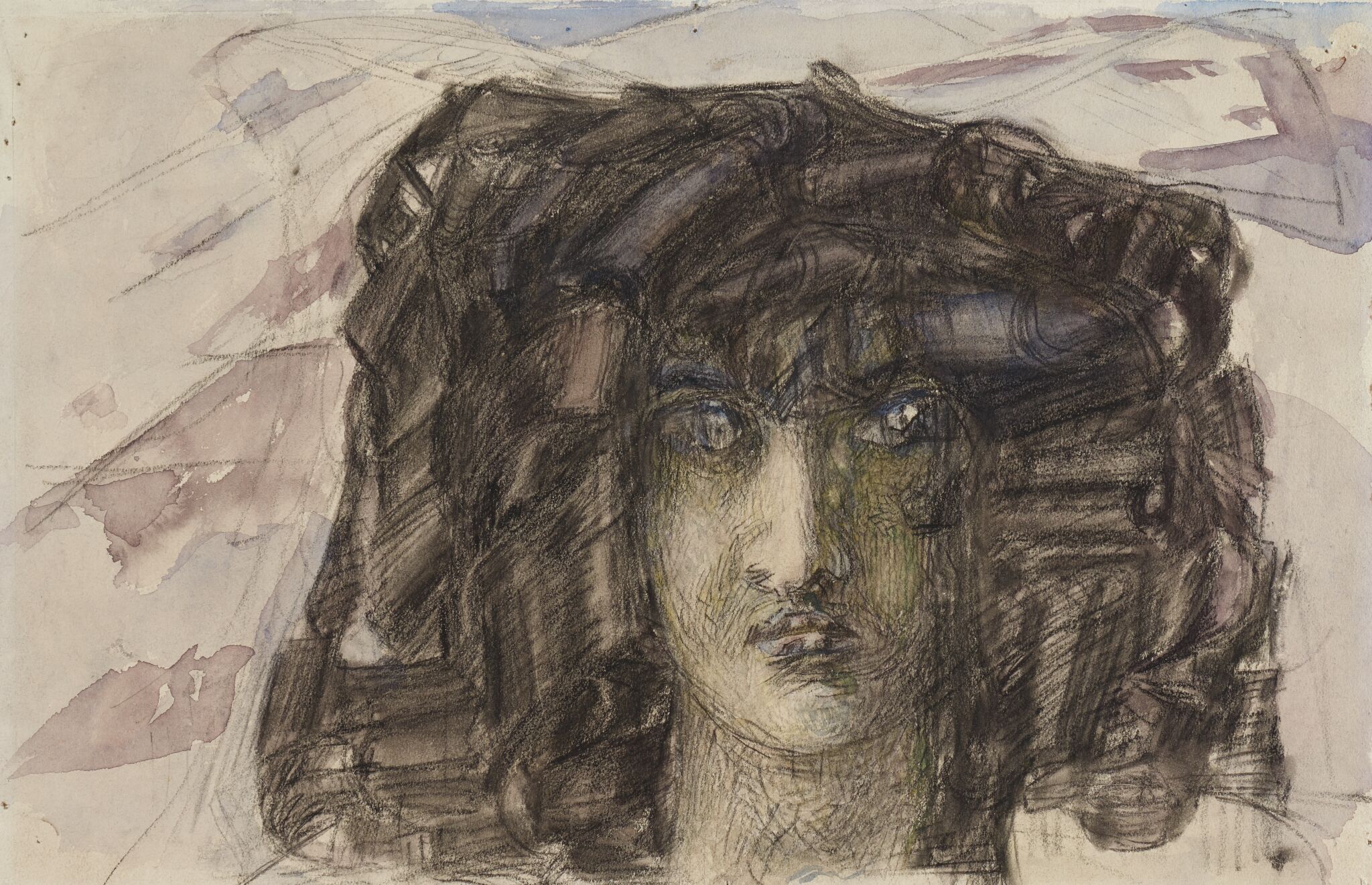
Голова Демона
Can I see it?
Unknown
Where is “Голова Демона” now? Collection: Tretyakov Gallery, Moscow. Unknown.

Moscow, Russia
The owner is known; whether it is on view today is not.
- In this state since
- Source
- The museum
About the work
Museum text in Russian
В 1890 году, к пятидесятилетию смерти Михаила Лермонтова, к выпуску готовилось юбилейное издание сочинений поэта. К созданию иллюстраций пригласили ведущих русских художников. По рекомендации Валентина Серова к проекту был привлечен Михаил Врубель. Издатели так декларировали свои намерения: «сделать это издание по возможности характерным и самостоятельным в художественном отношении… Мы искали в рисунках не шаблонных иллюстраций по заказу, по большей части сухих, однообразных и скучных, а искали в них характера, жизни, словом сколько-нибудь художественного произведения». В рамках этого заказа Врубель исполнил 36 рисунков. В письме к сестре Анне от 6 марта 1891 года он рассказывает: «Я сейчас занят иллюстрациями к «Демону» в издании иллюстрированного Лермонтова товариществом Кушнерева. Мучаюсь и работой, мучаюсь и порывами к кубку жизни».
Read on
Работа над иллюстрациями стала продолжением демонологической сюиты, начатой в рисунках и эскизах к картине «Демон сидящий», хранящейся в Третьяковской галерее. В композиции рисунка Врубель применяет тот же прием, что и в построении картины, – резко «кадрированный» крупный план. Он акцентирует выразительность изображенного мотива, усиливает степень его воздействия на зрителя. Композиционное решение, найденное в этом рисунке, станет лейтмотивом для дальнейших врубелевских поисков лика Демона. Этот лик, по воспоминаниям Анны Врубель, позднее будет приравнен художником к иконе нового времени: «Он намеревается ехать в Париж и там выставить своего «Демона» под титлом «Ikone».
Tretyakov Gallery
Details
- Accession number
- 10035
In the catalog
Sources
- Tretyakov Gallery
- Image: Tretyakov Gallery — © State Tretyakov Gallery
In the life of Mikhail Vrubel
The whole lifesecond half of the 1880s
His father sees the first “Demon”, which is destroyed
While painting Kiev’s churches, Vrubel was simultaneously turning to the image of the Demon. His father, visiting Kiev, was horrified by his son’s poverty — “no warm blanket, no warm coat” — and disgusted by the first version of the “Demon”; the artist destroyed the painting, as he did much else he made in Kiev.
second half of the 1880s
His designs for St Volodymyr’s Cathedral rejected
Prakhov brought Vrubel into the decoration of St Volodymyr’s Cathedral but rejected his own designs — among them at least six versions of “The Lamentation at the Tomb”: their originality would have wrecked the unity of the ensemble, and for such murals, Prakhov remarked, one would have to build a church “in a completely special style”. Vrubel was left with minor work — ornaments and “The Days of Creation” in one of the ceiling panels after sketches by the Svedomsky brothers.
September 1889
The move to Moscow
After rushing to Kazan to his gravely ill father, in September Vrubel went to Moscow to see friends — and stayed for fifteen years; most likely he was drawn there by an infatuation with a circus horsewoman. He settled in Konstantin Korovin’s studio on Dolgorukovskaya Street; a plan for the two of them to work together with Serov came to nothing, as relations with Serov did not work out.
December 1889
Meeting Savva Mamontov
Korovin introduced Vrubel to the industrialist and patron Savva Mamontov, and in December the artist moved into his house on Sadovaya-Spasskaya Street. Mamontov became his steady patron, though Mamontov’s wife openly called Vrubel “a blasphemer and a drunkard”, and the painter soon moved to a rented flat.
July 1890
Abramtsevo: a passion for ceramics
Having come to Abramtsevo to bid farewell to his friend A. Mamontov, who died on 20 July aged 22, Vrubel stayed on and fell passionately for ceramics — soon he proudly wrote to his sister that he was running a “factory of tiles and terracotta decorations”. For the first time in his life he was no longer a hanger-on in wealthy households and earned well: stove designs, a majolica chapel over A. Mamontov’s grave, a design for an extension to the Mamontovs’ Moscow house.
10 April 1891
Illustrations for Lermontov’s “Demon”
The jubilee two-volume Lermontov, illustrated by 18 artists of whom Vrubel alone was completely unknown to the public, was passed by the censor on 10 April 1891. The press savaged Vrubel’s black-watercolour sheets for their “coarseness, ugliness, caricature and absurdity”, and he became convinced that “true art” is understood by almost no one.