 Mikhail Nesterov1862–1942
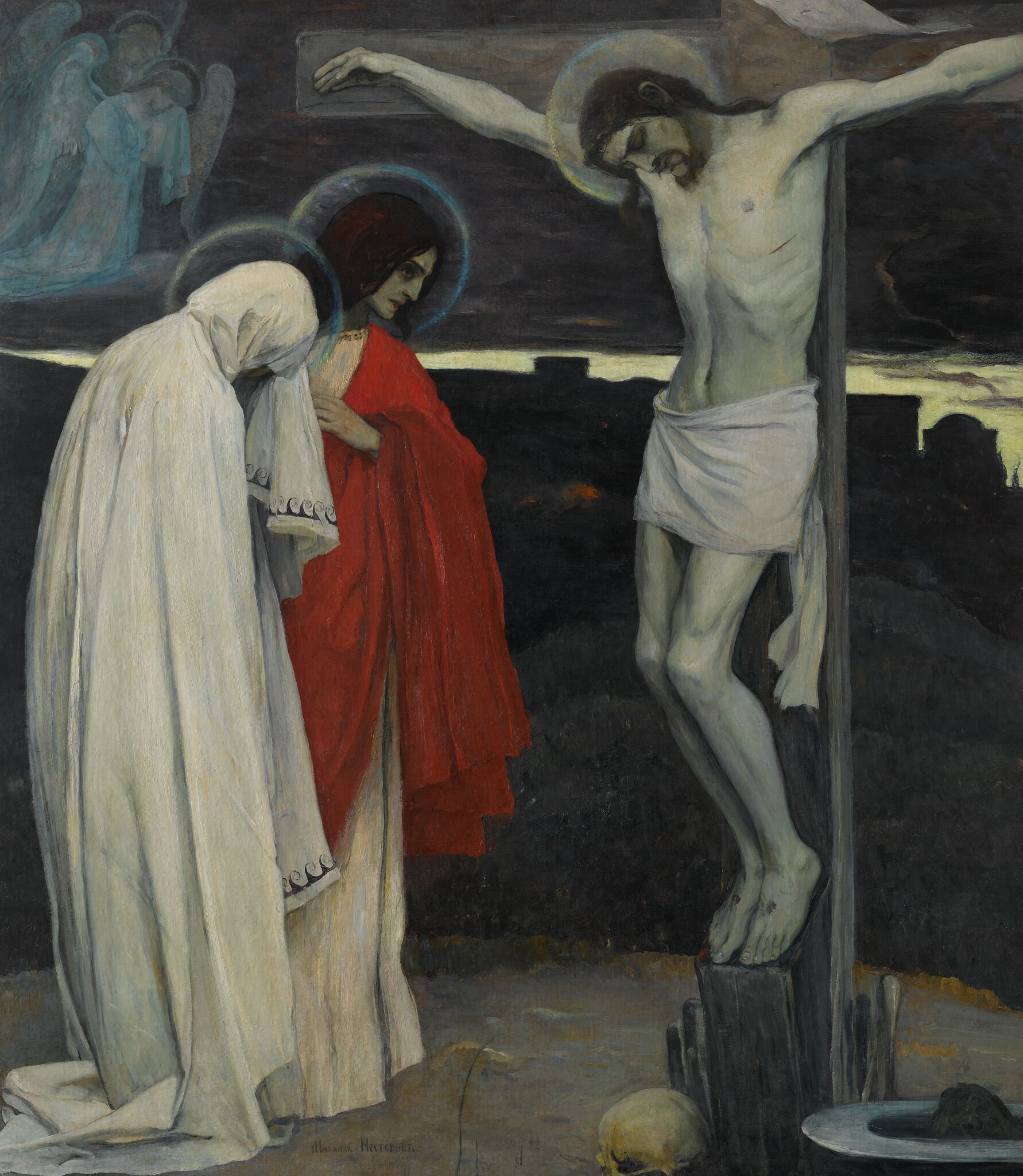
Голгофа
May one see it?
Unknown

Tretyakov Gallery
Moscow, Russia
The owner is known; whether it is on view today is not.
- Source
- The museum
About the painting
In the museum's own words — in Russian
Нестеров вошел в историю русского искусства не только как художник-станковист, но и как мастер монументальной живописи. Четверть века, начиная с работы во Владимирском соборе в Киеве, он расписывал разные храмы, создав вместе с Виктором Васнецовым новый язык религиозно-церковной живописи. Однако философ Василий Розанов, когда увидел на его персональной выставке в 1907 году эскизы художника для храма святого Александра Невского в Абастумани, сделал вывод: «Нестеров не иконописец. Не его дело писать “Бога”, а только как человек прибегает к Богу».
Read on
Сам Нестеров это понимал. В 1900 году, трудясь над большим полотном «Голгофа», он признавался своему другу Александру Турыгину: «Трагедия – для меня задача небывалая. Да и формы более строгие, чем обычно, дают мне много забот». Тем не менее в этом произведении ему удалось выразить весь драматизм события, создав сильный в эмоциональном отношении образ. Для решения поставленной задачи художник прибегнул к живописно-пластическим приемам стиля модерн. В прорисовке фигур он использовал плавную контурную линию, а цветовые акценты расставил, столкнув с темным общим фоном белые и красные одеяния предстоящих Богородицы и Иоанна Богослова, что значительно усилило тревожное звучание сцены. «Голгофа» создавалась для XXVIII передвижной выставки 1900 года, после которой, как пишет Нестеров, он отдал полотно «на нужды войны [Русско-японской] Ее купил какой-то сибиряк, увез к себе». Еще раз, но в иной композиционной разработке, Нестеров вернулся к сюжету «Распятия» в 1908 году, выполнив его в традиционном варианте.
Tretyakov Gallery
Particulars
- Accession number
- Ж-565
In the catalog
Sources
- Tretyakov Gallery
- Image: Tretyakov Gallery — © State Tretyakov Gallery
Meanwhile, in the life of Mikhail Nesterov
The whole life1890s
Studies Byzantine art
To master monumental painting, new to him, Nesterov travelled to Rome, Palermo, Constantinople and Ravenna, where he could study the traditions of Byzantine art (other accounts name Rome and Istanbul).
1893, 1908, 1911
Returns to Italy
Nesterov went abroad repeatedly, visiting Italy in 1893, 1908 and 1911, but unlike Henryk Siemiradzki, who shone in Europe, he always longed to go “home, to Russia”: of all foreign lands, only Italy left a mark on his art.
1898
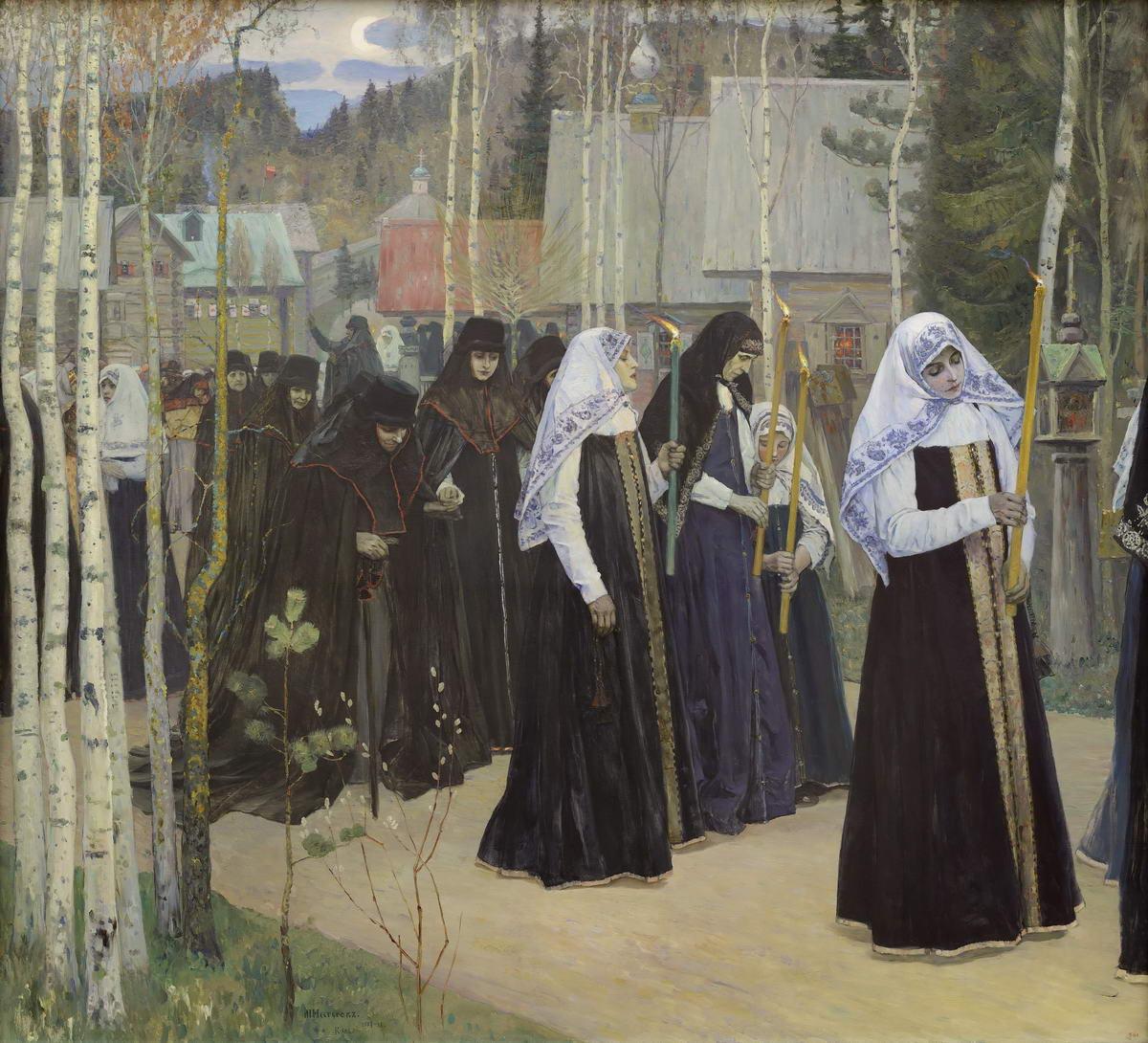
Made Academician for “The Great Tonsure”
“The Great Tonsure” (1897–1898), a young girl led by nuns to take the veil at a forest Old Believer hermitage, was warmly received by the public, and for it Nesterov was made an Academician of painting; in 1910 he became a Full Member of the Academy of Arts.
1898–1902
Life with Yulia Urusman
From 1898 until his second marriage in 1902 Nesterov was together with Yulia Nikolaevna Urusman (1877–1962). In these years the artist's daughter Vera (1899–1998) and sons Mikhail (1901–1921) and Fyodor, who lived from 23 February to 7 July 1902, were born.
1898–1904
Decorates the church at Abastumani
At the invitation of Tsesarevich George Alexandrovich, younger brother of Nicholas II, Nesterov decorated the palace church of St Alexander Nevsky at Abastumani, personally executing more than 50 compositions on the walls and iconostasis, yet he was dissatisfied with the result. By contrast, he refused to paint the Orthodox cathedral in Warsaw, unwilling to serve as “propaganda” for Russification in a Polish city.
1901
Journey to the Solovetsky Monastery
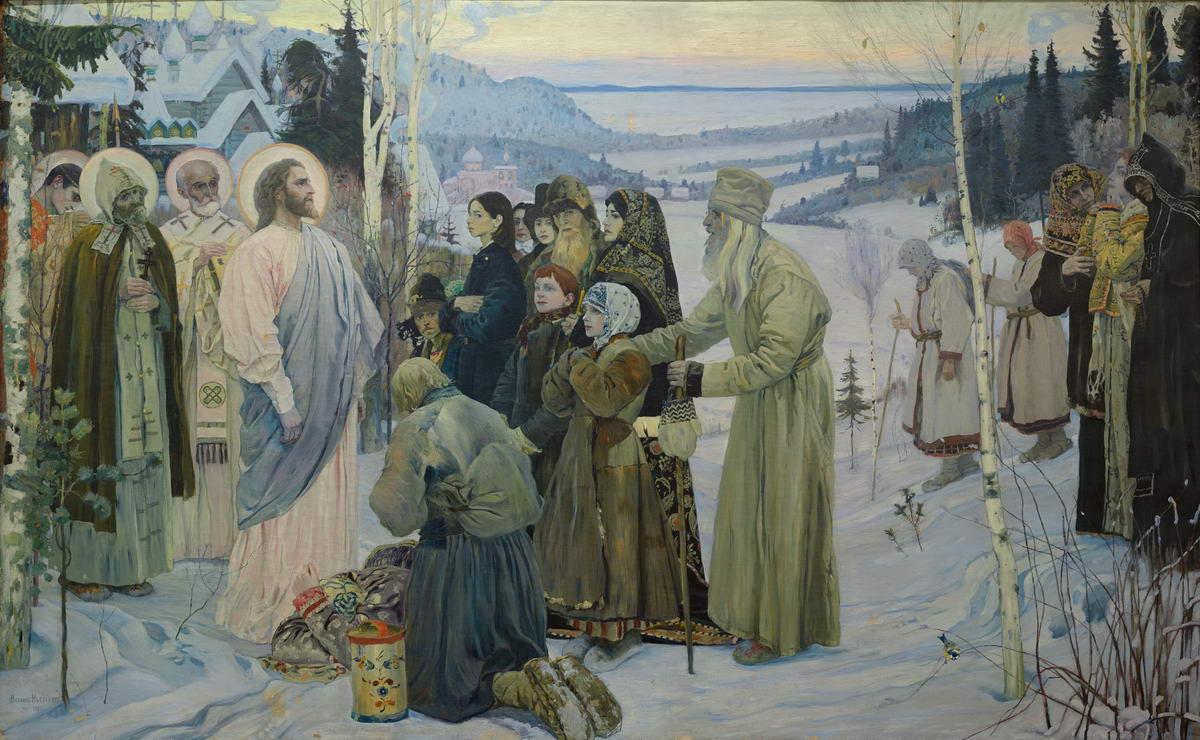
Seeking a deeper knowledge of the spiritual world of Russian monasteries, and material for his planned “Holy Rus”, Nesterov travelled to Solovki on the White Sea. The North and its monks inspired “Silence”, “The Little Fox”, “Quiet Life”, “The Solovetsky Cloister” and “Dreamers”.