ART WIKI32,963 on view
MapCollectionArtistsMuseumsExhibitionsJournal
Sign in

ART WIKI

Where the masterpiece hangs, and when they let you in.

Collections: Art Institute of Chicago, Getty Villa, Harvard Art Museums, Hirshhorn Museum and Sculpture Garden, J. Paul Getty Museum, Minneapolis Institute of Art, Musée du Louvre, National Gallery of Art, National Museum of Asian Art, National Portrait Gallery (Smithsonian), Pushkin State Museum of Fine Arts, Rijksmuseum, Smithsonian American Art Museum, SMK — National Gallery of Denmark, State Hermitage Museum, State Russian Museum, The Cleveland Museum of Art, The Metropolitan Museum of Art, The Museum of Modern Art, Tretyakov Gallery, Victoria and Albert Museum, Whitney Museum of American Art, State Catalogue of the Museum Fund of Russia (274 museums), Europeana (19 museums), Wikidata (6 museums), Paris Musées (12 museums), and Joconde, the French Ministry of Culture's museum database (495 museums). Images belong to their rights holders.

Sections

  • Map
  • Search
  • Collection
  • Masterpieces
  • On view now
  • Artists

More

  • Museums & galleries
  • Exhibitions
  • Journal
  • Where the data comes from
  • Privacy & cookies
HomeMapBrowse
  1. Collection/
  2. Kunsthistorisches Museum/
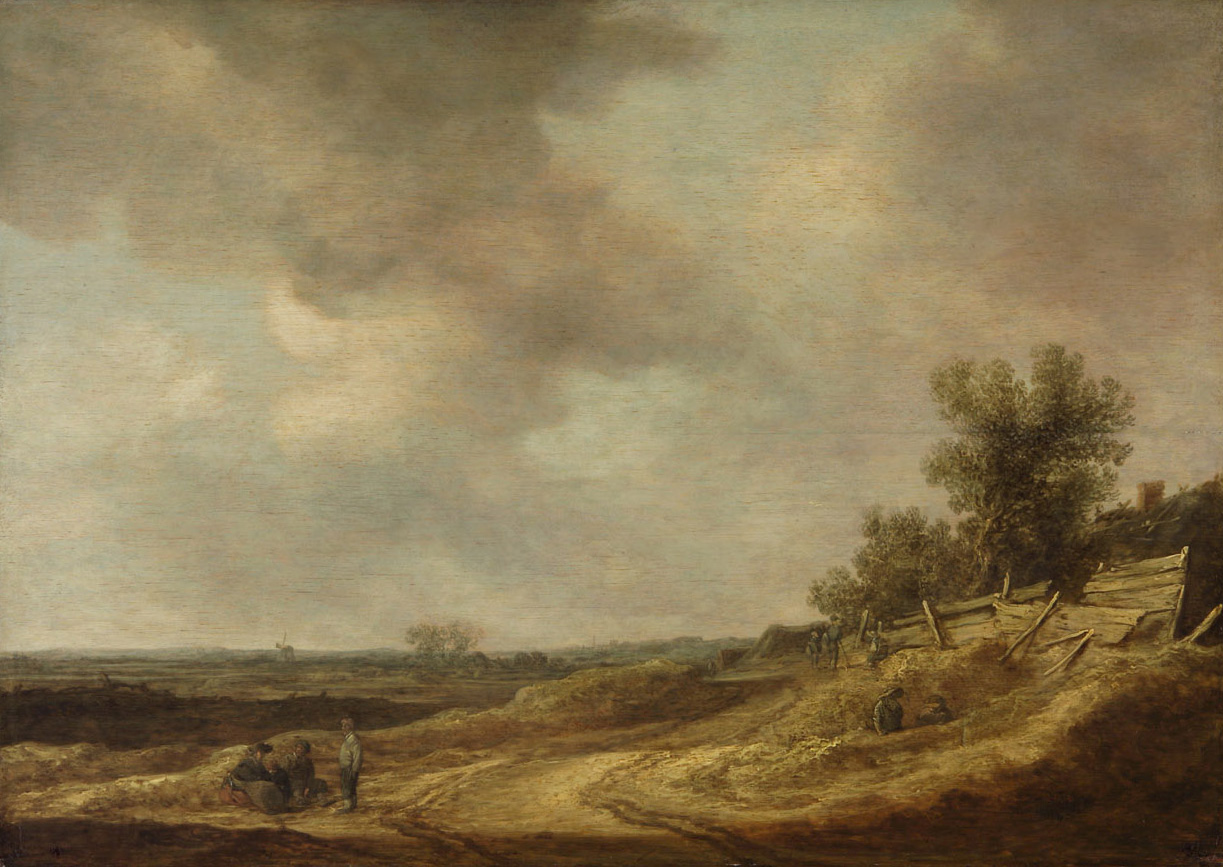
  3. Flachlandschaft
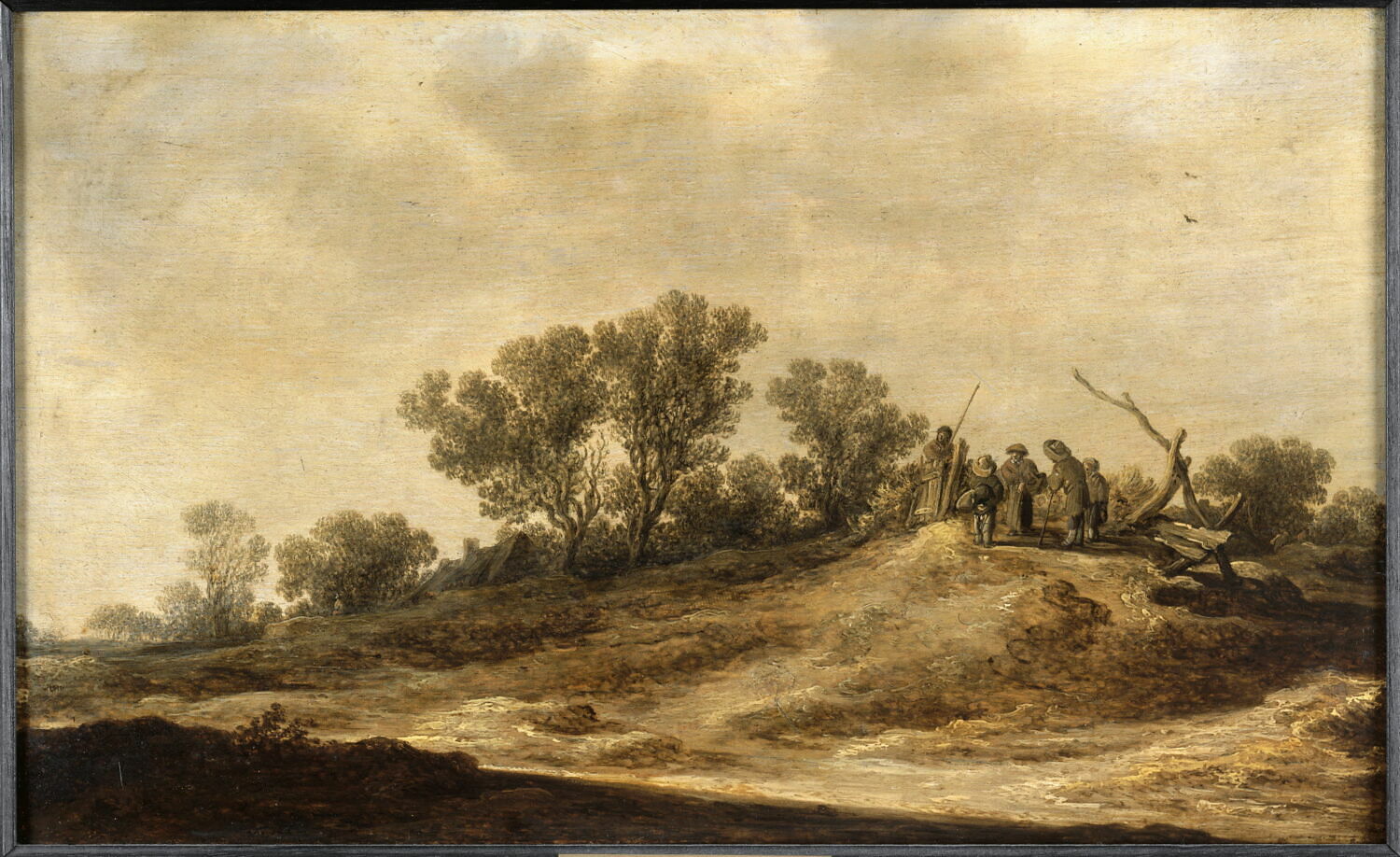
Flachlandschaft, Jan van Goyen, 1630-1640
Jan van Goyen, portraitJan van GoyenDutch, 1596–1656

Flachlandschaft

1630-1640 · Painting

May one see it?

Unknown

Kunsthistorisches Museum

Vienna, Austria

The owner is known; whether it is on view today is not.

In this state since
Sep 27, 2026
Source
The museum
On the mapMuseum page

Particulars

1630-1640
15961656

In the catalog

PaintingsDutch paintingBaroque17th century

Sources

  • Kunsthistorisches Museum
  • Image: Kunsthistorisches Museum — CC BY-NC-SA 4.0

Meanwhile, in the life of Jan van Goyen

The whole life
  1. 1618–1632 · Workplace

    Leiden

  2. late 1620s

    One of the creators of the “panoramic style”

    In the late 1620s the “panoramic style” took shape in Dutch landscape painting; van Goyen, together with Salomon van Ruysdael and Pieter de Molijn, is regarded as its exponent and one of its creators. His compositions are marked by a low horizon, a high sky and taut diagonals of perspective.

  3. 1629

    Meets Jan Porcellis

    In 1629 van Goyen met Jan Porcellis, who bought a house van Goyen was then selling. The encounter left its mark: after moving to The Hague in 1632 van Goyen began painting the seascapes and river views most typical of his art, and partly under Porcellis’s influence he worked out a laconic three-plane colour scheme, the “tonal landscape”.

  4. 1630s

    The last known victim of the tulip mania

    Van Goyen’s pictures rarely fetched high prices, so he sought other income: he worked as an art dealer and auctioneer and speculated in tulips and real estate, becoming the last known victim of the tulip mania of the 1630s. Real estate, usually a safe investment, left him with enormous debts; one of his houses was rented by Paulus Potter.

  5. 1632–1634 · Workplace

    The Hague

  6. 1634 · Workplace

    Haarlem
More by Jan van Goyen

All works
Summer, Jan van Goyen, 1625

Summer

1625 · Rijksmuseum

View of Dordrecht from the North, Jan van Goyen, early 1650s

View of Dordrecht from the North

early 1650s · National Gallery of Art

Winter, Jan van Goyen, 1625

Winter

1625 · Rijksmuseum

Paysans sur un talus, Goyen, Jan van, XVIIe siècle (1632)

Paysans sur un talus

17th century (1632) · Musée du Louvre

Landscape with Oak, Jan van Goyen, 1634

Landscape with Oak

1634 · State Hermitage Museum

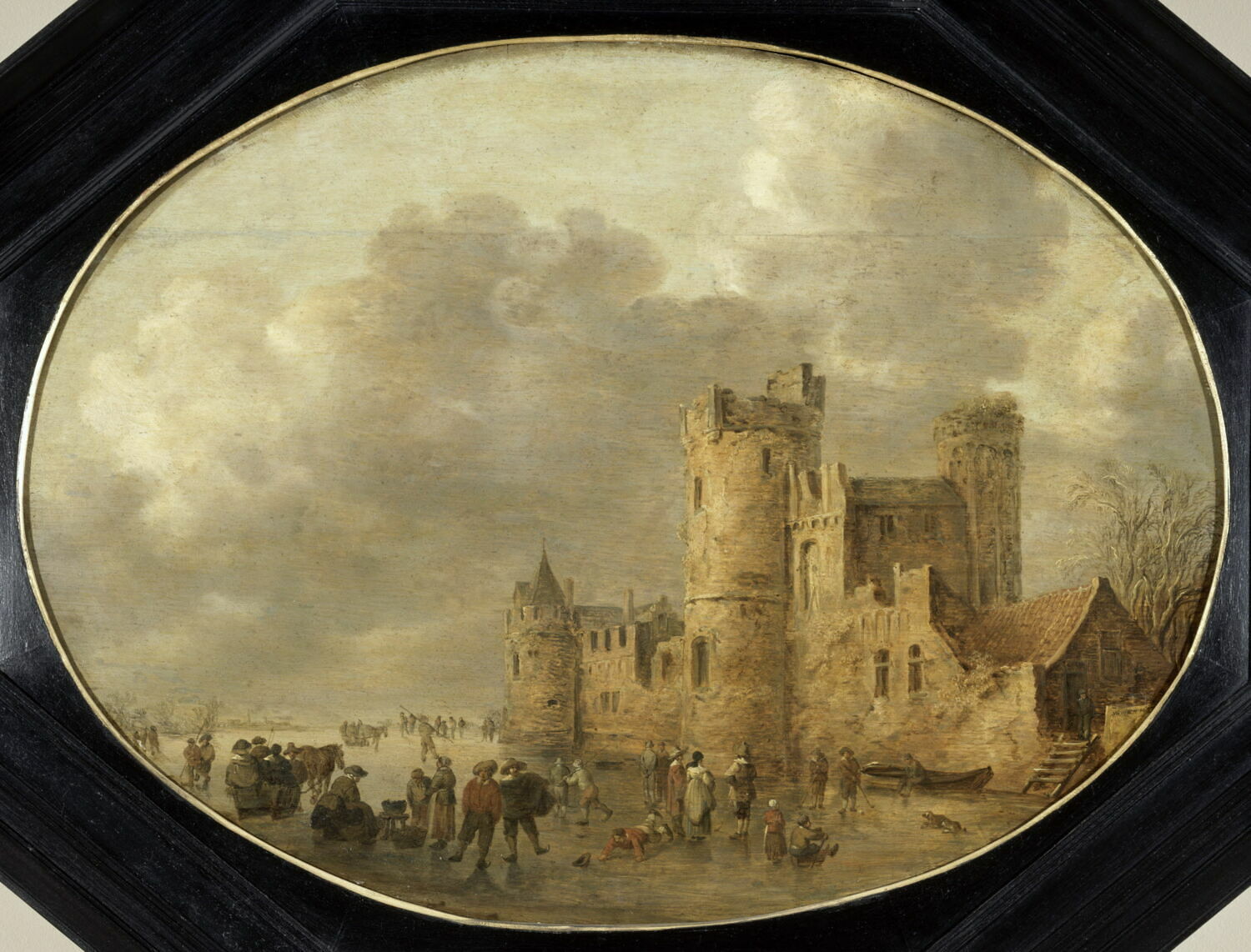
Patineurs devant un château médiéval, Goyen, Jan van, XVIIe siècle (1637)

Patineurs devant un château médiéval

17th century (1637) · Musée du Louvre

Skaters, Jan van Goyen, 1641

Skaters

1641 · State Hermitage Museum

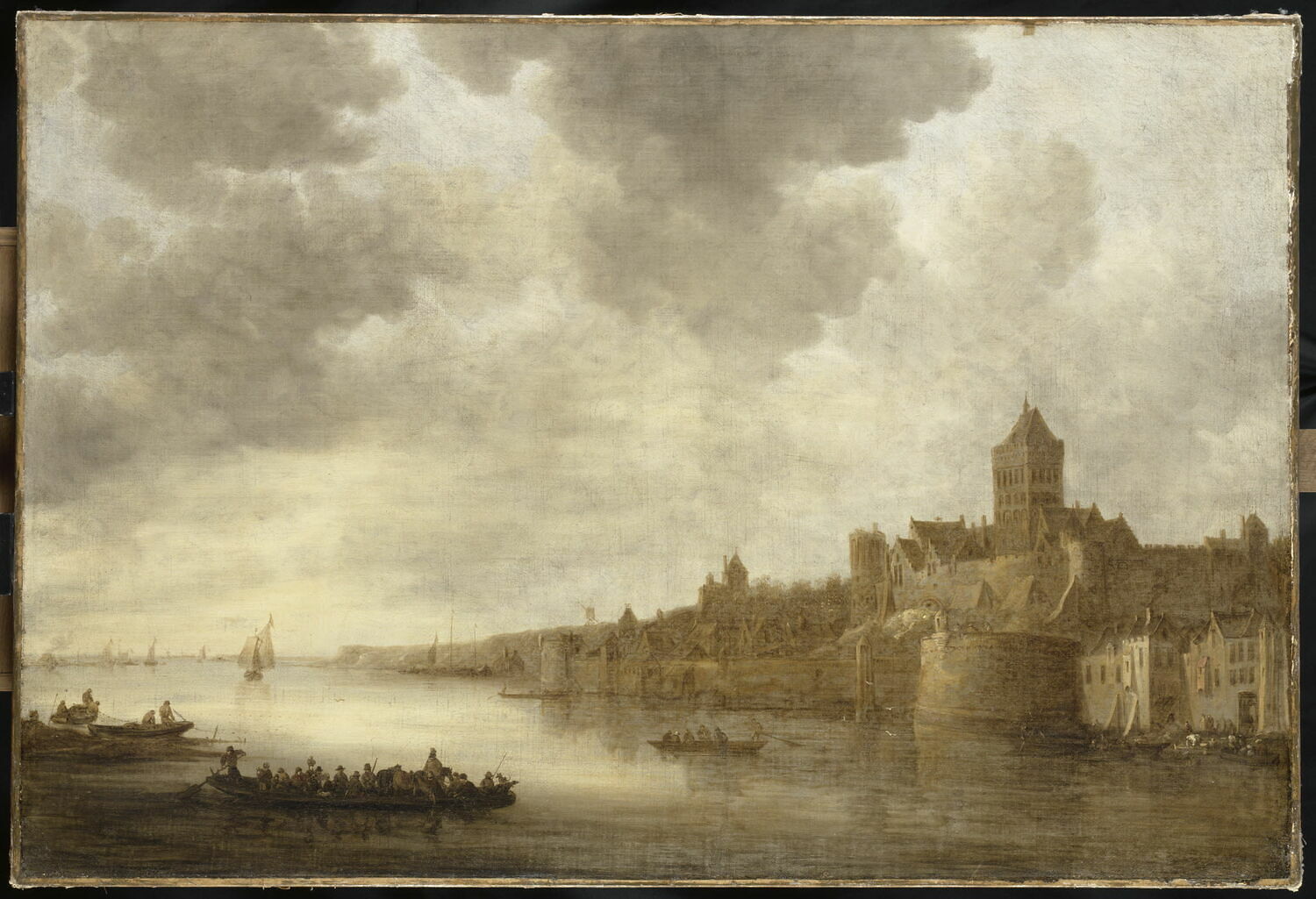
Vue de la ville néerlandaise de Nimègue avec le château du Valkhof dominant la rivière Waal, Goyen, Jan van, 2e quart du XVIIe siècle (1643)

Vue de la ville néerlandaise de Nimègue avec le château du Valkhof dominant la rivière Waal

second quarter of the 17th century (1643) · Musée du Louvre

From the collection of Kunsthistorisches Museum

Museum page
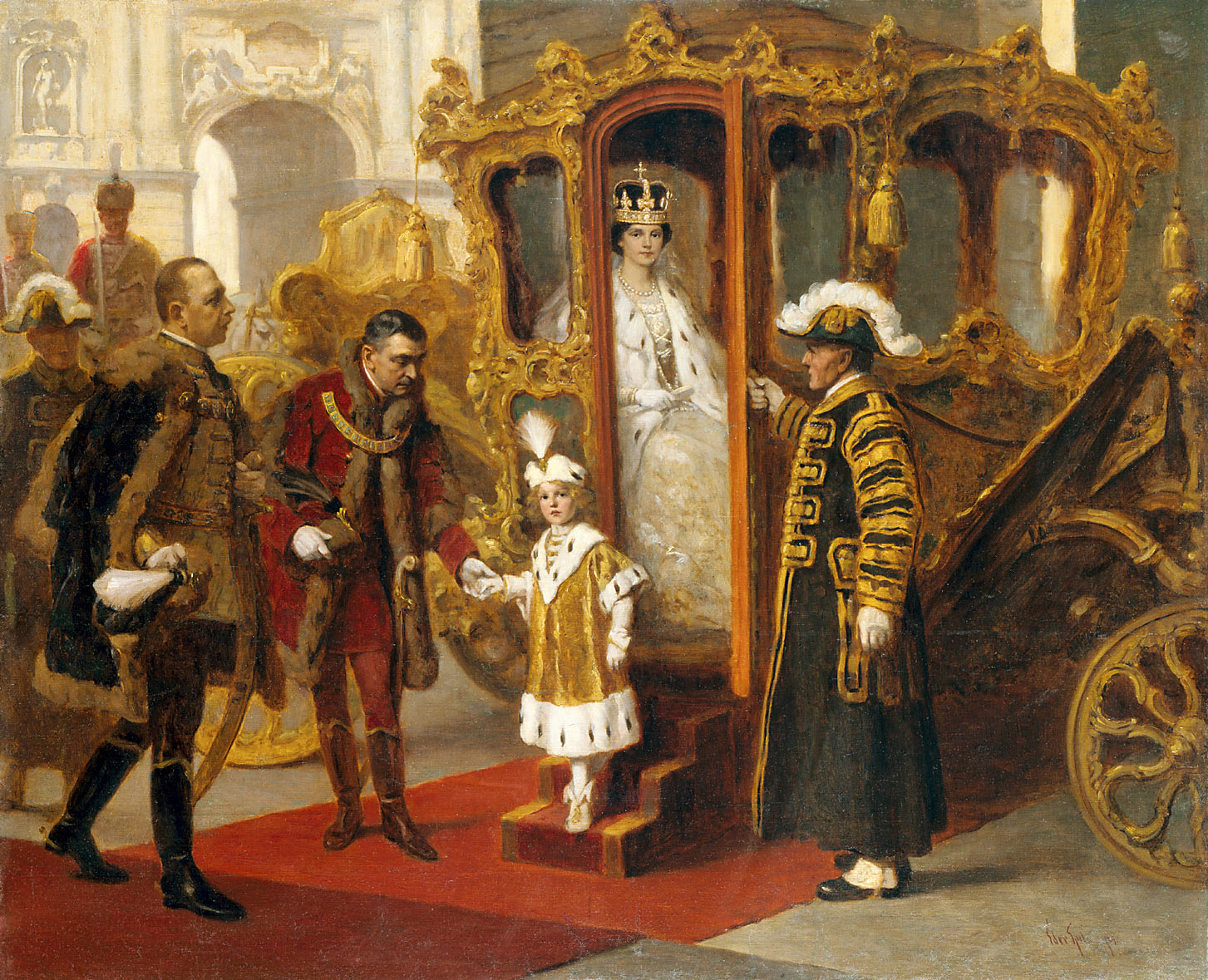
Kaiserin/Königin Zita und Kronprinz Otto beim Verlassen des Imperialwagens vor der Königskrönung in Budapest (30.12.1916), Gyula Éder, 1929

Gyula Éder

Kaiserin/Königin Zita und Kronprinz Otto beim Verlassen des Imperialwagens vor der Königskrönung in Budapest (30.12.1916), 1929

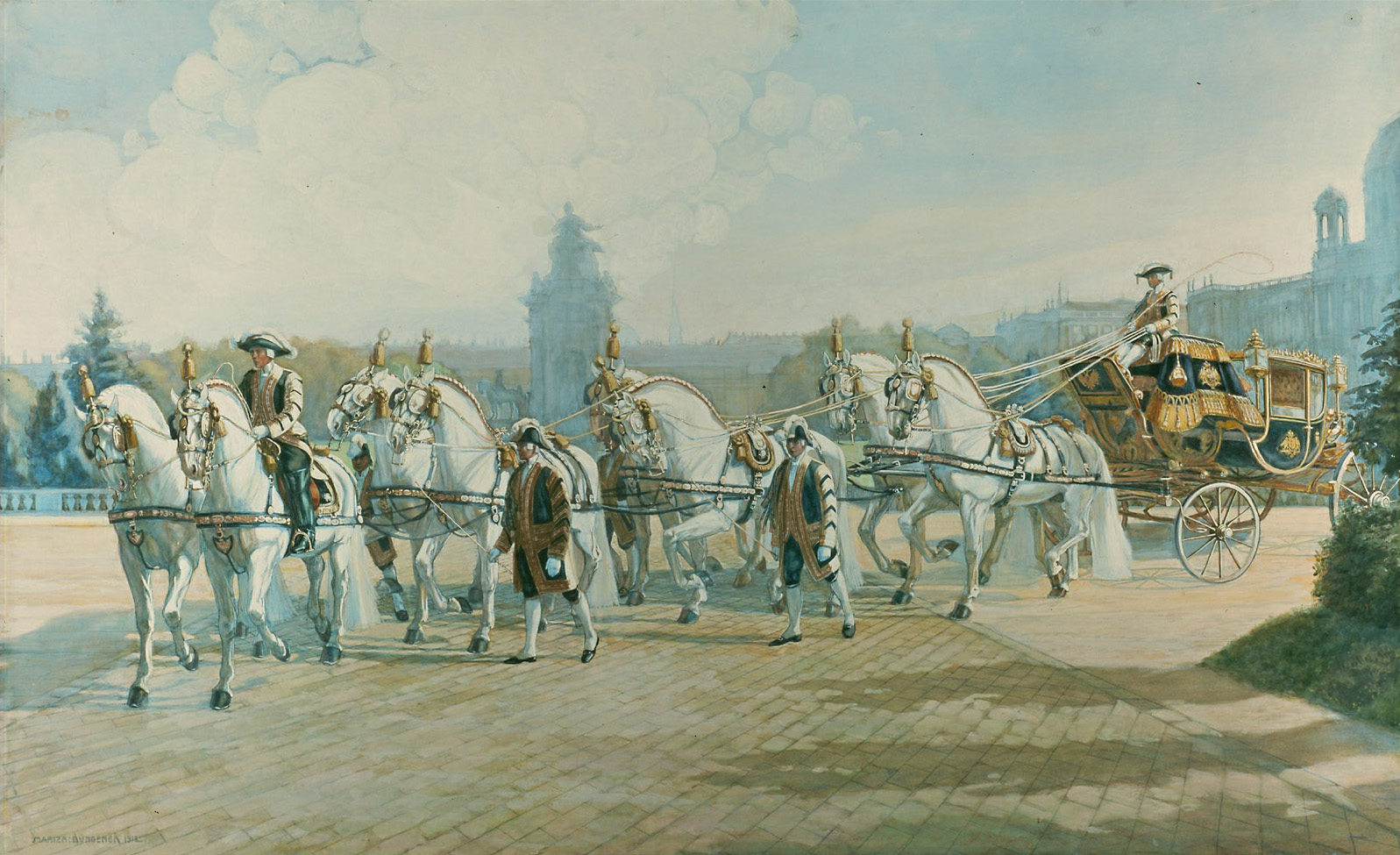
Der Gala-Staatswagen Kaiser Franz Josephs bei der Rückkehr in die Hofstallungen, Mariza Büngener, 1912

Mariza Büngener

Der Gala-Staatswagen Kaiser Franz Josephs bei der Rückkehr in die Hofstallungen, 1912

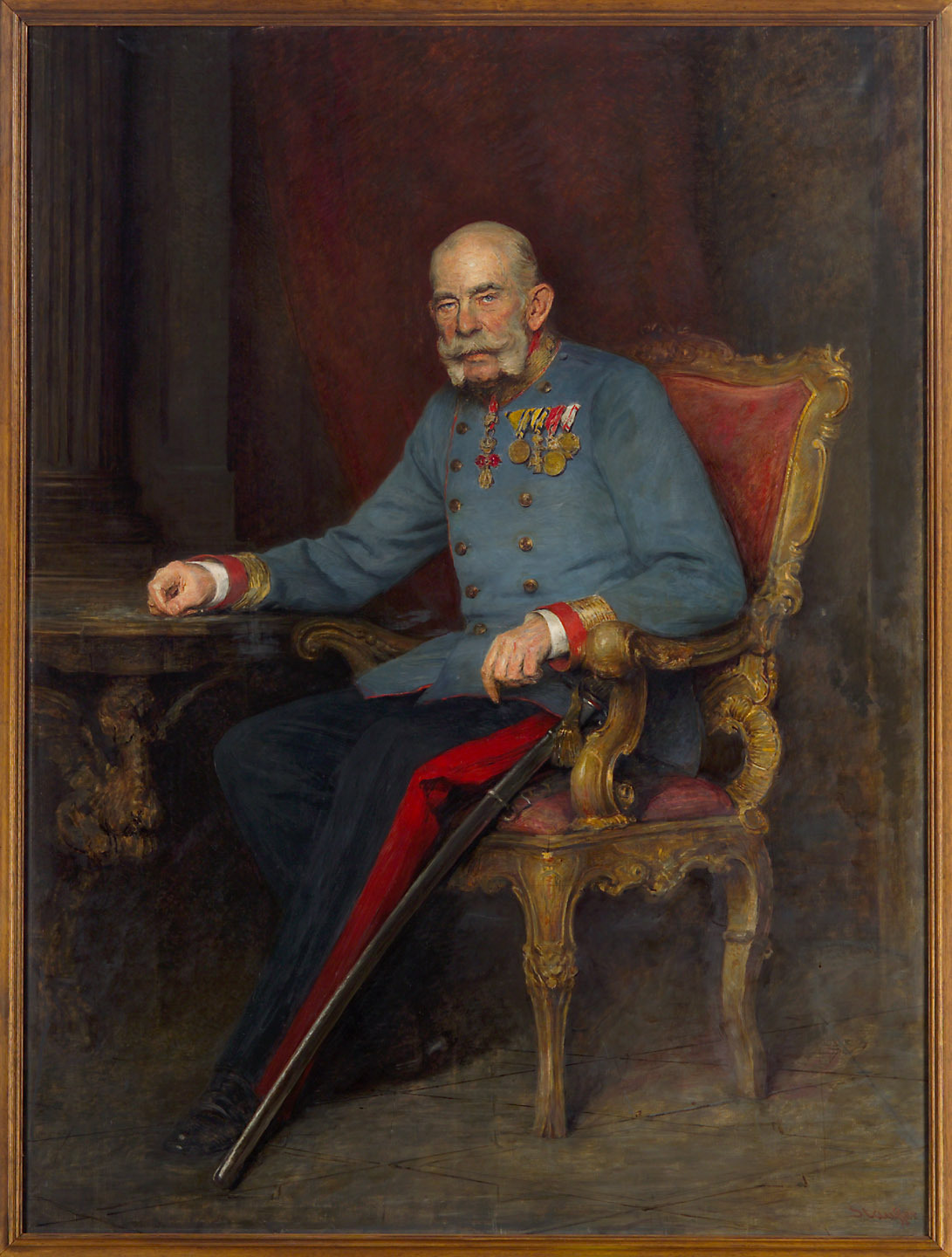
Kaiser Franz Joseph I. (1830-1916) sitzend, Viktor Stauffer, 1911-1916

Viktor Stauffer

Kaiser Franz Joseph I. (1830-1916) sitzend, 1911-1916

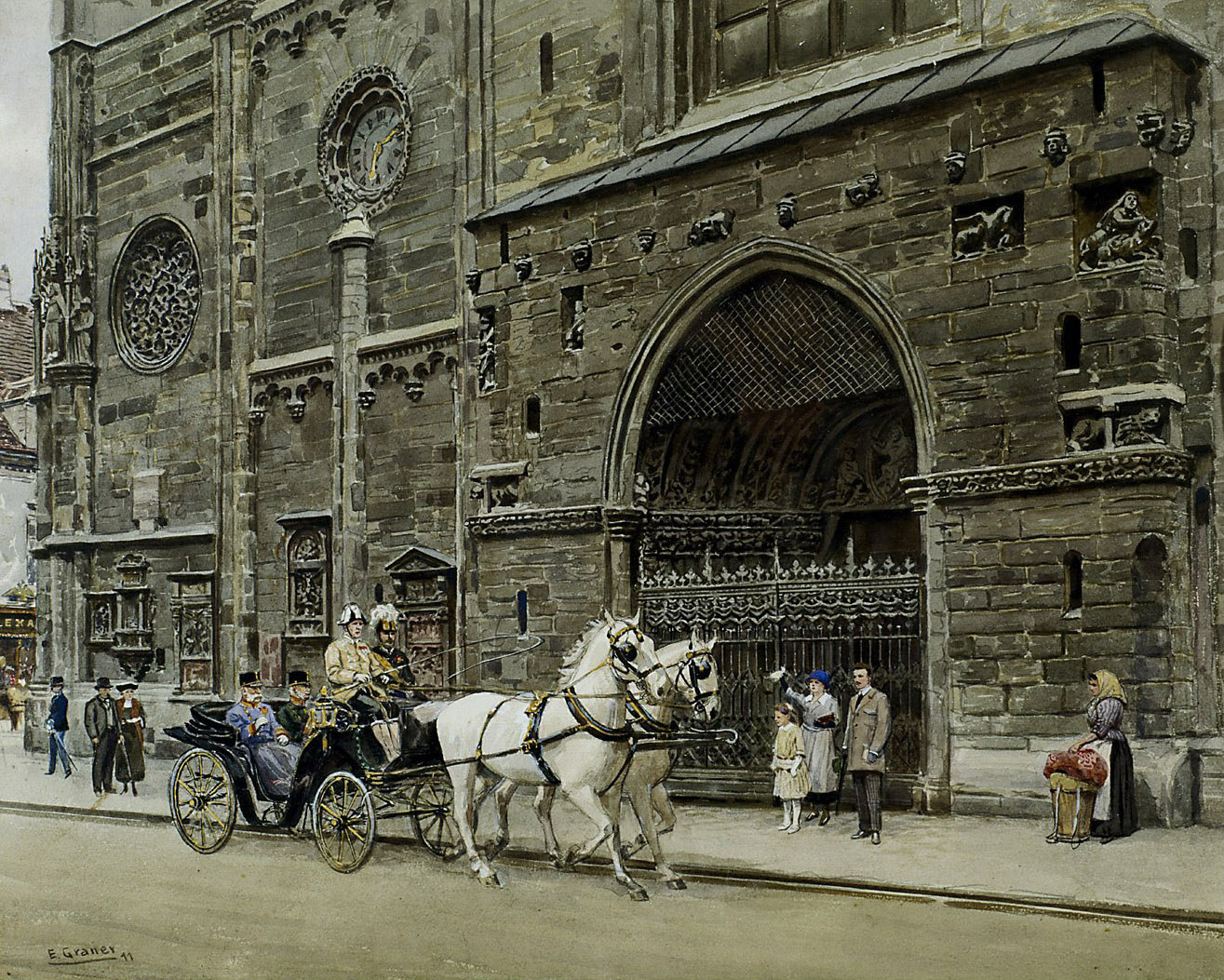
Kaiser Franz Joseph und Generaladjutant Graf Eduard Paar in einem Mylord mit Schimmelpaarweiszug vor der Stephanskirche, Ernst Graner, 1911

Ernst Graner

Kaiser Franz Joseph und Generaladjutant Graf Eduard Paar in einem Mylord mit Schimmelpaarweiszug vor der Stephanskirche, 1911

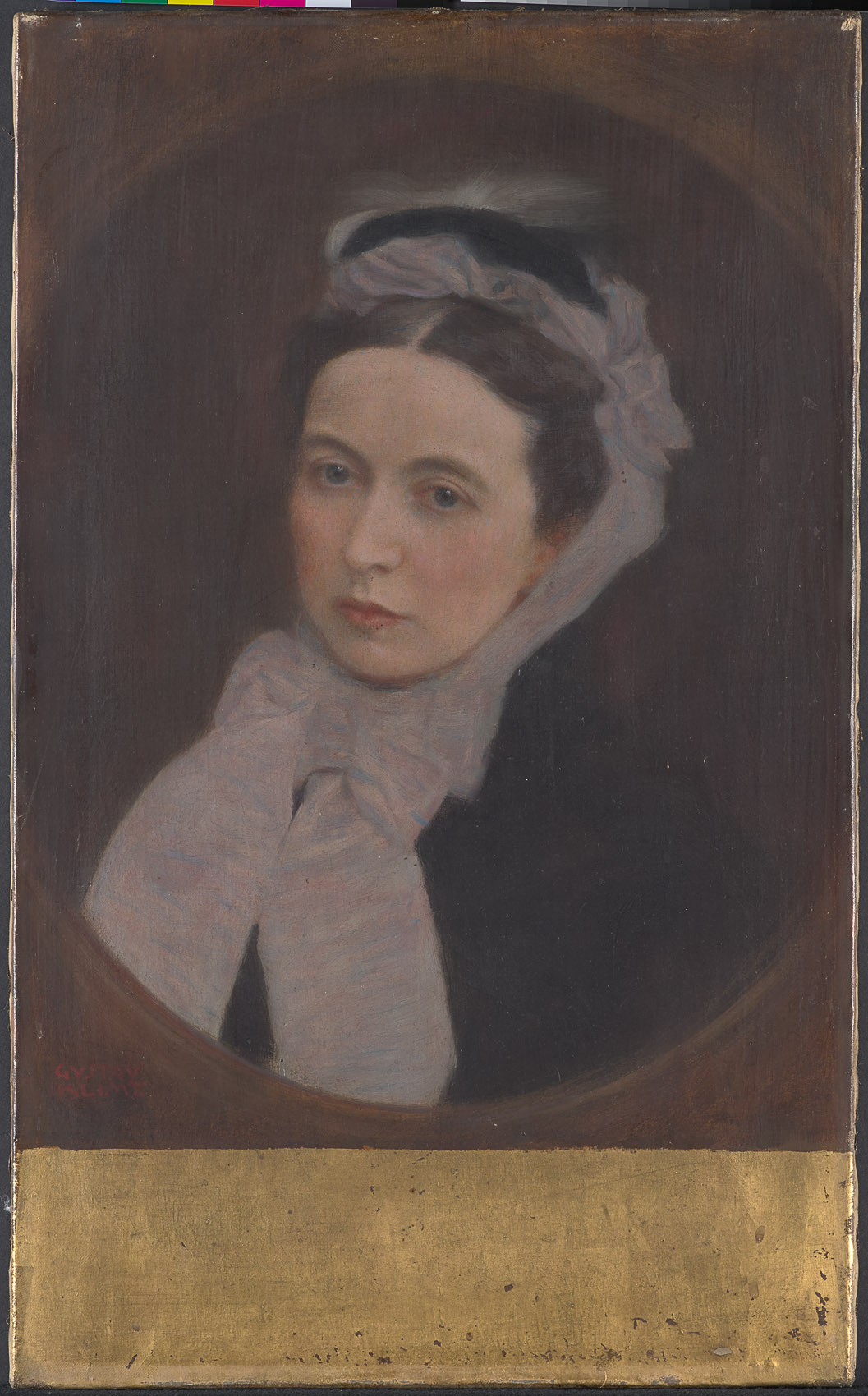
Dame mit lila Schal, Gustav Klimt, 1895

Gustav Klimt

Dame mit lila Schal, 1895

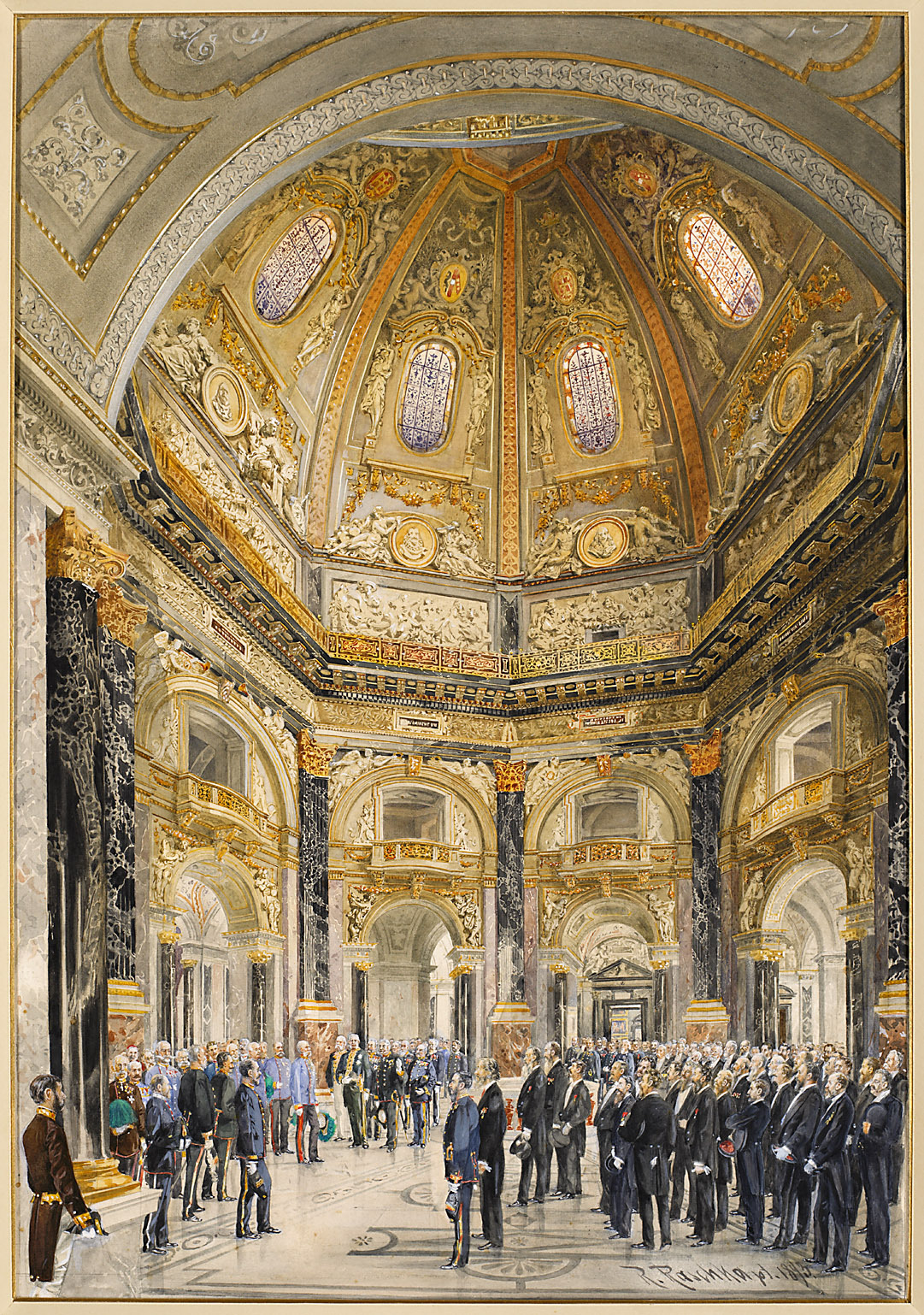
Die Eröffnung des Kunsthistorischen Museums durch Kaiser Franz Joseph I. am 17.10.1891, Robert Raschka, 1891

Robert Raschka

Die Eröffnung des Kunsthistorischen Museums durch Kaiser Franz Joseph I. am 17.10.1891, 1891

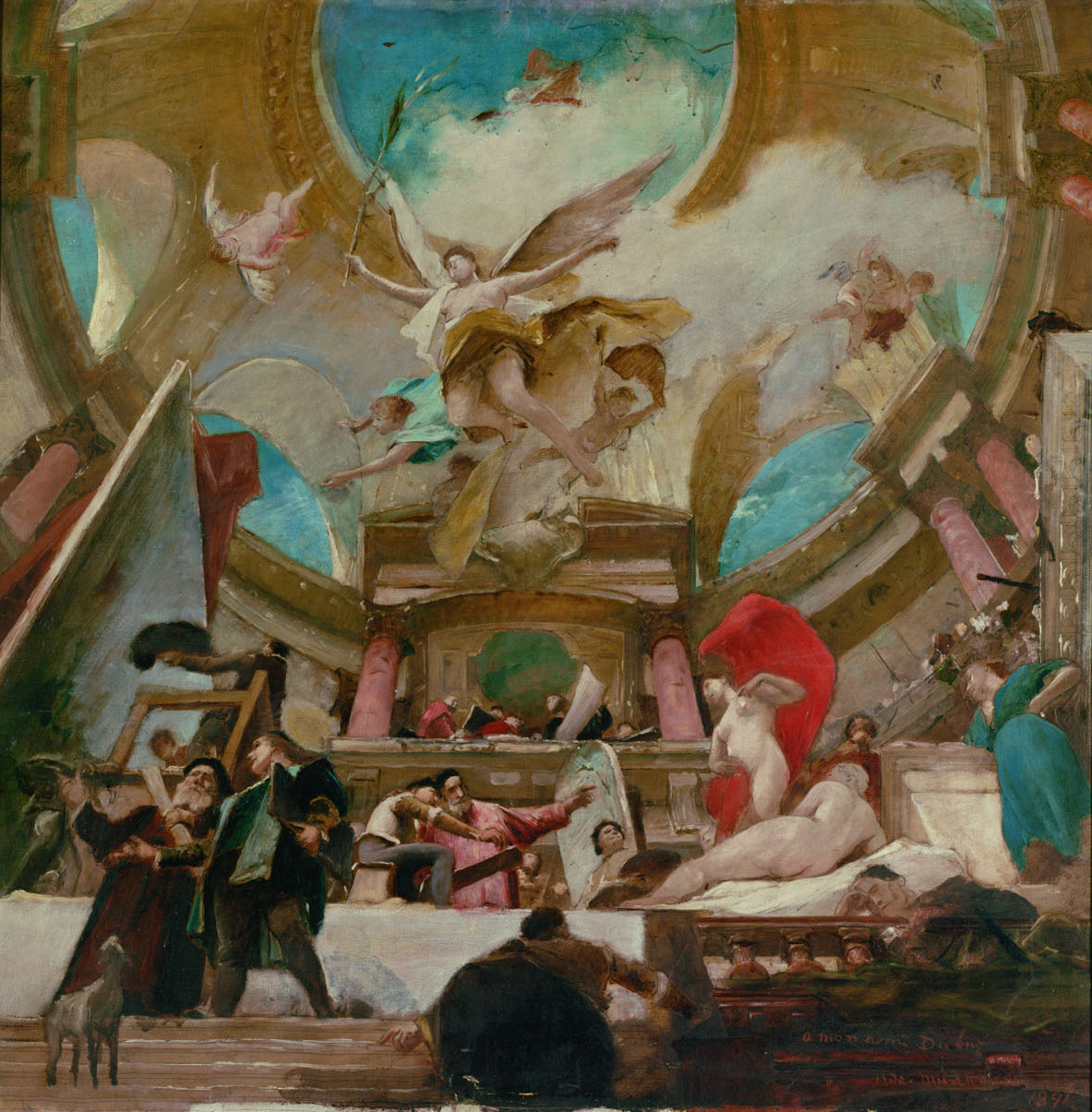
Apotheose der Renaissance, Mihály von Munkácsy, 1888

Mihály Munkácsy

Apotheose der Renaissance, 1888

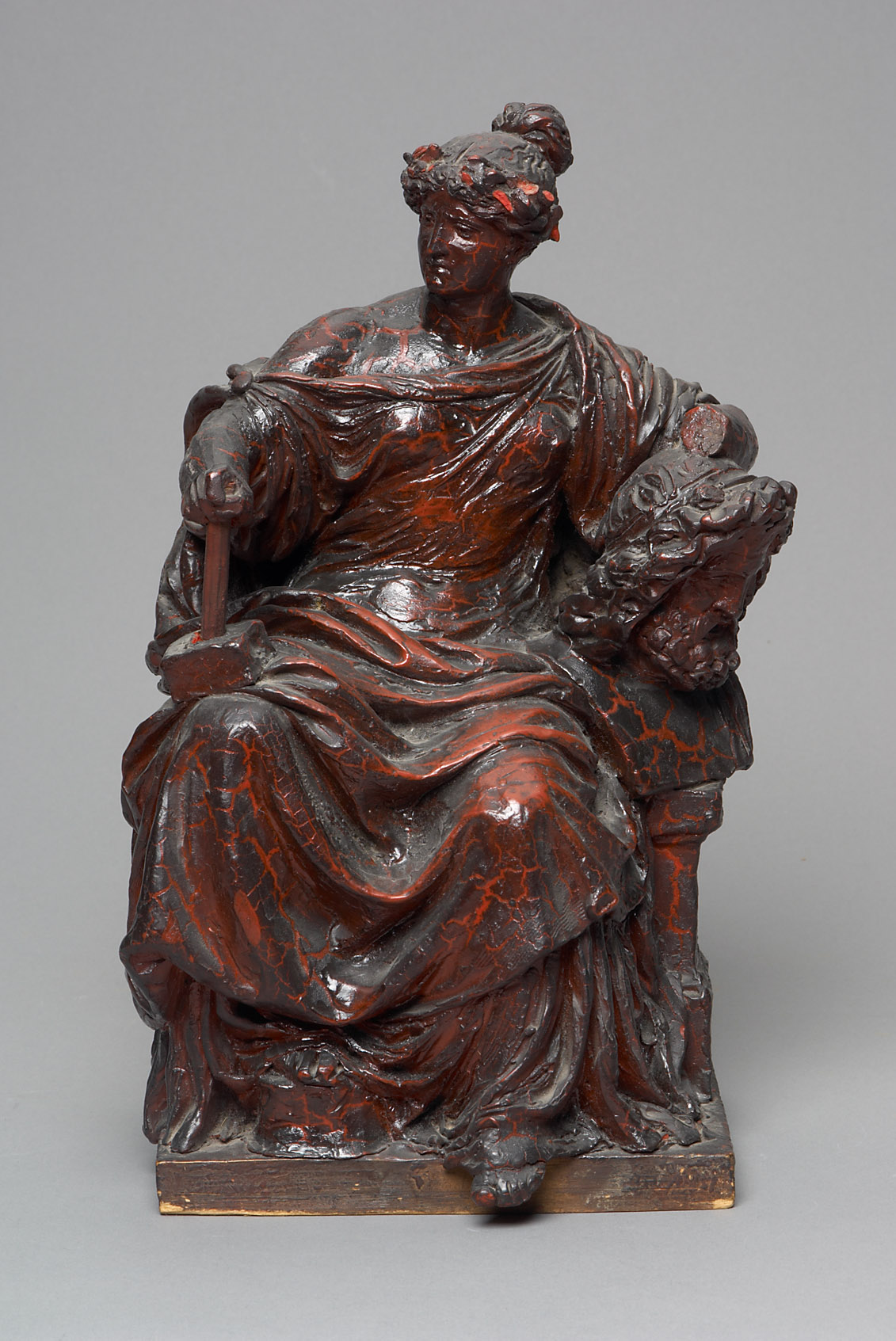
Allegorie der Bildhauerei / Figurenschmuck der Fassade des Kunsthistorischen Museums in Wien., Johannes Benk, 1878-1879

Johannes Benk

Allegorie der Bildhauerei / Figurenschmuck der Fassade des Kunsthistorischen Museums in Wien., 1878-1879