ART WIKI32,963 on view
MapCollectionArtistsMuseumsExhibitionsJournal
Sign in

ART WIKI

Where the masterpiece hangs, and when they let you in.

Collections: Art Institute of Chicago, Getty Villa, Harvard Art Museums, Hirshhorn Museum and Sculpture Garden, J. Paul Getty Museum, Minneapolis Institute of Art, Musée du Louvre, National Gallery of Art, National Museum of Asian Art, National Portrait Gallery (Smithsonian), Pushkin State Museum of Fine Arts, Rijksmuseum, Smithsonian American Art Museum, SMK — National Gallery of Denmark, State Hermitage Museum, State Russian Museum, The Cleveland Museum of Art, The Metropolitan Museum of Art, The Museum of Modern Art, Tretyakov Gallery, Victoria and Albert Museum, Whitney Museum of American Art, State Catalogue of the Museum Fund of Russia (274 museums), Europeana (19 museums), Wikidata (6 museums), Paris Musées (12 museums), and Joconde, the French Ministry of Culture's museum database (495 museums). Images belong to their rights holders.

Sections

  • Map
  • Search
  • Collection
  • Masterpieces
  • On view now
  • Artists

More

  • Museums & galleries
  • Exhibitions
  • Journal
  • Where the data comes from
  • Privacy & cookies
HomeMapBrowse
  1. Collection/
  2. Kunstpalast/
  3. Fest der Jünglinge
Fest der Jünglinge, Paul Klee, 1929
Paul Klee, portraitPaul KleeGerman, 1879–1940

Fest der Jünglinge

1929 · Drawing

May one see it?

Unknown

Kunstpalast

Düsseldorf, Germany

The owner is known; whether it is on view today is not.

In this state since
Sep 27, 2026
Source
The museum
On the mapMuseum page

Particulars

1929 · aged 50
18791940

In the catalog

Drawings & watercolorsModernism20th century

Sources

  • Kunstpalast
  • Image: Kunstpalast — In Copyright

Meanwhile, in the life of Paul Klee

The whole life
  1. 1921–1931

    The preliminary course on the “theory of form”

    Klee developed a preliminary course in the “theory of form” that began with the “point as the beginning of all beginnings”, moving through space, and the “cosmic egg” from which line, spiral, square, circle and cube are born. Students listened to lectures illustrated with Klee’s own abstract watercolours and then painted their own, trying to express movement, balance, flight and tension.

  2. 1928–1929

    A journey to Egypt

    Egypt impressed Klee less than Tunisia, yet in the desert he felt an almost mystical bond with the land: he was drawn to the proportions of the ancient funerary monuments and to the esoteric numerology by which they were built. His later “Ad Parnassum” was influenced by the trip.

  3. 1929

    The first major monograph on Klee

    In 1929 the first major monograph on Klee’s work was published; it was written by Will Grohmann, a confidant of the artist.

  4. 1931

    Leaving the Bauhaus for the Düsseldorf Academy

    Teaching at the Bauhaus shifted ever more from painting towards an architectural aesthetic, which no longer suited Klee: in 1931 he gave up his post there and became a professor at the Düsseldorf Academy of Art.

More by Paul Klee

All works
New House in the Suburbs, Paul Klee, 1924

New House in the Suburbs

1924 · National Gallery of Art

May Picture, Paul Klee, 1925

May Picture

1925 · The Metropolitan Museum of Art

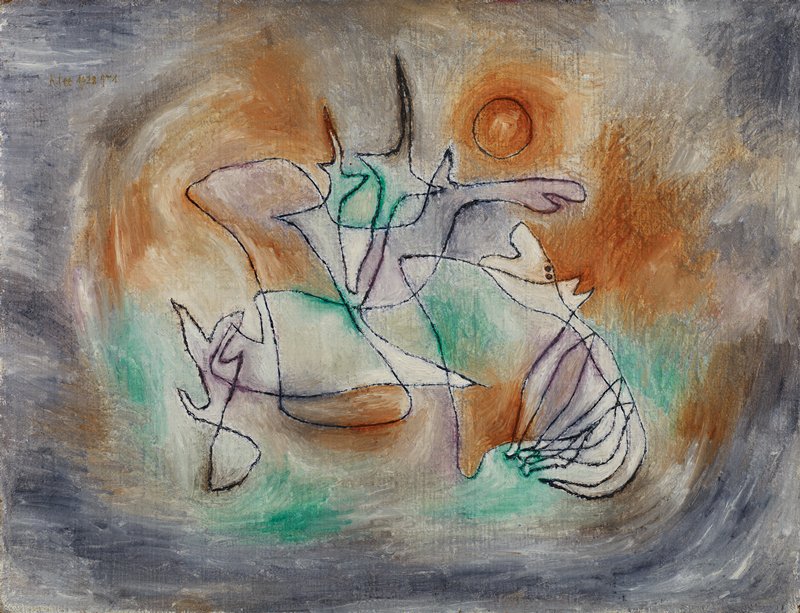
Howling Dog, Paul Klee, 1928

Howling Dog

1928 · Minneapolis Institute of Art

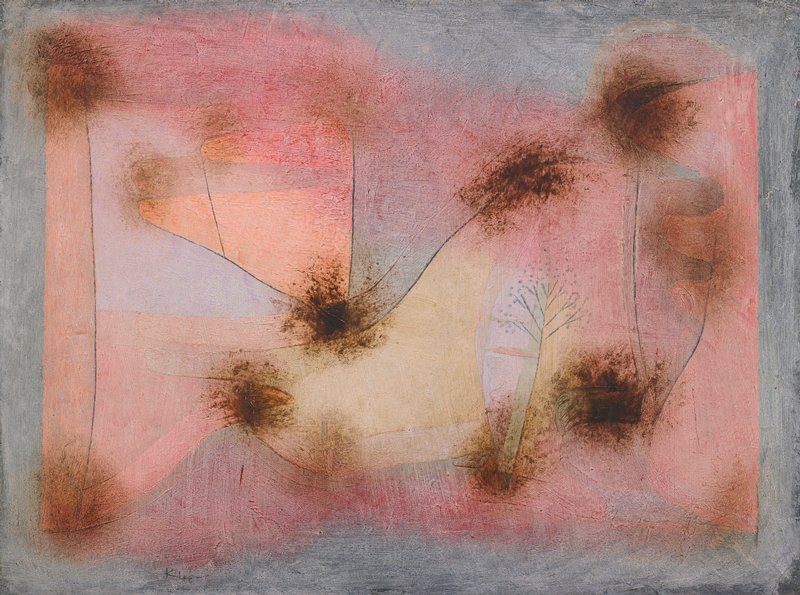
Hardy Plants, Paul Klee, 1934

Hardy Plants

1934 · Minneapolis Institute of Art

Stakim, Paul Klee, c. 1928

Stakim

c. 1928 · Art Institute of Chicago

Fleeing Ghost, Paul Klee, 1929

Fleeing Ghost

1929 · Art Institute of Chicago

In the Magic Mirror, Paul Klee, 1934

In the Magic Mirror

1934 · Art Institute of Chicago

Auslöschendes Licht, Paul Klee

Auslöschendes Licht

Albertina