ART WIKI32,963 on view
MapCollectionArtistsMuseumsExhibitionsJournal
Sign in

ART WIKI

Where the masterpiece hangs, and when they let you in.

Collections: Art Institute of Chicago, Getty Villa, Harvard Art Museums, Hirshhorn Museum and Sculpture Garden, J. Paul Getty Museum, Minneapolis Institute of Art, Musée du Louvre, National Gallery of Art, National Museum of Asian Art, National Portrait Gallery (Smithsonian), Pushkin State Museum of Fine Arts, Rijksmuseum, Smithsonian American Art Museum, SMK — National Gallery of Denmark, State Hermitage Museum, State Russian Museum, The Cleveland Museum of Art, The Metropolitan Museum of Art, The Museum of Modern Art, Tretyakov Gallery, Victoria and Albert Museum, Whitney Museum of American Art, State Catalogue of the Museum Fund of Russia (274 museums), Europeana (19 museums), Wikidata (6 museums), Paris Musées (12 museums), and Joconde, the French Ministry of Culture's museum database (495 museums). Images belong to their rights holders.

Sections

  • Map
  • Search
  • Collection
  • Masterpieces
  • On view now
  • Artists

More

  • Museums & galleries
  • Exhibitions
  • Journal
  • Where the data comes from
  • Privacy & cookies
HomeMapBrowse
  1. Collection/
  2. Albertina/
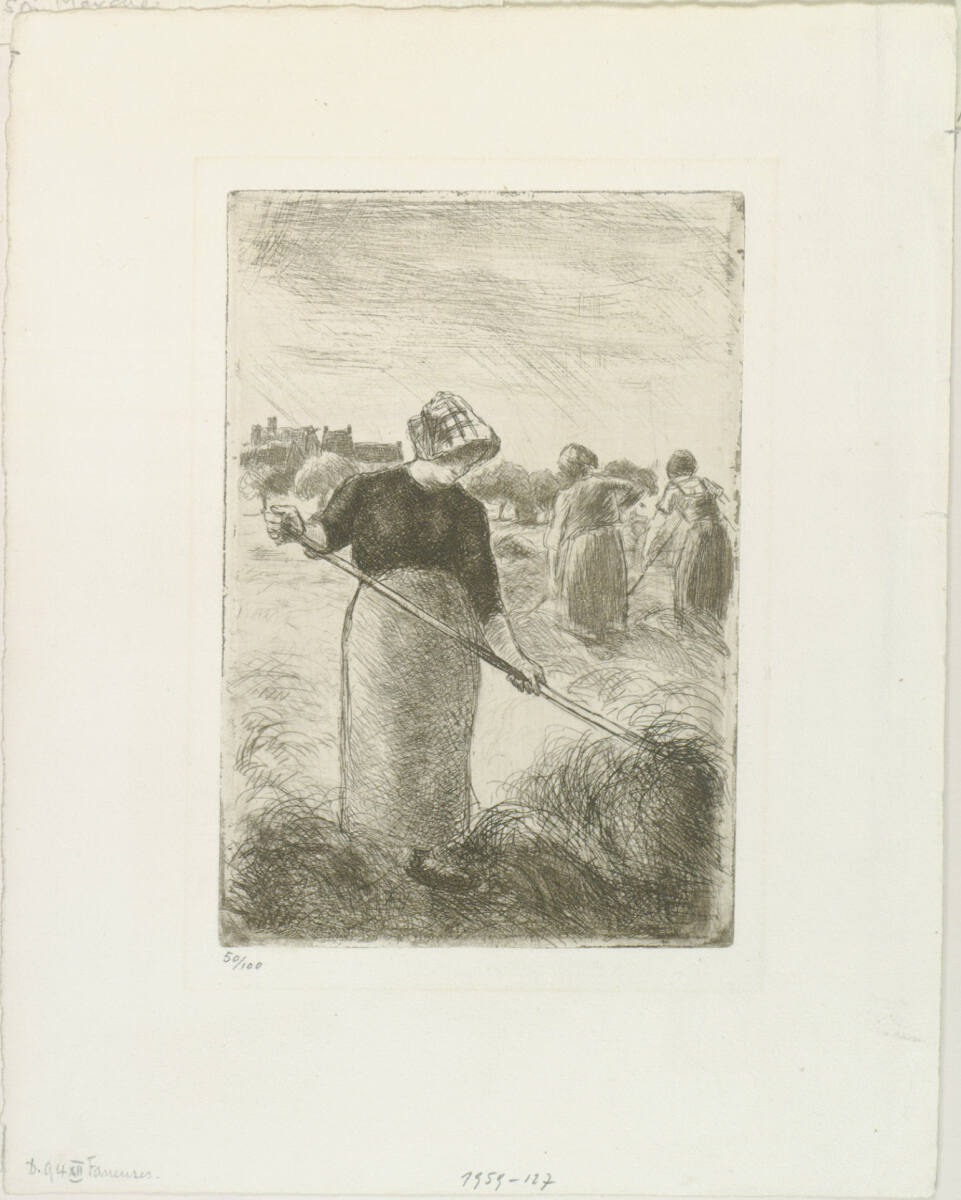
  3. Faneuses
Faneuses, Camille Pissarro, 1890
Camille Jacob Pissarro, portraitCamille Jacob PissarroFrench, 1830–1903

Faneuses

1890 · Print

May one see it?

Unknown

Albertina

Vienna, Austria

The owner is known; whether it is on view today is not.

In this state since
Sep 27, 2026
Source
The museum
On the mapMuseum page

Particulars

1890 · aged 60
18301903

In the catalog

PrintsImpressionism19th century

Sources

  • Albertina
  • Image: Albertina — Public Domain Mark 1.0

Meanwhile, in the life of Camille Jacob Pissarro

The whole life
  1. 1880s

    Theo van Gogh asks him to take in Vincent

    The art dealer Theo van Gogh asked Pissarro whether he would take his elder brother Vincent as a lodger in his house; according to his son Lucien, Pissarro was impressed by Van Gogh's work, foresaw his fame and explained to him different ways of seeking and expressing light and colour.

  2. 1880s

    A search for something new: peasant labour without idealisation

    By the 1880s some Impressionists felt the movement had exhausted itself, and Pissarro returned to scenes of country life, showing people at work without idealising them; in 1882 Renoir called these works “revolutionary”.

  3. April 1884

    Settles at Éragny-sur-Epte

    In April 1884 Pissarro and his family settled at Éragny-sur-Epte, a village near Gisors, where he lived for the rest of his life; he wrote to his son Lucien that the house was superb, with a garden and meadows. The house, garden, orchard, meadows and farm workers became recurring subjects for the last nineteen years of his career.

  4. 1885–1888

    Pointillism: working beside Seurat and Signac

    In 1885 Pissarro came into close contact with Georges Seurat and Paul Signac, whose technique juxtaposed small strokes of relatively pure colour, and until 1888 he experimented extensively with it, regarding it not as a rejection of Impressionism but as a possible continuation of it; among the older Impressionists this was unusual.

  5. late 1880s

    Abandoning Neo-Impressionism

    By the end of the 1880s Pissarro found the method of divided colour too restrictive: it made it hard to respond freely to changing effects of nature, movement and personal sensation; what remained from the experiment was a heightened attention to colour relationships and a more structured handling of the surface.

  6. 1892

    Buying the house at Éragny with Monet's help

    When the Éragny house the Pissarros were renting was offered for sale in 1892, his old friend Claude Monet, who lived nearby at Giverny, agreed to make up to 15,000 francs available, helping Pissarro and his wife Julie buy it.
More by Camille Jacob Pissarro

All works
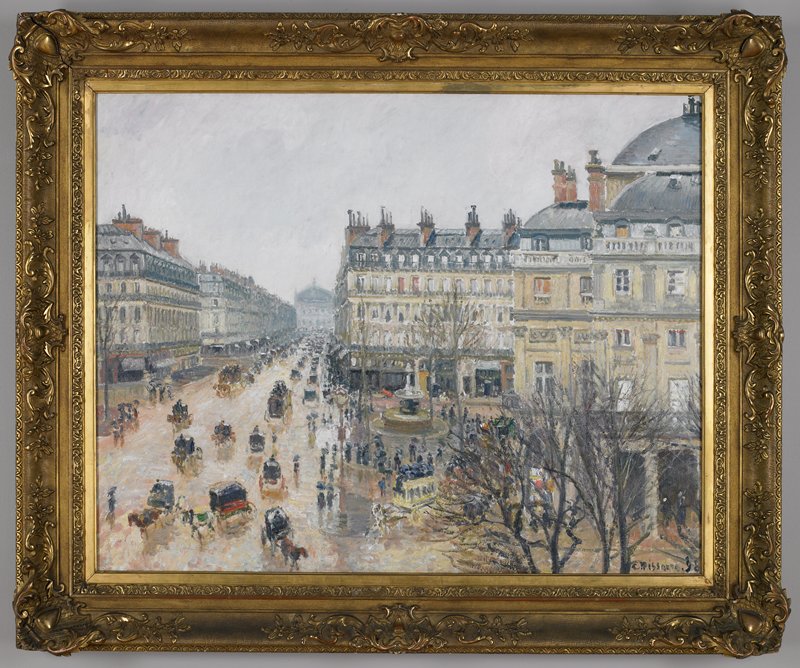
Place du Théâtre Français, Paris: Rain, Camille Pissarro, 1898

Place du Théâtre Français, Paris: Rain

1898 · Minneapolis Institute of Art

A Creek in St. Thomas (Virgin Islands), Camille Pissarro, 1856

A Creek in St. Thomas (Virgin Islands)

1856 · National Gallery of Art

Two Women Chatting by the Sea, St. Thomas, Camille Pissarro, 1856

Two Women Chatting by the Sea, St. Thomas

1856 · National Gallery of Art

Landscape at Les Pâtis, Pontoise, Camille Pissarro, 1868

Landscape at Les Pâtis, Pontoise

1868 · National Gallery of Art

Landscape at Louveciennes (Autumn), Camille Pissarro, 1870

Landscape at Louveciennes (Autumn)

1870 · J. Paul Getty Museum

Orchard in Bloom, Louveciennes, Camille Pissarro, 1872

Orchard in Bloom, Louveciennes

1872 · National Gallery of Art

The Fence, Camille Pissarro, 1872

The Fence

1872 · National Gallery of Art

Orchards at Louveciennes, Camille Pissarro, 1872

Orchards at Louveciennes

1872 · Minneapolis Institute of Art

From the collection of Albertina

Museum page
Zwei groteske Köpfe im Profil, Leonardo da Vinci

Leonardo da Vinci

Zwei groteske Köpfe im Profil

Landschaft mit Haus und Bäumen, Vincent van Gogh

Vincent van Gogh

Landschaft mit Haus und Bäumen

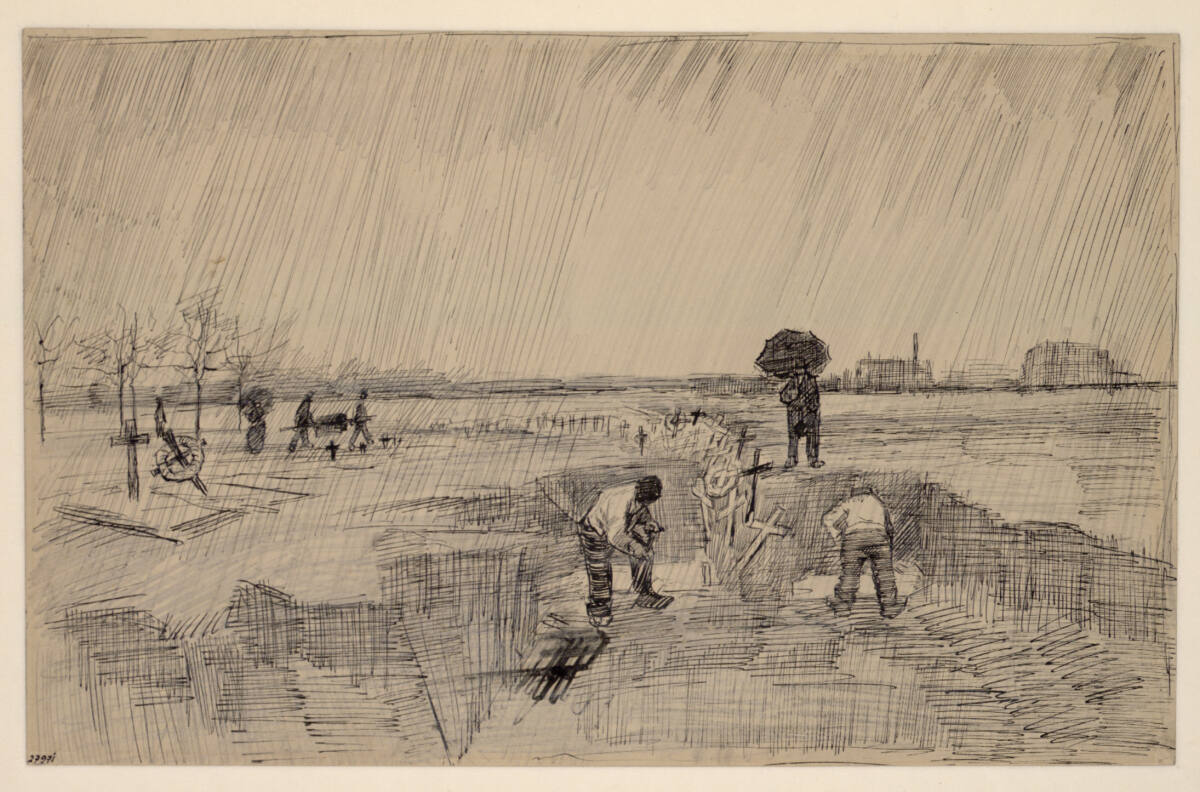
Friedhof im Regen, Vincent van Gogh

Vincent van Gogh

Friedhof im Regen

Studien eines erhobenen Armes mit Schultergelenk, Michelangelo

Michelangelo

Studien eines erhobenen Armes mit Schultergelenk

Studien eines weiblichen sitzenden Rückenakts, Michelangelo

Michelangelo

Studien eines weiblichen sitzenden Rückenakts

Männlicher Oberkörper mit gefalteten Händen sowie Handstudien, Michelangelo

Michelangelo

Männlicher Oberkörper mit gefalteten Händen sowie Handstudien

Männlicher Rückenakt (Studie zu dem eine Lanze tragenden Soldaten des geplanten Wandgemäldes "Schlacht von Cascina"), Michelangelo

Michelangelo

Männlicher Rückenakt (Studie zu dem eine Lanze tragenden Soldaten des geplanten Wandgemäldes "Schlacht von Cascina")

Beweinung Christi, Michelangelo

Michelangelo

Beweinung Christi