ART WIKI33,040 on view
MapCollectionArtistsMuseumsExhibitionsJournal
Sign in

ART WIKI

Where the masterpiece hangs, and when they let you in.

Collections: Art Institute of Chicago, Getty Villa, Harvard Art Museums, Hirshhorn Museum and Sculpture Garden, J. Paul Getty Museum, Minneapolis Institute of Art, Musée du Louvre, National Gallery of Art, National Museum of Asian Art, National Portrait Gallery (Smithsonian), Pushkin State Museum of Fine Arts, Rijksmuseum, Smithsonian American Art Museum, SMK — National Gallery of Denmark, State Hermitage Museum, State Russian Museum, The Cleveland Museum of Art, The Metropolitan Museum of Art, The Museum of Modern Art, Tretyakov Gallery, Victoria and Albert Museum, Whitney Museum of American Art, State Catalogue of the Museum Fund of Russia (274 museums), Europeana (19 museums), Wikidata (6 museums), Paris Musées (12 museums), and Joconde, the French Ministry of Culture's museum database (495 museums). Images belong to their rights holders.

Sections

  • Map
  • Search
  • Collection
  • Masterpieces
  • On view now
  • Artists

More

  • Museums & galleries
  • Exhibitions
  • Journal
  • Where the data comes from
  • Privacy & cookies
HomeMapBrowse
  1. Collection/
  2. The Cleveland Museum of Art/
  3. Eve
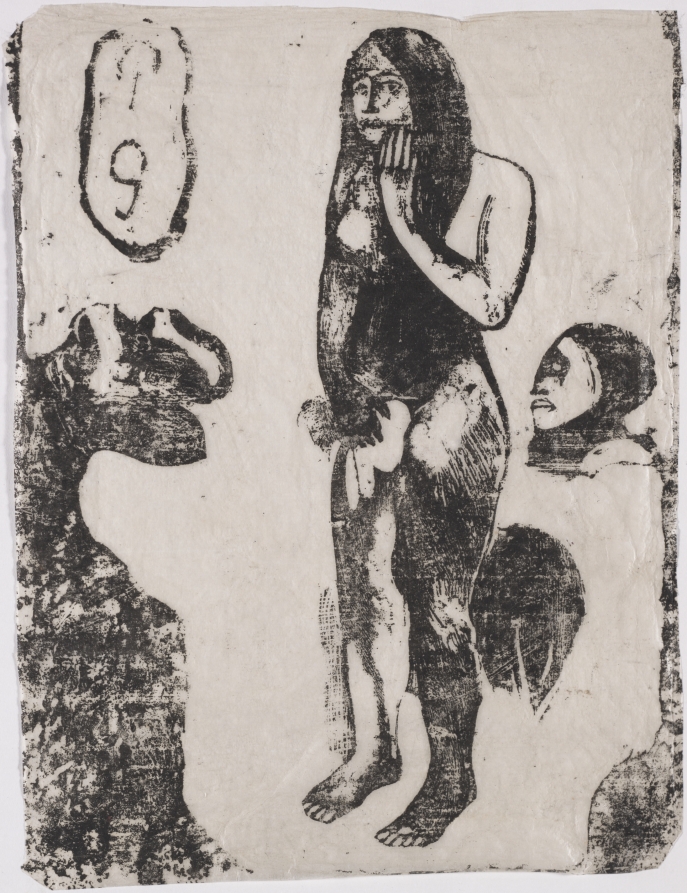
Eve, Paul Gauguin, 1898–99
Paul Gauguin, portraitPaul GauguinFrench, 1848–1903

Eve

1898–99 · Print

May one see it?

Not receiving at present

The Cleveland Museum of Art

Cleveland, United States

It belongs to the collection, but is not on display at present.

Checked
9 days ago
In this state since
Aug 19, 2026
Source
The museum
On the mapMuseum page

About the work

In his quest to reconcile the Gospels of the New Testament with the spirit of modern science, Gauguin created 14 woodcuts that mix Christian and Polynesian imagery to create the visual equivalents of parables or fables. Here, Eve’s gesture of modesty recalls earlier representations of her expulsion from the Garden of Eden, but the disembodied hooded head, the tupapau (a Tahitian evil spirit), and the rat (the shadow of a ghost) are Polynesian symbols. Combining Eve, an image of guilt and violation, with Tahitian symbols of death increases the potency of the scene. This special impression of Eve is the only known example of the first state in which the black shape in the lower right is blank, before the block was changed; additional white lines appear on Eve and the rat.

The Cleveland Museum of Art

Particulars

1898–99
18481903
Accession number
1991.158

In the catalog

PrintsWoodcutImpressionism19th centuryFrance, 19th century

Sources

  • The Cleveland Museum of Art
  • Image: The Cleveland Museum of Art — Museum open access

Meanwhile, in the life of Paul Gauguin

The whole life
  1. 1891–1901 · Workplace

    Tahiti

  2. April 1897

    News of the Death of His Daughter Aline

    In April 1897 Gauguin received news that his beloved daughter Aline had died of pneumonia; the same month he learned that he had to vacate his house, and, taking out a bank loan for a new one, by the end of the year he was on the brink of ruin and despair.

  3. c. 1898

    Suicide Attempt

    After finishing Where Do We Come From? What Are We? Where Are We Going?, Gauguin attempted suicide by taking arsenic, but the dose proved too large, and a violent fit of vomiting saved his life.

  4. 1899

    Birth of a Son by Pahura

    In 1899 the artist's Tahitian lover Pahura bore him a son; the painting Women by the Sea (Maternity) is associated with this event.

  5. 1899

    Son born: Emile Gauguin

  6. 16 September 1901

    Move to Hiva Oa, the House of Pleasure

    On 16 September 1901 Gauguin arrived at Atuona on the island of Hiva Oa (Marquesas Islands), where he bought a plot from the Catholic mission and built a two-story house he named the Maison du Jouir ("House of Pleasure"). Here, despite illness and poverty, he worked at full strength — painting landscapes, writing stories, and engaging in journalism.
More by Paul Gauguin

All works
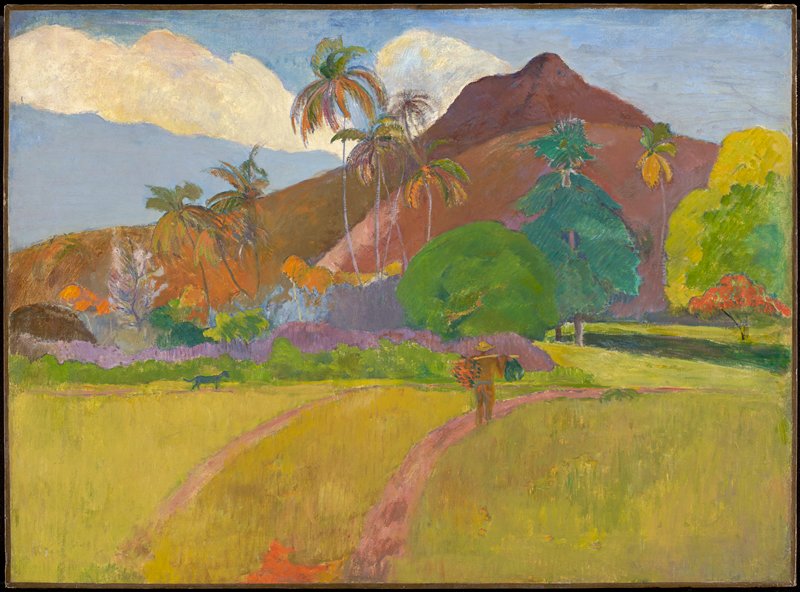
Tahitian Landscape, Paul Gauguin, 1891

Tahitian Landscape

1891 · Minneapolis Institute of Art

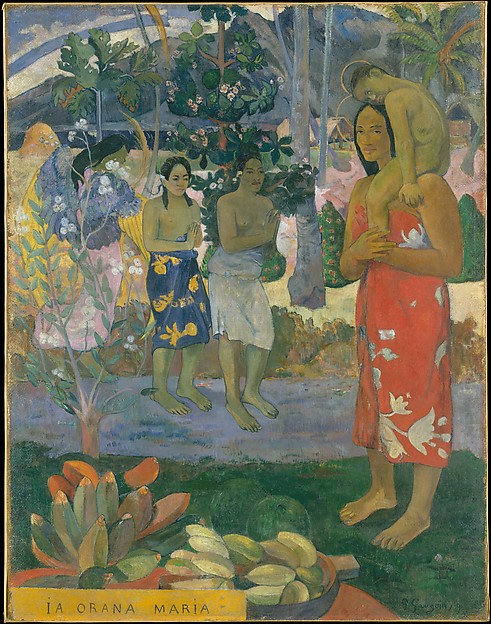
Ia Orana Maria (Hail Mary), Paul Gauguin, 1891

Ia Orana Maria (Hail Mary)

1891 · The Metropolitan Museum of Art

Emile Gauguin (1874–1955), the artist's son, Paul Gauguin, ca. 1877–78

Emile Gauguin (1874–1955), the artist's son

ca. 1877–78 · The Metropolitan Museum of Art

Madame Alexandre Kohler, Paul Gauguin, 1887/1888

Madame Alexandre Kohler

1887/1888 · National Gallery of Art

Breton Girls Dancing, Pont-Aven, Paul Gauguin, 1888

Breton Girls Dancing, Pont-Aven

1888 · National Gallery of Art

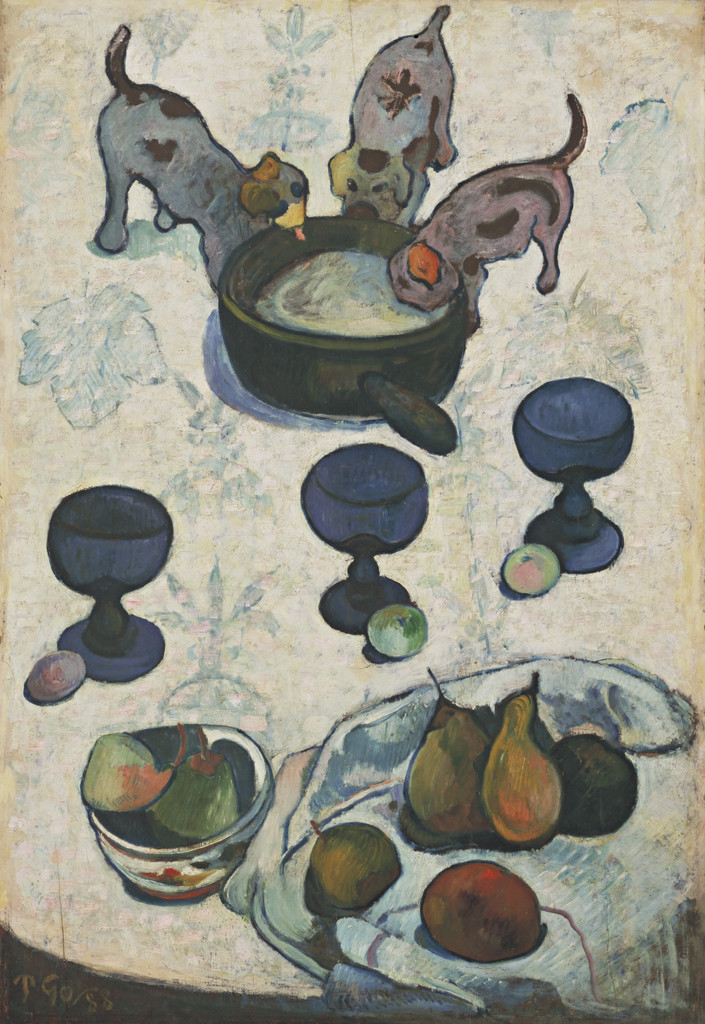
Still Life with Three Puppies, Paul Gauguin, 1888

Still Life with Three Puppies

1888 · The Museum of Modern Art

Walking stick with a female nude and a Breton sabot on the handle, Paul Gauguin, ca. 1888–90

Walking stick with a female nude and a Breton sabot on the handle

ca. 1888–90 · The Metropolitan Museum of Art

Pair of Wooden Shoes (Sabots) [left], Paul Gauguin, 1889/1890

Pair of Wooden Shoes (Sabots) [left]

1889/1890 · National Gallery of Art

Neighbors at The Cleveland Museum of Art

Museum page
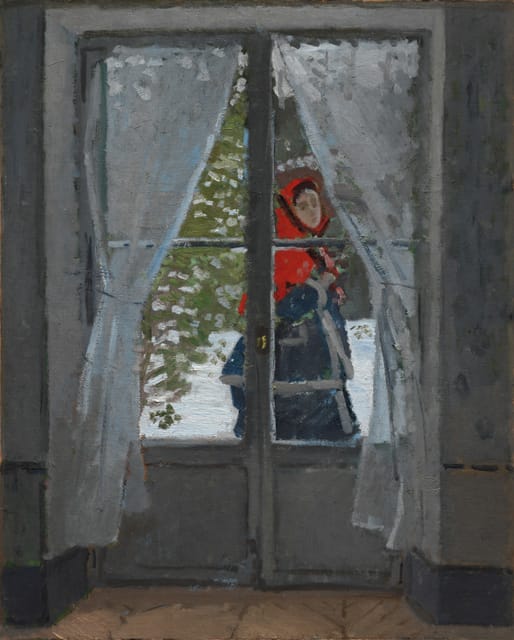
The Red Kerchief, Claude Monet, c. 1868–73

Claude Monet

The Red Kerchief, c. 1868–73

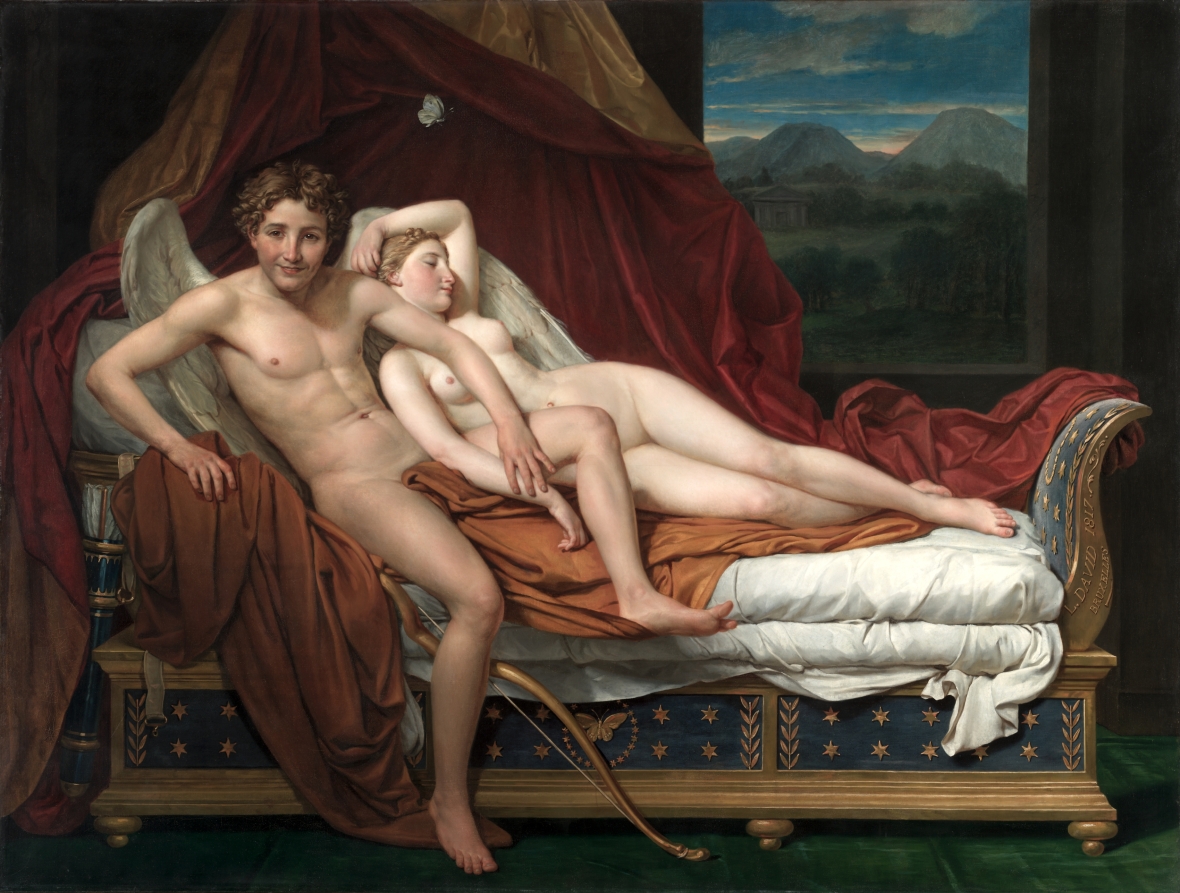
Cupid and Psyche, Jacques-Louis David, 1817

Jacques-Louis David

Cupid and Psyche, 1817

Mars, Venus, and Eros, Marcantonio Raimondi possibly after Andrea Mantegna, 1508

Andrea Mantegna

Mars, Venus, and Eros, 1508

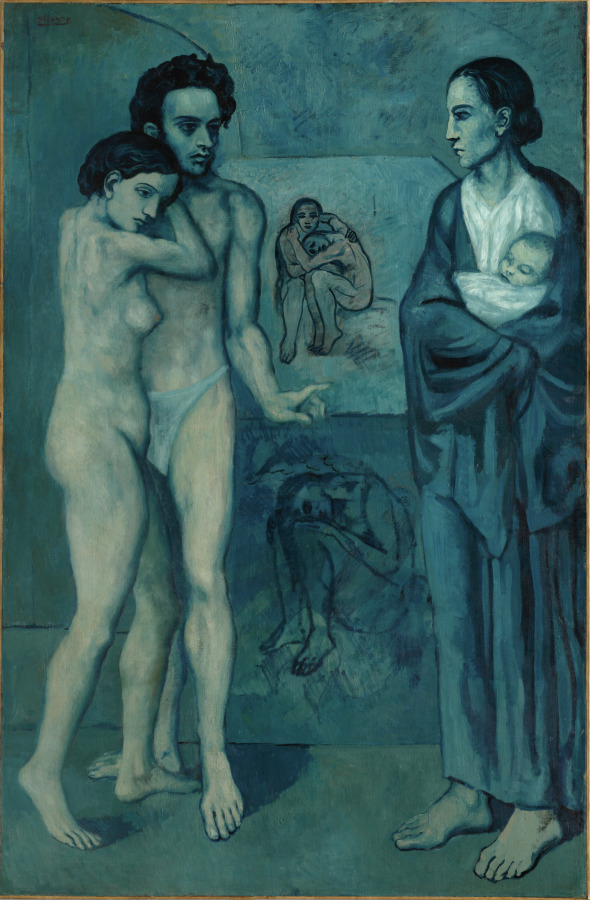
La Vie, Pablo Picasso, 1903

Pablo Picasso

La Vie, 1903

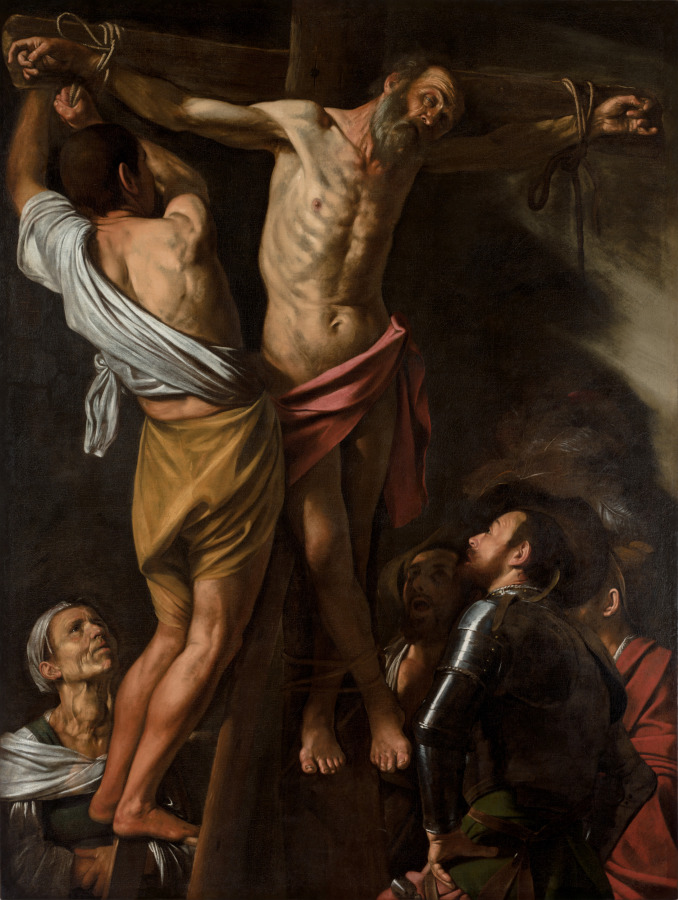
The Crucifixion of Saint Andrew, Caravaggio, 1606–7

Caravaggio

The Crucifixion of Saint Andrew, 1606–7

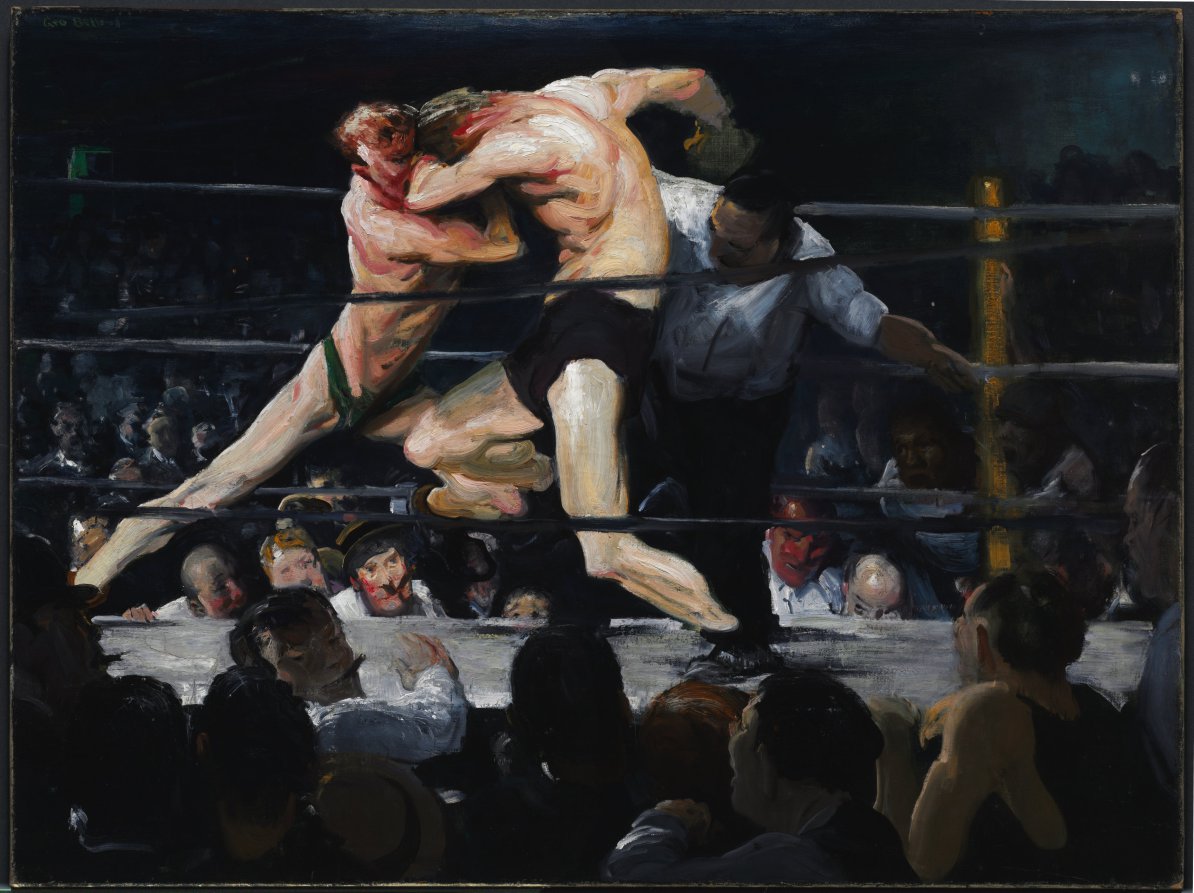
Stag at Sharkey's, George Bellows, 1909

George Bellows

Stag at Sharkey's, 1909

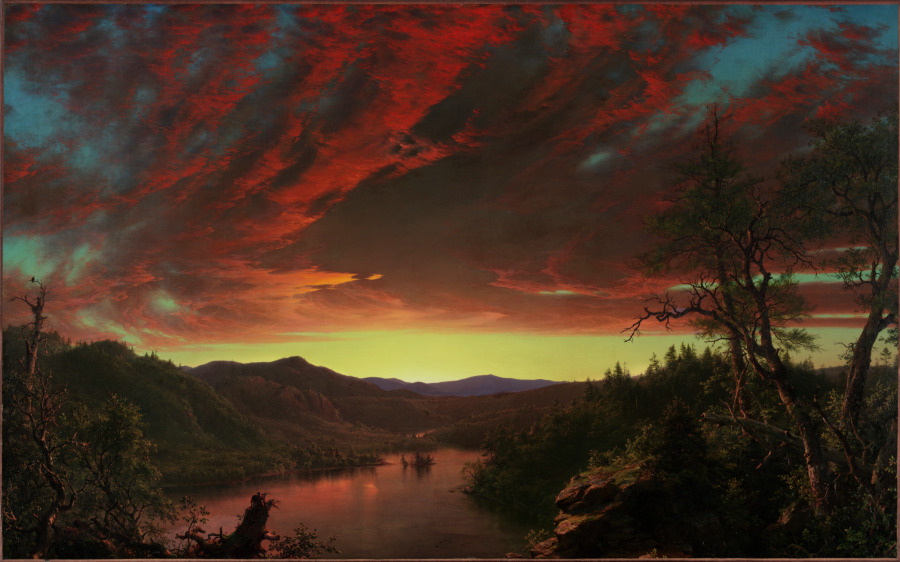
Twilight in the Wilderness, Frederic Edwin Church, 1860

Frederic Edwin Church

Twilight in the Wilderness, 1860

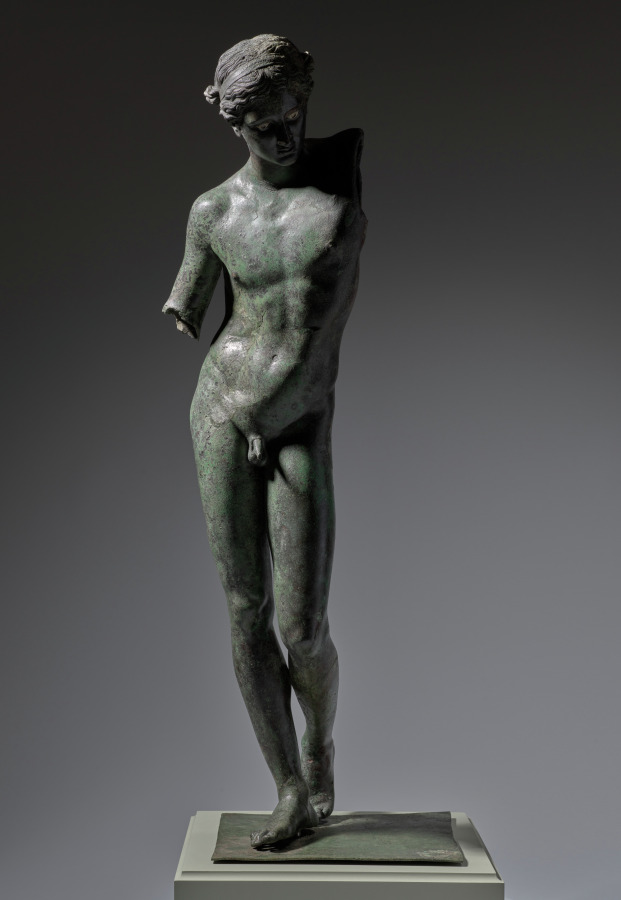
The Cleveland Apollo: Apollo Sauroktonos (Lizard-Slayer) or Apollo the Python-Slayer, Praxiteles, c. 350–200 BCE

Praxiteles

The Cleveland Apollo: Apollo Sauroktonos (Lizard-Slayer) or Apollo the Python-Slayer, c. 350–200 BCE