ART WIKI32,963 on view
MapCollectionArtistsMuseumsExhibitionsJournal
Sign in

ART WIKI

Where the masterpiece hangs, and when they let you in.

Collections: Art Institute of Chicago, Getty Villa, Harvard Art Museums, Hirshhorn Museum and Sculpture Garden, J. Paul Getty Museum, Minneapolis Institute of Art, Musée du Louvre, National Gallery of Art, National Museum of Asian Art, National Portrait Gallery (Smithsonian), Pushkin State Museum of Fine Arts, Rijksmuseum, Smithsonian American Art Museum, SMK — National Gallery of Denmark, State Hermitage Museum, State Russian Museum, The Cleveland Museum of Art, The Metropolitan Museum of Art, The Museum of Modern Art, Tretyakov Gallery, Victoria and Albert Museum, Whitney Museum of American Art, State Catalogue of the Museum Fund of Russia (274 museums), Europeana (19 museums), Wikidata (6 museums), Paris Musées (12 museums), and Joconde, the French Ministry of Culture's museum database (495 museums). Images belong to their rights holders.

Sections

  • Map
  • Search
  • Collection
  • Masterpieces
  • On view now
  • Artists

More

  • Museums & galleries
  • Exhibitions
  • Journal
  • Where the data comes from
  • Privacy & cookies
HomeMapBrowse
  1. Collection/
  2. Art Institute of Chicago/
  3. Eshu (The Trickster)
Eshu (The Trickster), Betye Saar, 1971
Betye Saar, portraitBetye SaarAmerican, 1926–2026

Eshu (The Trickster)

1971 · Sculpture

About the sculpture

Betye Saar began her career as a printmaker in Los Angeles in the 1960s, incorporating metaphysical elements from a wide range of sources including phrenology, palm reading, and astrology. In the 1970s she started to incorporate imagery from Africa and the African diaspora, creating iconic works such as her assemblage The Liberation of Aunt Jemima (1972; Berkeley Art Museum) that appropriated racially offensive characters of the Jim Crow era to evoke and debunk stereotypes associated with blackness.

Read on

Eshu (The Trickster) was inspired by Saar’s visit to Chicago’s Field Museum of Natural History in 1970. Deeply impressed with the multitude of African objects she encountered, Saar returned home to start a new series of “ritual pieces” that she described as “mojos.” The titles of the work and the series are of African origin: Eshu is the trickster god of the Yoruba people of West Africa, known for his unpredictability and disruptive pranks, and mojo, in the artist’s words, “is a term referring to a magical amulet or charm that either works magic or heals.” To create this assemblage, Saar adhered fabric to a found leather support. “When I saw the main shape,” Saar reflected, “I knew I wanted to create a body.” She traced the contours of her own hands and feet in paint onto the surface to conjure an abstract version of Eshu and underscore the role of the artist as a conduit between the occult and intangible aspects of her art and their material manifestations.

Art Institute of Chicago · CC BY 4.0

Particulars

1971 · aged 45
19262026
Accession number
2018.273

More by Betye Saar

All works

In the same room · Gallery 297, Art Institute of Chicago

Museum page

On the same theme · African American

All works on the theme

May one see it?

Yes, receiving visitors

Art Institute of Chicago

Chicago, United States

Room297

On public display.

Checked
3 days ago
In this state since
Sep 28, 2026
Source
The museum
On the mapMuseum page

What it shows

African American

In the catalog

SculpturePost-war art20th century

Comings and goings

  1. On view · Gallery 297

    Art Institute of Chicago · Sep 28, 2026 — now · Verified

  2. Was on view · Regenstein Hall

    Art Institute of Chicago · Aug 19, 2026 — Sep 28, 2026 · Verified

Sources

  • Art Institute of Chicago
  • Image: Art Institute of Chicago — © the artist or rights holder
Twilight Awakening, Betye Saar, 1978

Twilight Awakening

1978 · National Gallery of Art

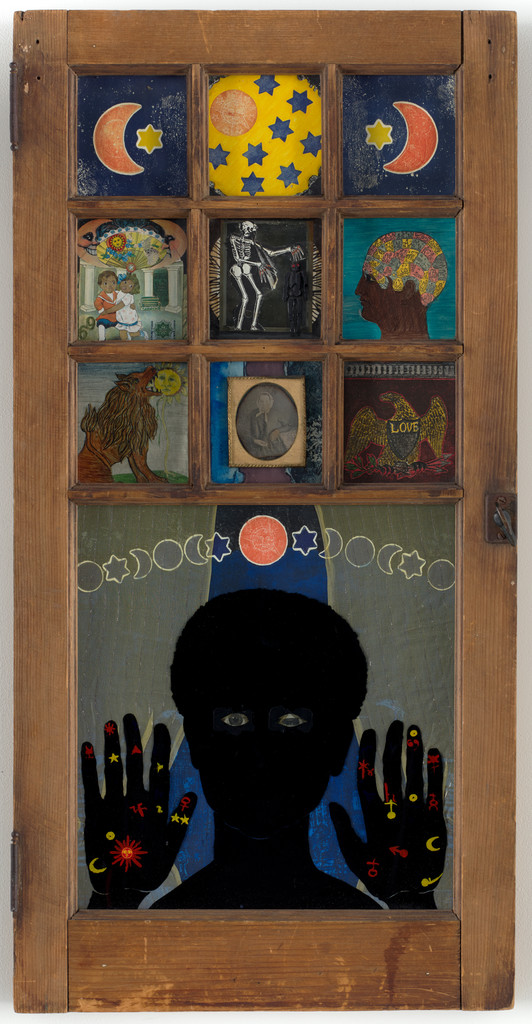
Black Girl's Window, Betye Saar, 1969

Black Girl's Window

1969 · The Museum of Modern Art

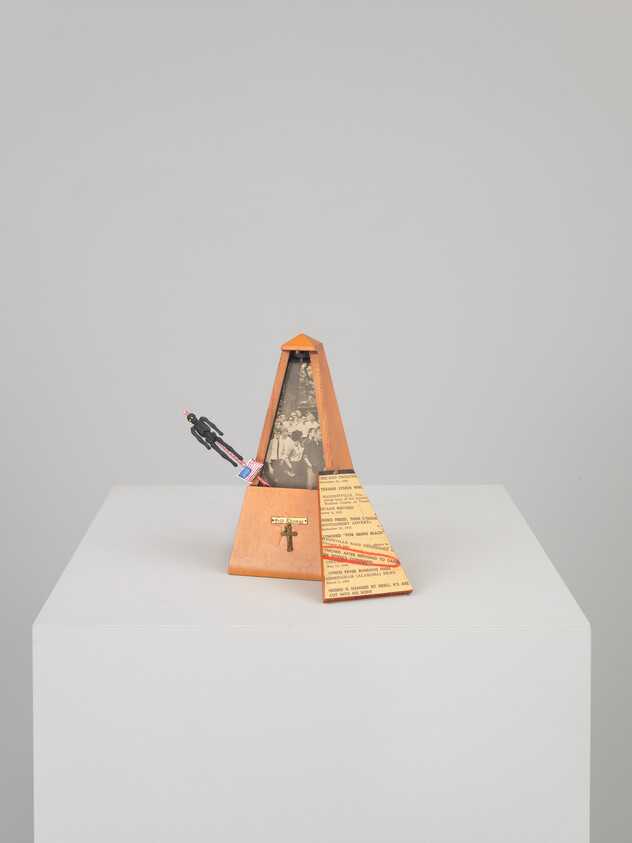
I've Got Rhythm, Betye Saar, 1972

I've Got Rhythm

1972 · Whitney Museum of American Art

Dat Ol' Black Magic, Betye Saar, 1981

Dat Ol' Black Magic

1981 · Not on view · National Gallery of Art

Mystic Sky with Self-Portrait, Betye Saar, 1992

Mystic Sky with Self-Portrait

1992 · Not on view · National Gallery of Art

The Trickster, Betye Saar, 1994

The Trickster

1994 · Not on view · National Gallery of Art

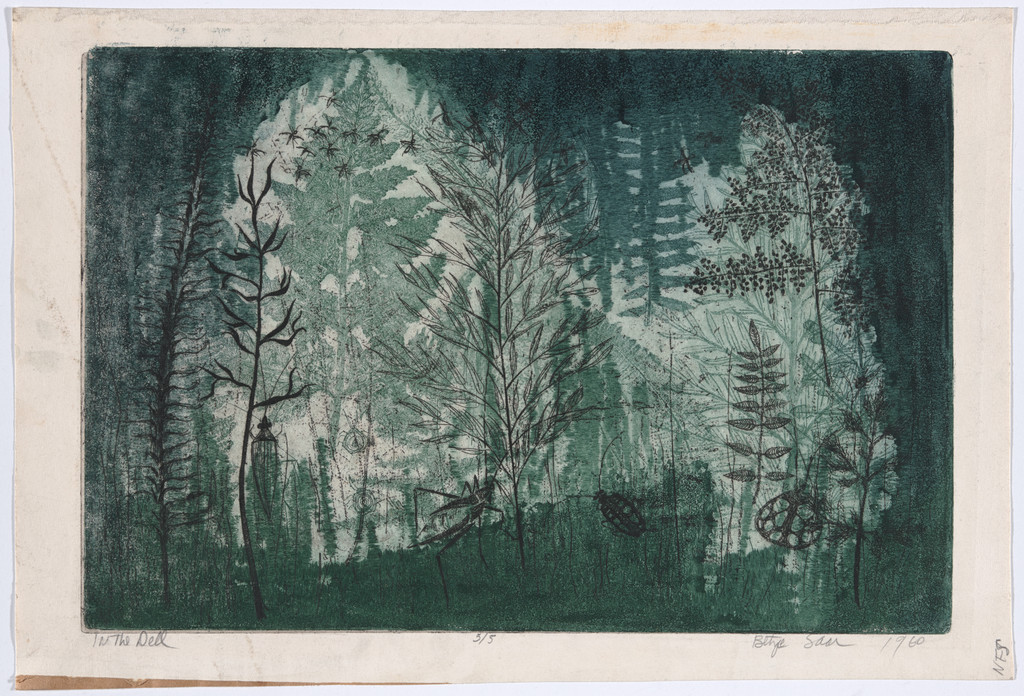
In the Dell, Betye Saar, 1960

In the Dell

1960 · Not on view · The Museum of Modern Art

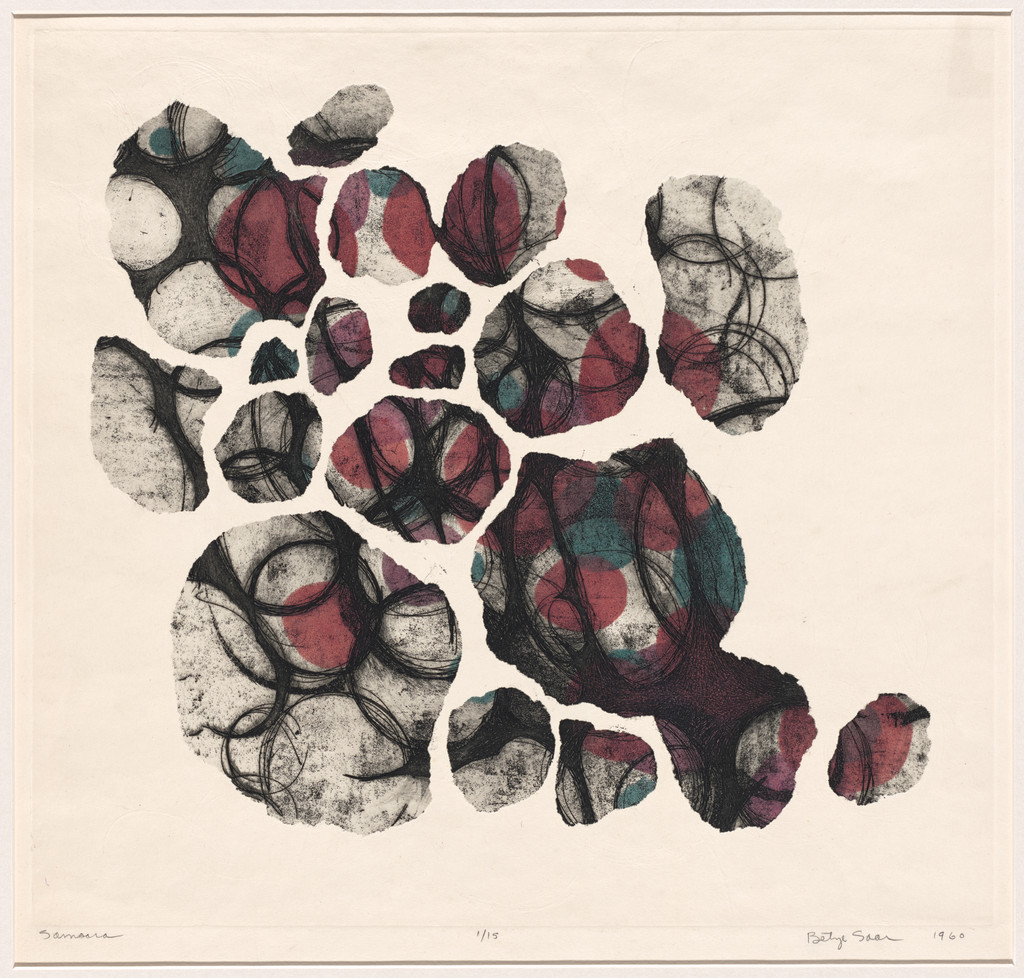
Samsara, Betye Saar, 1960

Samsara

1960 · Not on view · The Museum of Modern Art

Untitled #12, Agnes Martin, 1977

Agnes Martin

Untitled #12, 1977

Hang Up, Eva Hesse, 1966

Eva Hesse

Hang Up, 1966

Mountain, Anne Appleby, 2019

Anne Appleby

Mountain, 2019

Mogabido, Moshekwa Langa, 2016

Moshekwa Langa

Mogabido, 2016

Oxalá, Emanoel Araujo, 2007

Emanoel Araujo

Oxalá, 2007

Untitled, Emily Kam Kngwarray, 1993

Emily Kam Kngwarray

Untitled, 1993

Boost West, Edgar Heap of Birds, 1990

Hock E Aye Vi Edgar Heap of Birds

Boost West, 1990

Fifty-Fifty, Jackie Winsor, 1975

Jackie Winsor

Fifty-Fifty, 1975

Plate Number 6. Walking, Eadweard Muybridge, 1887

Eadweard Muybridge

Plate Number 6. Walking, 1887

Not on view · National Gallery of Art

Plate Number 126. Descending stairs, Eadweard Muybridge, 1887

Eadweard Muybridge

Plate Number 126. Descending stairs, 1887

Not on view · National Gallery of Art

Nurse Midwife Maude Callen, New Dresses, W. Eugene Smith, 1951

W. Eugene Smith

Nurse Midwife Maude Callen, New Dresses, 1951

Not on view · National Gallery of Art

Langston Hughes, Chicago, Gordon Parks, December 1941

Gordon Parks

Langston Hughes, Chicago, December 1941

Not on view · National Gallery of Art

Pilots Gambling in Ready Room, Selfridge Field, Michigan ("I fired a long burst and saw an explosion behind the pilot's cockpit—He went straight down—I tried to follow—When he crashed three white blobs jumped out of the ground—Heh! This isn't my deal!"), Gordon Parks, October 1943

Gordon Parks

Pilots Gambling in Ready Room, Selfridge Field, Michigan ("I fired a long burst and saw an explosion behind the pilot's cockpit—He went straight down—I tried to follow—When he crashed three white blobs jumped out of the ground—Heh! This isn't my deal!"), October 1943

Not on view · National Gallery of Art

Lt. "Wild Bill" William Walker and Lt. George Knox 332nd Fighter Group, Selfridge Field, Michigan ("A guy like Bill has got to come in—Let's wait a while longer."), Gordon Parks, October 1943

Gordon Parks

Lt. "Wild Bill" William Walker and Lt. George Knox 332nd Fighter Group, Selfridge Field, Michigan ("A guy like Bill has got to come in—Let's wait a while longer."), October 1943

Not on view · National Gallery of Art

P40 in Line for Take Off, Selfridge Field, Michigan ("We're back sugar—Thanks a lot—You're a great gal."), Gordon Parks, October 1943

Gordon Parks

P40 in Line for Take Off, Selfridge Field, Michigan ("We're back sugar—Thanks a lot—You're a great gal."), October 1943

Not on view · National Gallery of Art

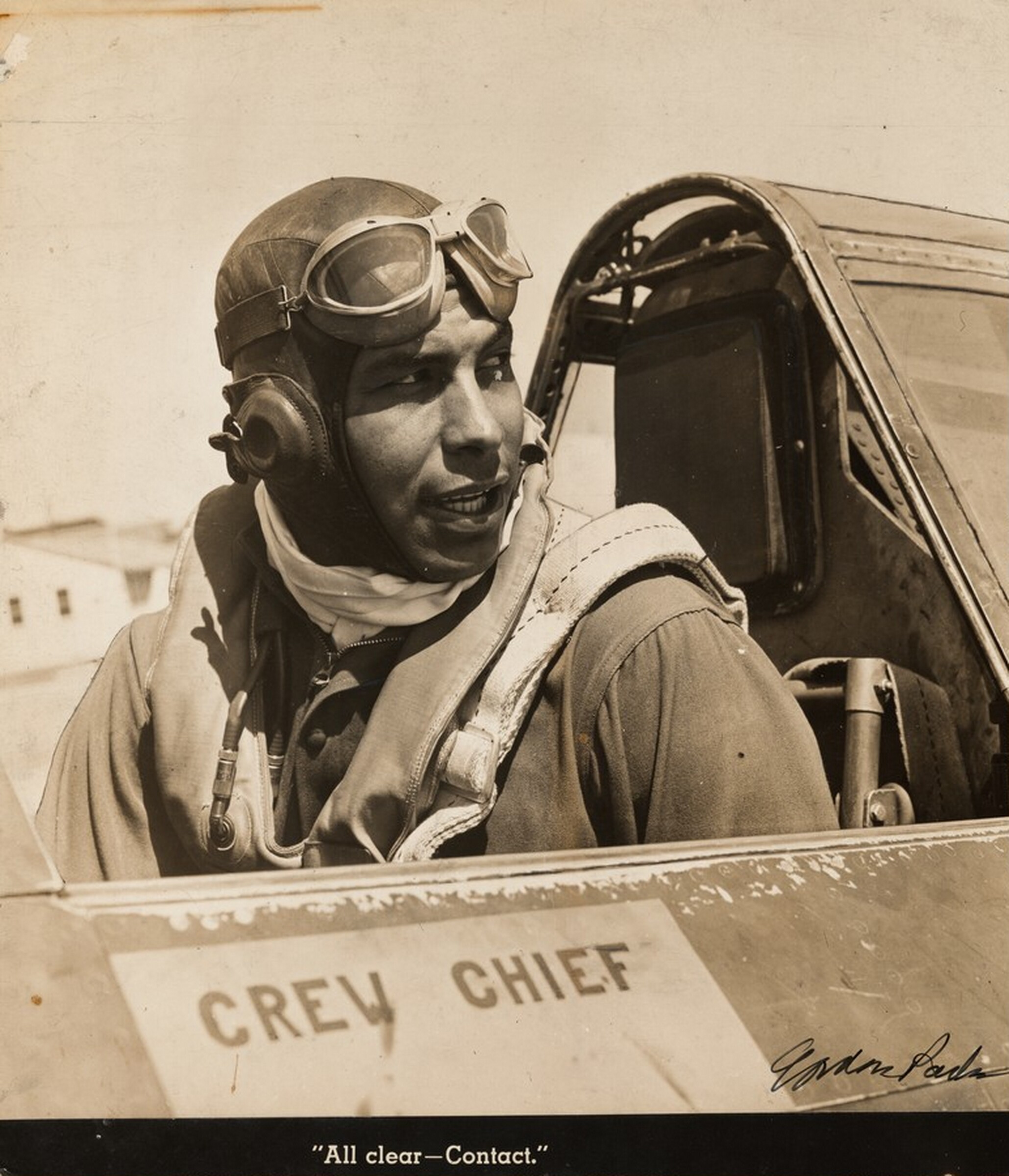
Lt. "Wild Bill" William Walker, former college athlete, in the cockpit of a P39, Selfridge Field, Michigan ("All clear—Contact."), Gordon Parks, October 1943

Gordon Parks

Lt. "Wild Bill" William Walker, former college athlete, in the cockpit of a P39, Selfridge Field, Michigan ("All clear—Contact."), October 1943

Not on view · National Gallery of Art