 Jan van GoyenDutch, 1596–1656
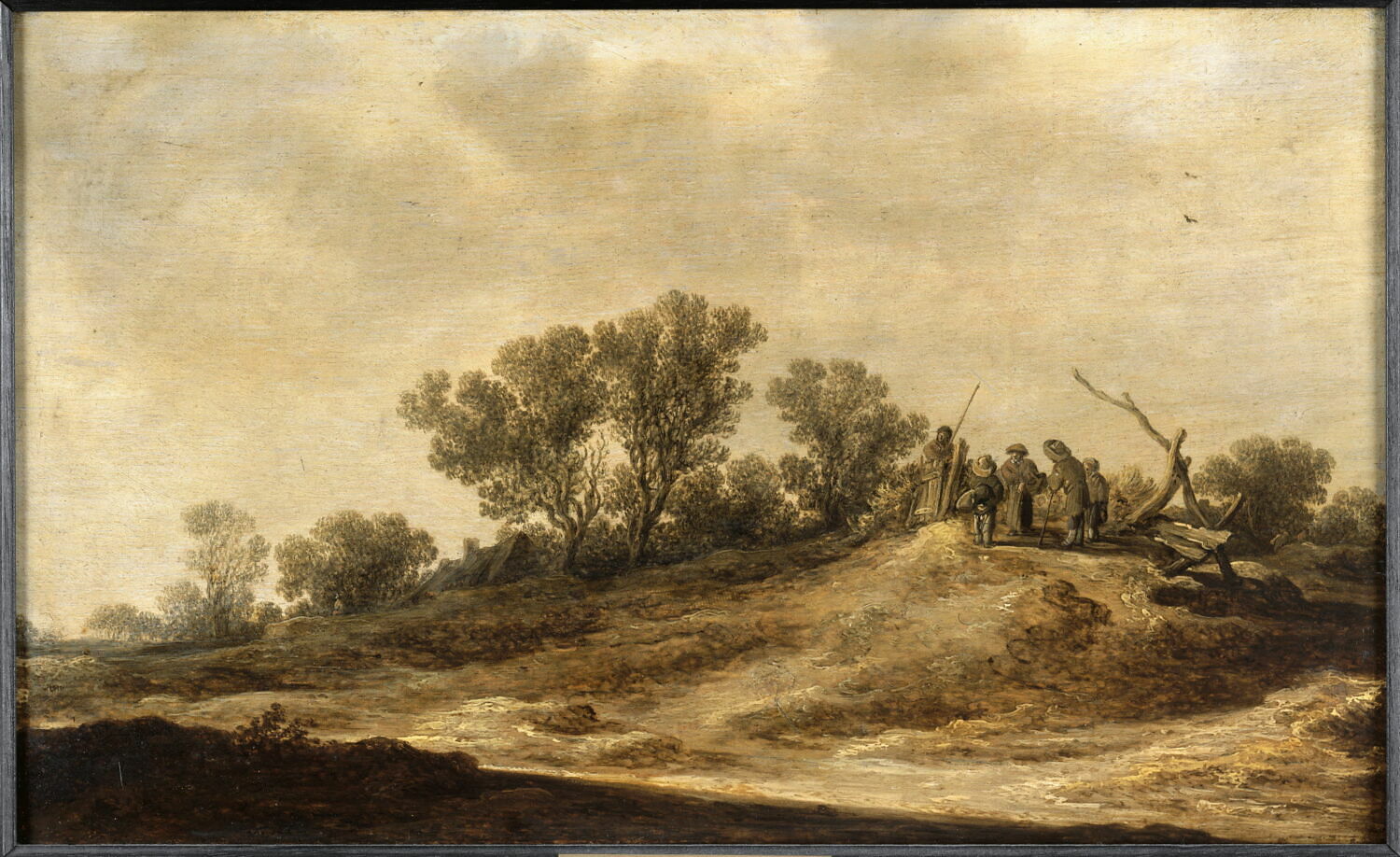
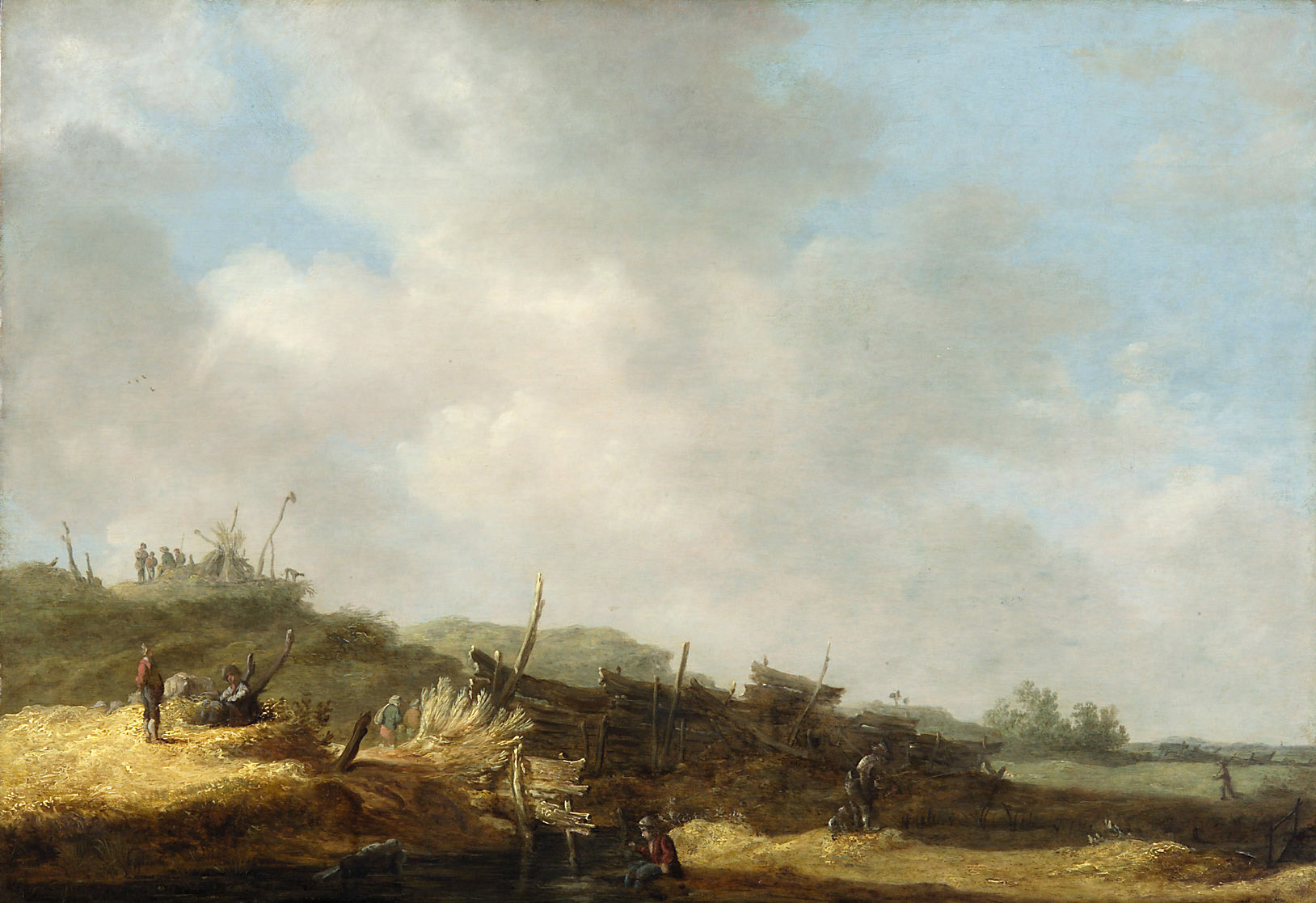
Dünenlandschaft
May one see it?
Unknown

Vienna, Austria
The owner is known; whether it is on view today is not.
- In this state since
- Source
- The museum
About the painting
In the museum's own words — in German
Beschriftung: Signatur: Bez. in der Mitte unten an der Planke: IVG
Kunsthistorisches Museum
Particulars
In the catalog
Sources
- Kunsthistorisches Museum
- Image: Kunsthistorisches Museum — CC BY-NC-SA 4.0
Meanwhile, in the life of Jan van Goyen
The whole life1618–1632 · Workplace
Leiden
late 1620s
One of the creators of the “panoramic style”
In the late 1620s the “panoramic style” took shape in Dutch landscape painting; van Goyen, together with Salomon van Ruysdael and Pieter de Molijn, is regarded as its exponent and one of its creators. His compositions are marked by a low horizon, a high sky and taut diagonals of perspective.
1629
Meets Jan Porcellis
In 1629 van Goyen met Jan Porcellis, who bought a house van Goyen was then selling. The encounter left its mark: after moving to The Hague in 1632 van Goyen began painting the seascapes and river views most typical of his art, and partly under Porcellis’s influence he worked out a laconic three-plane colour scheme, the “tonal landscape”.
1630s
The last known victim of the tulip mania
Van Goyen’s pictures rarely fetched high prices, so he sought other income: he worked as an art dealer and auctioneer and speculated in tulips and real estate, becoming the last known victim of the tulip mania of the 1630s. Real estate, usually a safe investment, left him with enormous debts; one of his houses was rented by Paulus Potter.
1632–1634 · Workplace
The Hague
1634 · Workplace
Haarlem