 Natalia GoncharovaRussian, 1881–1962
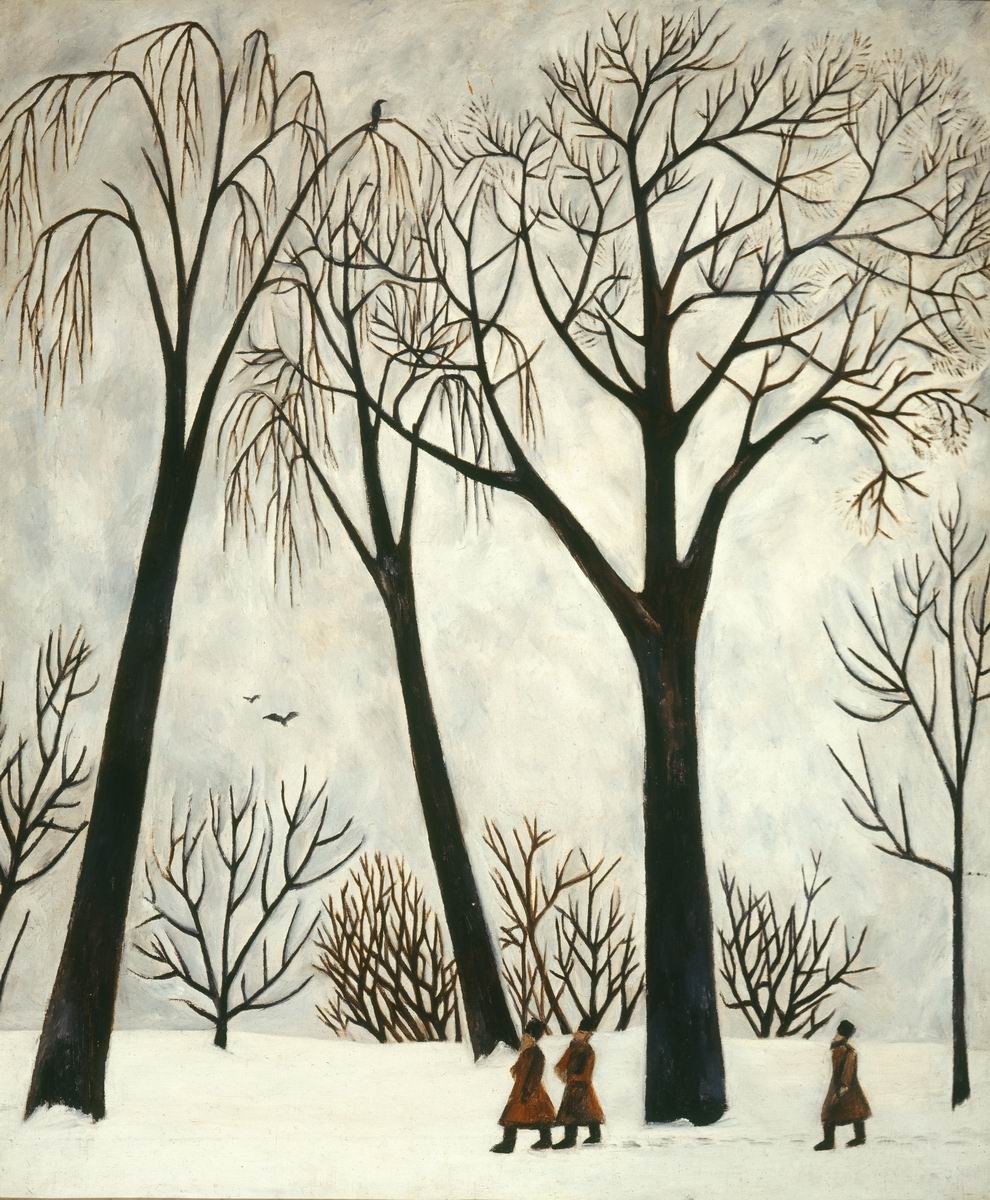
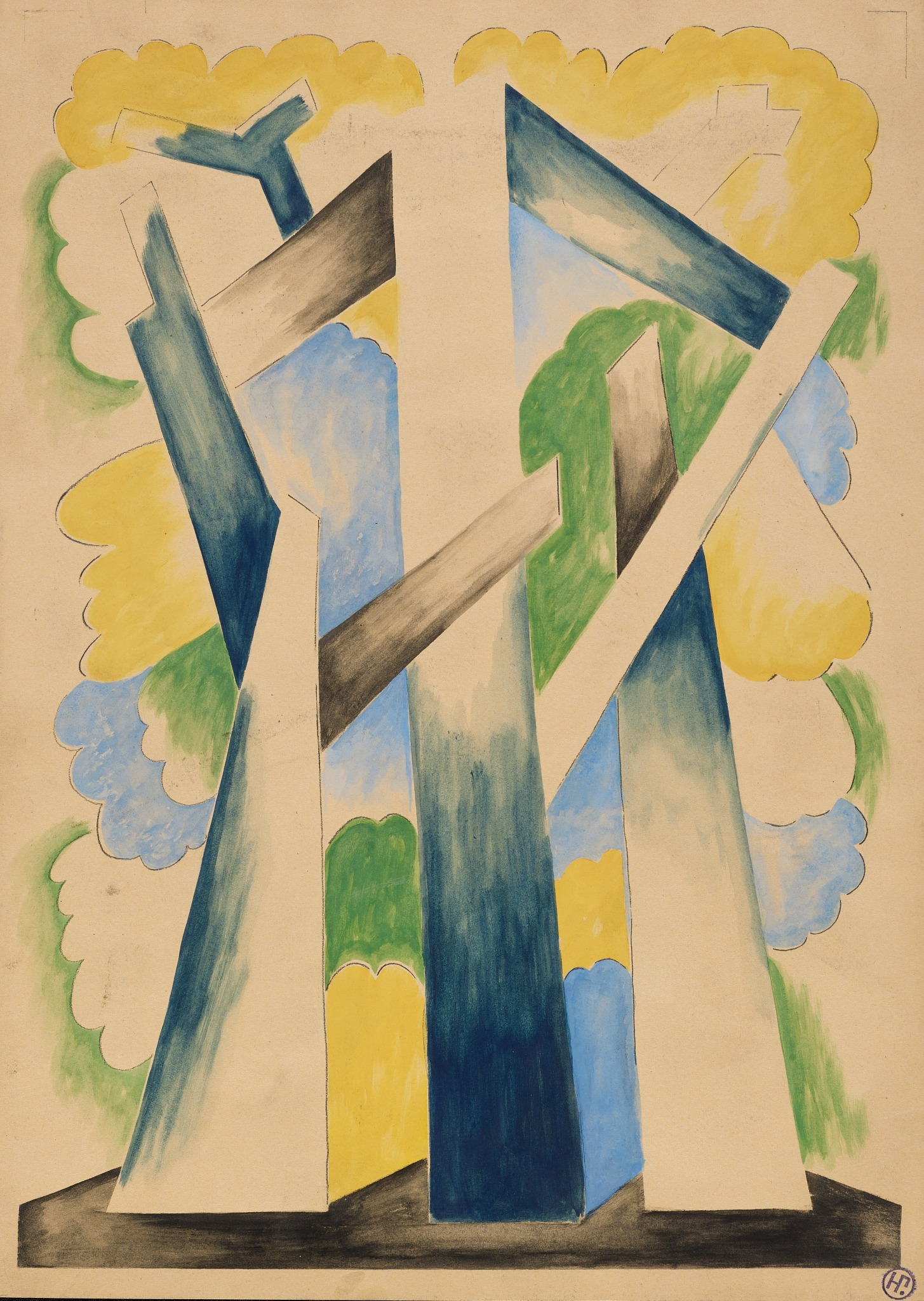
Деревья
May one see it?
Unknown

Tretyakov Gallery
Moscow, Russia
The owner is known; whether it is on view today is not.
- In this state since
- Source
- The museum
About the work
In the museum's own words — in Russian
Техника пошуара (от фр. Poche – карман, прорезь) – создание рисунка при помощи трафаретов, изготовленных по эскизам художника. Краска через трафарет наносилась вручную на бумагу кистью или тампоном. Первые экземпляры раскрашивались самой Гончаровой, остальные по авторским образцам – в парижских ателье. Достоинством техники было соединение возможности тиража и иллюзии оригинального рисунка, «ручного производства». В среде русской художественной эмиграции за Гончаровой даже закрепилось «авторство» новой техники. К технике пошуара Гончарова обратилась в конце 1910-х годов во Франции, однако, интерес к трафарету возник гораздо раньше, в России, и связан с увлечением Гончаровой и Ларионовым народным искусством и особенно лубками, которые раскрашивались также при помощи трафаретов. Среди экспонатов Выставки иконописных подлинников и лубков, организованной М.Ф.
Read on
Ларионовым в Москве в 1913 году, указаны «трафаретные формы». В парижский период пик увлечения трафаретом относится к концу 1910-х–середине 1920-х, когда Гончарова много работала в декоративной сфере: исполняла оформление интерьеров, ширмы, эскизы тканей для Домов Моды, иллюстрации к книгам.
Первые пошуары Гончаровой и Ларионова вошли в альбом «Gontcharova – Larionov L'art Décoratif Théâtral moderne». Paris, la Cible, 1919. Очевидно, предполагалось издание тематических серий: «Театральные портреты», «Времена года», «Купальщицы». Техника плоскостных декоративных форм, характерная для пошуаров оказала влияние на живописное творчество Гончаровой начала 1920-х («Купальщицы», «Завтрак», «Испанки с собакой»), в свою очередь некоторые из живописных работ имеют воспроизведения в технике пошуара.
Tretyakov Gallery
Particulars
- Accession number
- Р-10198
In the catalog
Sources
- Tretyakov Gallery
- Image: Tretyakov Gallery — © State Tretyakov Gallery
Meanwhile, in the life of Natalia Goncharova
The whole life1915–1962 · Residence
Paris
May 1919
Settles in Paris for good
After years in Switzerland, Paris and Rome, Goncharova and Larionov settled in Paris for good (other sources say 1921). She later remarked: “I wanted to go East, and ended up in the West.”
1921
The Paris Salon d'Automne
Goncharova exhibited at the Salon d'Automne and from then on took part regularly in the Salon des Tuileries and the Salon des Indépendants.
1921
Illustrates “The Tale of Tsar Saltan”
The Paris publisher Éditions de la Sirène issued Pushkin's tale in Claude Anet's French translation with Goncharova's illustrations; “The Tale of Igor's Campaign” with her drawings followed in 1923.
1922–1926
Fashion designs for Maison Myrbor
For Marie Cuttoli's Paris shop Maison Myrbor on the Rue Vincent, Goncharova designed richly embroidered and appliquéd dresses inspired by Russian folk art, Byzantine mosaics and her work for the Ballets Russes.
June 1931
First solo exhibition abroad
Goncharova's first solo exhibition abroad opened in June 1931.