ART WIKI33,040 on view
MapCollectionArtistsMuseumsExhibitionsJournal
Sign in

ART WIKI

Where the masterpiece hangs, and when they let you in.

Collections: Art Institute of Chicago, Getty Villa, Harvard Art Museums, Hirshhorn Museum and Sculpture Garden, J. Paul Getty Museum, Minneapolis Institute of Art, Musée du Louvre, National Gallery of Art, National Museum of Asian Art, National Portrait Gallery (Smithsonian), Pushkin State Museum of Fine Arts, Rijksmuseum, Smithsonian American Art Museum, SMK — National Gallery of Denmark, State Hermitage Museum, State Russian Museum, The Cleveland Museum of Art, The Metropolitan Museum of Art, The Museum of Modern Art, Tretyakov Gallery, Victoria and Albert Museum, Whitney Museum of American Art, State Catalogue of the Museum Fund of Russia (274 museums), Europeana (19 museums), Wikidata (6 museums), Paris Musées (12 museums), and Joconde, the French Ministry of Culture's museum database (495 museums). Images belong to their rights holders.

Sections

  • Map
  • Search
  • Collection
  • Masterpieces
  • On view now
  • Artists

More

  • Museums & galleries
  • Exhibitions
  • Journal
  • Where the data comes from
  • Privacy & cookies
HomeMapBrowse
  1. Collection/
  2. Albertina/
  3. Der Dudelsackpfeifer
Der Dudelsackpfeifer, Albrecht Dürer, 1514
Albrecht Dürer, portraitAlbrecht DürerGerman, 1471–1528

Der Dudelsackpfeifer

1514 · Print

May one see it?

Unknown

Albertina

Vienna, Austria

The owner is known; whether it is on view today is not.

In this state since
Sep 27, 2026
Source
The museum
On the mapMuseum page

Particulars

1514 · aged 43
14711528

In the catalog

PrintsRenaissance16th century

Sources

  • Albertina
  • Image: Albertina — Public Domain Mark 1.0

Meanwhile, in the life of Albrecht Dürer

The whole life
  1. 1507–1528 · Workplace

    Nuremberg

  2. 1512

    Emperor Maximilian I becomes his chief patron

    From 1512 Emperor Maximilian I was Dürer's chief patron. For him Dürer and his workshop produced the Triumphal Arch, a giant woodcut 295 × 357 cm printed from 192 blocks and modelled on the triumphal arches of ancient Rome.

  3. 3 January 1512

    Nuremberg's privilege against forgeries

    Nuremberg's city council granted Dürer a privilege for the sale of his prints, with penalties for anyone who forged them.

  4. 1513–1516

    Three years without painting

    Complaining that painting did not pay enough to justify the time compared with his prints, Dürer produced no paintings from 1513 to 1516.

  5. 1514

    Death of his mother

    In the year of Melencolia I and St Jerome in His Study, the artist's mother, Barbara Holper, died.

  6. 1515

    A life pension from the emperor

    The perpetually cash-strapped Maximilian could not pay on time and offered to exempt the artist from city taxes, which the Nuremberg Council opposed. At Dürer's request the emperor granted him a life pension of 100 guilders a year from the sums Nuremberg paid into the imperial treasury.
More by Albrecht Dürer

All works
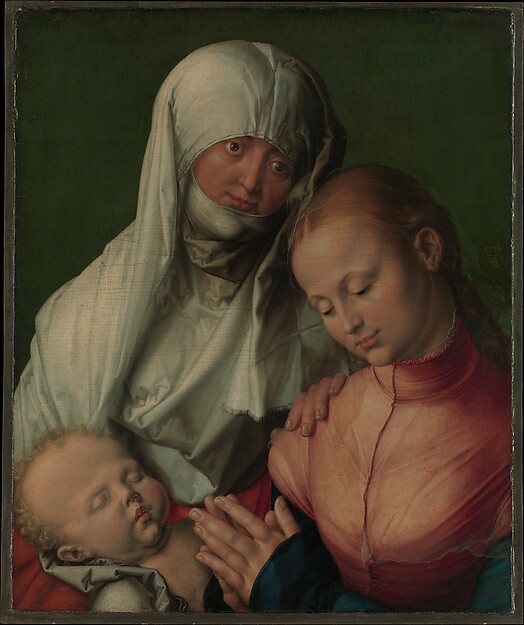
Virgin and Child with Saint Anne, Albrecht Dürer, probably 1519

Virgin and Child with Saint Anne

probably 1519 · The Metropolitan Museum of Art

Madonna and Child [obverse], Albrecht Dürer, c. 1496/1499

Haller Madonna

c. 1496/1499 · National Gallery of Art

Lot and His Daughters [reverse], Albrecht Dürer, c. 1496/1499

Lot and His Daughters [reverse]

c. 1496/1499 · National Gallery of Art

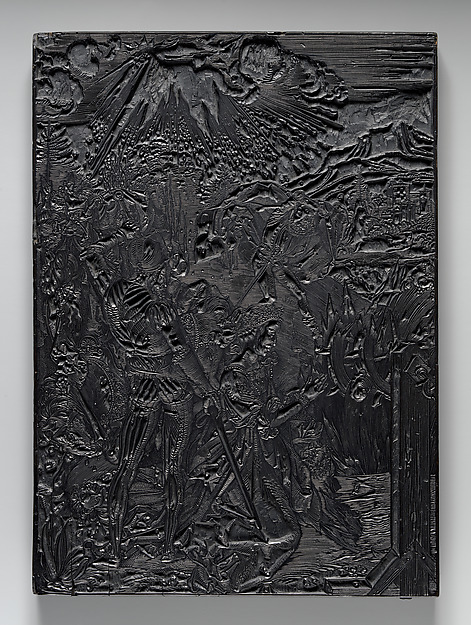
The Martyrdom of Saint Catherine, Albrecht Dürer, ca. 1498

The Martyrdom of Saint Catherine

ca. 1498 · The Metropolitan Museum of Art

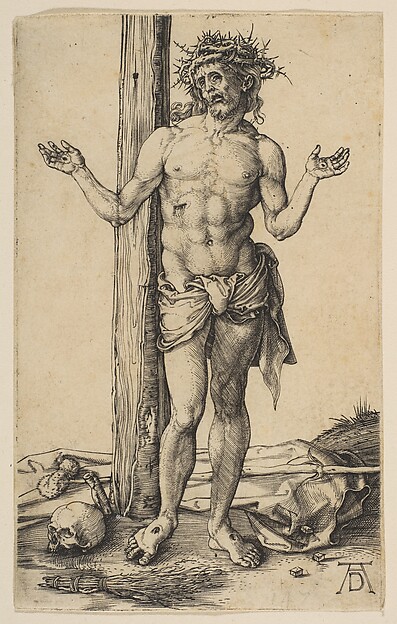
Man of Sorrows with Arms Outstretched, Albrecht Dürer, ca. 1500

Man of Sorrows with Arms Outstretched

ca. 1500 · The Metropolitan Museum of Art

Nemesis (The Great Fortune), Albrecht Dürer, c. 1501/1502

Nemesis (The Great Fortune)

c. 1501/1502 · National Gallery of Art

Large Horse, Albrecht Dürer, 1505

Large Horse

1505 · National Gallery of Art

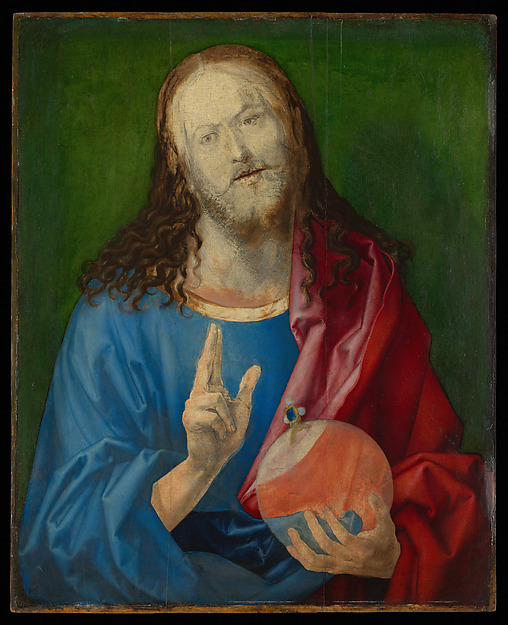
Salvator Mundi, Albrecht Dürer, ca. 1505

Salvator Mundi

ca. 1505 · The Metropolitan Museum of Art

From the collection of Albertina

Museum page
Zwei groteske Köpfe im Profil, Leonardo da Vinci

Leonardo da Vinci

Zwei groteske Köpfe im Profil

Landschaft mit Haus und Bäumen, Vincent van Gogh

Vincent van Gogh

Landschaft mit Haus und Bäumen

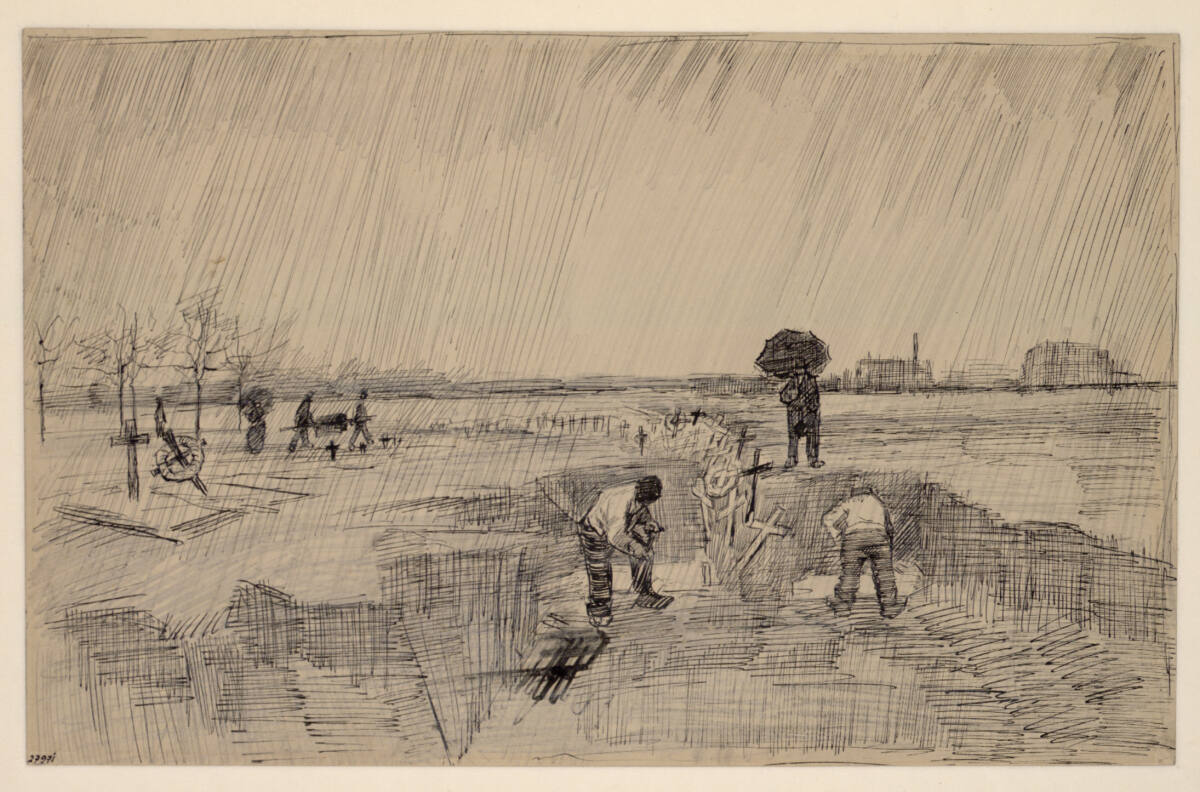
Friedhof im Regen, Vincent van Gogh

Vincent van Gogh

Friedhof im Regen

Studien eines erhobenen Armes mit Schultergelenk, Michelangelo

Michelangelo

Studien eines erhobenen Armes mit Schultergelenk

Studien eines weiblichen sitzenden Rückenakts, Michelangelo

Michelangelo

Studien eines weiblichen sitzenden Rückenakts

Männlicher Oberkörper mit gefalteten Händen sowie Handstudien, Michelangelo

Michelangelo

Männlicher Oberkörper mit gefalteten Händen sowie Handstudien

Männlicher Rückenakt (Studie zu dem eine Lanze tragenden Soldaten des geplanten Wandgemäldes "Schlacht von Cascina"), Michelangelo

Michelangelo

Männlicher Rückenakt (Studie zu dem eine Lanze tragenden Soldaten des geplanten Wandgemäldes "Schlacht von Cascina")

Beweinung Christi, Michelangelo

Michelangelo

Beweinung Christi