 Mikhail Vrubel1856–1910
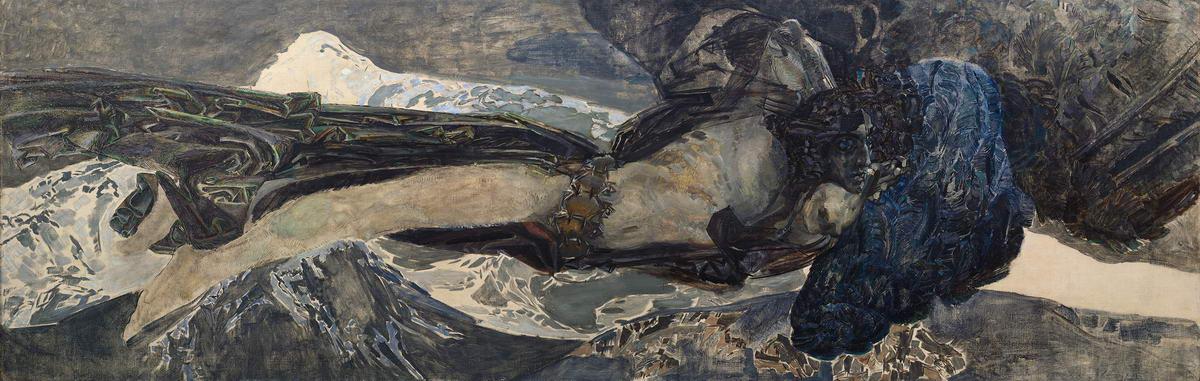
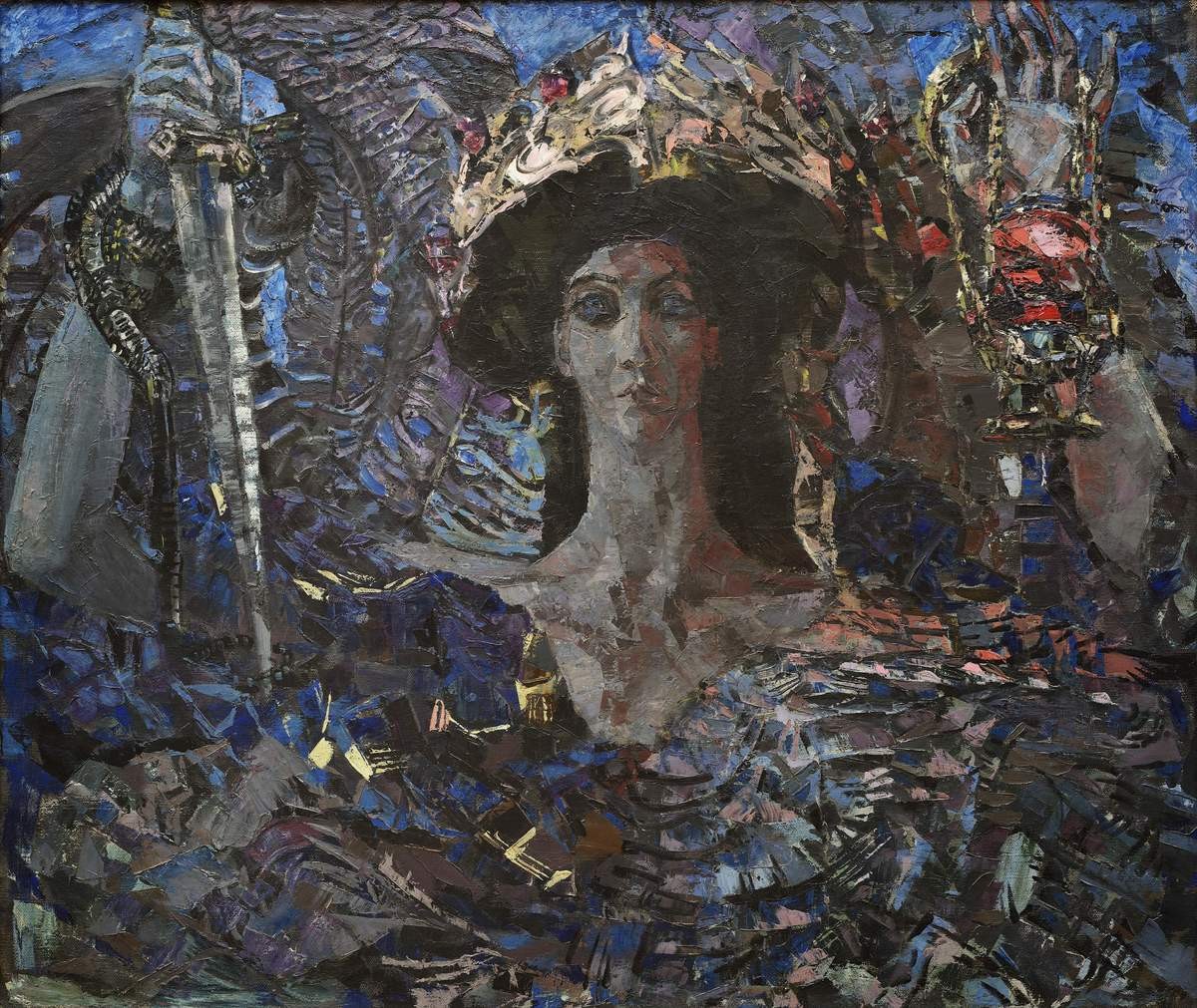
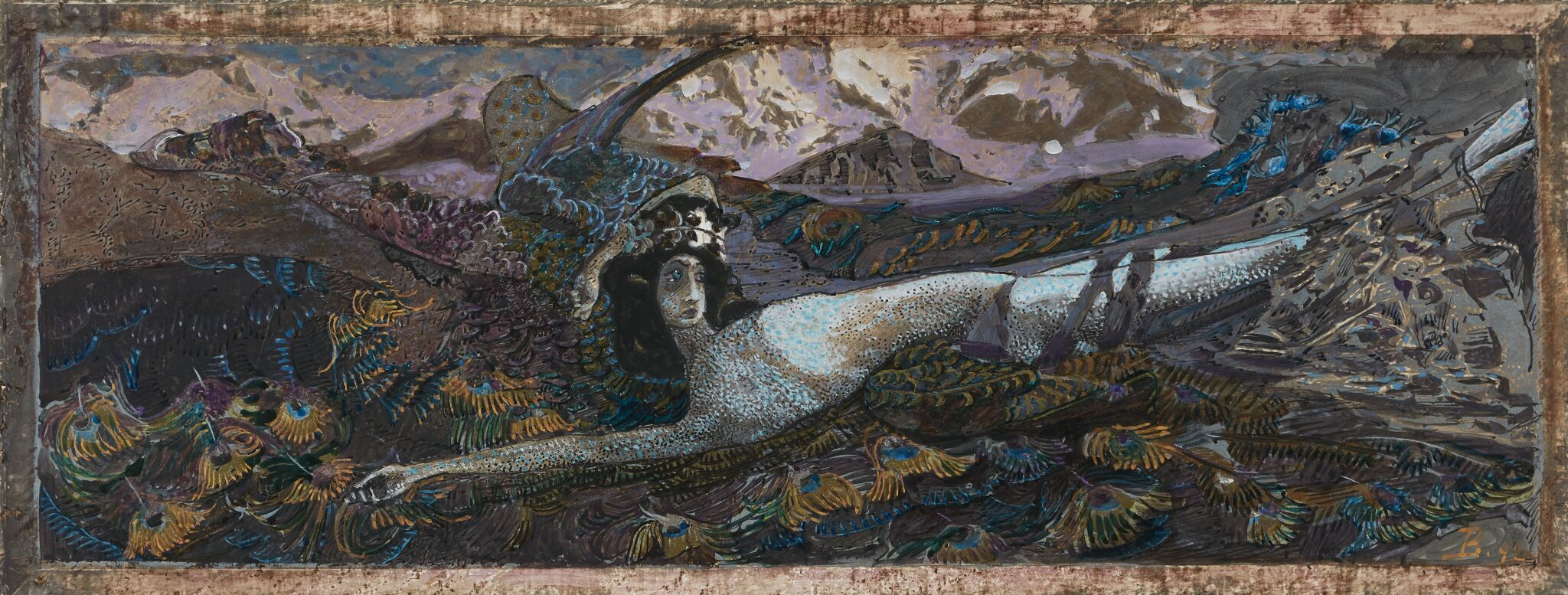
Демон поверженный
May one see it?
Unknown

Tretyakov Gallery
Moscow, Russia
The owner is known; whether it is on view today is not.
- In this state since
- Source
- The museum
About the work
In the museum's own words — in Russian
Михаил Врубель любил фотографические отпечатки, тщательно изучал запечатленные на них необычные эффекты освещения, и зачастую наблюдаемые им сложные тональные градации могли подсказать искомое композиционное решение той или иной темы. Так, общий настрой рисунка «Моление о чаше» («Христос в Гефсиманском саду», 1887) был найден непосредственно при созерцании фотографий. Художник делился впечатлениями со своей сестрой А.А. Врубель: «Я окончательно решил писать Христа: судьба мне подарила такие прекрасные материалы в виде трех фотографий прекрасно освещенного пригорка с группами алоэ между ослепительно белых камней и почти черных букетов выжженной травы; унылая каменистая котловина для второго плана; целая коллекция ребятишек в рубашонках под ярким солнцем для мотивов складок хитона. Надо тебе еще знать, что на фотографии яркое солнце удивительную дает иллюзию полночной луны».
Read on
С помощью фотографий Врубель мог проверять и действенность, точность композиционного решения уже созданных им полотен. Такой «проверкой» является и этот фотоотпечаток одного из вариантов картины «Демон поверженный» (Врубель неоднократно переписывал холст), наклеенный на картон и от руки раскрашенный художником. Бронзовая и серебряная краски, нанесенные на фотоизображение, свидетельствуют о сложнейших живописных задачах, которые ставил перед собой художник в «исходнике» – на полотне. В своих воспоминаниях Г.Г. Бурданов подчеркивал, что «для образов его творчества как бы не хватало всей сложности современной палитры, и он прибегает к обогащению ее, вводя бронзу и алюминий в смеси красок, отчего белоснежные одежды его святых и ангелов искрятся чудным неуловимым тоном, как ни у кого. Знаменитая гамма его лиловых тонов, не та ли это грань видения цветов, за которую не переходит человек?».
Этот фотоотпечаток, доработанный тушью, кистью и пером, что усиливало сияние бронзы и серебра, был для Врубеля камертоном, аналогом последних, верхних лессировок, которые объединяют колористическую гамму композиции в целом.
Tretyakov Gallery
Particulars
- Accession number
- Р-4999
In the catalog
Sources
- Tretyakov Gallery
- Image: Tretyakov Gallery — © State Tretyakov Gallery
Meanwhile, in the life of Mikhail Vrubel
The whole lifesummer 1900
A gold medal at the Paris World’s Fair
In midsummer the Vrubels learned that he had won a gold medal at the Exposition Universelle for the fireplace “Volga Svyatoslavich and Mikula Selyaninovich”; his ceramics and majolica were shown in the Handicrafts Pavilion. Serov won the Grand Prix that year, and Korovin and Malyavin gold medals.
1 September 1901
Birth of his son Savva
Nadezhda Zabela-Vrubel gave birth to a son, Savva — a sturdy baby with a cleft lip; for his sake she left the stage for a time, and the family’s keep fell entirely on Vrubel. In the thick of his work on the “Demon” the artist painted a large watercolour portrait of his six-month-old son in a pram.
1902
Bekhterev’s diagnosis
In St Petersburg Vrubel went on repainting the “Demon” without pause, ruining it in his friends’ view, and his family took him to the psychiatrist Vladimir Bekhterev, who diagnosed “incurable progressive paralysis” — tertiary syphilis; the artist himself was told nothing. In Moscow, although the collector Vladimir von Meck bought the painting for 3,000 roubles, he grew worse still: he drank and squandered money, and his wife and son tried to take refuge from him with relatives in Ryazan.
2 February 1902
“The Demon Downcast” fails in Moscow
The painting went on show in Moscow a day before the “Group of 36” exhibition closed; Vrubel hoped it would be bought for the Tretyakov Gallery. The failure coincided with news of the suicide of Alexander Rizzoni after unfair criticism in the journal Mir iskusstva.
April 1902
First hospitalisation
In early April, with symptoms of acute mental disorder, Vrubel was admitted to F. A. Savey-Mogilevich’s private clinic; until August his condition was so grave that even his wife and sister were not allowed to see him. In September he was moved to Vladimir Serbsky’s clinic at Moscow University, and Serbsky confirmed the diagnosis, establishing that the infection dated back to 1892.
3 May 1903
Death of his son Savva
Vrubel had been discharged from the clinic in February, and von Meck invited the family to spend the summer on his estate in Kiev province, but on the eve of departure two-year-old Savva fell ill, and in Kiev the child died. Vrubel at once shook off his apathy, busied himself with the funeral and supported his wife, who would not say a word; their son was buried on Baikove Hill.